Joël Pynson

March 2026

Gerd-Rüdiger Lang, founder of Chronoswiss, was a knowledgeable collector of chronographs, both wristwatches and pocket watches.

My friend Sébastien Chaulmontet and I had the privilege of meeting him several times at his home near Munich and spending long hours discussing the many models he collected. He often favored pocket chronographs, appreciating their wide variety of calibers and technical solutions.

His vast collection was auctioned off in several stages, and recently Bonhams Cornette de Saint Cyr in Paris offered a series of pocket chronographs that perfectly illustrate the diversity of Swiss production in the late 19th and early 20th centuries.

Most of these chronographs are unsigned, so it takes a certain amount of experience to try to identify the manufacturers behind the calibers.

This series of articles will therefore select certain significant models and attempt to attribute them to their respective manufacturers. Models with a proven origin, such as Omega, Zenith, or Longines, will not be described here as they are easy to attribute. For some models, of course, attribution will be conditional, as the movements may well have been produced by one manufacturer and the chronograph part by another.

(Illustrations courtesy of Bonhams, Cornette de Saint Cyr)

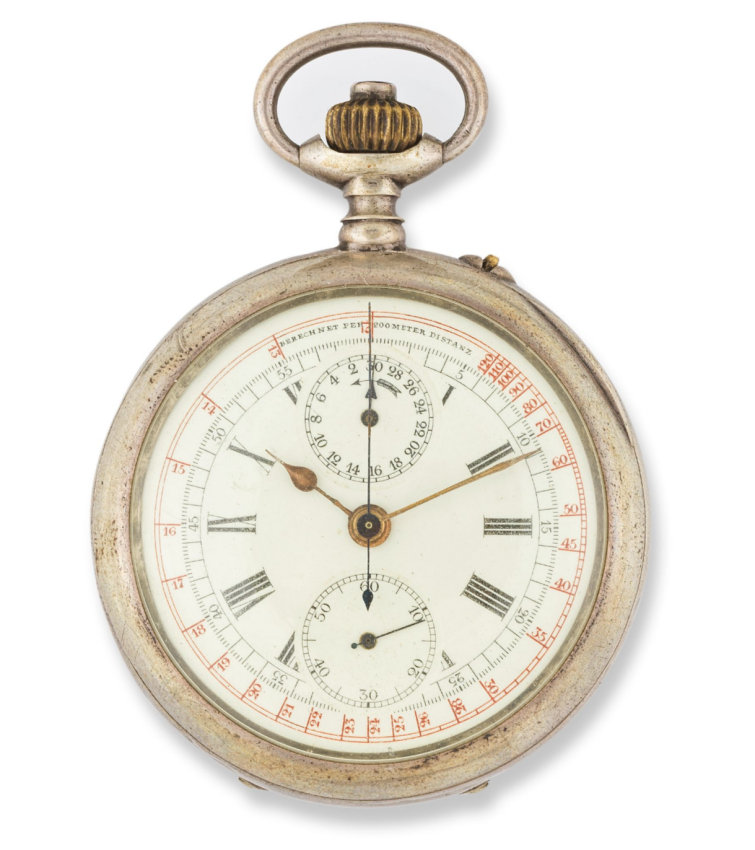
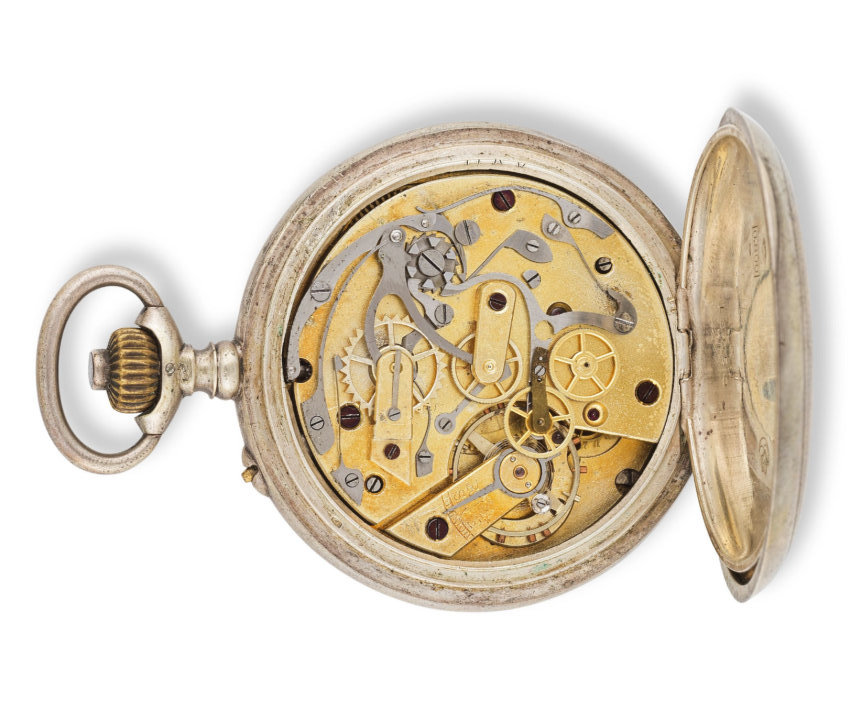
- Lot 3

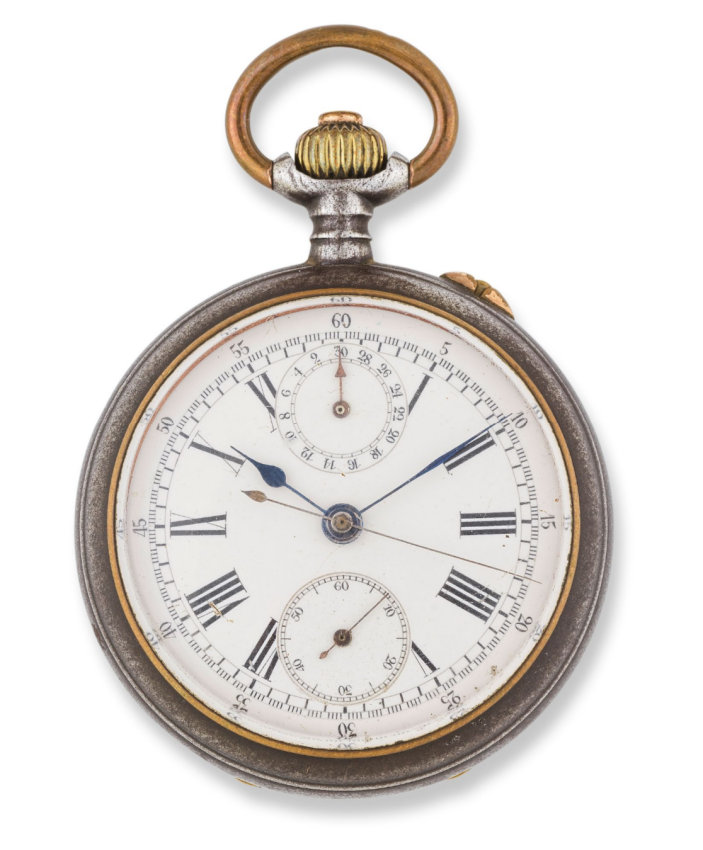
One detail gives us a clue as to the manufacturer of this anonymous chronograph: the minute hand rotates counterclockwise and a small arrow indicates this on the counter. This detail is frequently found on chronographs made by Nicolet, Fils & Cie in La Chaux-de-Fonds. This is confirmed by the movement, which is characteristic but exists in many variations. The caliber visible on this chronograph is probably late, dating from around 1910. These calibers are often found in chronographs made by the sister company Stauffer, Son & Co.

1896

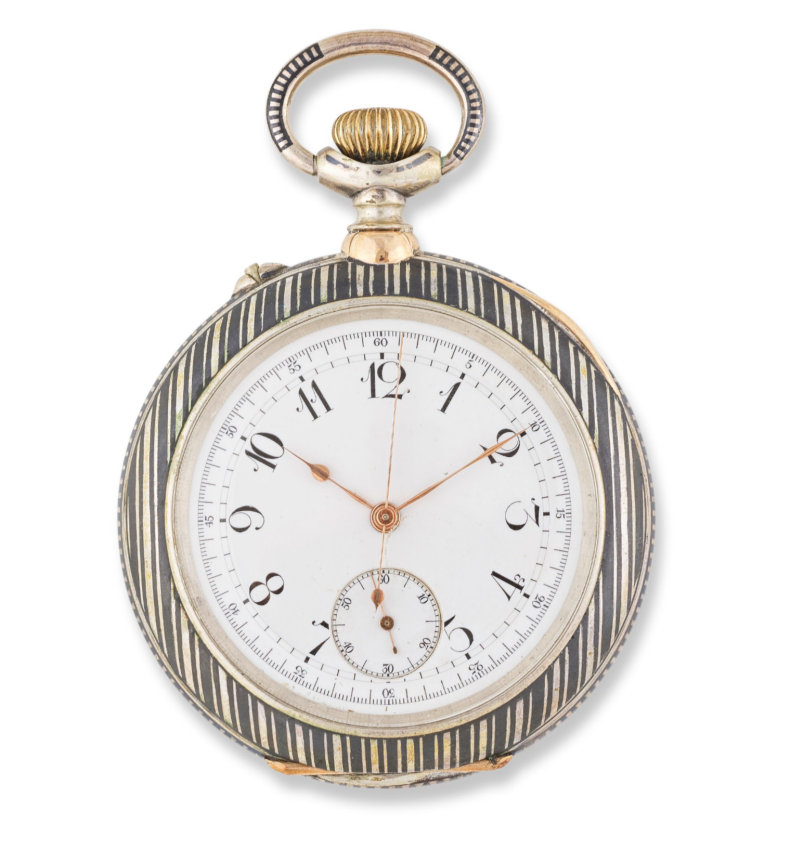
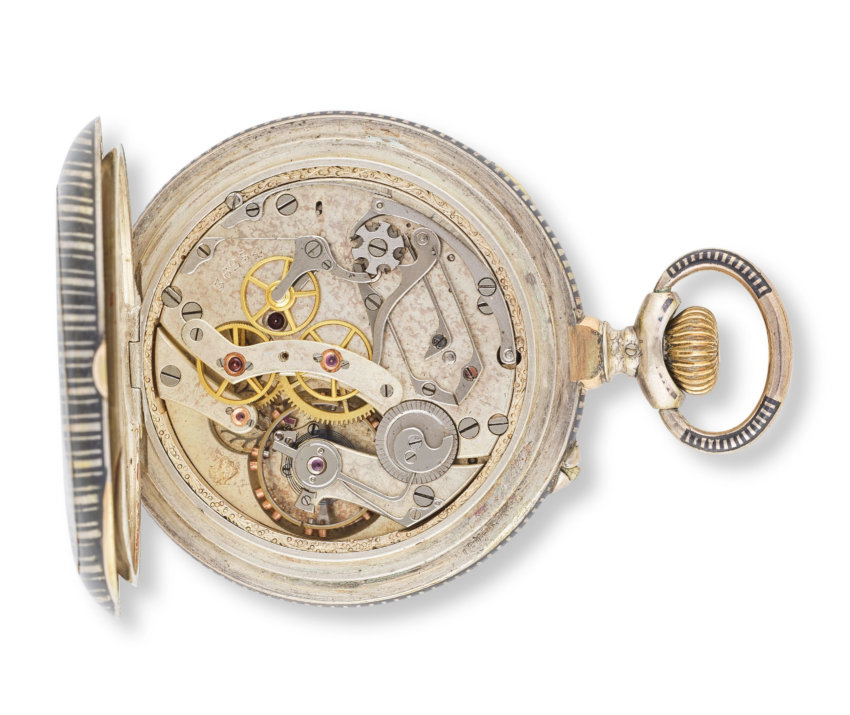
- Lot 4

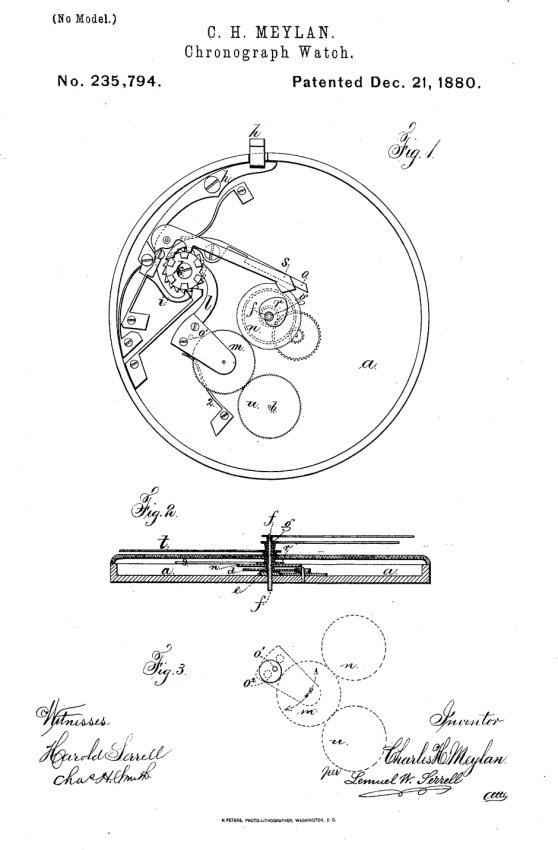
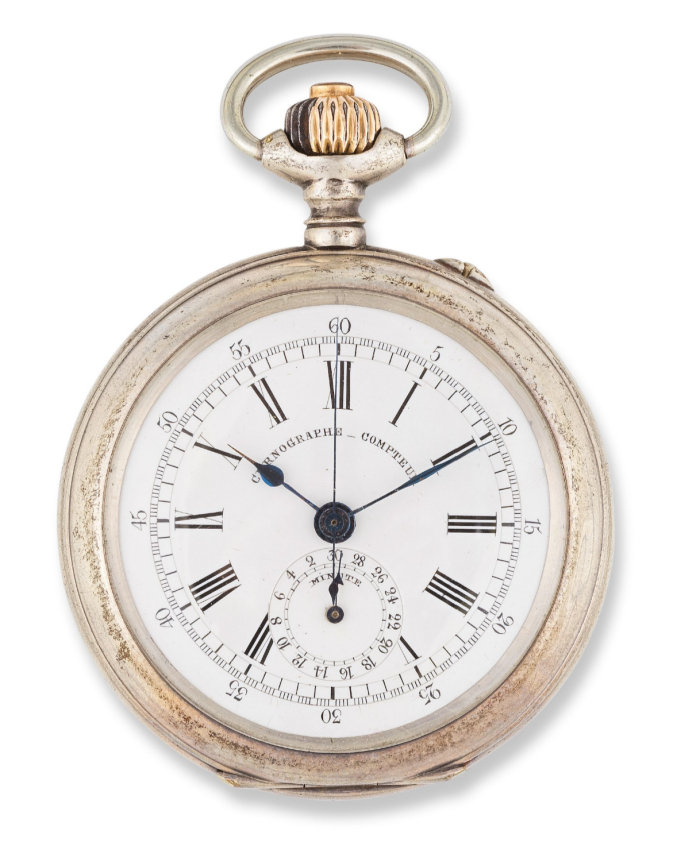
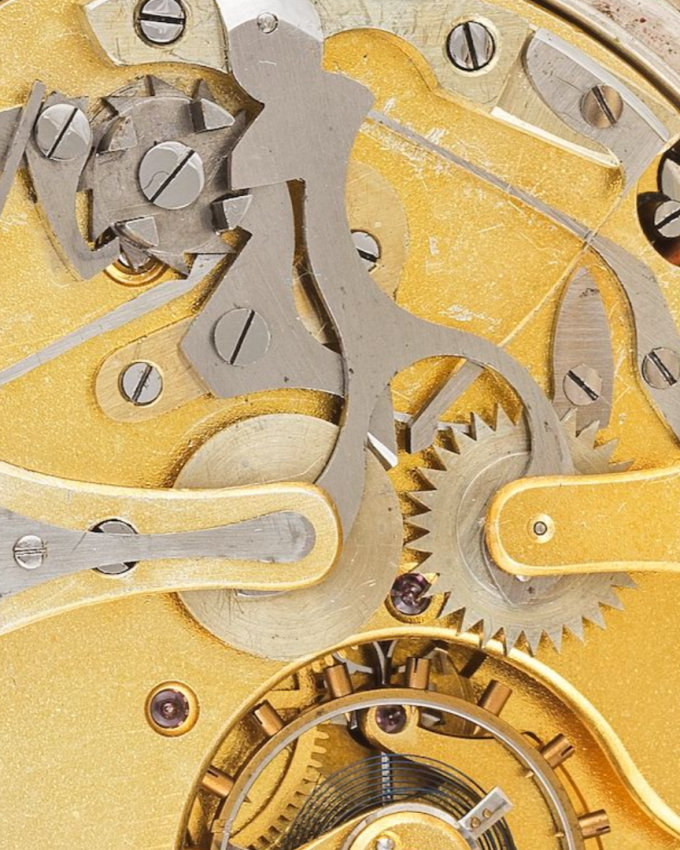
This attractive anonymous chronograph with a nielloed case is equipped with a caliber typical of the production of Charles-Henry Meylan in Le Brassus in the Vallée de Joux. This caliber was patented in 1880 in the United States, where Charles-Henry Meylan worked between 1871 and 1888.

To learn more about Charles-Henry Meylan, his story can be found here.

- Lots 25 and 99

These two lots are analyzed together because they are historically linked. Lot 25 is a vertical clutch chronograph with instantaneous minute counter, invented by Charles Lehmann and manufactured by the Société Jurassienne d'Horlogerie, founded in 1883 in Biel. As Charles Lehmann began his business in Biel before 1883, it is possible that some of his chronographs were manufactured before that date, which would explain why the plate of lot 25 is not signed with the letters SJH, which are sometimes found on this type of movement.

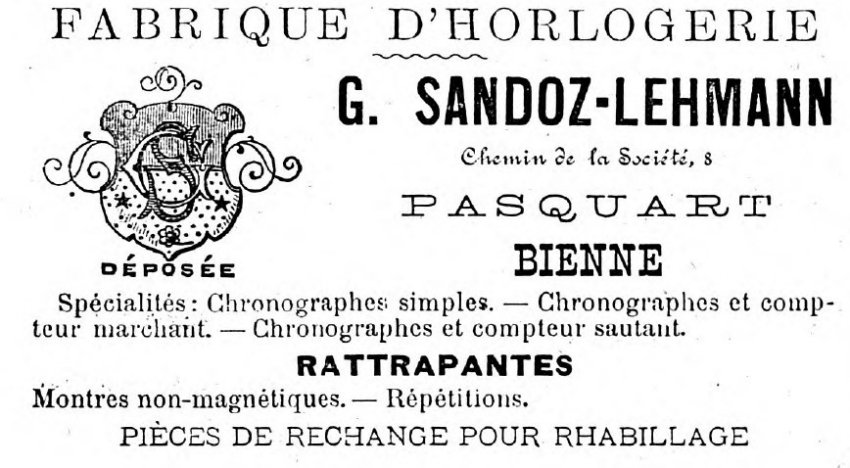
Lot 99, clearly of more recent manufacture, has a caliber by G. Sandoz-Lehmann, patented in 1889 (CH 783). G. Sandoz-Lehmann, probably a relative of Charles Lehmann, joined the board of directors of the Société Jurassienne d'Horlogerie in 1888. He then set up his own factory after the company went bankrupt. The G. Sandoz-Lehmann caliber is quite similar to that of Charles Lehmann, with a vertical clutch and instantaneous minute counter.

1893

To be continued...

Product added to wishlist

Nous utilisons des cookies afin de fournir une expérience utilisateur conviviale. En naviguant sur ce site, vous acceptez la politique d'utilisation des cookies.