The true history of Mulco watches

The true history of Mulco watches

Mulco

Despite its short history, Mulco has launched some remarkable watches, particularly chronographs and diving watches.

Description

Joël Pynson

May 2025

1. Creation in La Chaux-de-Fonds

Two watchmakers from La Chaux-de-Fonds, Edmond Muhlematter and Paul Grimm, joined forces in 1919 to create the Muhlematter et Grimm watch finishing company [1].

The company specialized in small wristwatches.

1927

In 1931, the company was taken over by Robert Muller-Caccia and became Mulco SA [2].

A few years later, Edmond Muhlematter took over the Britix factory.

2. Mulco SA

Under the impetus of Robert Muller, the company went from strength to strength.

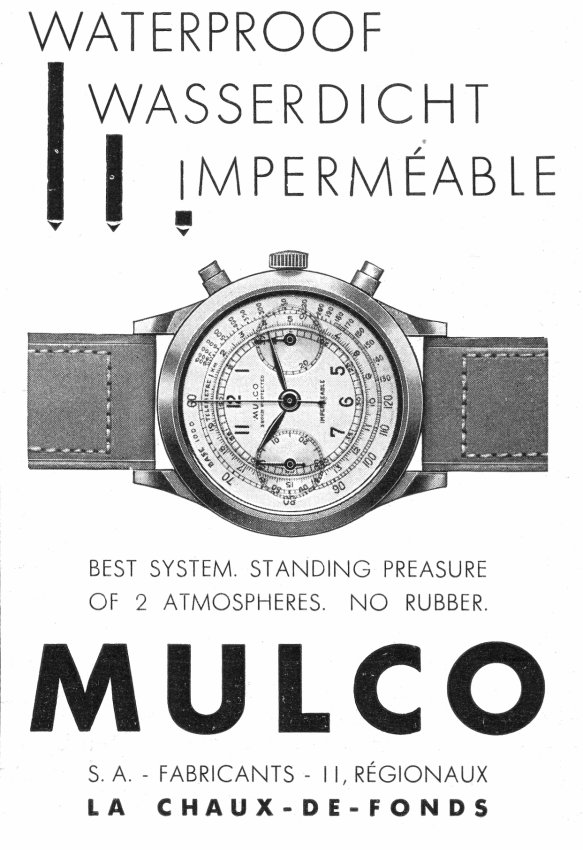
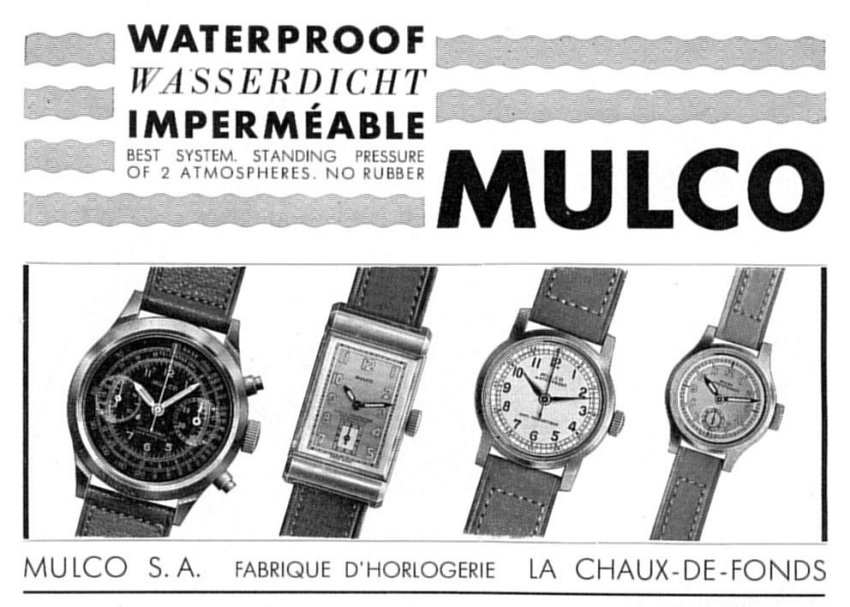
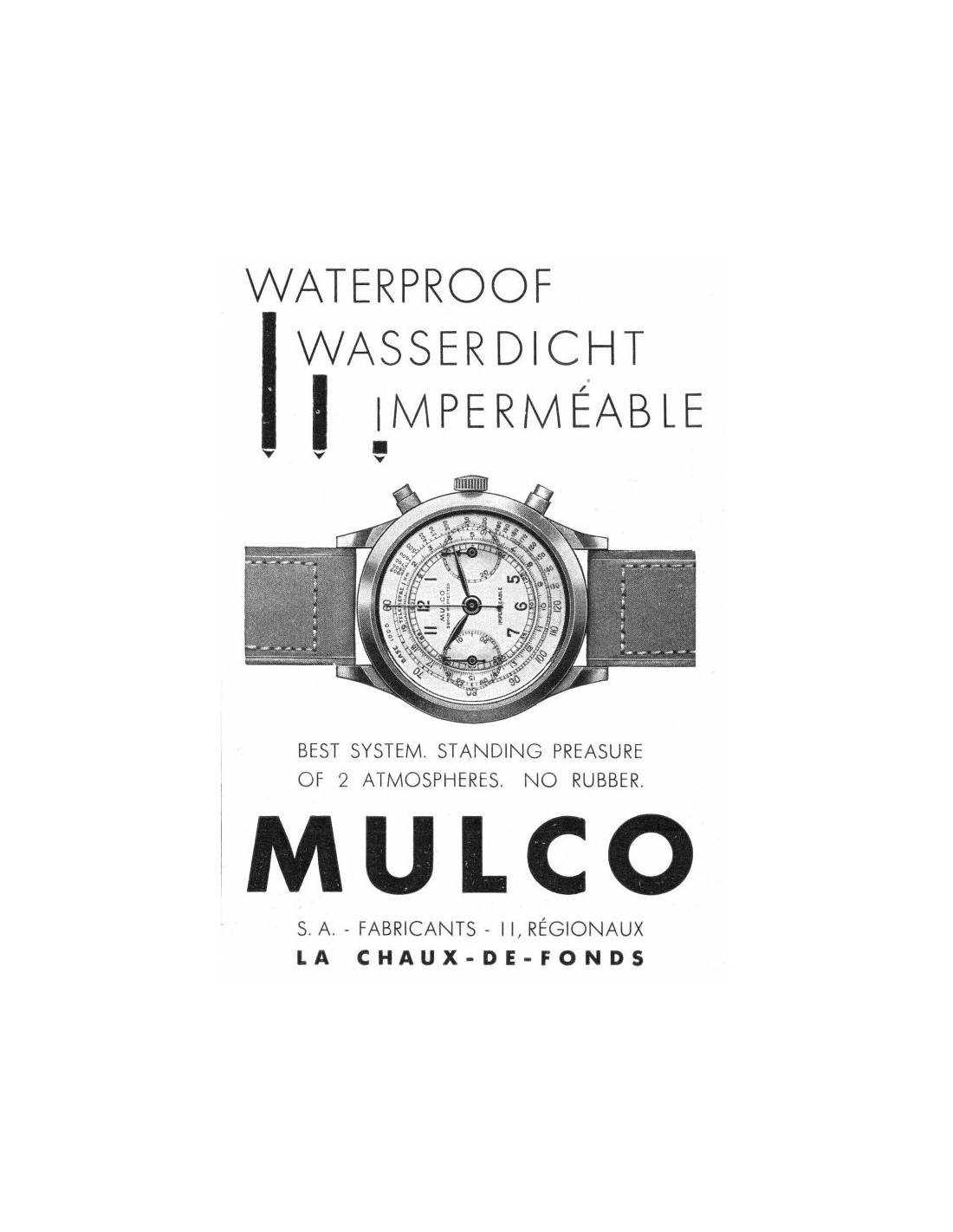
As early as 1933, Mulco launched automatic watches, and in 1938 Mulco became one of the first Swiss manufacturers to launch water-resistant chronographs, using cases manufactured by the Charles-Rodolphe Spillmann company in La Chaux-de-Fonds. The special feature of these cases, patented in 1937 [3], is that the pushers are watertight thanks to a truncated-cone-shaped joint, with no gaskets.

1938

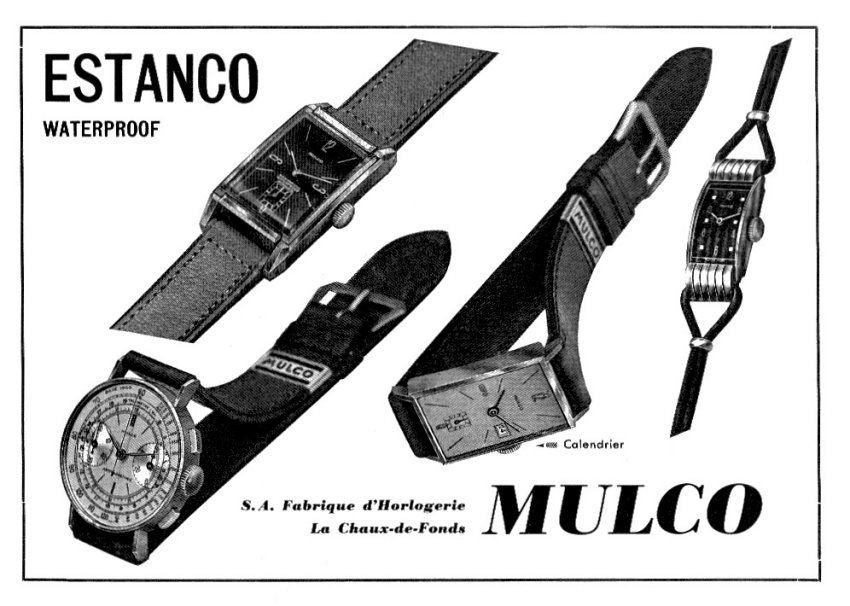
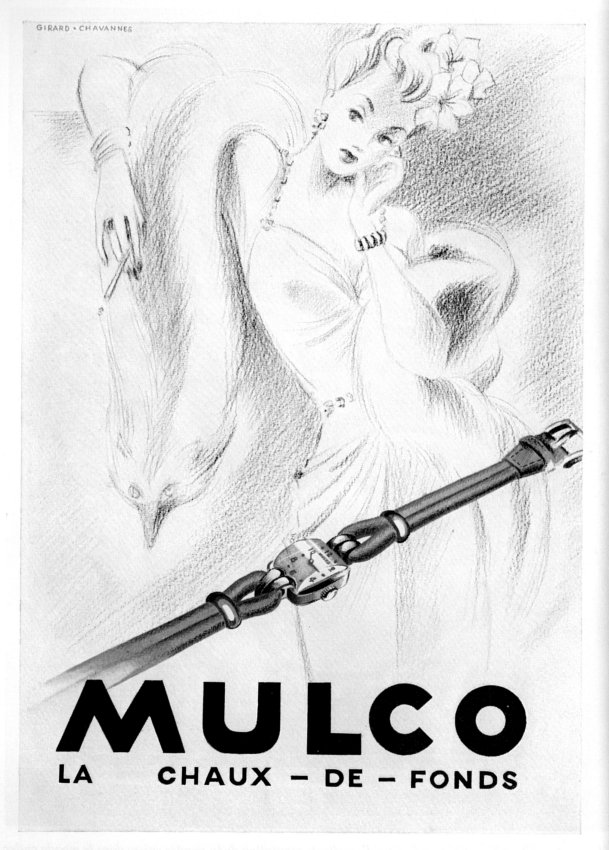
Water-resistant watches became a speciality of the company, which also launched calendar watches and ladies' watches. By 1941, Mulco employed over 80 people and its watches were distributed in 40 countries [4].

1939

1940

1946

1947

At the end of the 1950s, new members of the Muller family join the company: Anny and Anne-Marie Muller.

In the early 1960s, Mulco launches a series of new high-quality models, in particular the datovisor range, and above all the escafandra range, with beautiful diving watches, some with compressor cases.

1964

1961

1962

1964

For unknown reasons, perhaps linked to the early difficulties of the "quartz crisis", the company decided to dissolve in 1975 [5].

The Mulco brands were taken over in 1975 by Henrique Pfeffer in Caracas, Venezuela.

Today, an American company uses the Mulco name for fashion watches: https: //mulco.com/


[1] FOSC 1919

[2] FOSC 1931

[3] Patent CH 201 044

[4] La Fédération Horlogère, 1941, 30, p. 265

[5] FOSC 1975

Notes :

About Time To Tell: Time To Tell has one of the largest private digitized databases on the history of Swiss watchmaking, with over 2.3 TB of data on more than 1,000 Swiss watch manufacturers. This database has been built up over a period of some thirty years, and continues to be fed with around 50 to 100 GB of data every year. The database is made up of old documents, mainly Swiss trade journals, dating from the late 19th to the late 20th century. Most of these documents are not available on the Internet. Historical articles published on the time2tell.com website always cite the sources used.

Time To Tell is a private company, independent of any watch manufacturer.

©Time To Tell, 2025 

Reproduction forbidden without authorization.

Any use of this article by artificial intelligence is strictly forbidden and will be considered an infringement of copyright.
Product Details

Product added to wishlist

Nous utilisons des cookies afin de fournir une expérience utilisateur conviviale. En naviguant sur ce site, vous acceptez la politique d'utilisation des cookies.