The true story of Ed. Kummer and Atlantic watches

The true story of Ed. Kummer and Atlantic watches

Atlantic

Ed. Kummer was a major manufacturer of Roskopf watches and was one of the few factories to be taken over by ASUAG during the creation of the Swiss watch trusts. With the quartz crisis, the company became independent again and took the name Atlantic.

Description

Joël Pynson

May 2025

1. A major watch factory in Bettlach

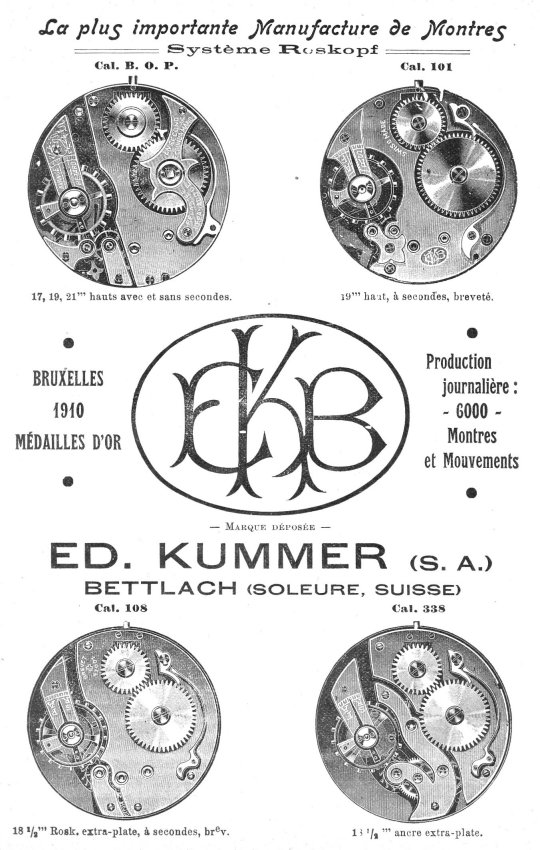
Edouard Kummer first joined forces with Peter Obrecht in Grenchen in 1883 to set up a cabinet-making factory. He separated from Peter Obrecht in 1888 to settle in his native Bettlach. He registered his ébauches factory in Bettlach in 1891 [1], producing watches and calibers for anchors, cylinders and Roskopf. However, official history records the date of foundation as 1888.

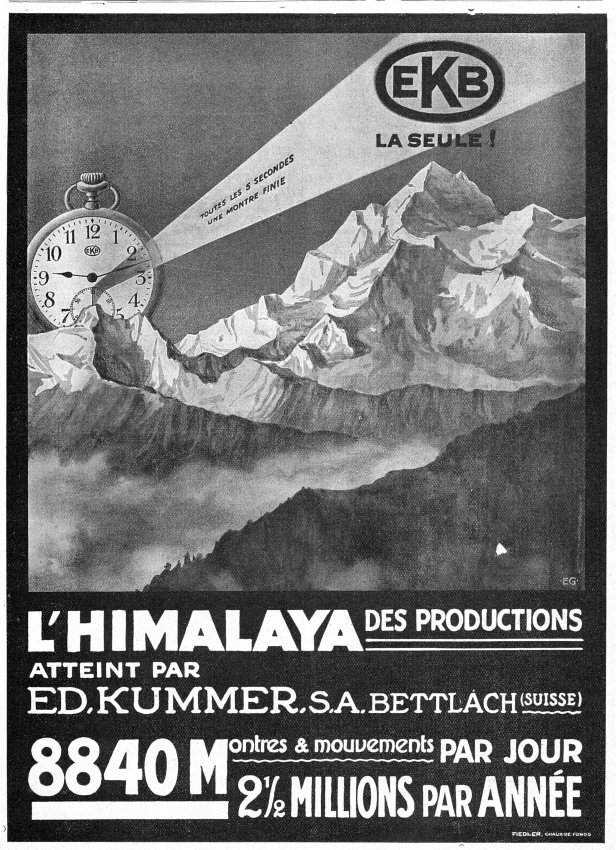
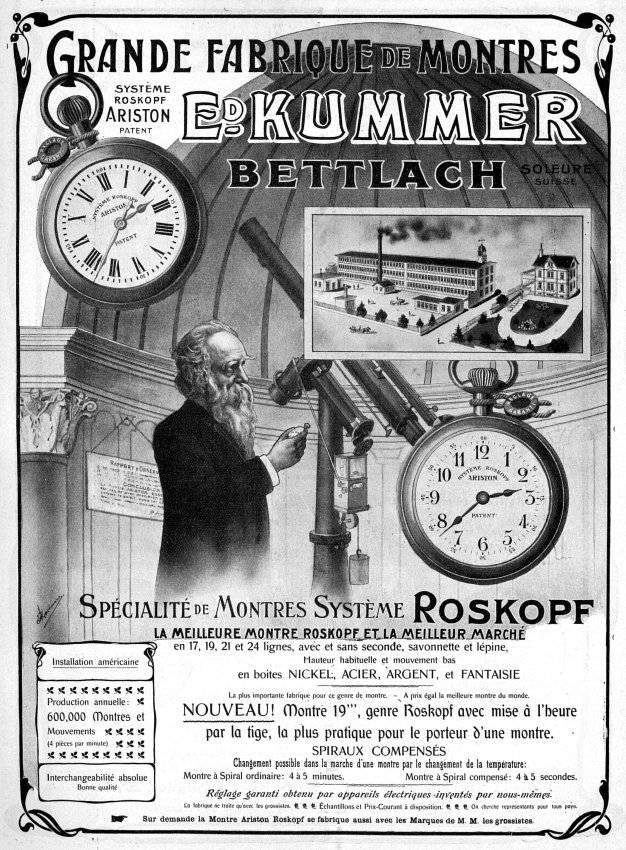
The company grew rapidly, producing 600,000 watches a year by 1904.

1904

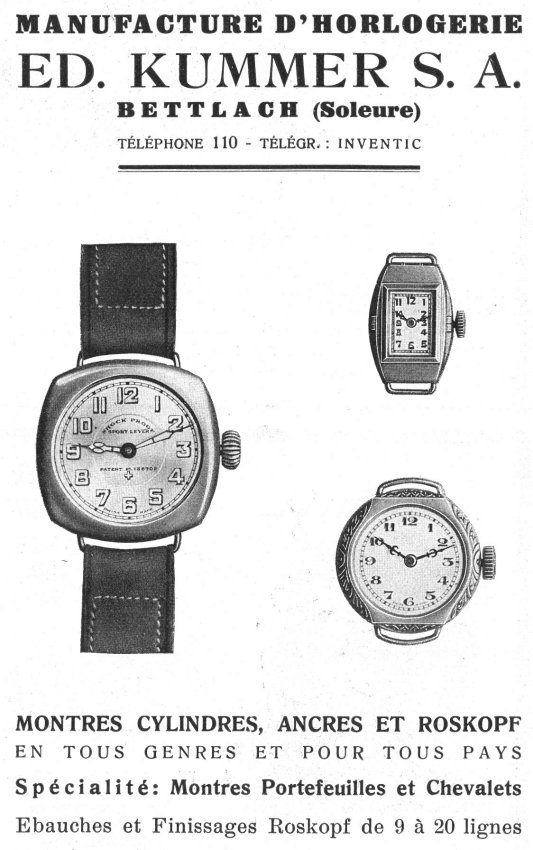
In 1909, Edouard's sons Hans and Joseph Kummer joined the family business [2]. The Roskopf-type watch, popular and inexpensive, became a speciality of the company, with production increasing steadily.

1913

1915

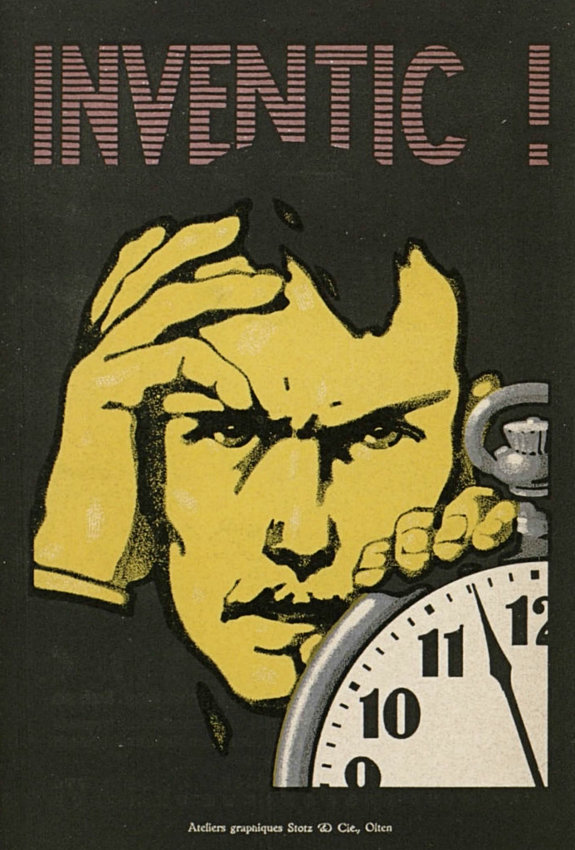
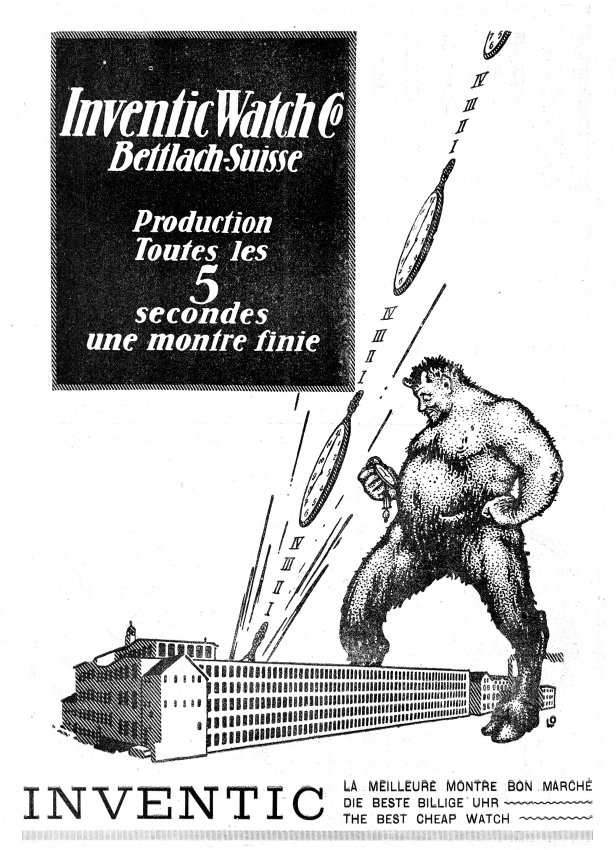
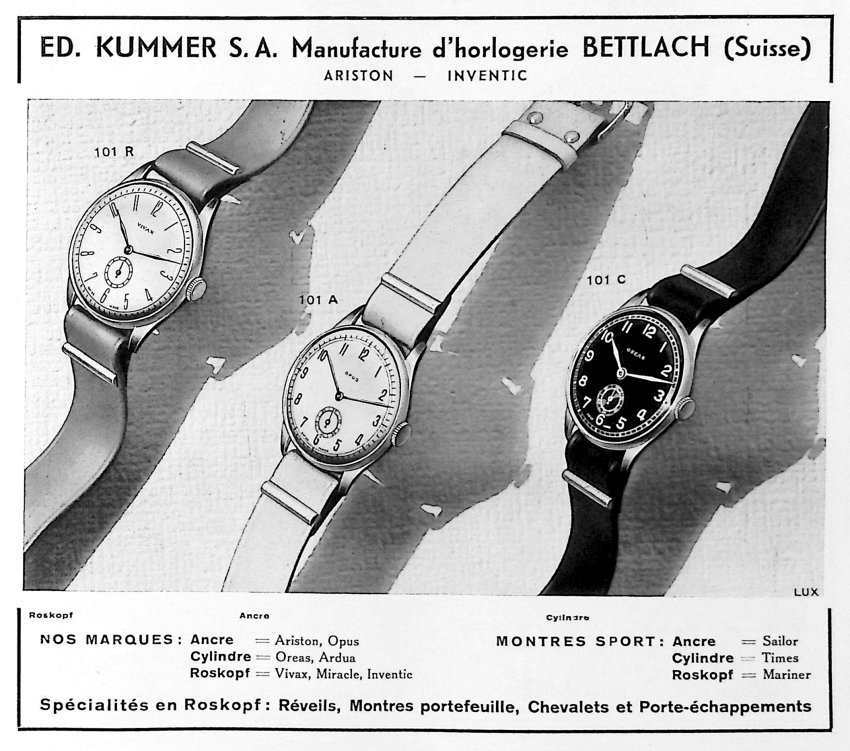
Numerous trademarks were registered, such as Ariston, Urbana or Inventic, and in 1917 the factory became Ed. Kummer SA, Manufacture Ariston Inventic [3].

1916

1917

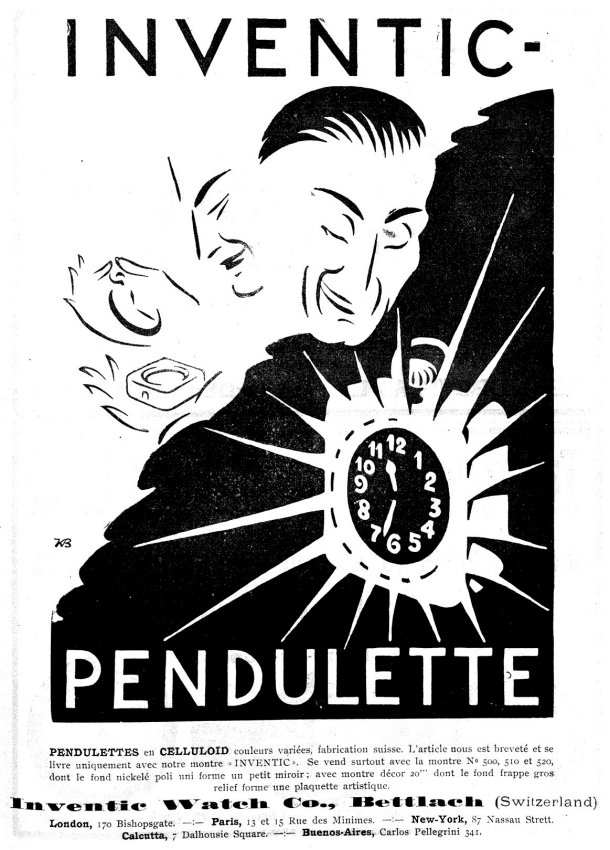
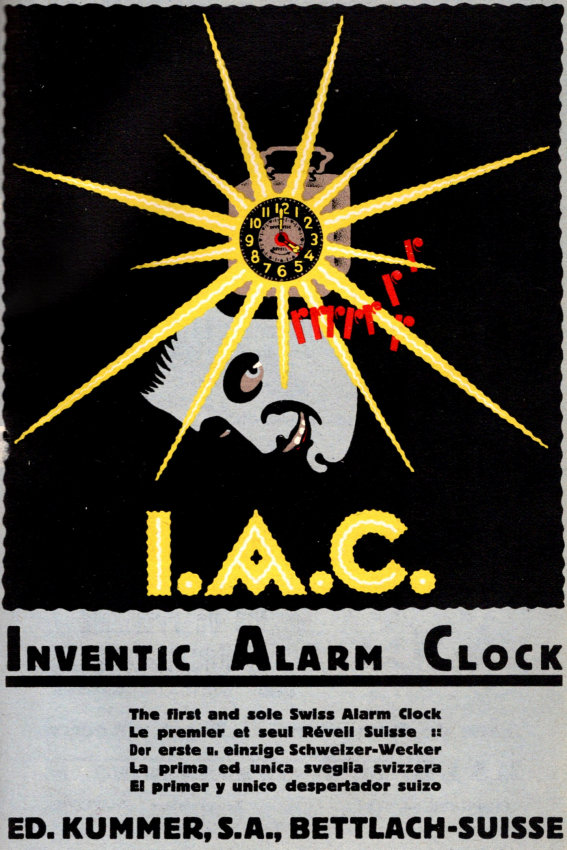
The Inventic watch can be supplied with a celluloid stand that transforms it into a clock, and in 1920 Ed. Kummer began making alarm clocks.

1917

1920

The 1930s were years of economic crisis, and the factory's situation was very difficult.

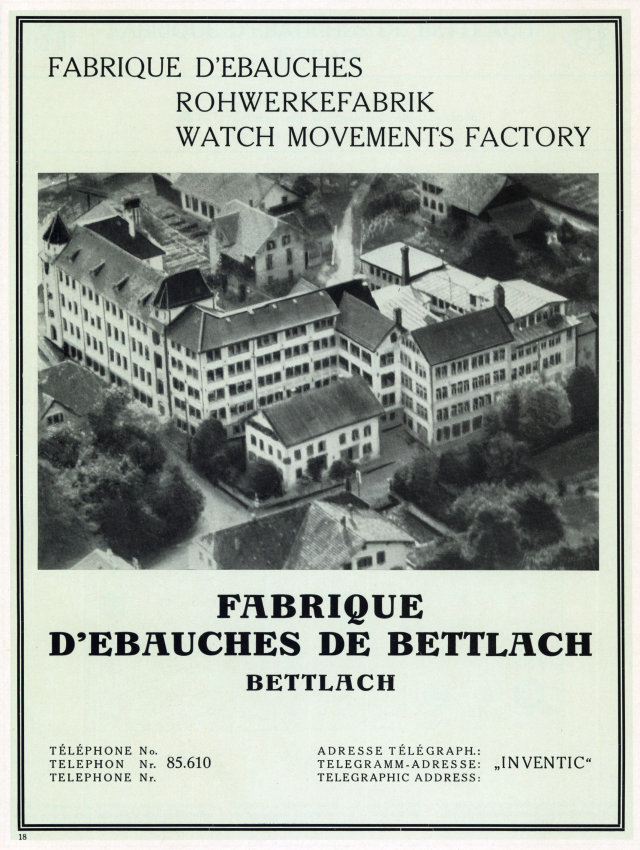
In 1932, the ébauches factory was taken over by Ébauches SA and became the Fabrique d'ébauches de Bettlach. More surprisingly, ASUAG also took over the rest of the company, making Ed. Kummer the third factory to be integrated into ASUAG, along with Eterna and A. Reymond SA (ARSA).

1935

1934

2. Integration into ASUAG

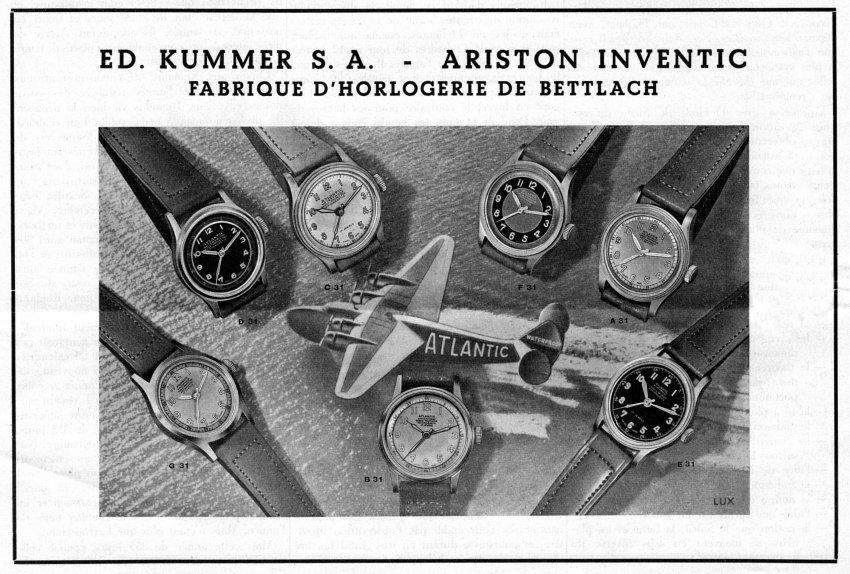
Within ASUAG, Ed. Kummer SA benefits from the impressive range of Ébauches SA calibers, and offers anchor watches under the Ariston and Sailor brands, cylinder watches under the Oreas and Time brands (a brand taken over from Times Watch), and Roskopf watches under the Inventic and Mariner brands. The Atlantic brand was registered in 1941.

1941

1944

Ed. Kummer's watches were simple and of good quality, with a particular focus on water-resistant watches. By the end of the 1940s, the company employed over 700 people [4].

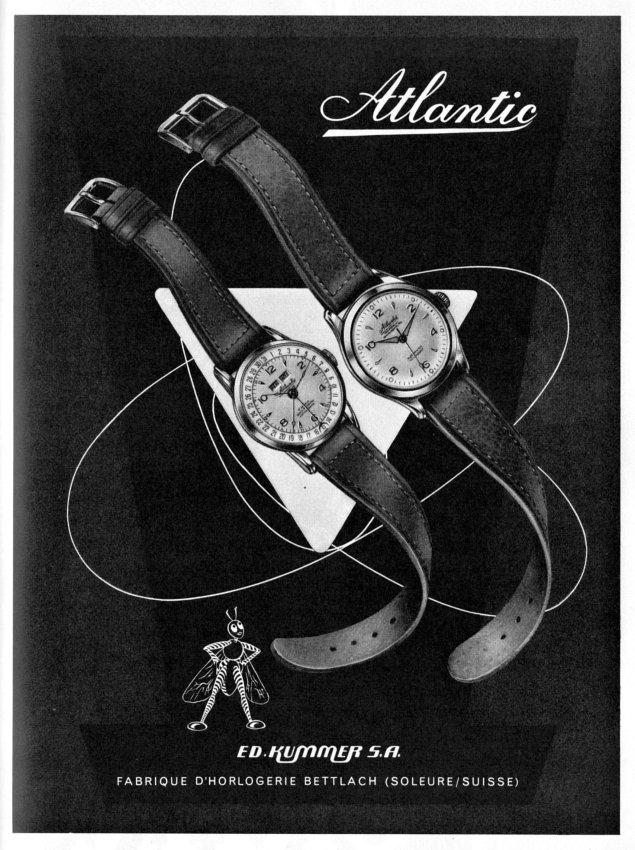
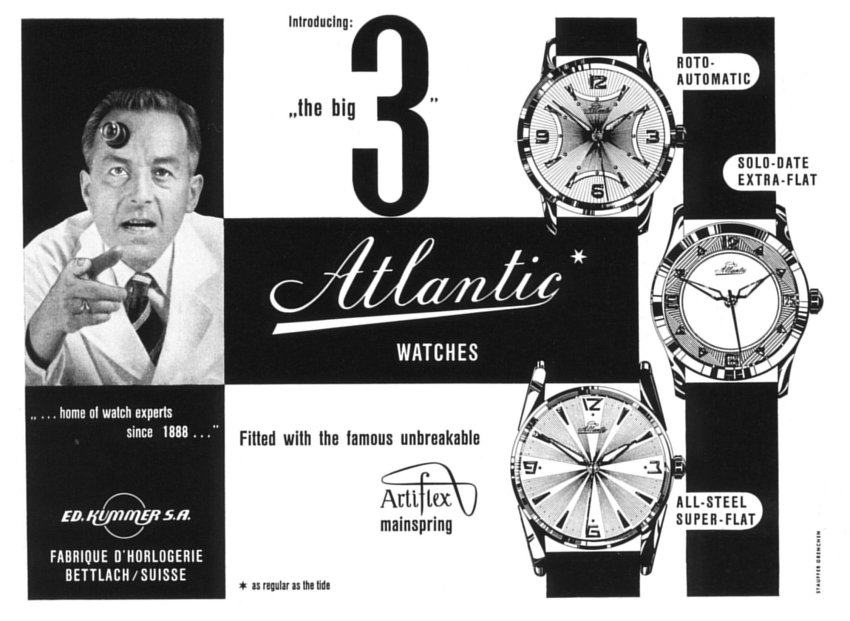
From the 1950s onwards, the Atlantic brand established itself and diversified its ranges: calendar watches in 1952, automatic watches in 1956, and the use of a stainless steel mainspring called Artiflex from 1954.

1952

1956

1958

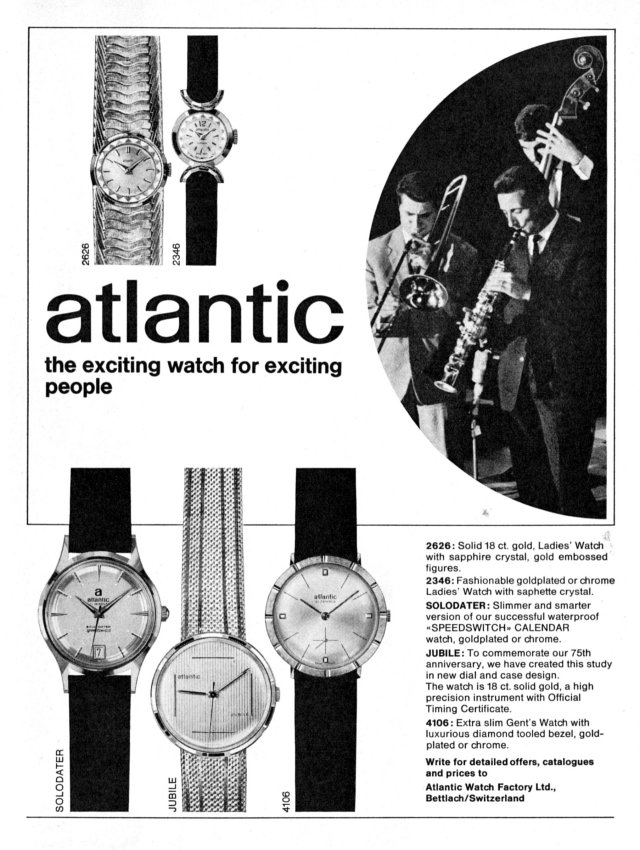
In 1960, Ed. Kummer patented a quick-dating system called Speedswitch: this name appears on the dial of watches fitted with it.

In 1962, the company changed its name to Fabrique d'Horlogerie Atlantic [5].

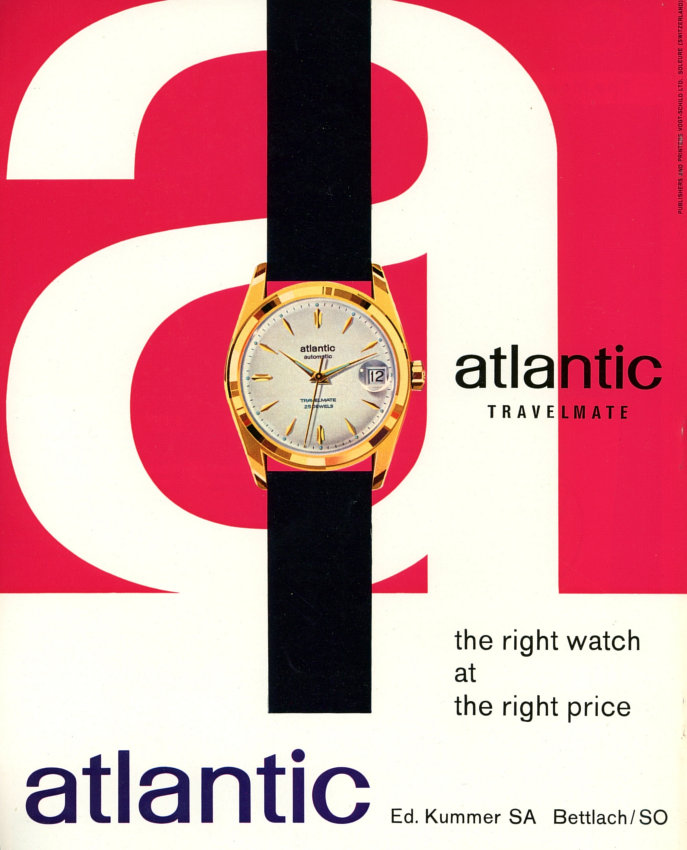
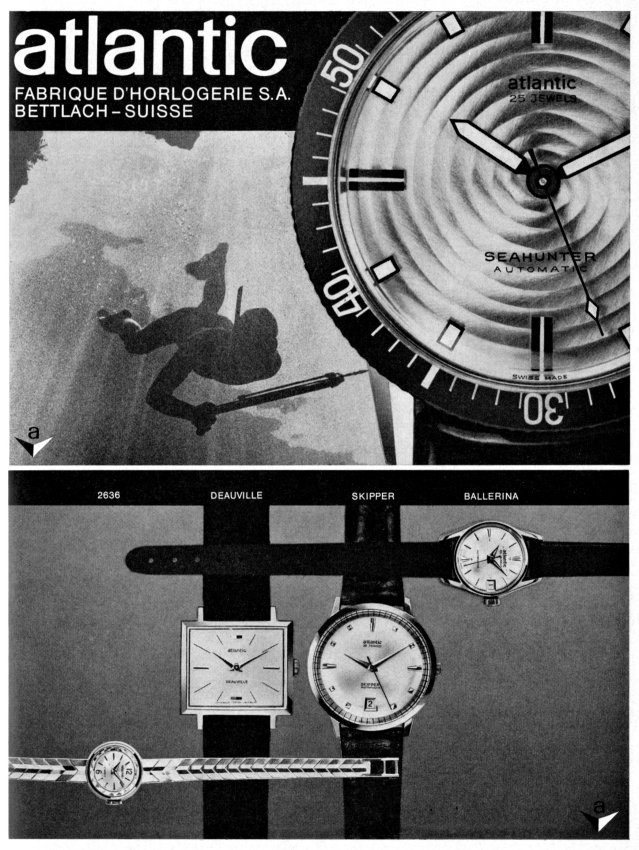
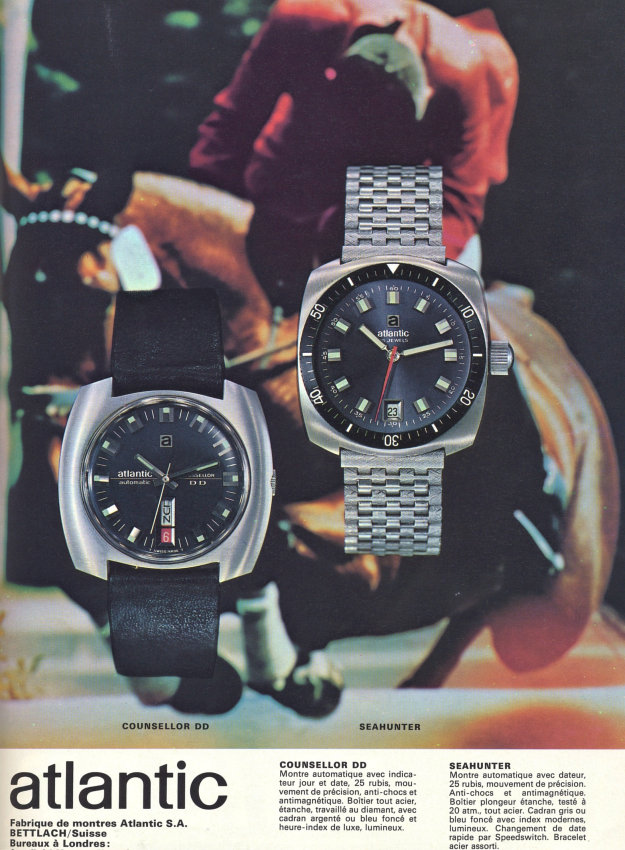
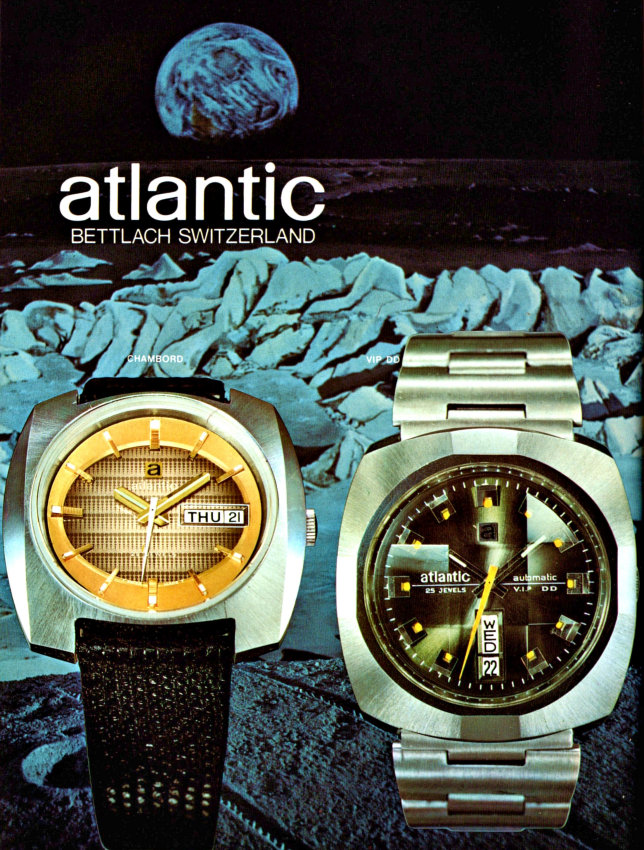
Numerous models are launched:Travelmate, Counsellor, Flat-O-Date, VIP, Jubilé for the company's 75th anniversary, and around 1965 a first diver's watch : Seahunter.

1963

1965

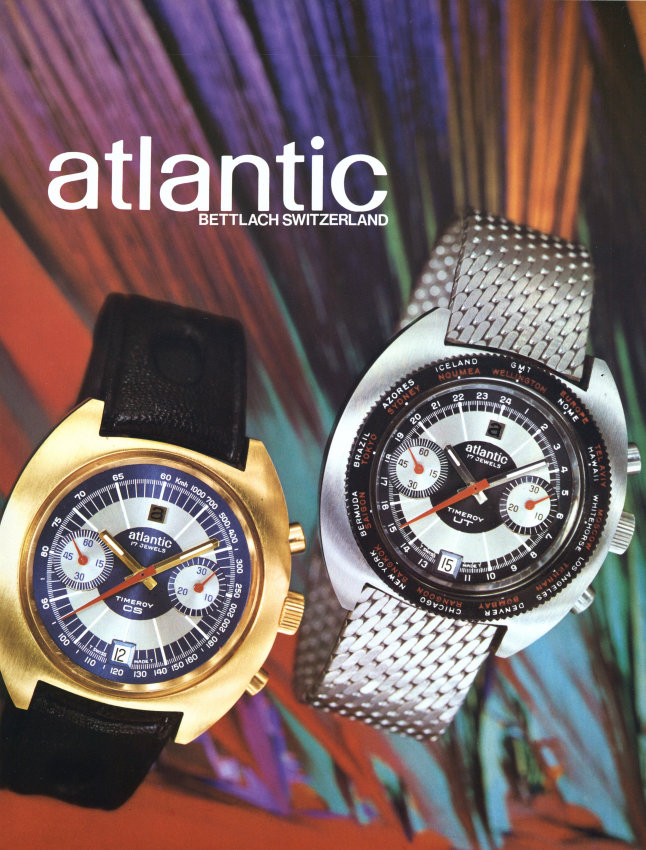
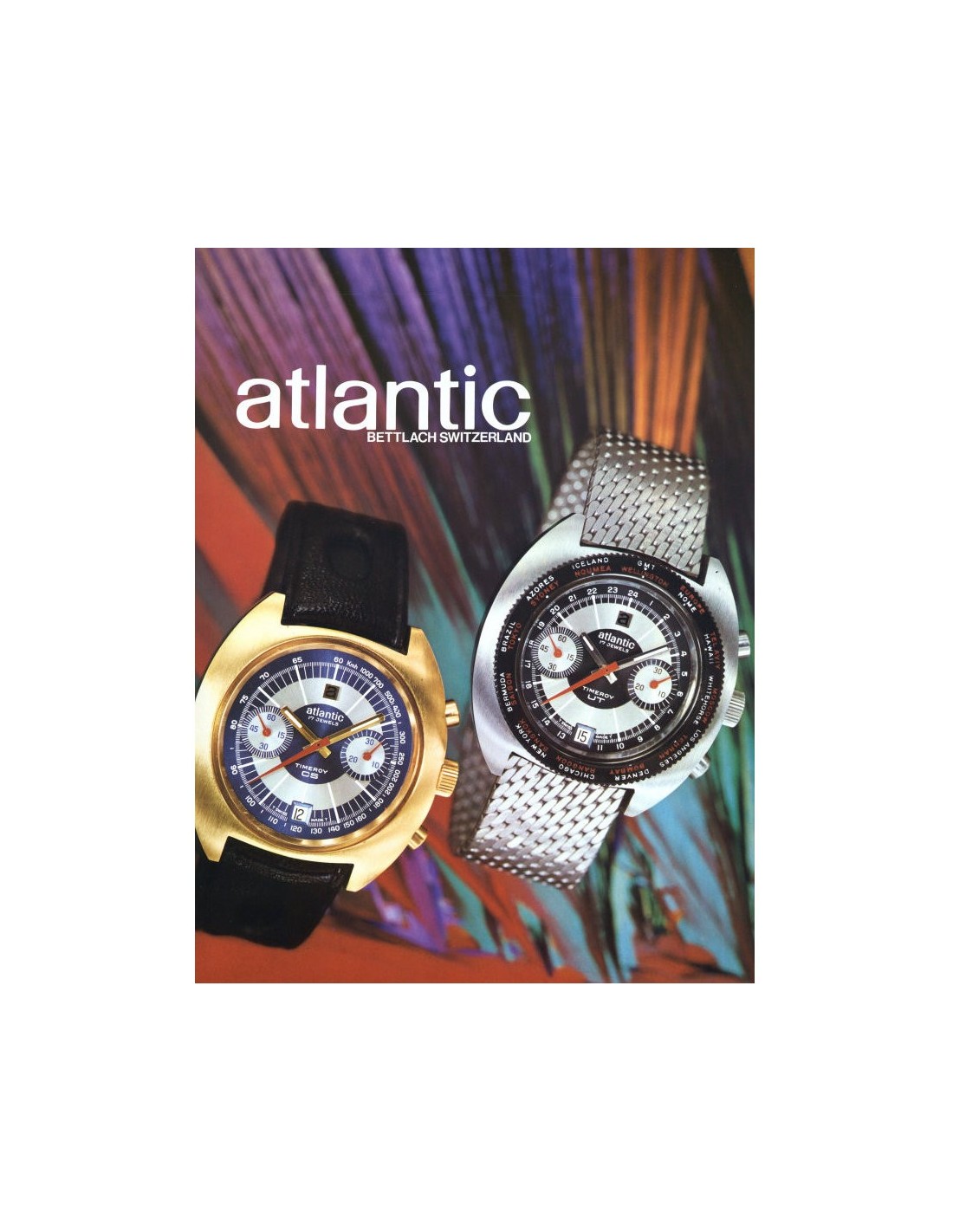
At the end of the 1960s and throughout the 1970s, Atlantic launched an impressive number of new models: the Ben line in 1967, updating of the Counselor, Travelmate and Seahunter ranges, Timeroy chronographs in 1970, and so on.

1969

1970

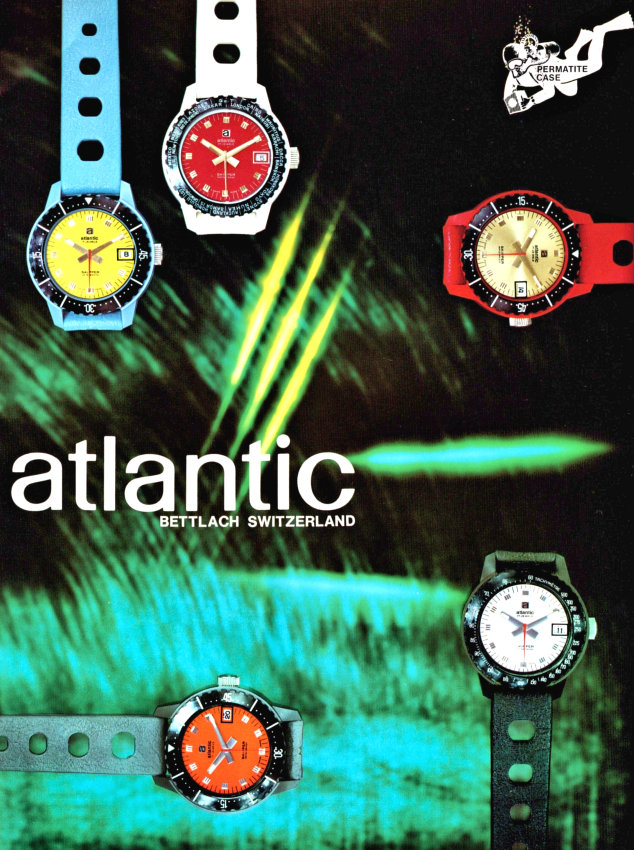
In 1969, Atlantic joined the Time Center group, which included Felca & Titoni, Fortis-Eloga and Nivada [6]. Together, they produced almost 1.5 million watches a year. Production was rationalized, but each company remained independent. This probably explains why Atlantic launched plastic diving watches in 1970, similar to the Fortis-Eloga Flipper models.

1970

1973

1977

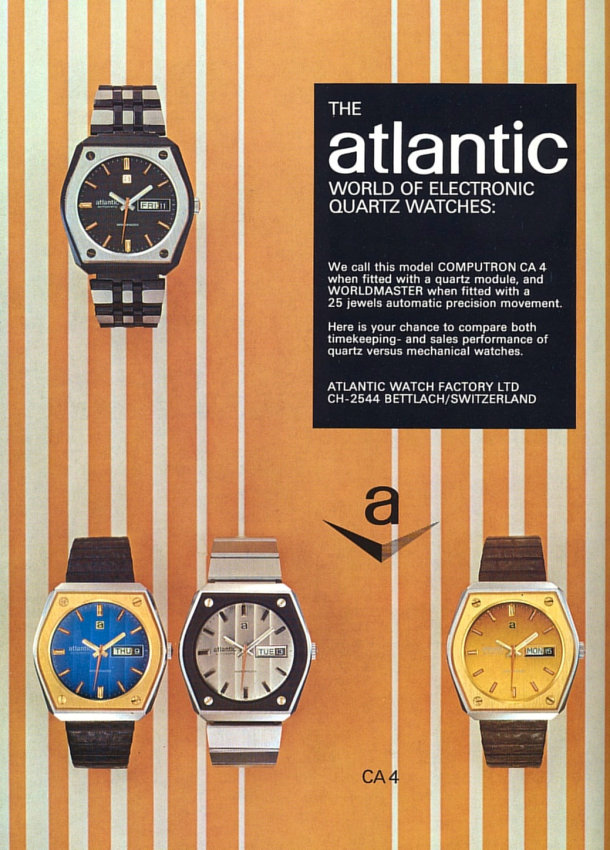
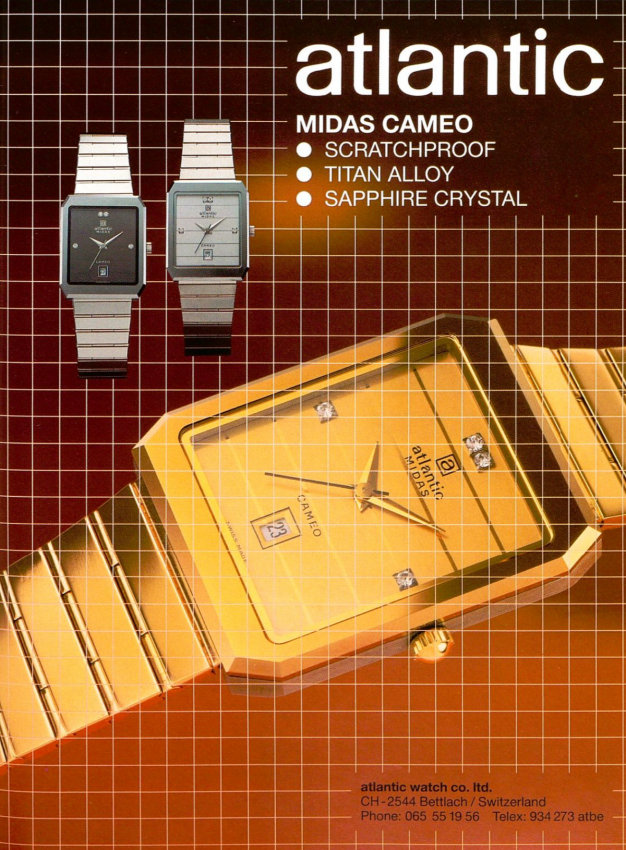
The first Atlantic quartz watches were launched rather late, in 1977, but in the late 1970s and early 1980s, ASUAG was in great difficulty and sold off several of its companies.

This was the case with Atlantic, taken over in 1984 by its director, Heinz Pauli, under the name Compagnie des Montres Atlantic [7].

3. Atlantic Watch Production

Heinz Pauli relaunches the company with a range of rather luxurious quartz watches, but by 1988 the company is in difficulty.

1986

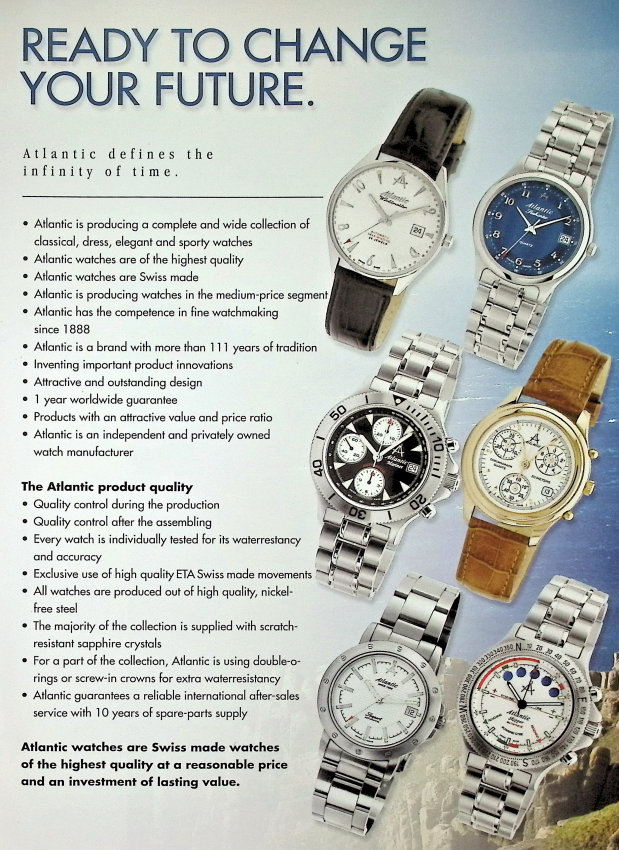
In 1989, Compagnie des Montres Atlantic was bought out and became Atlantic Watch Production [8]. In 1992, the head office was transferred to Zurich.

1999

A succession of managers followed, and the company was gradually relaunched. In 2000, the head office was transferred to Granges.

The company is still active today: https://atlanticwatches.ch/


[1] FOSC 1891

[2] FOSC 1909

[3] FOSC 1917

[4] Journal Suisse d'Horlogerie, 1963, 6, p. 860

[5] FOSC 1962

[6] Journal Suisse d'Horlogerie, 1969, 6, p. 646

[7] FOSC 1984

[8] FOSC 1989. It seems that the company that bought Atlantic that year was UVB Ditribution in Zurich, a company founded in 1957 with subsidiaries in Eastern Europe. This company went bankrupt in 1996.

Notes :

About Time To Tell: Time To Tell has one of the largest private digitized databases on the history of Swiss watchmaking, with over 2.3 TB of data on more than 1,000 Swiss watch manufacturers. This database has been built up over a period of some thirty years, and continues to be fed with around 50 to 100 GB of data every year. The database is made up of old documents, mainly Swiss trade journals, dating from the late 19th to the late 20th century. Most of these documents are not available on the Internet. Historical articles published on the time2tell.com website always cite the sources used.

Time To Tell is a private company, independent of any watch manufacturer.

©Time To Tell, 2025 

Reproduction forbidden without authorization.

Any use of this article by artificial intelligence is strictly forbidden and will be considered an infringement of copyright.
Product Details

Product added to wishlist

Nous utilisons des cookies afin de fournir une expérience utilisateur conviviale. En naviguant sur ce site, vous acceptez la politique d'utilisation des cookies.