The true story of Liga watches

The true story of Liga watches

Liga

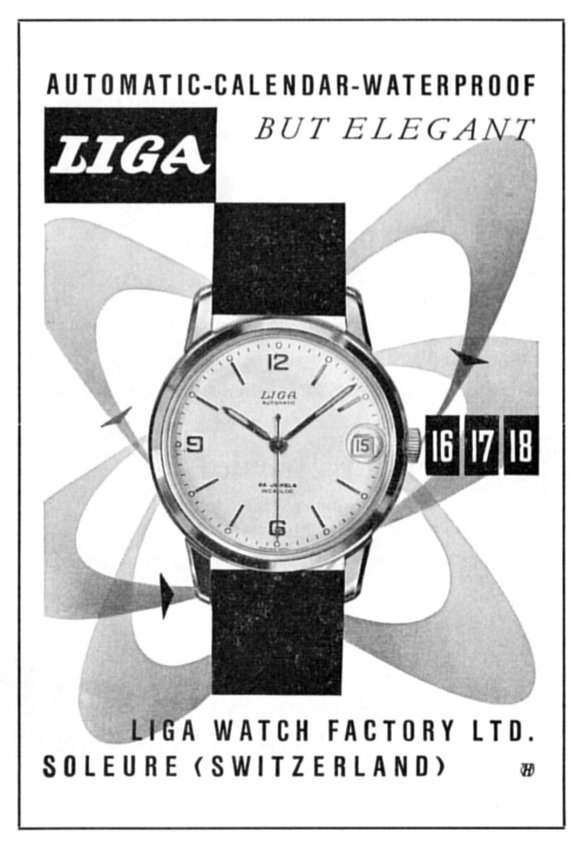
This Solothurn-based manufacturer made anchor watches, Roskopf watches and counters. It was taken over by Ermano in 1971.

Description

Joël Pynson

August 2025

1. From Grenchen to Solothurn

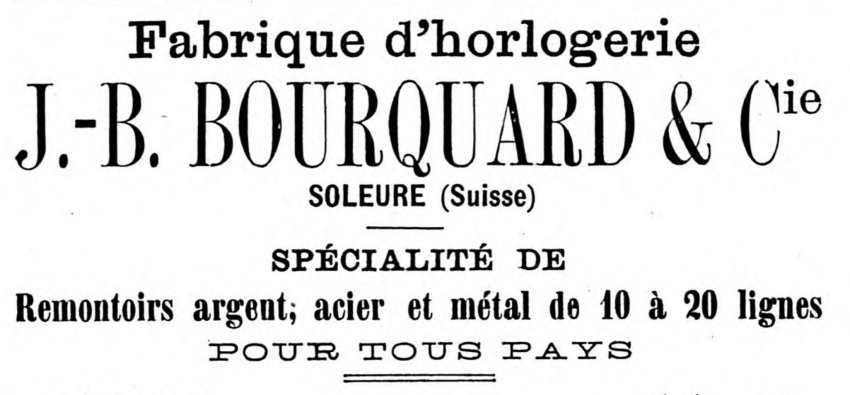
Jean-Baptiste Bourquard established his watchmaking factory in Grenchen in 1887 [1]. In 1895, he moved to Solothurn to join forces with Adolf Schläfli under the name J.B. Bourquard & Cie [2].

1896

In 1902, Jean-Baptiste Bourquard remained alone in the company.

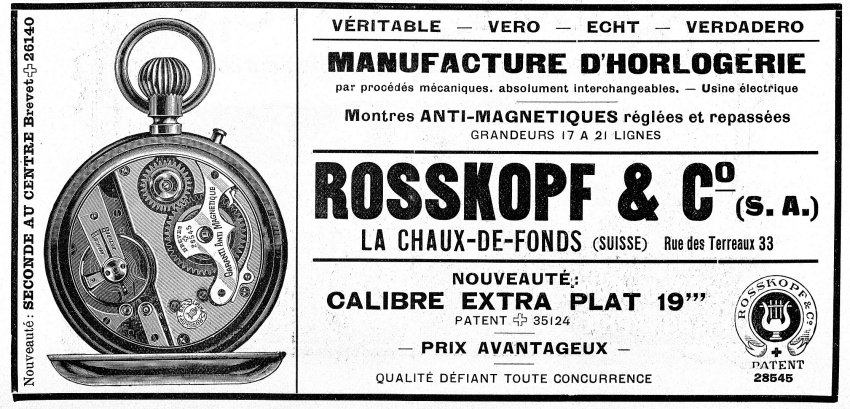
The factory produced anchor watches, but was also interested in Roskopf watches, which were in great demand at the beginning of the 20th century due to their very low cost. In 1914, this led to the takeover of the Roskopf factory. Rosskopf & Cie, in La Chaux-de-Fonds, one of the many factories created with a substitute for the name of the famous Georges-Frédéric Roskopf.

Rosskopf & Cie had been created in 1900 by Auguste Ducommun-Degen, associated with Henri Rosskopf from Berlin, whose name they used. [3].

1911

1920

2. Manufacture de Montres Liga

In 1920, Jean-Baptiste Bourquard's factory was transformed into a limited company and renamed Manufacture de Montres Liga [4]. The Liga trademark is registered the following year.

1922

After Jean-Baptiste Bourquard's death in 1924, the company was managed by Pierre Gunzinger, and in the crisis years of the 1920s-1930s, he tried his hand at producing jewelry watches.

1927

The company then stopped making its own blanks, and underwent major changes after the 2nd World War.

3. Fabrique d’Horlogerie Liga

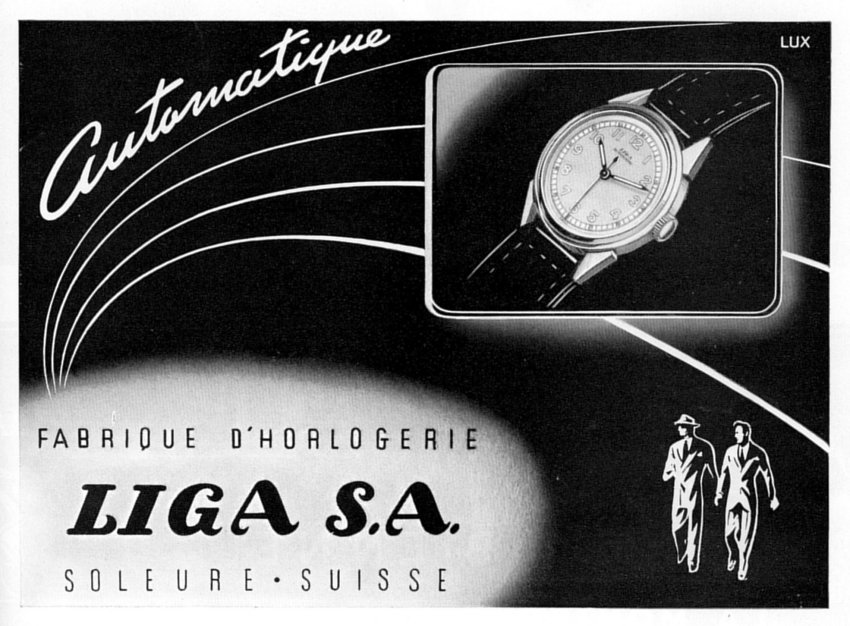
In 1949, Liga merged with Herold watches, another Solothurn-based factory then run by James Jabas [5]. The new company is called Fabrique d’Horlogerie Liga, with Board members James and Marcelin Jabas, Max Bossart and Walter Bader.

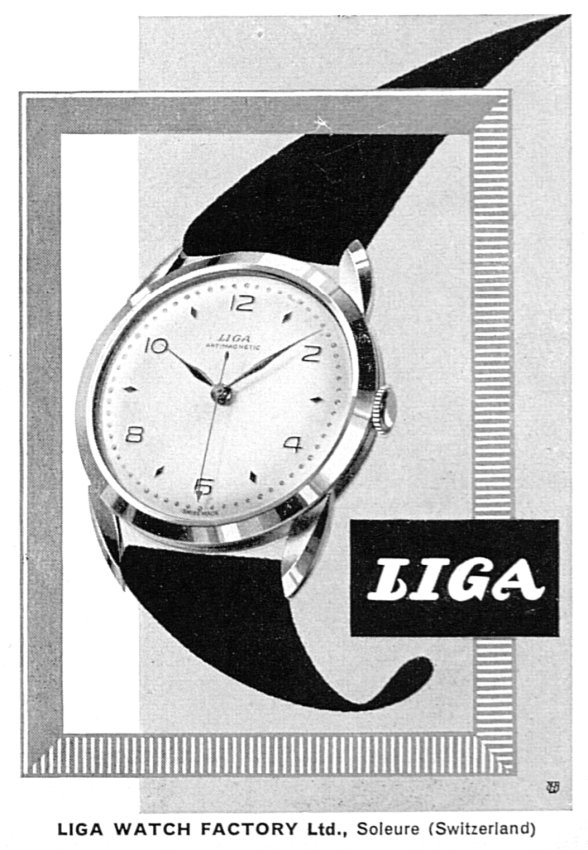
The factory then became very active, with classic, anchor and Roskopf watch ranges.

1950

1950

1951

1955

1960

1956

1966

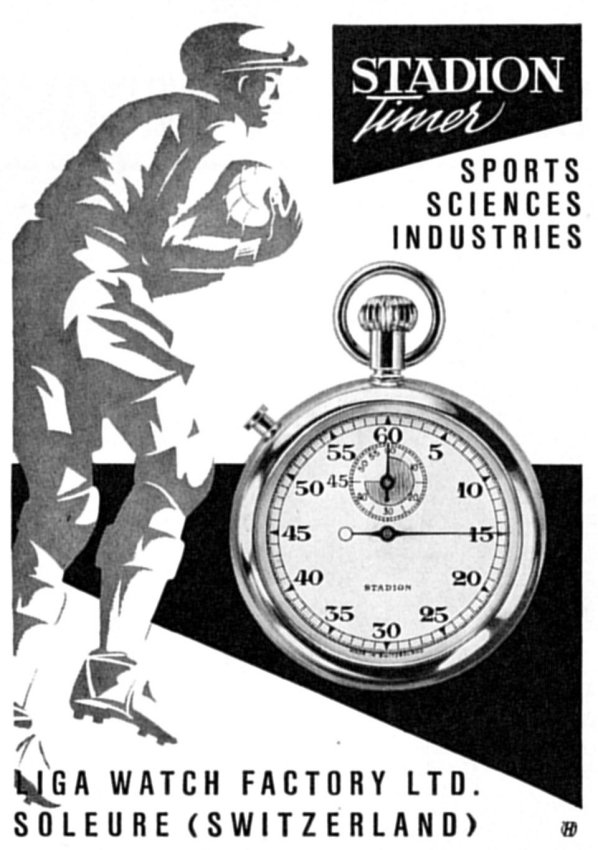
Liga also manufactures counters, marketed under the brand name Stadion.

1966

Finally, in 1971, Liga was taken over by the Ermano group from Solothurn, which already owned the company. Ilona, Tegra and above all the famous Cortébert |6].

As Ermano is mainly interested in the timer business, the Liga brand will no longer be used.


[1] FOSC 1887

[2] FOSC 1895

[3] FOSC 1900 et 1914

[4] FOSC 1920

[5] FOSC 1949

[6] Journal Suisse d’Horlogerie, 1972, 5, p. 468

The FOSC (Feuille Officielle Suisse du Commerce) is available on E-periodica

Notes :

Concerning Time To Tell : Time To Tell has one of the largest private digitized databases on the history of Swiss watchmaking, with over 2.3 TB of data on more than 1,000 Swiss watch manufacturers. This database has been built up over a period of some thirty years, and continues to be fed with around 50 to 100 GB of data every year. The database is made up of old documents, mostly Swiss trade magazines, dating from the late 19th to the late 20th century. Most of these documents are not available on the Internet. Historical articles published on time2tell.com always cite the sources used.

Time To Tell is a privately-owned company, independent of any watch manufacturer.

©Time To Tell, 2025

Reproduction forbidden without permission.

Any use of this article by an artificial intelligence is strictly forbidden and will be considered an infringement of copyright.

Product Details

Product added to wishlist

Nous utilisons des cookies afin de fournir une expérience utilisateur conviviale. En naviguant sur ce site, vous acceptez la politique d'utilisation des cookies.