• New
The True Story of the Barbezat-Bôle Company

The True Story of the Barbezat-Bôle Company

Barbezat-Bôle

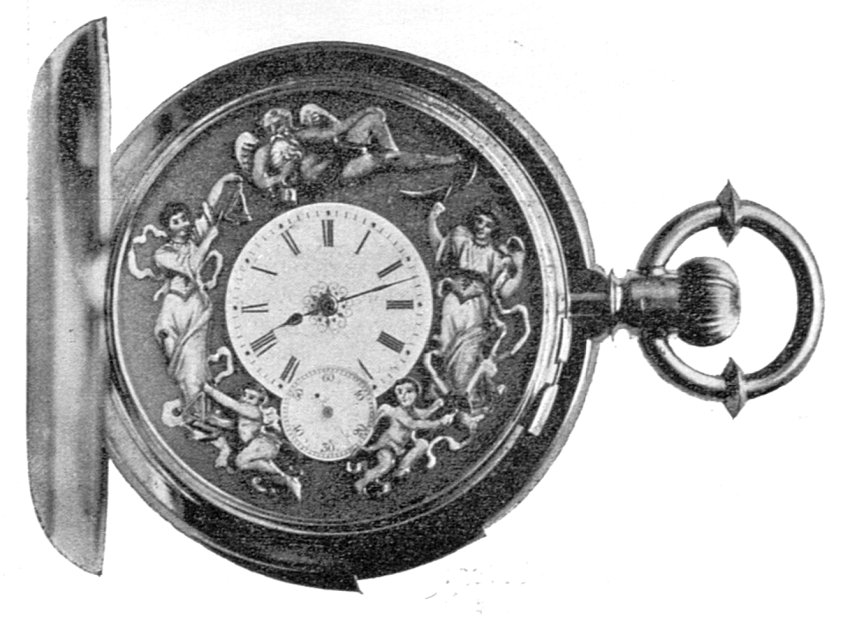
The Barbezat-Bôle company in Le Locle—not to be confused with Barbezat-Baillot, the founder of the Le Phare factory—specialized in fine pocket watches featuring complications and automatons. It acquired the Paul Buhré company in 1928.
Description

Joël Pynson

January 2026

Updated: April 2026

1. Founded in Le Locle

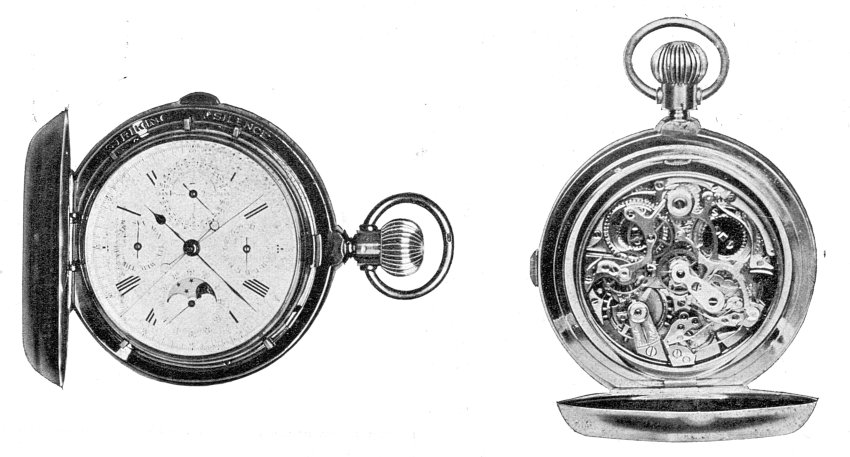
Henri-Ernest Barbezat-Bôle established his watchmaking factory in Le Locle around 1875 [1]. He specialized in “refined and complicated” timepieces: watches with chronographs, minute repeaters, perpetual calendars, automatons, chronometers, and so on.

The movements came from the Vallée de Joux: in 1896, for example, Barbezat-Bôle acquired the patent from Constant Piguet of Le Sentier [2] to produce grande sonnerie watches with four hammers. He thus became one of the first manufacturers to offer Westminster chimes, reproducing the chime of the famous clock in London.

1903

1903

Around 1900, Henri-Ernest’s son, Paul-Émile Barbezat, joined the company.

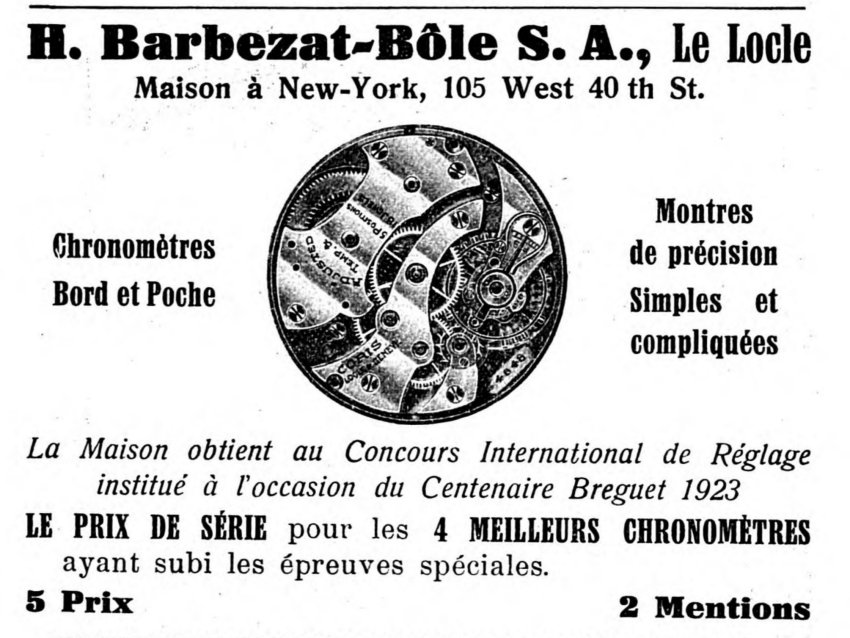
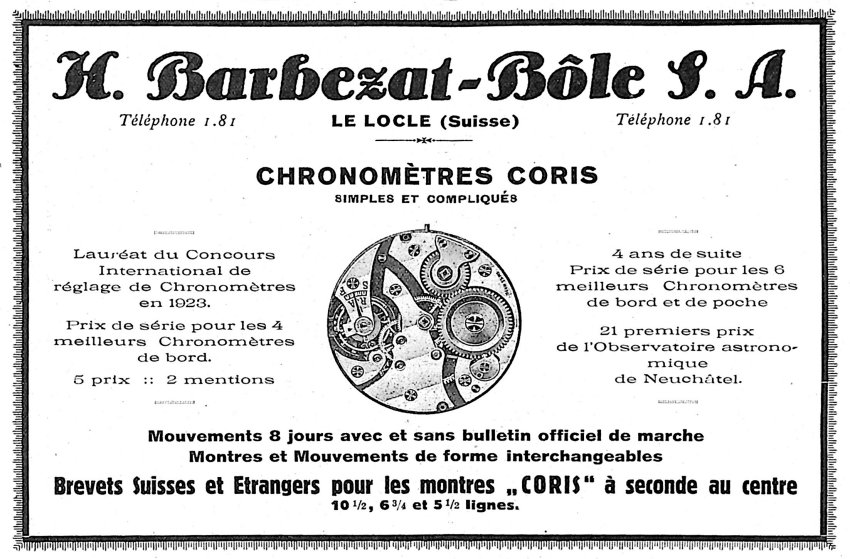
In 1919, the company H. Barbezat-Bôle became a public limited company (SA), led by Paul-Émile Barbezat and Charles-Alcide Humbert-Sarbach [3]. The production of exceptional watches continued, as did that of chronometers, which won numerous awards at the precision competitions held by the Neuchâtel Observatory.

The Coris trademark was registered in 1920.

1924

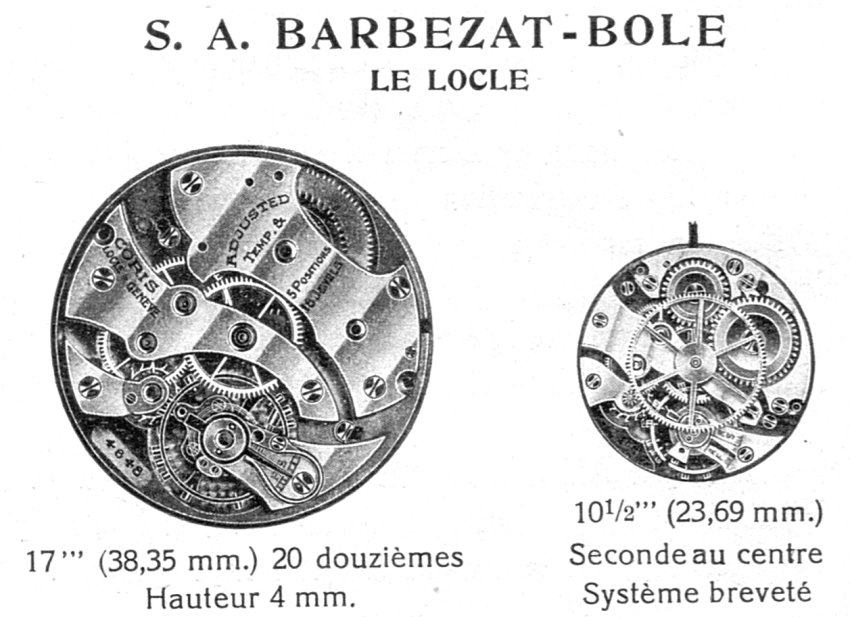
1928, The 17-line caliber is a Ulysse Nardin movement

1928

2. Barbezat-Bôle and Paul Buhré

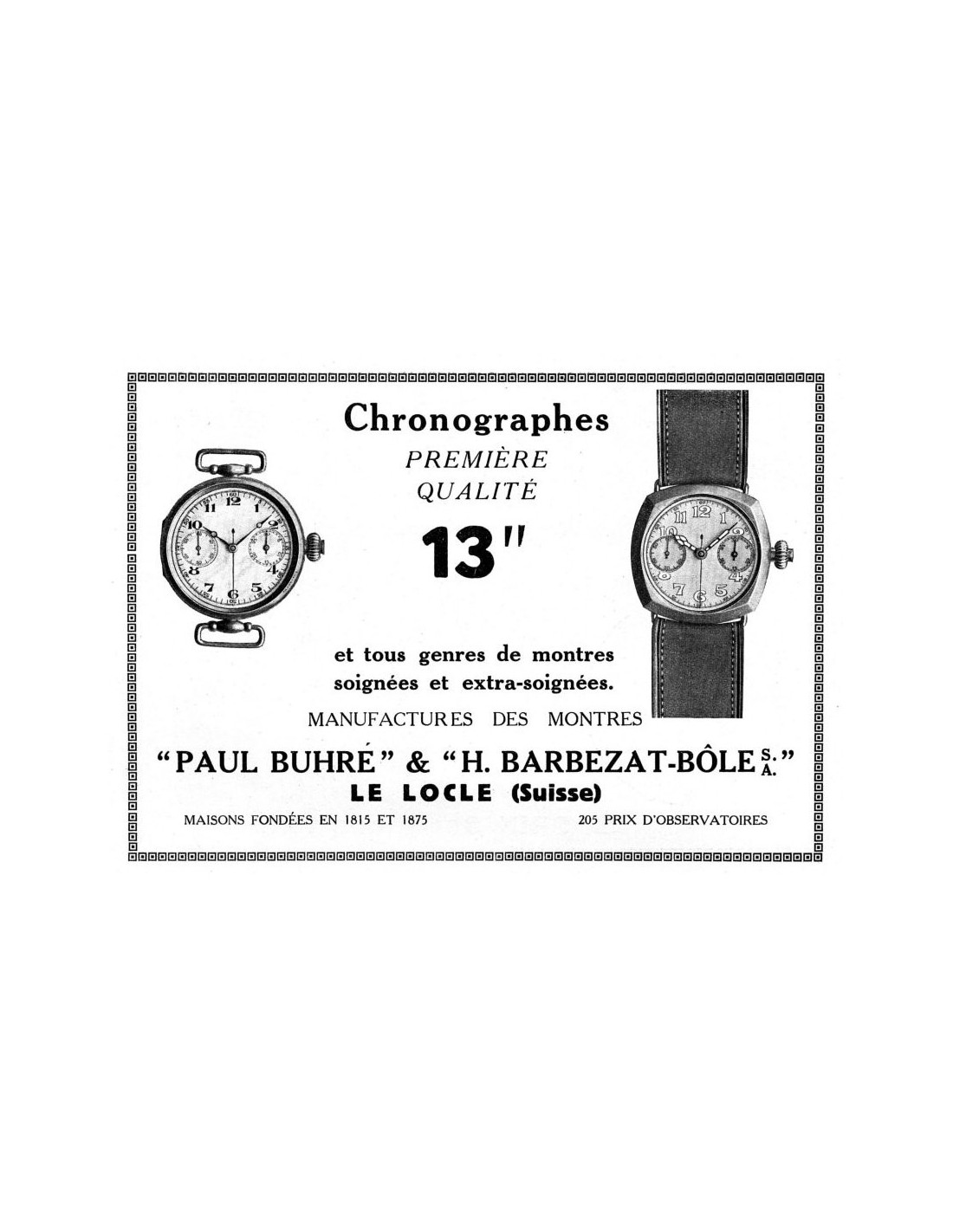
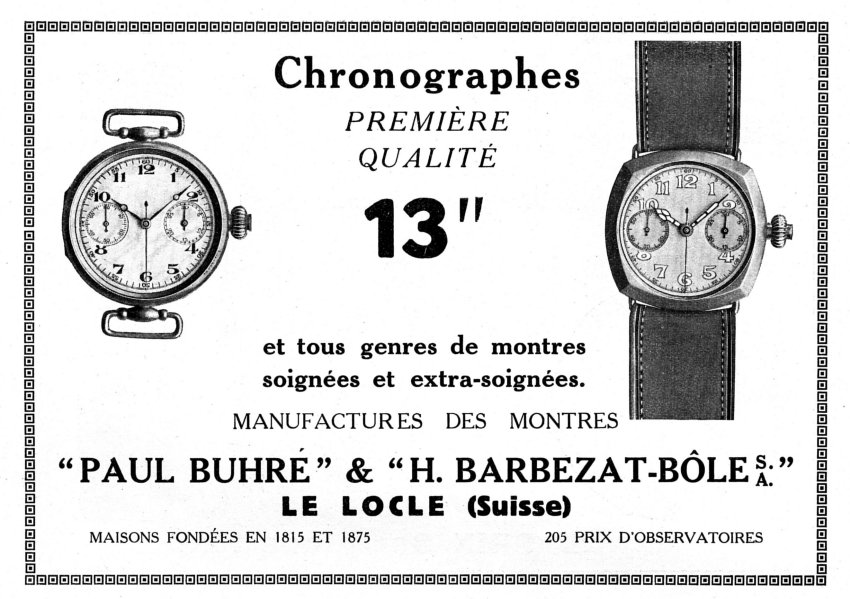
In 1928, Barbezat-Bôle took over the famous Paul Buhré company, which had gone bankrupt [4], and became Manufactures des montres Paul Buhré et H. Barbezat-Bôle SA.

1929

However, only the Paul Buhré brand appears on the dials, and in 1945 the company changed its name to become the Paul Buhré Watch Manufacture [5].


[1] Jean-Paul Bourdin, Fabricants et horlogers loclois, Éditions G d’encre, 2012, p. 35

[2] Brevet CH 11 948

[3] FOSC 1920

[4] FOSC 1928

[5] FOSC 1945

The FOSC (Swiss Official Gazette of Commerce) is available at E-periodica

Notes:

About Time To Tell: Time To Tell has one of the largest private digitized databases on the history of Swiss watchmaking, with over 2.5 TB of data on more than 1,000 Swiss watch manufacturers. This database has been built up over a period of around 30 years and continues to be updated with around 50 to 100 GB of data each year. The database consists of historical documents, mainly Swiss trade journals, dating from the late 19th century to the late 20th century. Most of these documents are not available on the Internet. The historical articles published on the time2tell.com website always cite the sources used.

Time To Tell is a private company, independent of any watch manufacturer.

©Time To Tell, 2026

Reproduction without permission is prohibited.

Any use of this article by artificial intelligence is strictly prohibited and will be considered a violation of copyright.

Product Details

Product added to wishlist

Nous utilisons des cookies afin de fournir une expérience utilisateur conviviale. En naviguant sur ce site, vous acceptez la politique d'utilisation des cookies.