- Lots 7 et 129

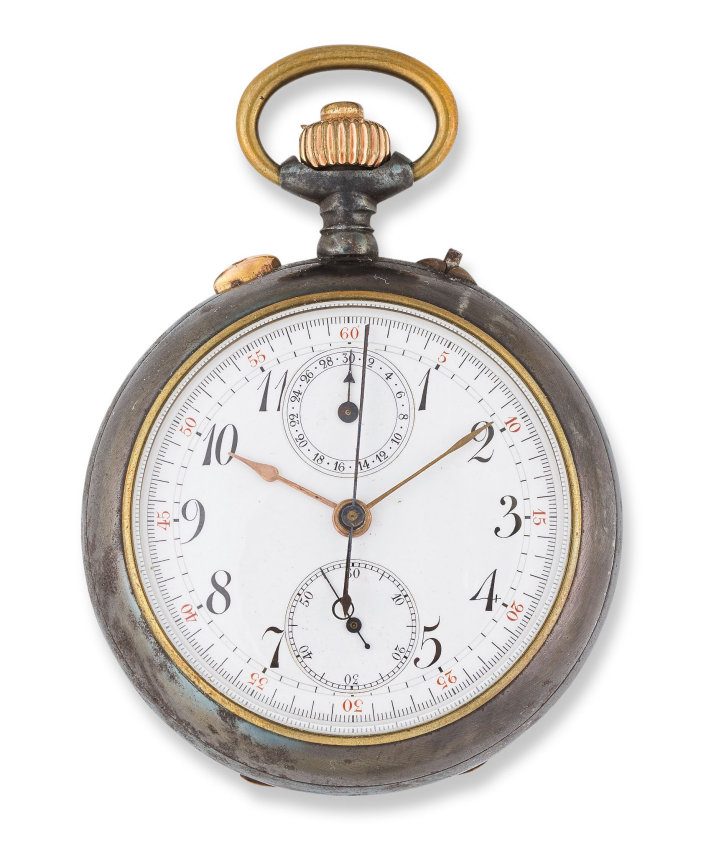
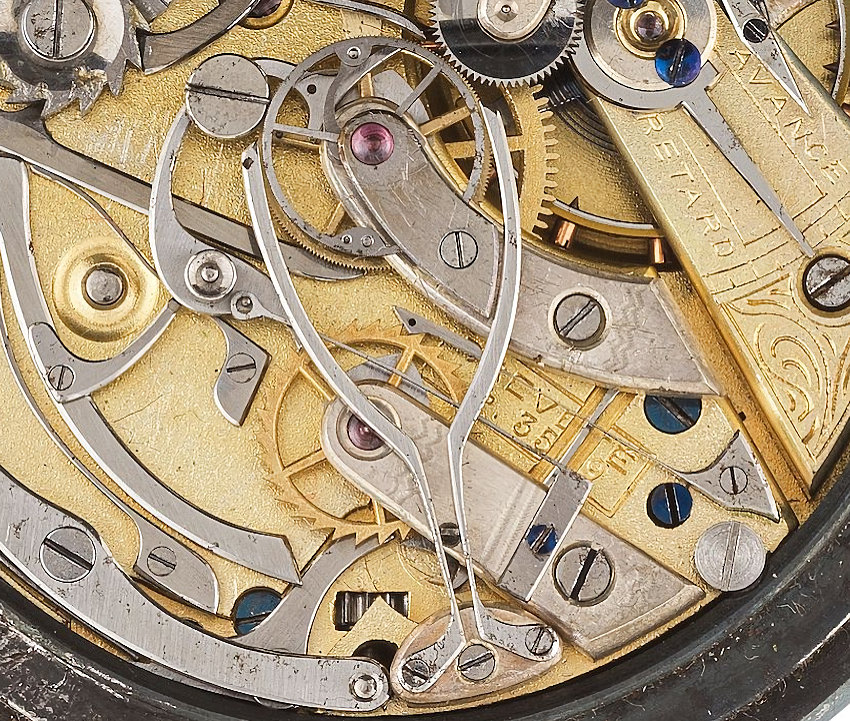
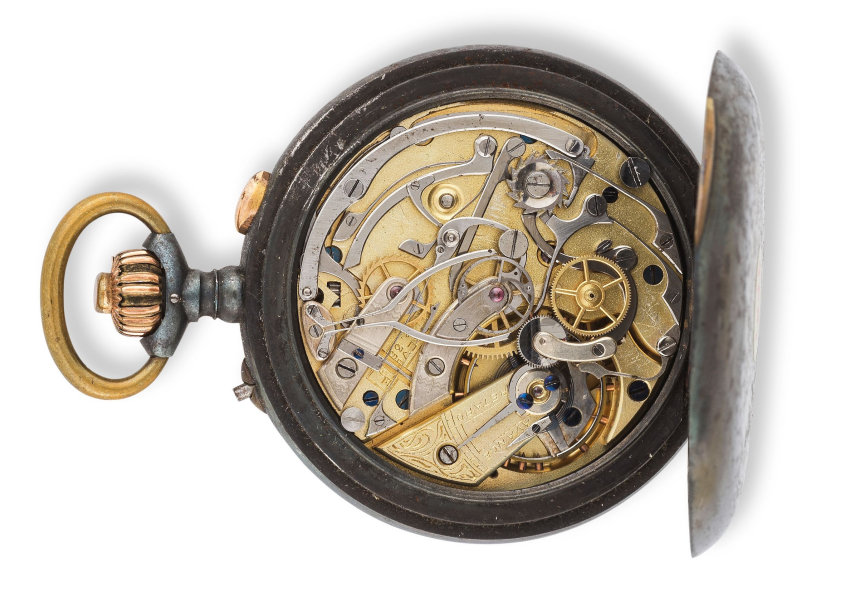
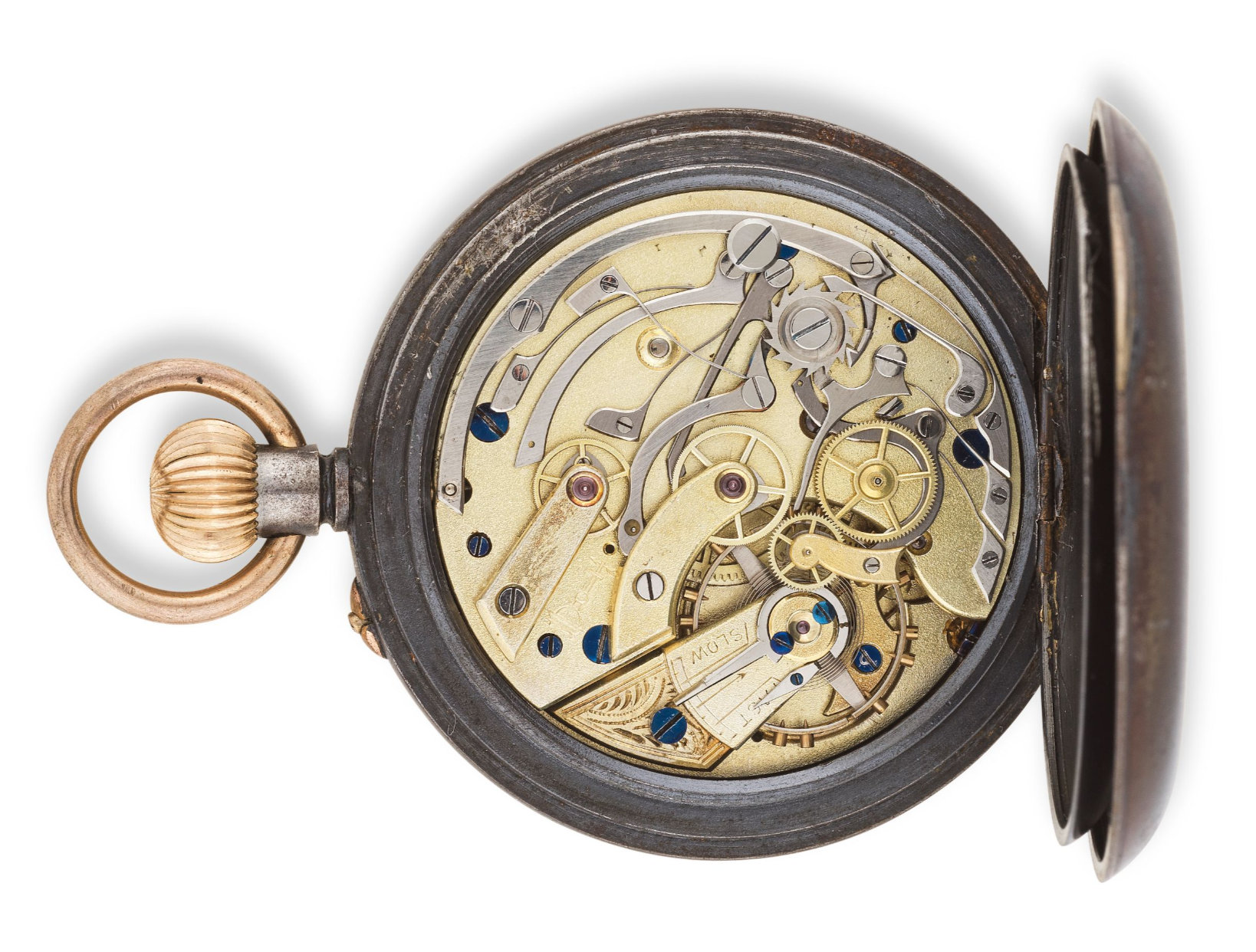
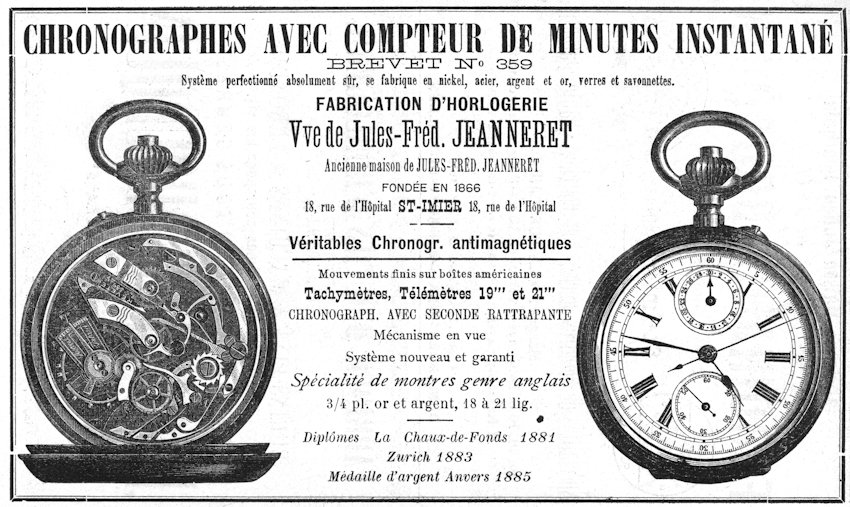
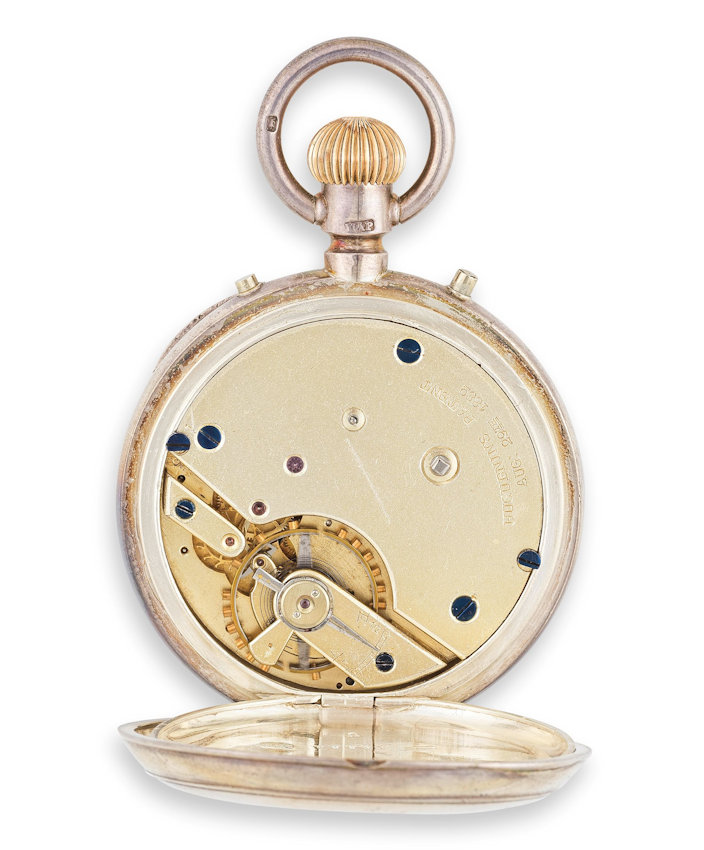
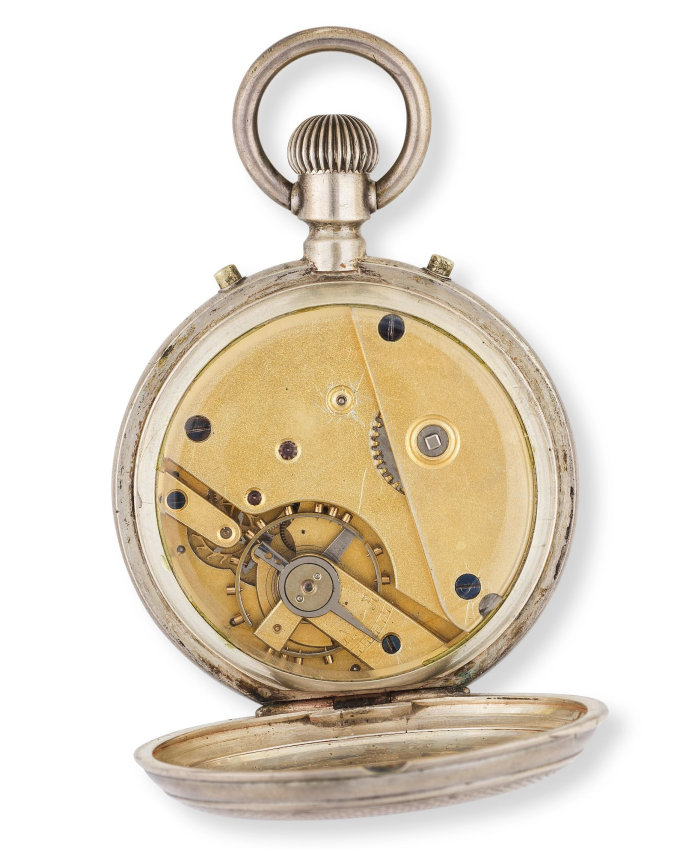
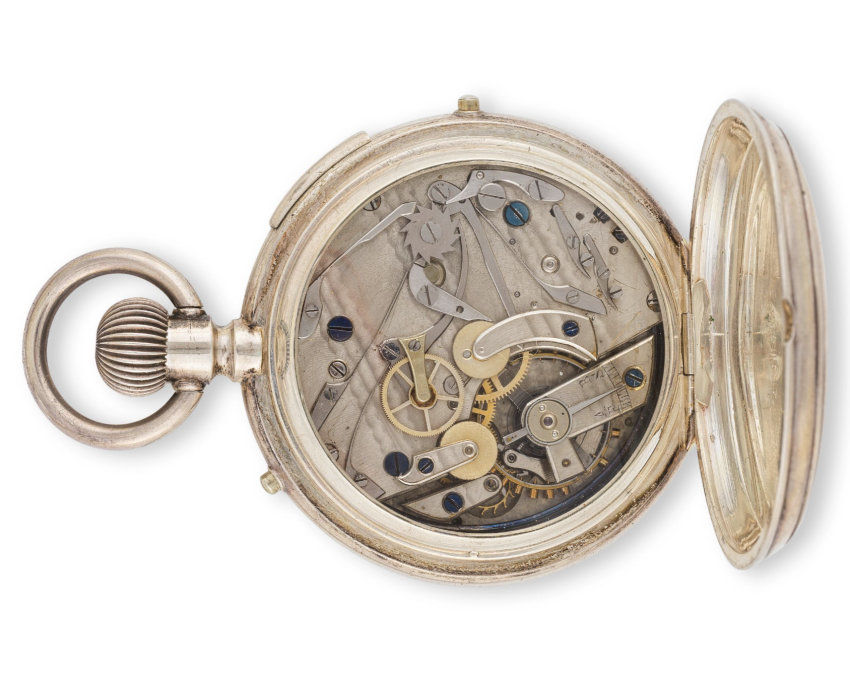
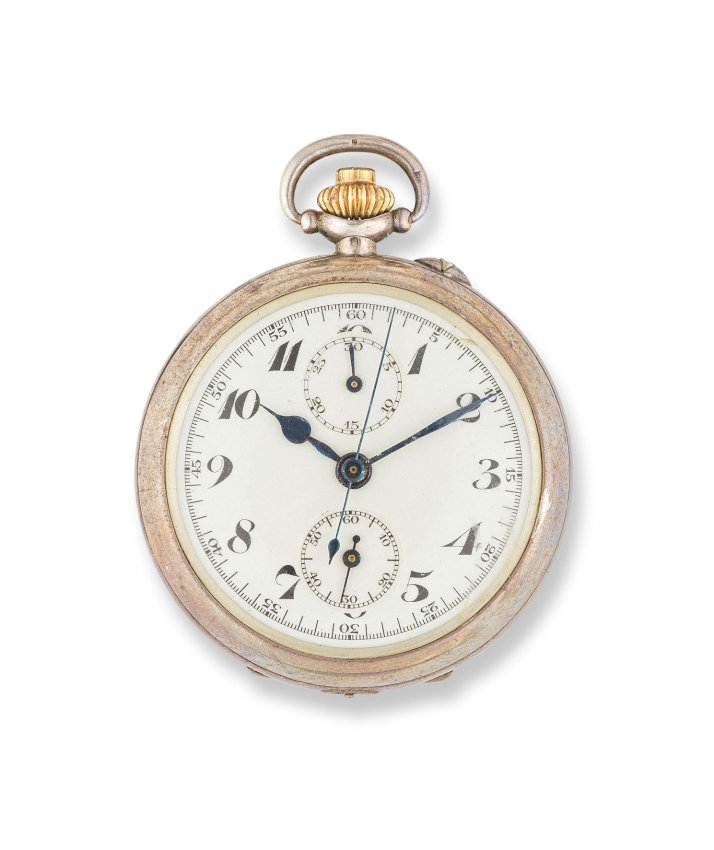
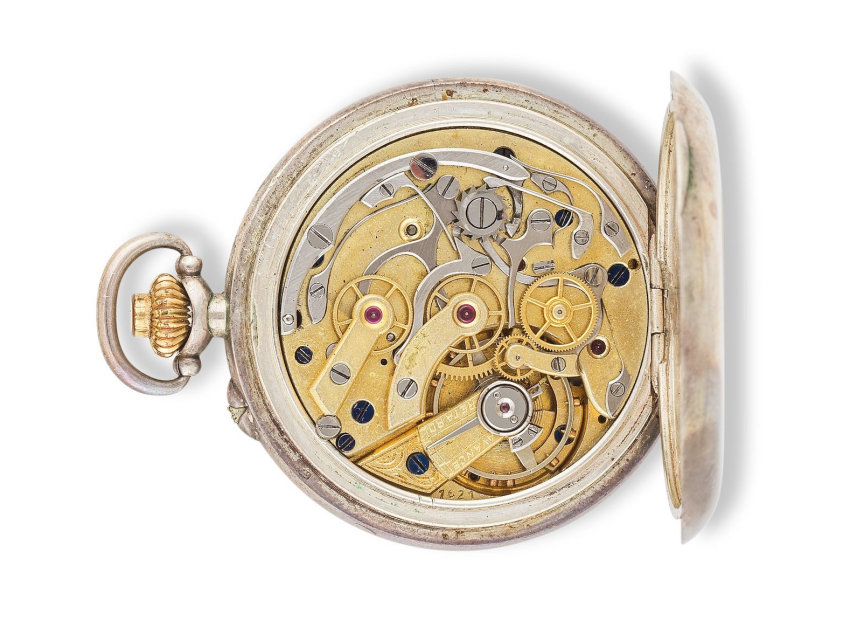
These two chronographs, the first of which is a split-seconds model, are unmarked but typical of the watches produced by Jules-Frédéric Jeanneret in St. Imier. Patent No. CH 359 is a Lugrin (Lémania) patent for which Jeanneret held a license. This caliber had a very long history and was used by numerous manufacturers. Upon the death of Jules-Frédéric Jeanneret in 1892, his widow Cécile Sandoz, and later his sons Samuel and Paul, continued its production.

1896

- Lot 11 et 44

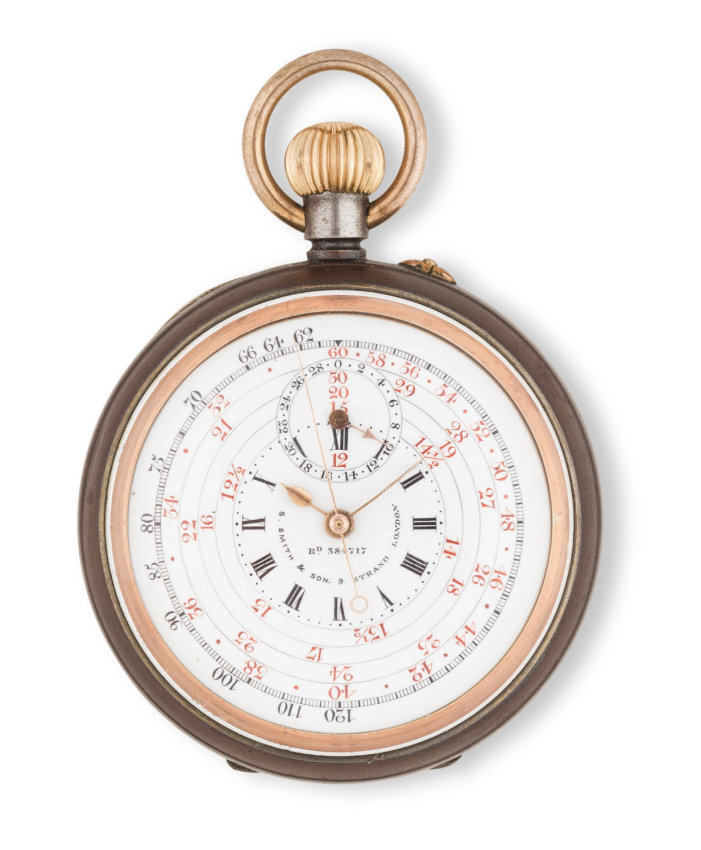
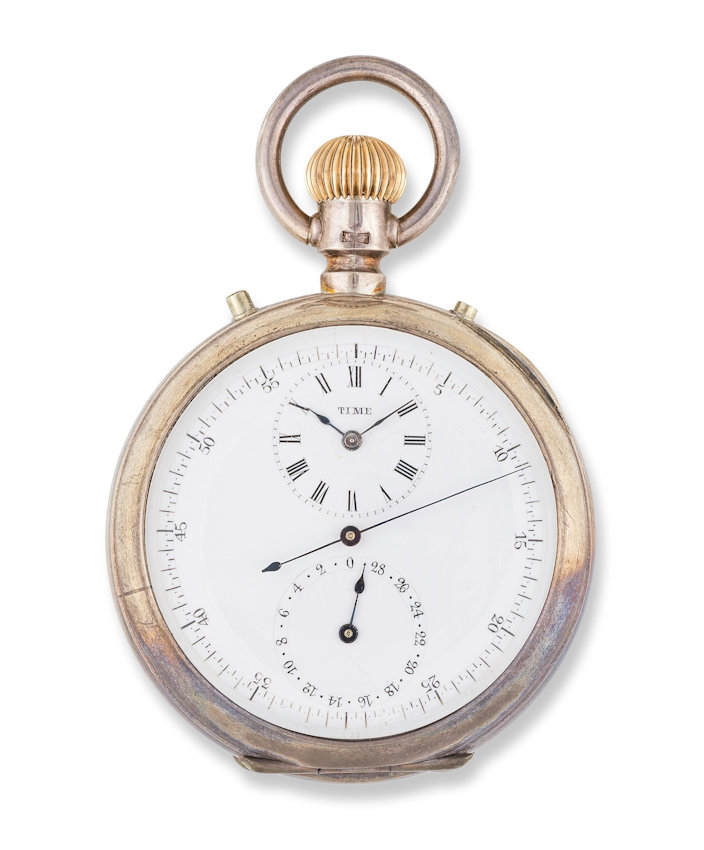
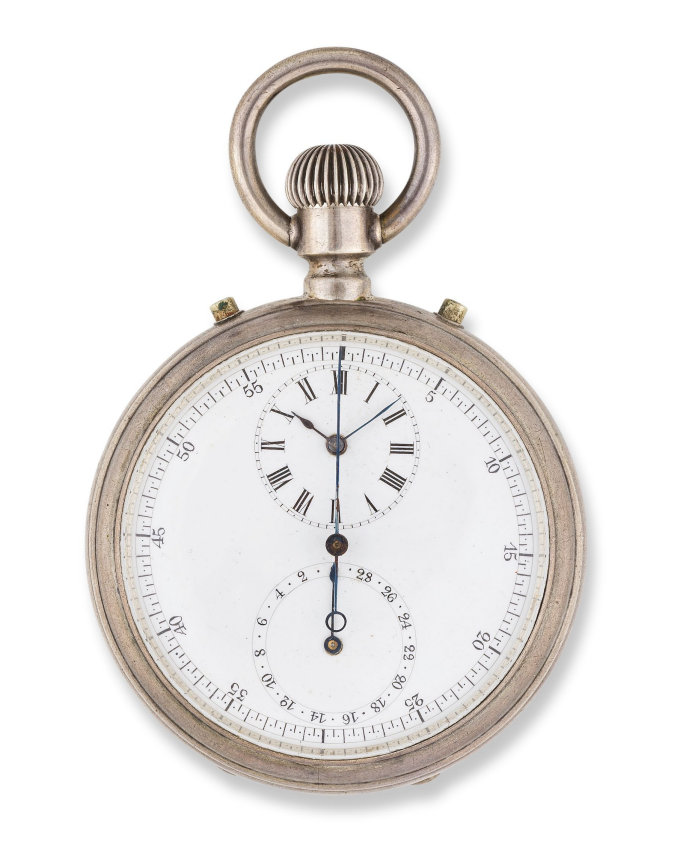
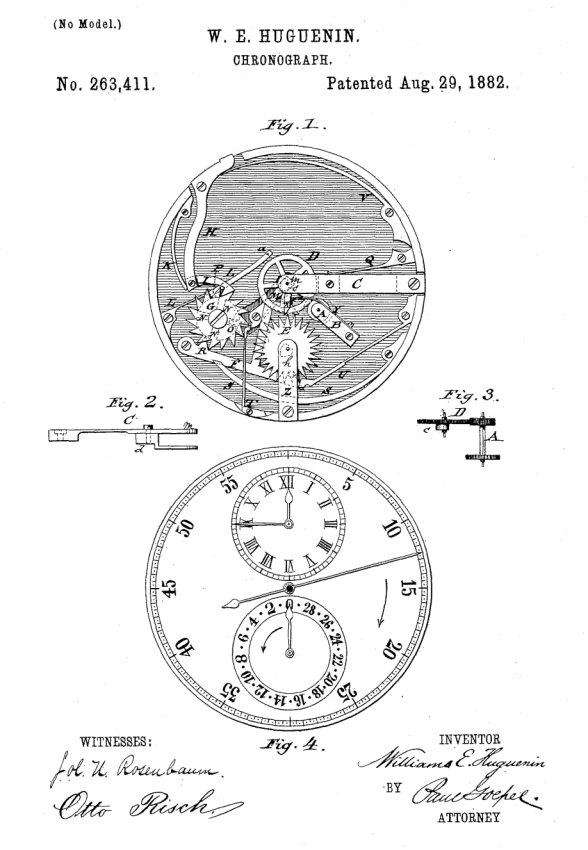
These chronographs feature a so-called "regulator" dial with the hours and minutes offset to 12 o'clock. The minute counter runs counterclockwise. This design was patented by Williams Huguenin in Le Locle in 1882 (US 263,411).

The movement is located beneath the dial, and this type of chronograph is often found in England.

- Lots 12 et 46

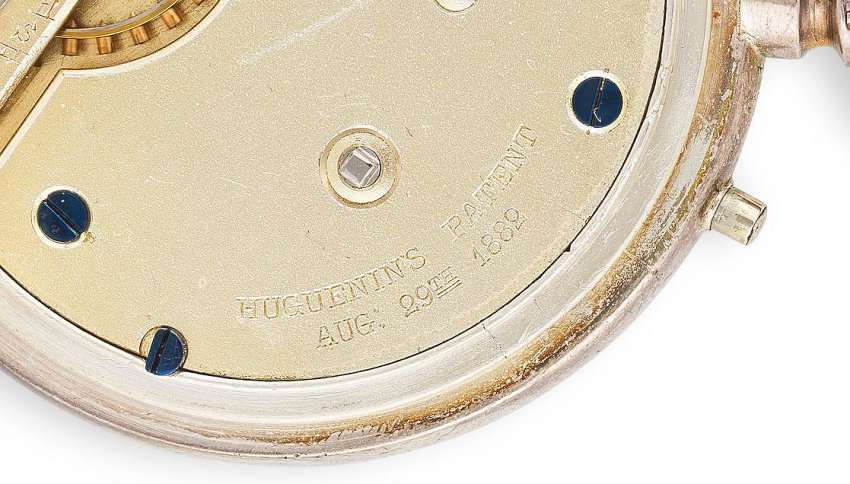
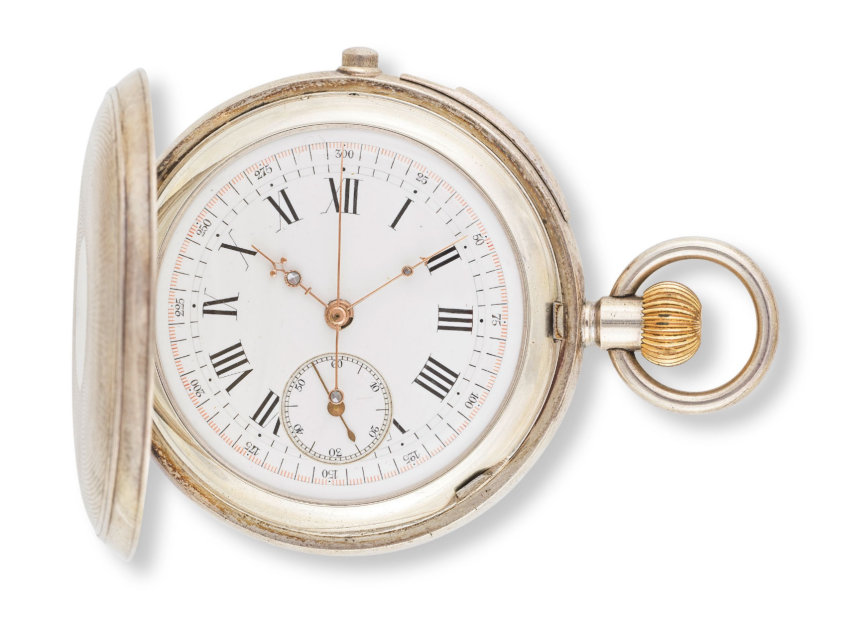
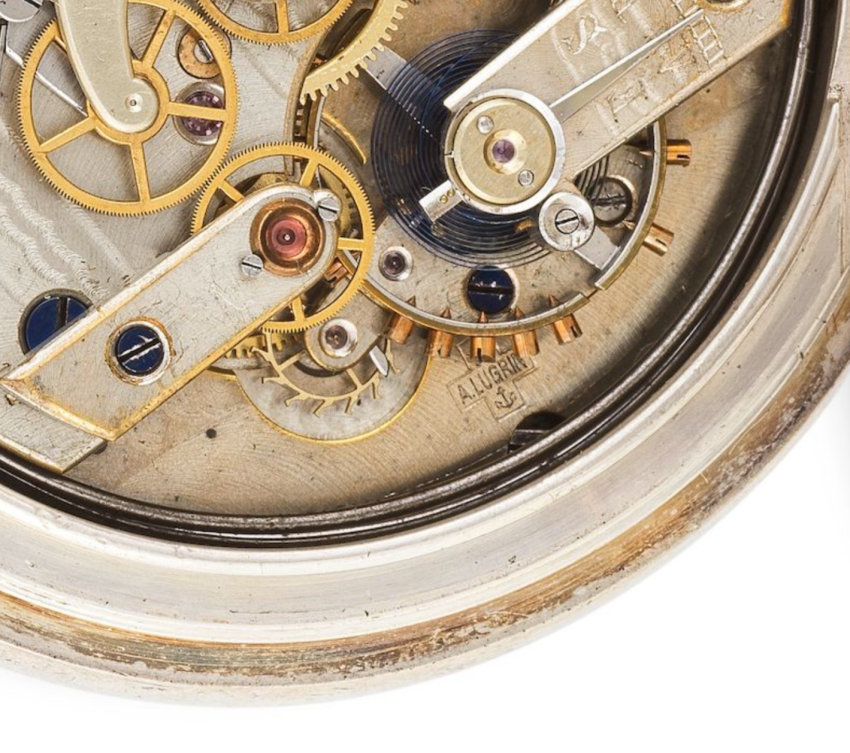
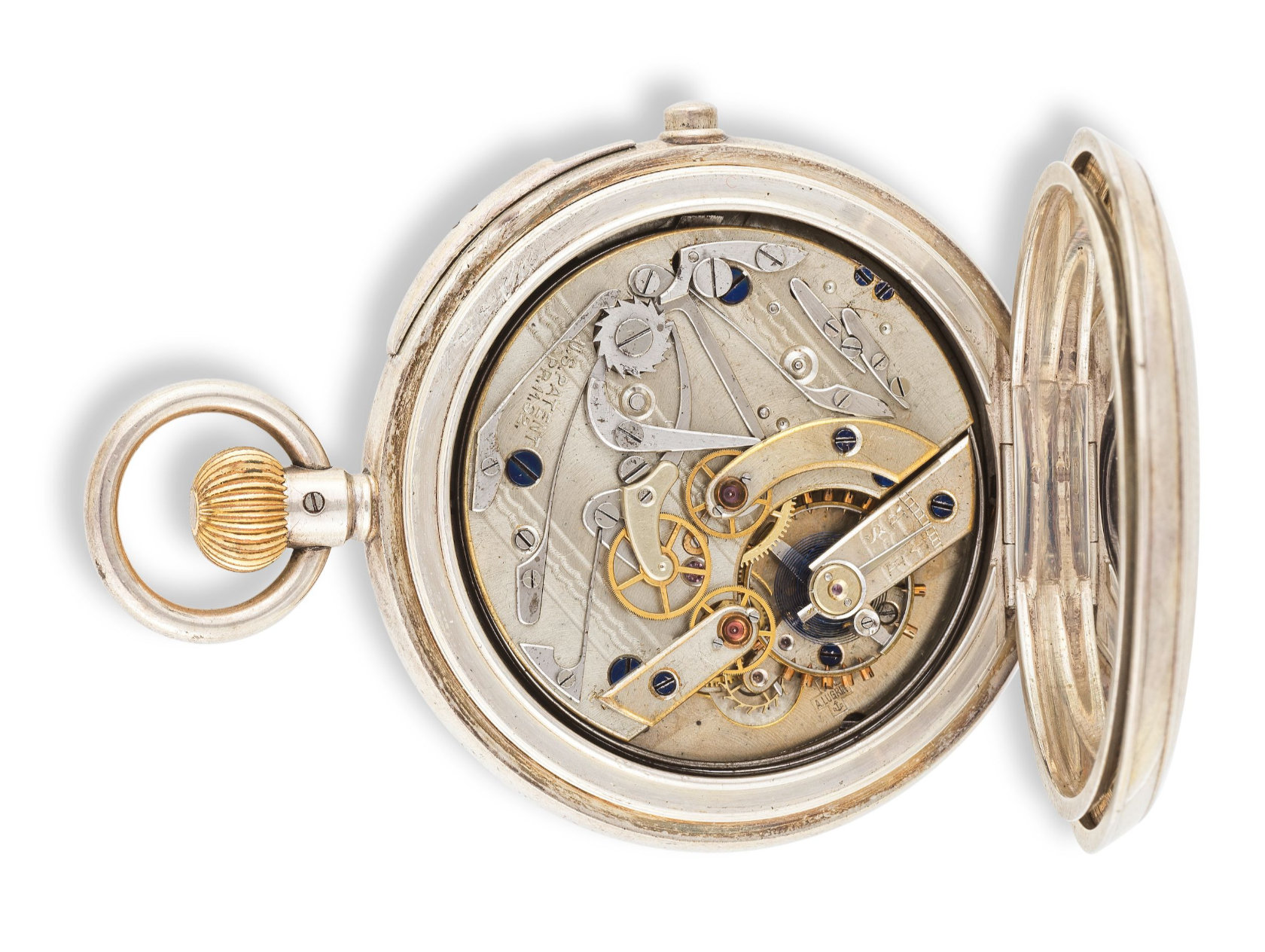
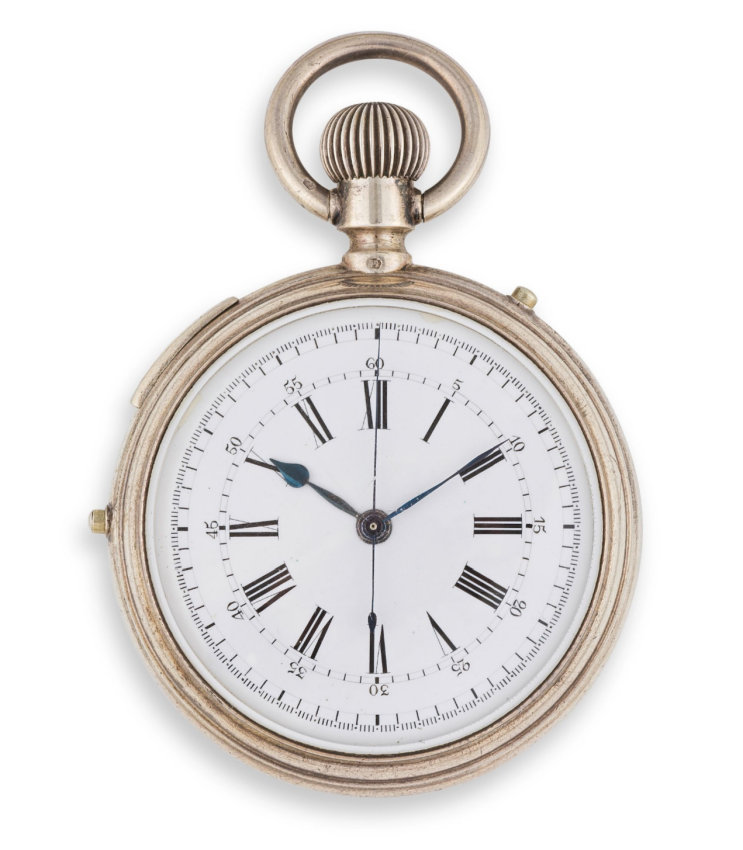
Both of these quarter-repeating chronographs are made by Lugrin (Lémania). However, the first one also bears a U.S. patent date. This refers to another patent by Williams Huguenin of Le Locle (U.S. 256,218) covering a simplified repeater mechanism. The chronograph is therefore indeed a Lugrin, with the repeater mechanism patented by Huguenin.

- Lot 19

This small chronograph features a Lémania caliber with an oscillating pinion, the design of which was patented in 1899. This type of caliber was regularly used by the Moeris factory in St. Imier, and also in wristwatch chronographs—among the first made in Switzerland at the beginning of the 20th century.

To be continued…

Product added to wishlist

Nous utilisons des cookies afin de fournir une expérience utilisateur conviviale. En naviguant sur ce site, vous acceptez la politique d'utilisation des cookies.