The true story of Cortébert watches

The true story of Cortébert watches

Cortébert

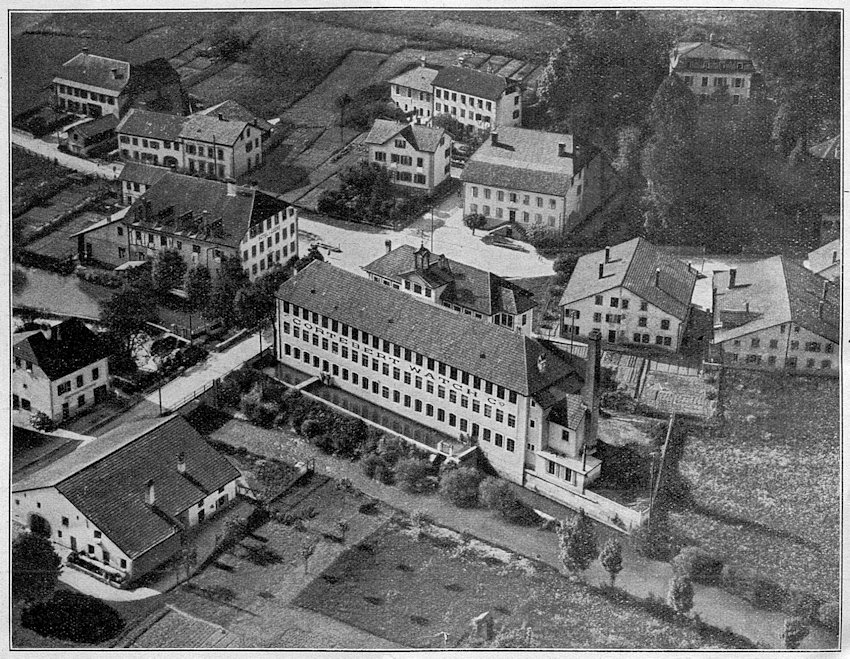
Today, Cortébert is no more than the name of a small Swiss village between St Imier and Bienne. Yet it was also the name of one of Switzerland's oldest watchmaking factories, producing watches for almost two centuries.

Description

Joël Pynson

February 2025

1. The Juillard dynasty

Abraham-Louis Juillard was a watchmaker in Sonvilier in 1790 [1]. He and his family produced around thirty watches a year, which he then sold in Paris.

Around 1830, his son Lucien took over and set up a "comptoir" in St Imier. Manufacturing had been modernized: blanks came from Fontainemelon or Beaucourt, various parts were made by home watchmakers, and final assembly was done at the comptoir.

In 1850, Lucien handed over to his son, Albert Juillard-Morel. The watchmaking industry was doing well in Switzerland, and the major problem for manufacturers was to find the blanks they needed to meet demand. Albert joined forces with other local manufacturers, such as Chopard in Sonvilier, Jaquet in St Imier and Blancpain in Villeret, to create an ébauches factory. Cortébert was chosen as the site, as the Suze river runs through the village, providing the necessary hydroelectric power.

The Raiguel, Juillard & Cie factory, which later became Fabrique d'ébauches de Cortébert, was inaugurated in 1864. An agreement drawn up in 1872 set the company's duration at 15 years [2]. And in 1887, at the end of the agreement, Albert's sons Henri and Émile took over the factory, via the Juillard frères company created for the occasion [3]. In the same year, the Cortébert trademark was registered.

1895

As the Cortébert brand grew in importance, in 1901 the company was renamed Cortébert Watch Co. [4]

1909

1909

It's worth noting that Cortébert was manufacturing "no-hands watches" and Roskopf watches at the time. In the case of the Roskopf watches, it was Cortébert's ébauches factory that supplied the first ébauches to Georges-Frédéric Roskopf for the development of his "proletarian watch" [5]. Watches with jumping hours and minutes were invented by the Austrian watchmaker Joseph Pallweber [6]. Cortébert had already been manufacturing this type of watch since 1884, when it signed an agreement with the International Watch Co (IWC), which held the patents [6bis].

Emile Juillard died in 1907 and Henri in 1912. Henri's sons Ernest and Émile II took over the management of the company [7].

Around 1919, the first Cortébert wristwatches appear.

1919

Albert, son of Henri, and Charles, son of Émile, became partners in 1922 [8].

1923

1923

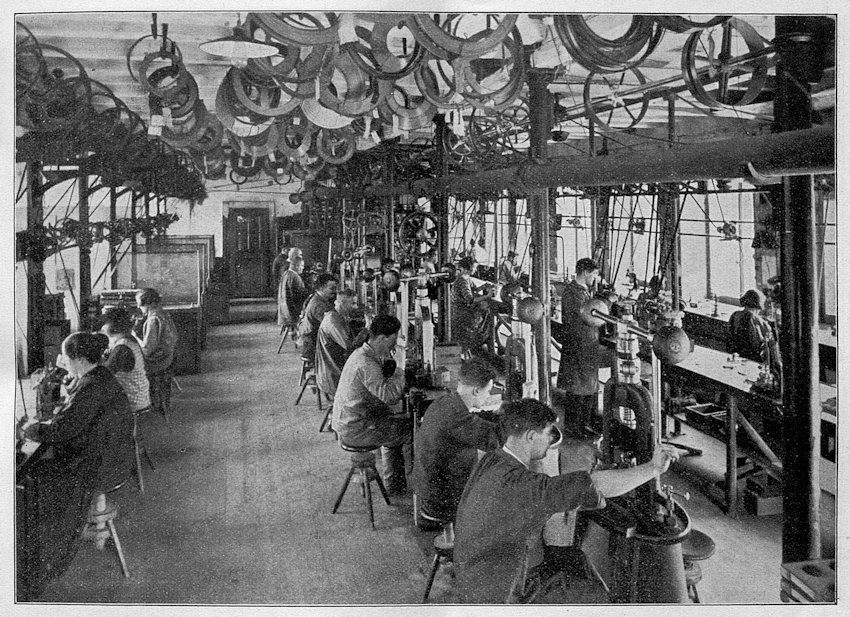
By the early 1920s, Cortébert was a major manufacturer. It produced its own ébauches, and even its own dials. In all, more than 200,000 watches are produced each year and shipped worldwide. Pocket watches remain the company's specialty, and it is renowned for its reliable, precise and elegant calibers, because they are so thin. For example, it mass-produces calibers only 14 "twelfths" thick [9], or 2.6 mm.

1926

1928

1926

Production of wristwatches gradually increased, with the launch in 1929 of an original wristwatch, the bracelet-chevalet, whose case could be hinged up on a double back.

1930

In 1931, Cortébert launched another original watch, the Rébus. It was a "bag" watch, competing with the Ermeto from Movado, and could be stored inside a decorated case.


1931

The following year, Cortébert launched its own chronograph. Curiously, it was a pocket chronograph, at a time when more and more Swiss manufacturers were launching wrist chronographs.

1932

From 1934 onwards, Cortébert launched water-resistant watches, the Cortébert Sport, and equipped its watches with an anti-shock system (Incabloc): the word "unbreakable" appeared on the dials. Charles Juillard explained in 1935: "It does not occur to (the buyer) that the watch delivered to him should be as unbreakable as a lead ball. He simply asks that the mechanism of this watch be suitably protected against the minor shocks and falls that inevitably accompany the existence of an active man [10]".

1934

1935

1937

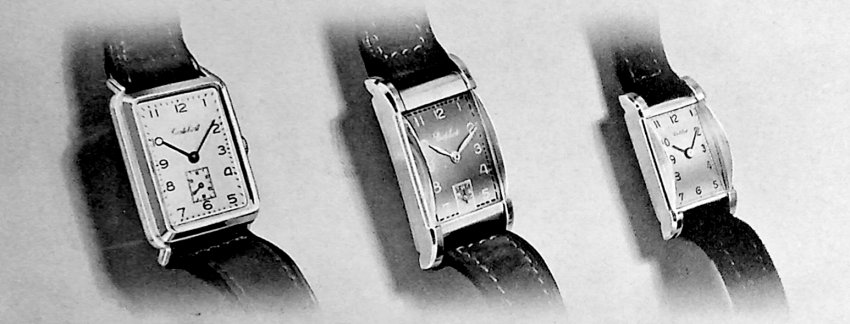
In the early 1940s, despite the restrictions imposed by the Second World War, Cortébert celebrated its 150th anniversary and launched a number of models, including attractive square and rectangular watches, equipped with the 5-line 650 caliber, some with curved glass, known at the time as "optical glass" because of its magnifying effect.

1941

1942

Ernest Juillard died in 1940, and his son Jean became a partner. In 1944, Émile's son Henry became a partner.

In 1944, Cortébert recruited a remarkable young engineer who was to be responsible for numerous technical patents. He was Hans Kocher [11], who would later go on to invent automatic micro-rotor calibres at Büren.

In 1947, Cortébert introduced a calendar watch, the Corté-date, in 1950 a new ratchet system, the Spirofix, which facilitated watch setting, and in 1954 the first Cortébert automatic caliber, the Cortérotor.

1947

1950

1954

Henry Juillard died in 1955, and Emile in 1957. These two deaths seem to have had a major impact on the company, which was also subject to strong competition, particularly from low-cost Roskopf watches. In the absence of new, truly competitive models, Cortébert decided in 1962 to sell its industrial facilities to SSIH (Omega-Tissot-Lémania) [12]. The Cortébert factory thus became an annex of Omega.

2. From Omega to Ermano

Cortébert opens offices in Bienne to continue its business [13]. Charles and Albert Juillard manage the company.

New, very classic models were launched, but this was probably not enough to ensure the company's survival, and it was bought by the Ermano holding company in 1966 [14]. Charles and Albert remained with the company, which tried to revive its fortunes with the launch of a diving watch in 1968, followed by an electronic spiral-balance watch in 1969.

1966

1969

In 1970, Charles and Albert left the company [15]. Ermano used the Cortébert brand name for a few years, in particular for pocket watches, before abandoning it.

1971

3. Cortébert and chronometry

Many Swiss manufacturers submitted their watches to the Bureaux de Contrôle to obtain chronometer bulletins, particularly from the 1950s onwards.

But the bravest manufacturers also took part in Observatory competitions in Neuchâtel, Geneva or Kew Teddington, which were much more demanding, but whose results were considered more honourable. Cortébert was one of them.

1940

1948

Thus, in 1929 and 1930, Cortébert won a Prix de série at Neuchâtel; in 1931 two Cortébert chronometers were classified at Kew Teddington; in 1932 Prix de série at Neuchâtel ; in 1948 new Prix de série in Neuchâtel, plus 5 Premiers Prix for pocket chronometers and the Prix Guillaume for the Berthold-Thommen setter; in 1949 new Prix de série and 8 Premiers Prix : in 1950 Prix de série and 6 Premiers Prix, in 1951 Prix de série and 5 Premiers Prix; in 1952 Prix de série, 2 Premiers Prix and Prix Guillaume; in 1953 Prix de série and 2 Premiers Prix: in 1954 Prix de série and 7 Premiers Prix; in 1955 Prix de série and 9 Premiers Prix, and in 1957, 16 wristwatches awarded in Neuchâtel.

Cortébert even received bulletins from the Geneva Observatory in 1952 and 1955!

1944

As for the bulletins issued by the control offices, particularly the one in La Chaux-de-Fonds, they can be counted by the hundreds: 129 in 1929, 193 in 1931, 100 in 1950, 23 in 1952, 10 in 1954, 81 in 1956, 28 in 1957, and 127 in 1961.

4. Perseo and Tellus

In Italy, some Cortébert watches were distributed under the name Perséo, a trademark registered by Cortébert in 1936. Today, it is an Italian watch manufacturer.

As for Tellus, it was a watch factory founded by Émile and Charles Juillard in 1926 in La Chaux-de-Fonds, in association with Wilhelm Ulrich, a merchant from Frankfurt am Main in Germany [21]. The company was dissolved in 1942, but the brand continued to exist. Today, it is a French watch manufacturer.


The main Cortébert watch models from the 1930s to the 1960s can be found here.


See also: Cortebert, Perseo and Tellus websites

[1] Revue Internationale d'Horlogerie, 1926, 2, pp. 17-30

[2] FOSC 1883

[3] FOSC 1887

[4] FOSC 1901

[5] Revue Internationale d'Horlogerie, 1926, 2, p. 27

[6] see for example patent CA 26 958

[6 bis] FOSC 1885

[7] FOSC 1912

[8] FOSC 1922. For the Juillard genealogy, see also: https://www.cgaeb-jura.ch/wp-content/uploads/2017/05/074_genealogie_jurassienne.pdf

[9] the twelfth of a line is 0.188 mm

[10] Revue Internationale d'Horlogerie, 1935, 23, p. 274-275

[11] Hans Kocher, Une vie marquée par des hommes et des montres, 1998, edited by the author, p. 13

[12] Journal Suisse d'Horlogerie, 1962, 1, p. 14

[13] FOSC 1962

[14] La Suisse Horlogère, weekly edition, 1966, 43, p. 1316

[15] FOSC 1970

[16] Revue Internationale d'Horlogerie, 1936, 9, p. 107

[21] FOSC 1926

The archives of Fédération Horlogère, Davoine and l'Impartial are available online at www.doc.rero.ch

The archives of Journal Suisse d'Horlogerie, Europa Star, Revue Internationale d'Horlogerie and Suisse Horlogère are available at The Watch Library

The FOSC (Feuille Officielle Suisse du Commerce) is available on E-periodica

Notes :

About Time To Tell: Time To Tell has one of the largest private digitized databases on the history of Swiss watchmaking, with over 2.3 TB of data on more than 1,000 Swiss watch manufacturers. This database has been built up over a period of some thirty years, and continues to be fed with around 50 to 100 GB of data every year. The database is made up of old documents, mainly Swiss trade journals, dating from the late 19th to the late 20th century. Most of these documents are not available on the Internet. Historical articles published on the time2tell.com website always cite the sources used.

Time To Tell is a private company, independent of any watch manufacturer.

©Time To Tell, 2025 

Reproduction forbidden without authorization. Any use of this article by artificial intelligence is strictly forbidden and will be considered an infringement of copyright. 

Product Details

Product added to wishlist

Nous utilisons des cookies afin de fournir une expérience utilisateur conviviale. En naviguant sur ce site, vous acceptez la politique d'utilisation des cookies.