The true story of Cyma and the Tavannes Watch Co.

The true story of Cyma and the Tavannes Watch Co.

Cyma

Millions of watches worldwide have borne the Cyma and Tavannes names, and Tavannes Watch was once one of Switzerland's most important.

Description

Joël Pynson

First publication: July 2023

Updated: May 2025

Not much remains of this distant past today, although Cyma and Tavannes Watch still exist. The history of these two closely-linked companies is difficult to reconstruct [1], as there were in fact multiple associated companies with directors who willingly moved from one to the other...

1. Creation and progress: the Sandoz and Schwob families

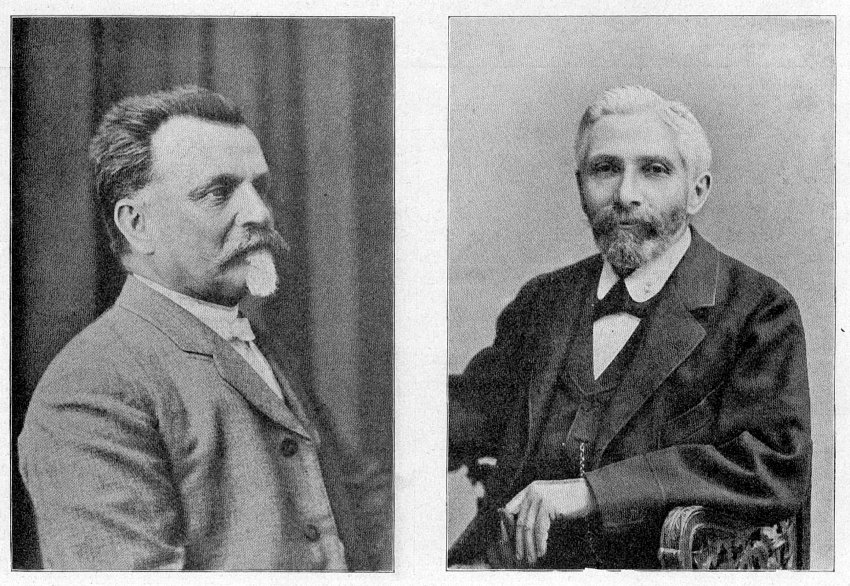
Henry Sandoz and Théodore Schwob, circa 1905

Henri Sandoz was a remarkable engineer, trained at the Le Locle watchmaking school and a specialist in complicated watches. In 1891, he took over the watch factory that had been built by the Tavannes bourgeoisie to promote industrialization in the region [2]. He applied the principles of mass production, and a year later the company employed 60 workers and produced 120 repeating watches a day. He then began mass production of the simple watch.

It was at this point that the major players in Cyma's history became involved: members of the Schwob family [3] of La Chaux-de-Fonds. Théodore Schwob and his son-in-law Joseph Schwob [4] provided Henri Sandoz with the funds he needed to realize his plans. They were wealthy merchants, one at the head of the Schwob Frères company, the other at what was to become Schwob et Cie. The great strength of these two companies, apart from their strong family involvement, was exporting: they distributed their products to every country in the world, without competing with each other, as they worked in different markets.

This led to the creation of the Tavannes Watch Co. in 1894 [5], and the appointment of Henri Sandoz as its director. Fully aware of the lead the American watchmaking industry had taken through mechanization and mass production of interchangeable parts, Henri Sandoz first ordered the best American machines to start production, then set up a department to manufacture machines that were constantly being improved for greater precision and efficiency [6].

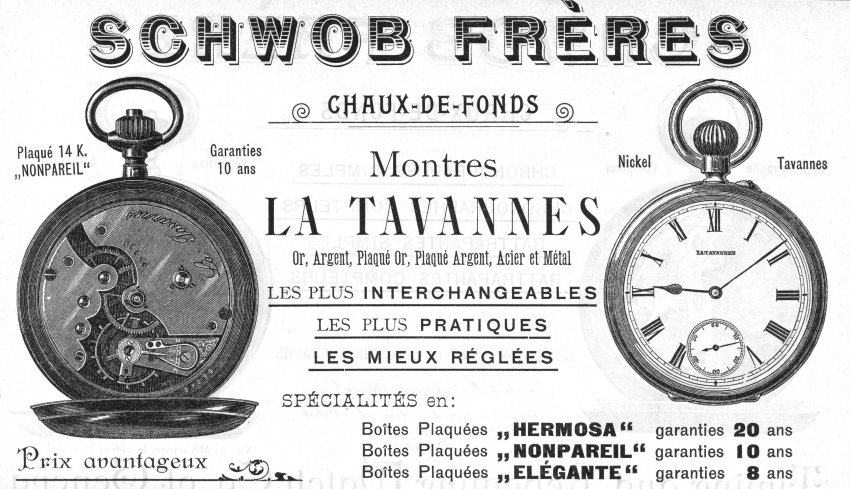
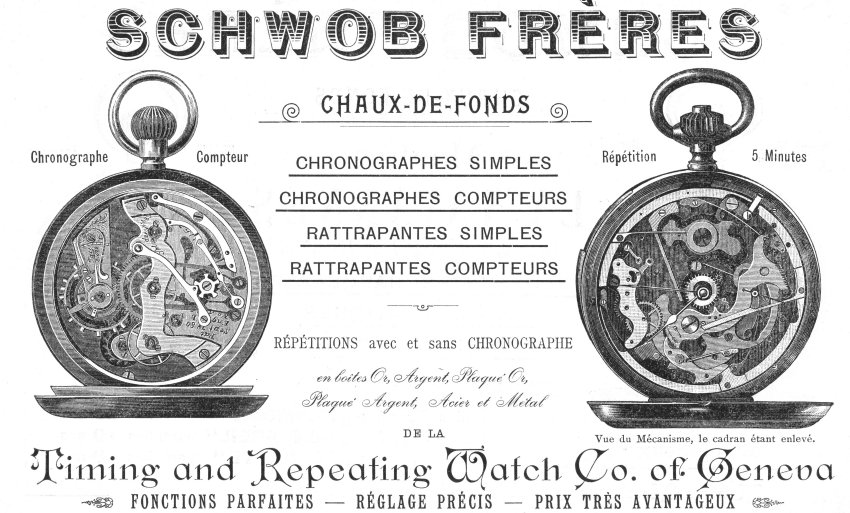
Watches marketed from 1894 onwards were called Hermosa, Non pareil, Elégante, Advance, Diana, La Tavannes, New-Haven, and so on. There was something for every taste: watches with keys, winders, anchors and cylinders, or Boston-style watches for the United States. There was also the distribution of chronographs and repeaters from the Timing & Repeating Watch Co. of Geneva. This company had been founded in Geneva in 1890 by Prosper Nordmann to produce chronographs under license from Lugrin [7].

1894

For all these watches, cases were needed. Initially imported from the USA [8], it was decided to build a new factory to produce them: it was inaugurated in Undervelier in 1897.

At the turn of the 20th century, Tavannes Watch employed 300 workers and produced 800 watches a day [9]. With productivity on the rise, the company reduced working hours from 10 to 9 a day in 1902, but with certain limits: "we hope to see the disappearance of snacks at 10 and 4; the nine hours should be devoted exclusively to work, and we don't want to see workers at the factory spending their time satisfying their appetites [10]".

In 1903, the Cyma trademark was registered, which would later become the name of the company. Cyma was in fact the name of a mass-produced caliber and a "cheap and well-made" watch model that was to enjoy considerable success. One version of the Cyma watch achieved an extraordinary feat: in 1914, a model with only 4 jewels (for the escapement) was awarded a Bulletin de 1re classe at the Neuchâtel Astronomical Observatory [11]!

1905

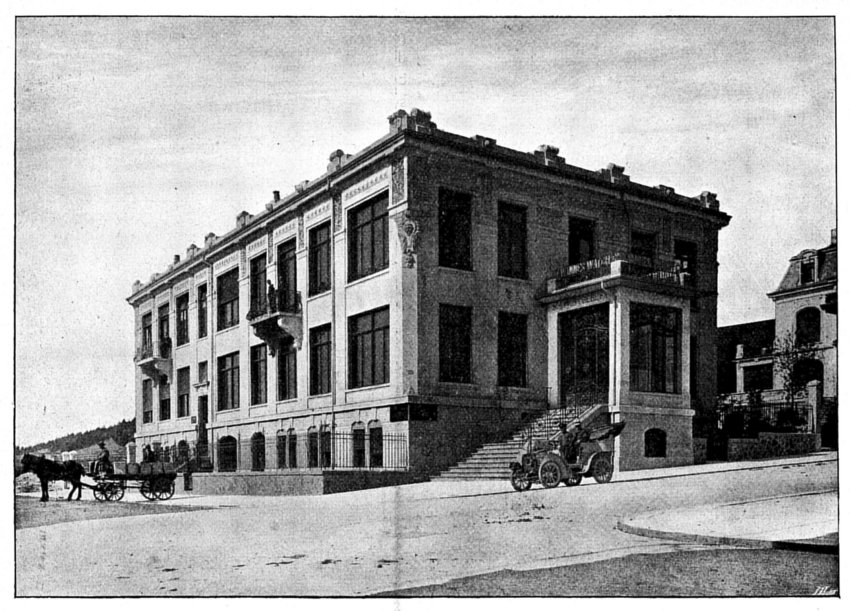
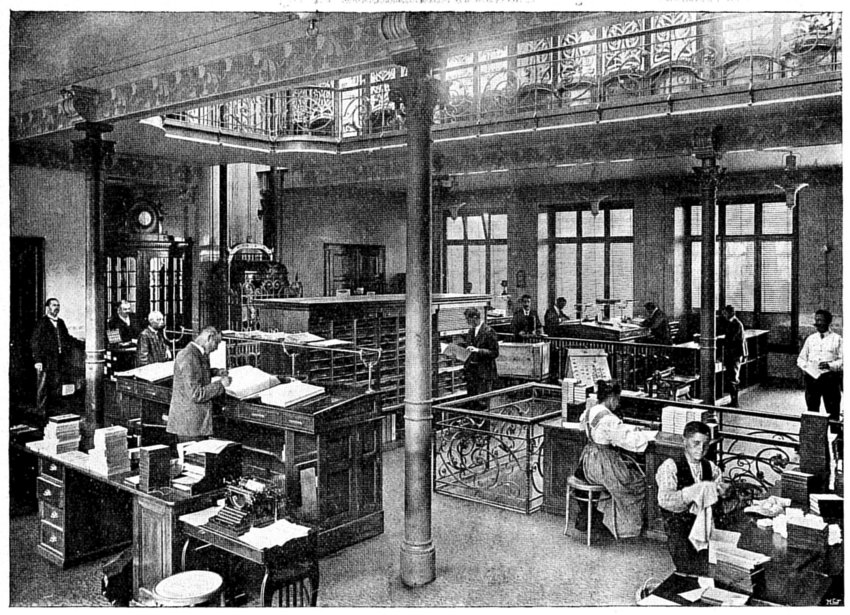
In 1905, the two Schwob companies inaugurated their new premises in La Chaux-de-Fonds [12]. It was the remarkable work of architect Léon Boillot. All the innovations of the period are present: telephone throughout the building, indirect electric lighting, elevators, American-style furniture. A large central skylight illuminates all the offices, which are glazed on opposite sides. Visitors are impressed: "The Schwob family has members in every country in the world, or at least in every country where watches can be sold. In the sales offices of the Tavannes Watch Co. you have the feeling of being in America. Everything tends to create this illusion, the appearance of the people as well as the layout of the offices, the furniture and the organization of the departments [13]."

The sons of the creators ran the company. The Tavannes factory employs 750 workers and produces 1,500 watches a day. Construction of an extension to the buildings has begun. For the workers, there's a welcome rule: the working day is 9 hours, whereas it is 10 almost everywhere else, and Saturday afternoons are free [14].

Business flourished and the company grew rapidly. In 1908 there were 900 workers in Tavannes, producing 2,500 watches a day [15]. These were anchor and cylinder watches, with 11 to 19 lines. There are also Roskopf-type watches. Undervelier employs 120 workers who produce 1,800 cases per day.

The 1910 Grand Prix watch

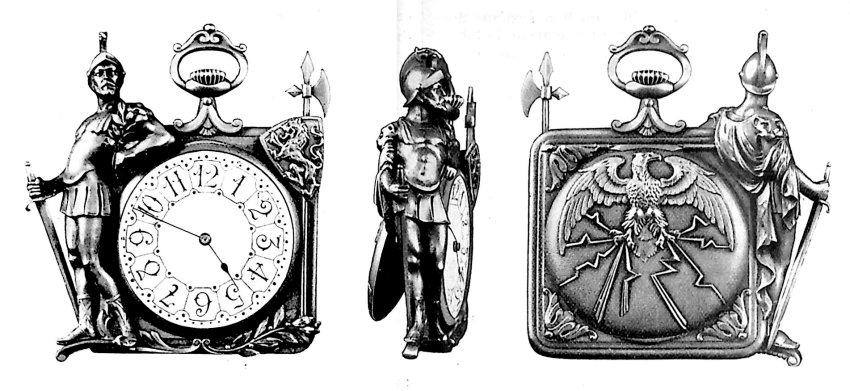
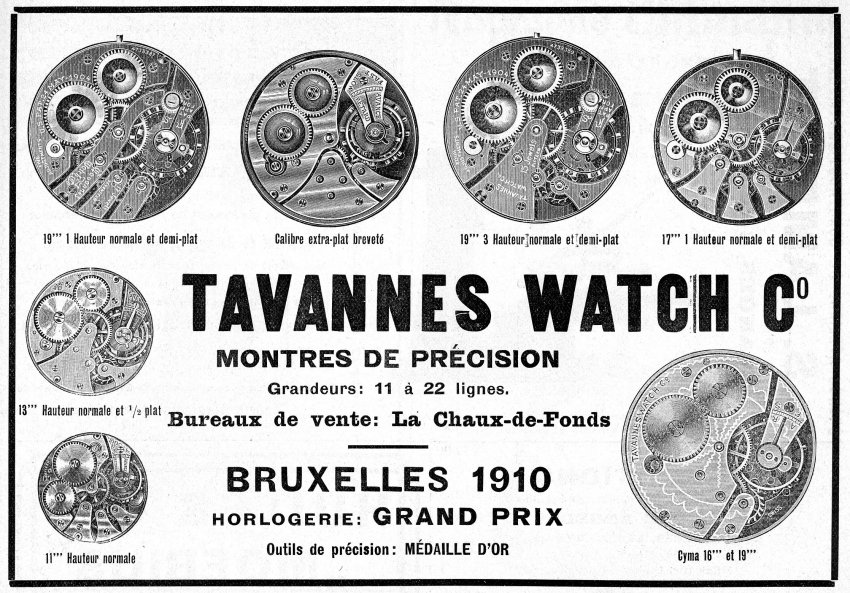
In 1910, the Tavannes Watch Co. presented a beautiful watch at the Brussels International Exhibition. It was in gold, with a richly decorated square case: a small sculpture of an ancient soldier in arms stood proudly to the left of the dial, while to the right was a halberd and a coat of arms. It is the work of the Geneva engraver Jacot-Guillarmot [16]. The watch makes such an impression that Tavannes Watch wins a Grand Prix [17] for its watches and a gold medal for its machines.

1910

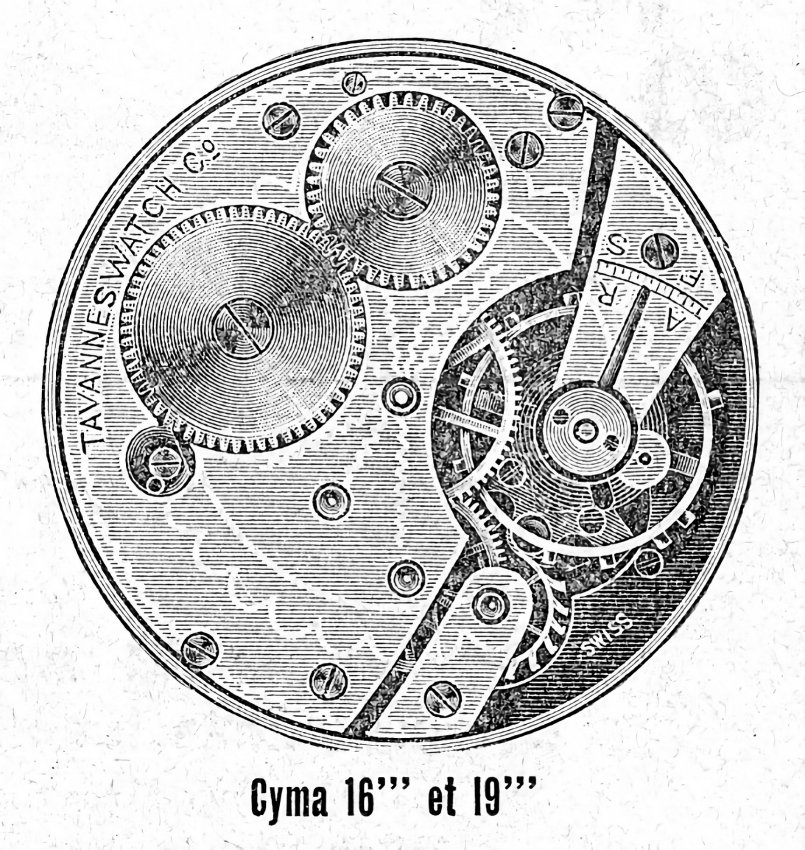
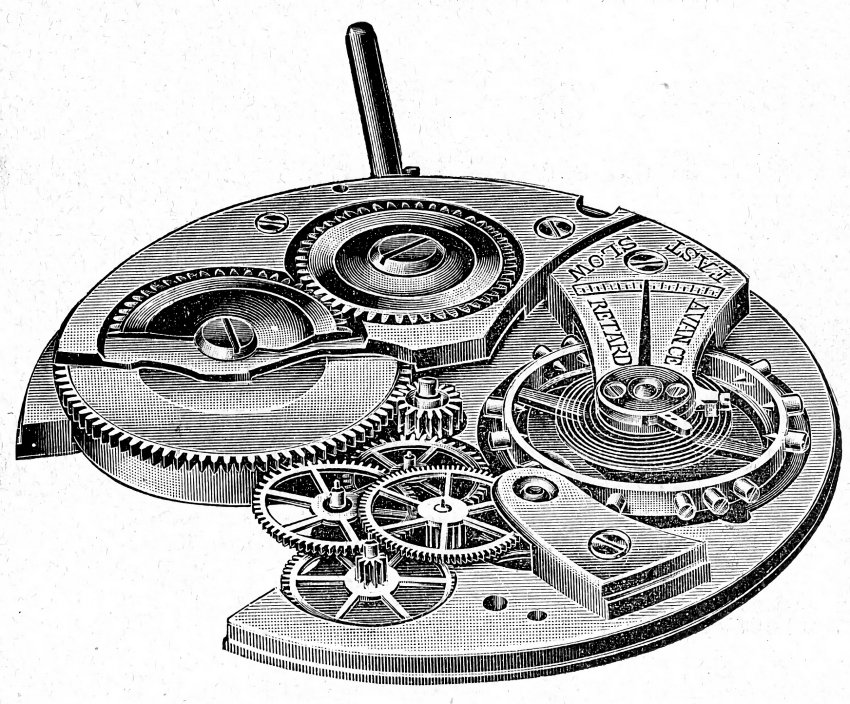
1910 also saw the development of a new, patented "extra-flat" caliber, a sign that the company was moving upmarket and no longer confining itself to good, inexpensive watches.

Diagram of the 1910 "extra-flat" caliber. The center wheel is eliminated, reducing the height and increasing the dimensions of the barrel and balance wheel for greater precision.

Expansion continued: in 1913, when Henri Sandoz was replaced by one of his sons, Henry, at the head of the factory, there were 1,200 workers in Tavannes producing 3,200 watches a day. Undervelier now produces 2,000 cases per day [18].

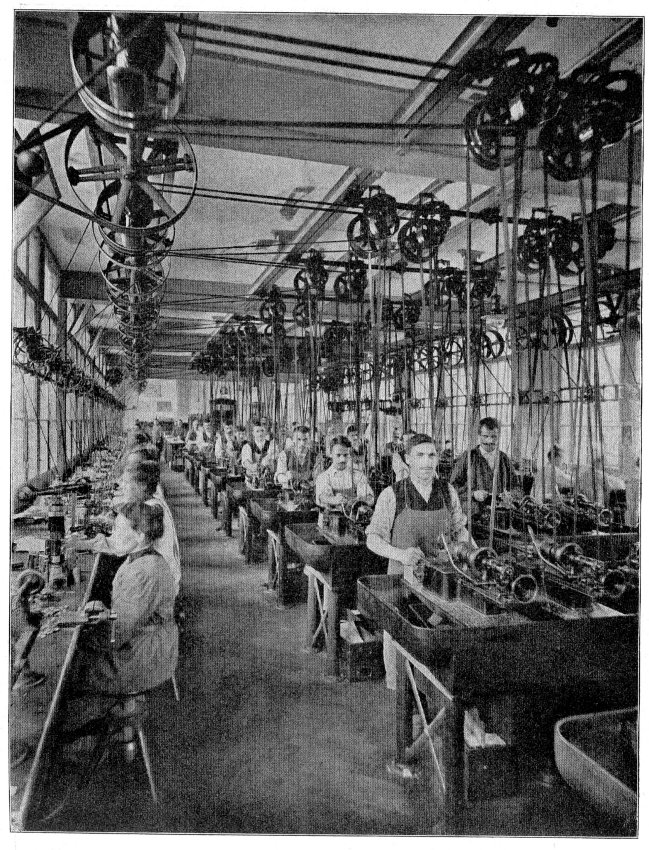
Tavannes has become one of the largest watchmaking factories in Switzerland. The workshops were regularly modernized, electricity was everywhere, and precision machines were manufactured on site and also marketed by a department that was to become known as Tavannes Machines. As in many large Swiss watchmaking factories of the period, workers were not forgotten: from one to three weeks' vacation a year, depending on seniority, health insurance, a provident fund, a home for workers with a large canteen, reading and reception rooms, and a crèche for children [19].

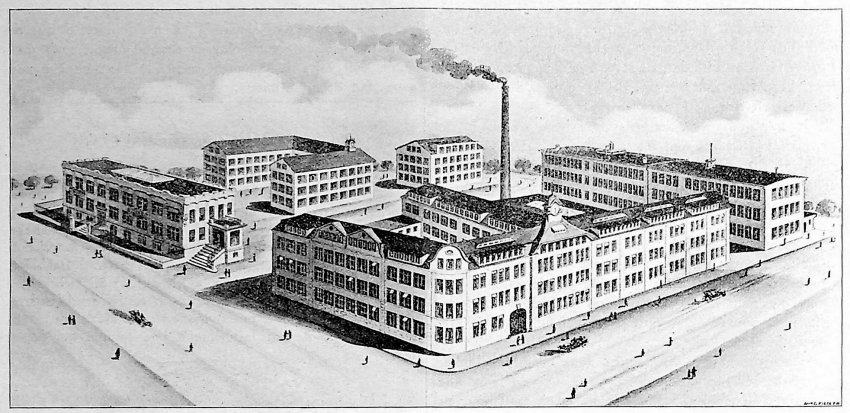
Artist's view, circa 1914, of the 5 Tavannes Watch sites. These buildings were actually in different locations.

Henry Sandoz fils was also an exceptional character: he was only 35 when he succeeded his father in 1913, and in 1919 he became a member of the Central Committee of the Swiss Chamber of Watchmaking. He was to become actively involved in the life of his commune, of which he became mayor, and in associative life: central committee of the Fédération horlogère, cantonal association of watch manufacturers, association of the Laboratoire de Recherche horlogère of the University of Neuchâtel, and above all, in 1925 he was elected national councillor to the Swiss Parliament [20].

In 1914, the Tavannes Watch won another Grand Prix, this time at the Swiss National Exhibition in Berne.

When the First World War broke out, La Tavannes Watch, like many other Swiss watchmakers, was manufacturing weapons and munitions. As a result, the company was boycotted by warring Germany for manufacturing munitions for the Allies [21].

The Submarine, Switzerland's first waterproof wristwatch

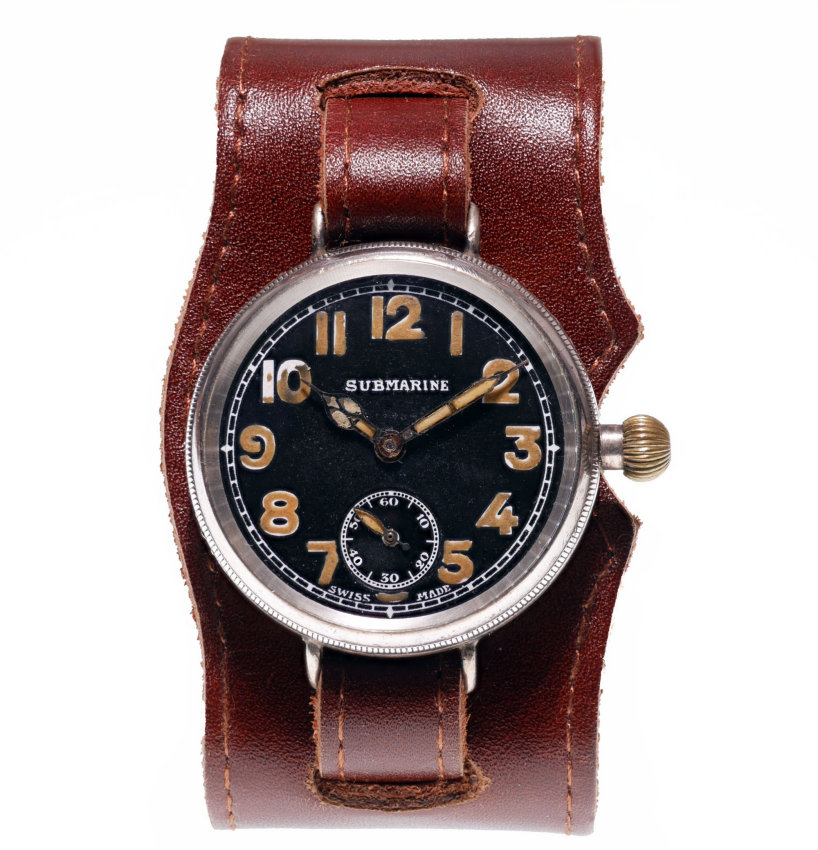
Around 1915, Tavannes Watch produced a waterproof watch that can be considered the first Swiss waterproof wristwatch [22]. The dating of this watch is documented by articles in the British press. According to The Horological Journal of December 1917, two Royal Navy officers asked Tavannes Watch for water-resistant watches that were also non-magnetic, insensitive to temperature variations, and easy to read with luminescent numerals and indexes. Since Tavannes Watch manufactured its own movements and cases, it could respond favorably to this demand. What's more, it was familiar with non-magnetic and isochronous alloys, since a Cyma watch had already obtained a chronometer certificate in Neuchâtel.

Crédit David Boettcher

The watches supplied, christened Submarine, met the specifications perfectly: screw-down caseback and bezel with gasket, screw-down crown, which also ensured water-resistance, black dial with clearly legible numerals, luminescent hour-markers and numerals.

These watches were marketed by Brook & Son in Scotland, and an article in The Scotsman on April 6, 1916, states that Royal Navy officers had received their watches 6 months earlier, which dates them to October 1915, four years before Depollier 's watch, often considered the first water-resistant wristwatch.

Post-war difficulties slowed the company down, but did not bring it down. The engineers innovated: a new process, introduced in 1921 and revolutionary at the time [23], avoided the tedious task of replating the pivots. On calibers, "plugs" replaced bezels, thus promoting interchangeability: "instead of being made separately, the holes are made together, with a stamp, and checked together. The hole in the stone is taken as the basis for rectifying the circumference [24]".

Mechanization reached exceptional levels, standards were now micrometrically accurate and machines were still manufactured on site [25].

1922

1937

A branch opens in Le Locle. The Cyma brand is increasingly promoted. In 1920, the two companies Schwob Frères and Schwob & Cie merge to form Schwob Frères et Cie, SA. In the same year, Tavannes presented remarkable electric master clocks at the Foire suisse de l'Horlogerie [26].

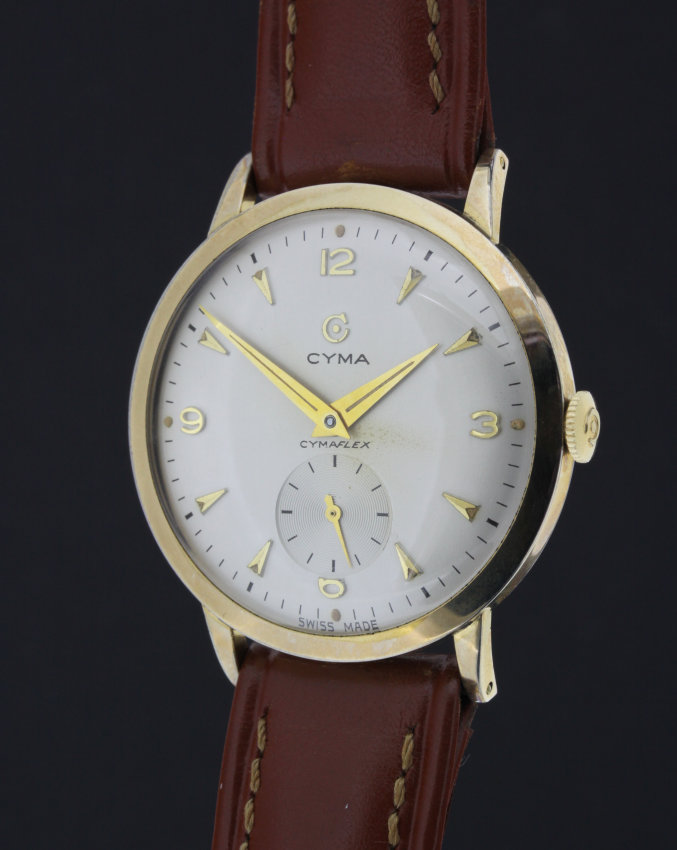
Cyma watches of the 1920s were renowned for their good workmanship and affordable price. But not for the diversity of their functions. Only the dimensions of the calibers are variable, as are the shape and decoration of the cases. Even the center second is considered unnecessary: only the small second at 6 o'clock is sometimes offered.

1929

Things gradually changed from 1930, the year in which the Société des montres Cyma was created, due to the upturn in business and, above all, no doubt, to competition.

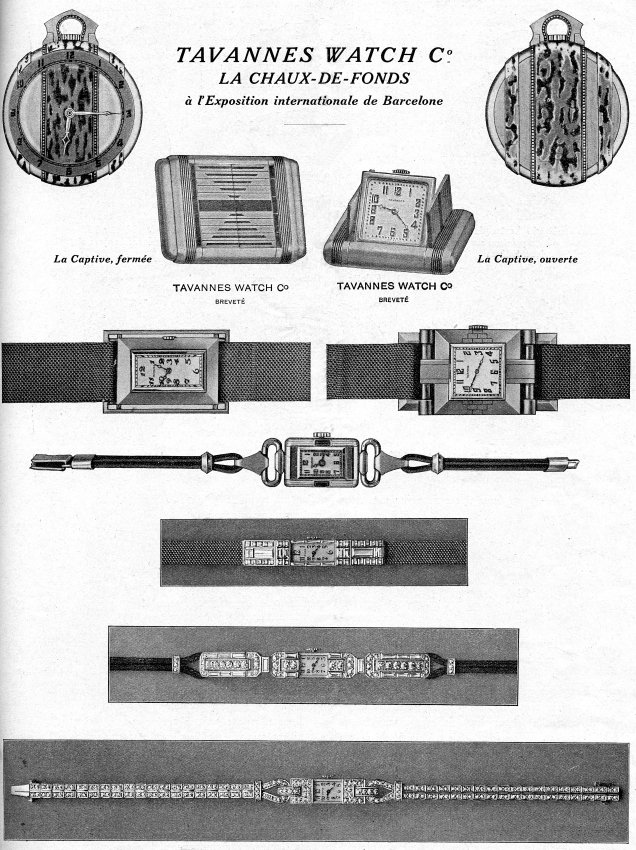
In 1929, Cyma launched an Ermeto-type watch, christened " La Captive ", and won another Grand Prix, this time at the Barcelona International Exhibition [27].

In the following years, special efforts were made on design: richly decorated rectangular watches and watches without hands. A new logo, in the shape of a stylized 5, appeared on the dials around 1931. It represents the T of Tavannes, associated with the company's 5 sites.

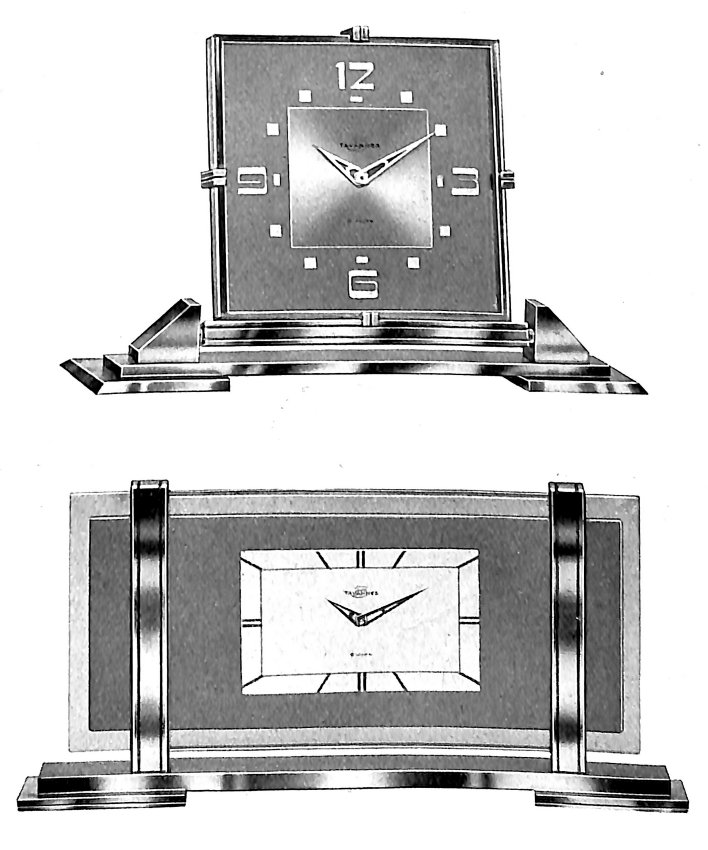
In 1933, Cyma began manufacturing clocks.

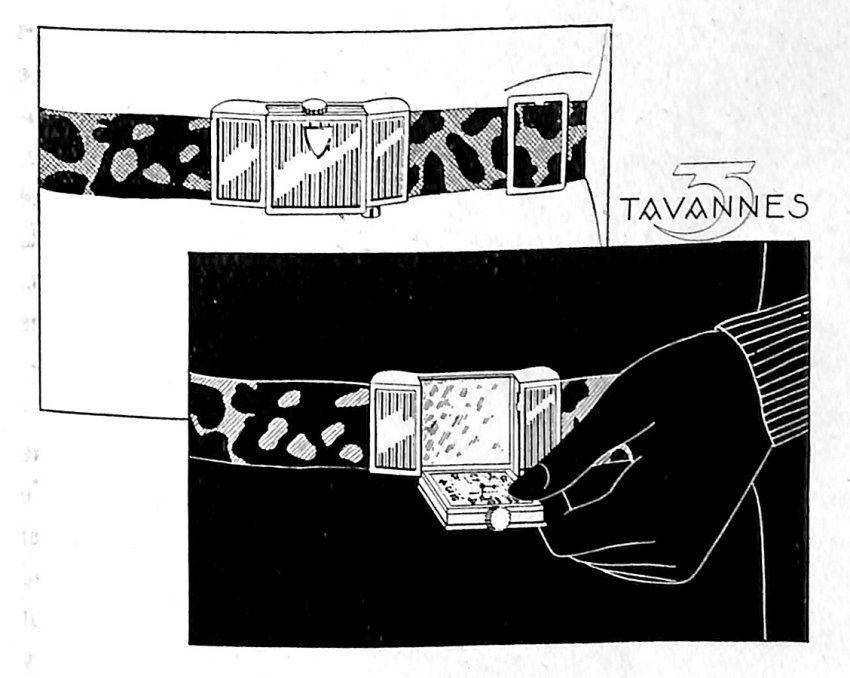
Belt watch produced by Tavannes Watch in the early 1930s

The Tavannes Watch was much in the news in 1936, due to what came to be known as the " Soviet Affair [28]". The Soviets were seeking to build up a watchmaking industry in the USSR, and wanted Swiss technological support. In the midst of the Factory Law, which forbade the construction of any watchmaking factories, and the ban on the export of "chablons", the Soviet attempt proved rather delicate. Many voices opposed the visit of Russian engineers wishing to acquire watchmaking machinery. However, in the greatest secrecy, a draft contract for the manufacture in the USSR of a watch with a round 17-line caliber had been prepared with Tavannes Watch. But it required the approval of the Federal Department of Economic Affairs, and the assent of the Swiss Chamber of Watchmaking. Both bodies firmly opposed the project, and the "Soviet affair" ended there.

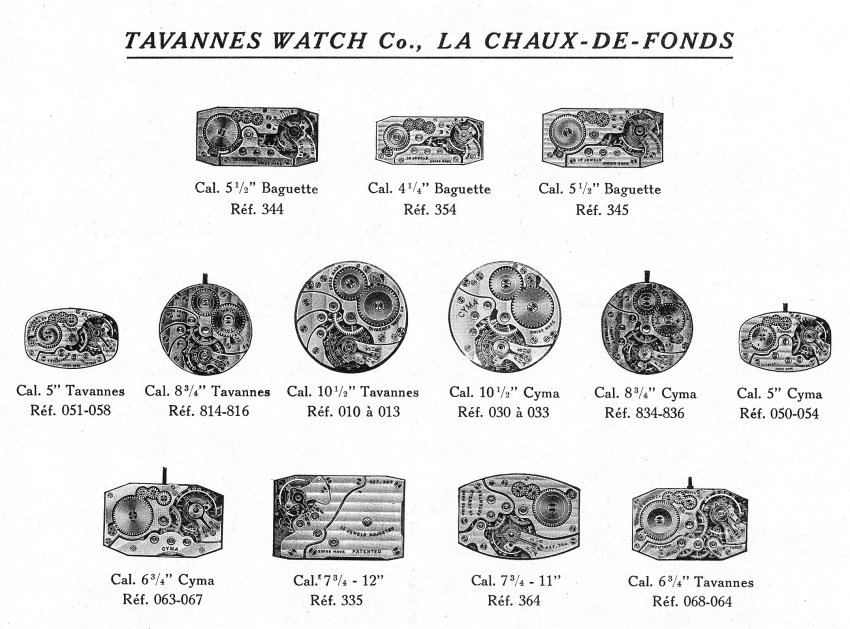
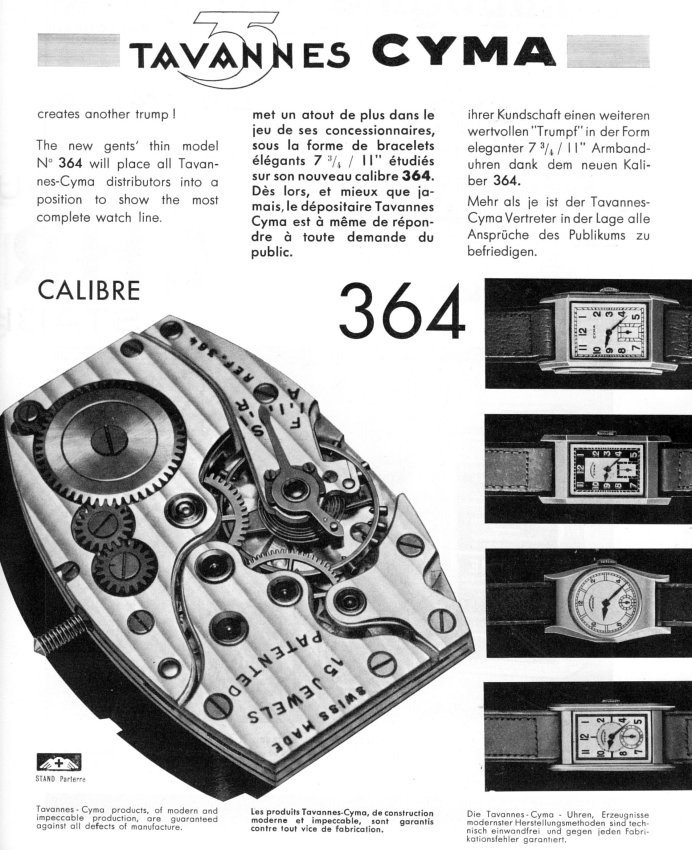
Also in 1936, Tavannes Watch presented nearly 20 different calibers at the Basel Fair, including the 364, a 7 ¾ / 11''' caliber that enabled the production of elegant rectangular watches.

1936

The following year, Tavannes offered its first waterproof " Watersport " watches, some of which were equipped with an anti-shock system developed in-house [29].

The Schwob family grows too. Some are involved in Tavannes, like Moïse and Anatole, others in Schwob companies like Arnold, Isaac, Théodore, Georges, Armand, René, Maurice and Raphaël! El the Schwobs are also present in other companies such as Tavaro in Geneva, Tacy Watch in Tavannes, or the Boillat foundry in Reconvillier.

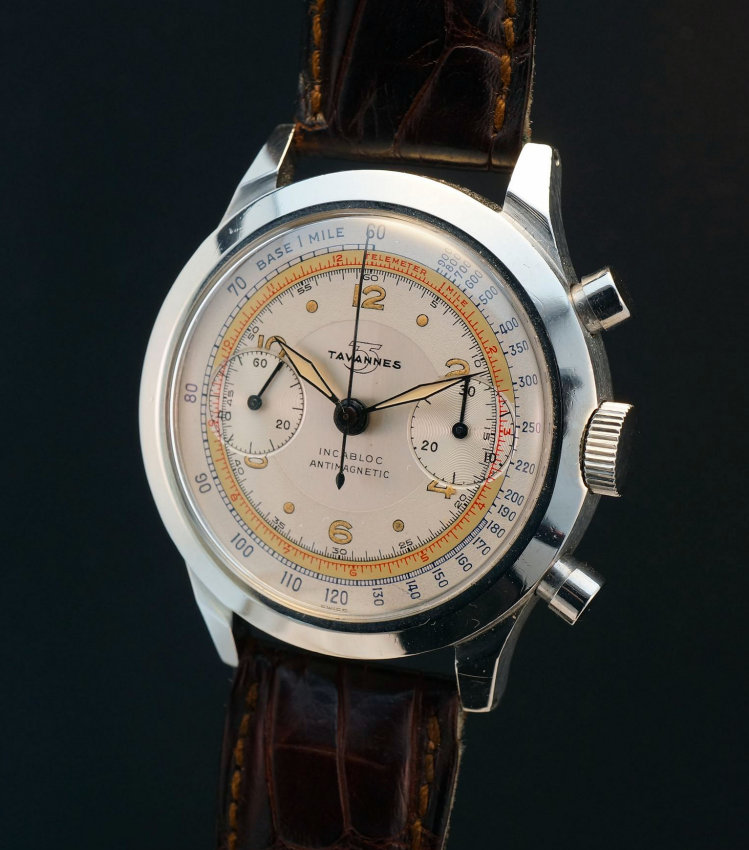
Chronographe Tavannes avec boîte étanche, années 1940. On reconnait le logo en forme de 5 stylisé représentant les 5 sites de l’entreprise

1938

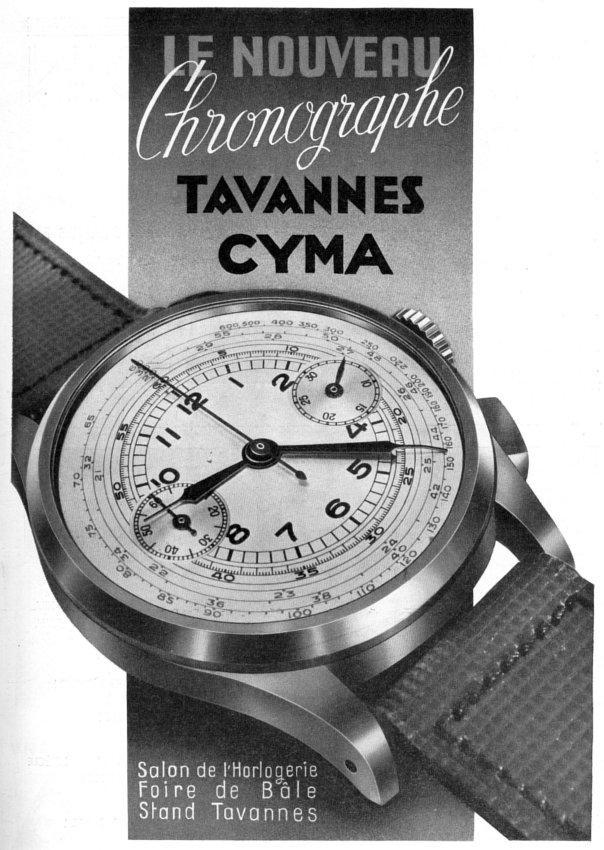
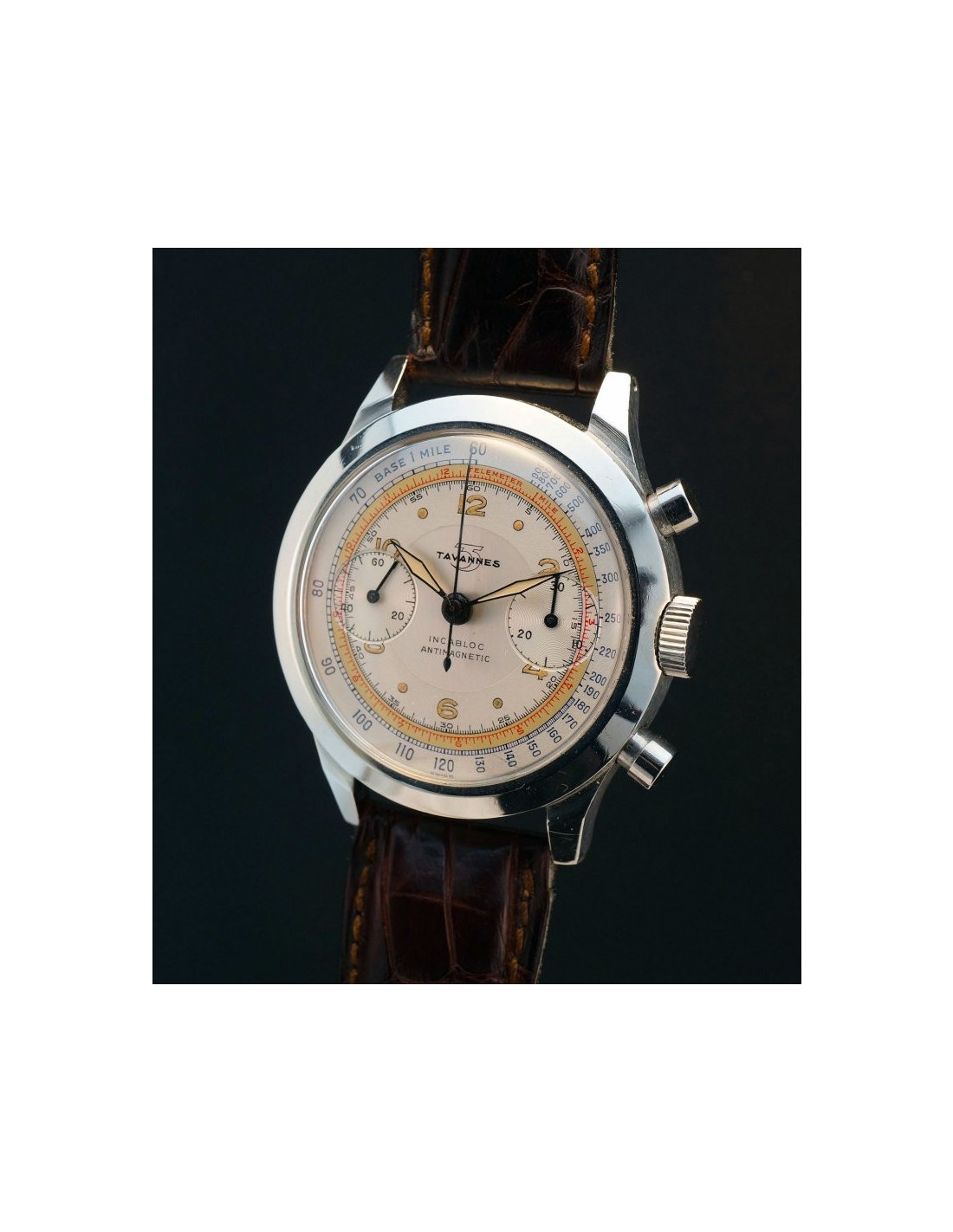
When the trusts regulating watch manufacturing in Switzerland were set up, Cyma did not join Ebauches SA and remained a Manufacture. The company therefore had no access to the Venus and Landeron chronograph calibers. It therefore launched its first chronograph in 1938 with a Valjoux caliber [30]. This model was offered in a classic case and, remarkably, also in a water-resistant case.

In 1939 Cyma-Tavannes reaches its peak: there are 2,000 employees producing 4,000 watches a day [31]. Technical advances focused on water-resistance, antimagnetism and shock-resistance.

During the 2nd World War, Cyma-Tavannes began manufacturing alarm clocks under the Cyma or Amic names.

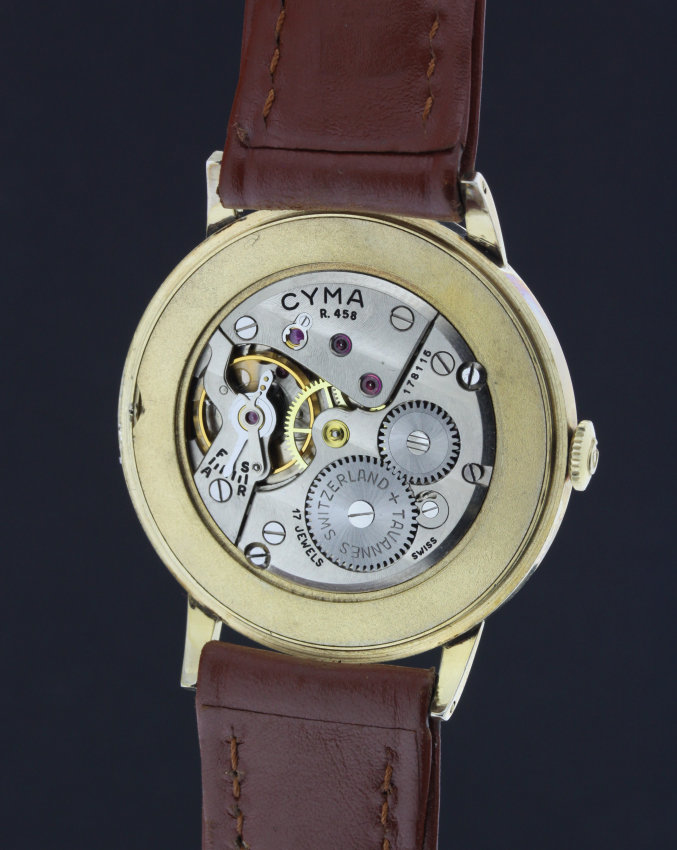
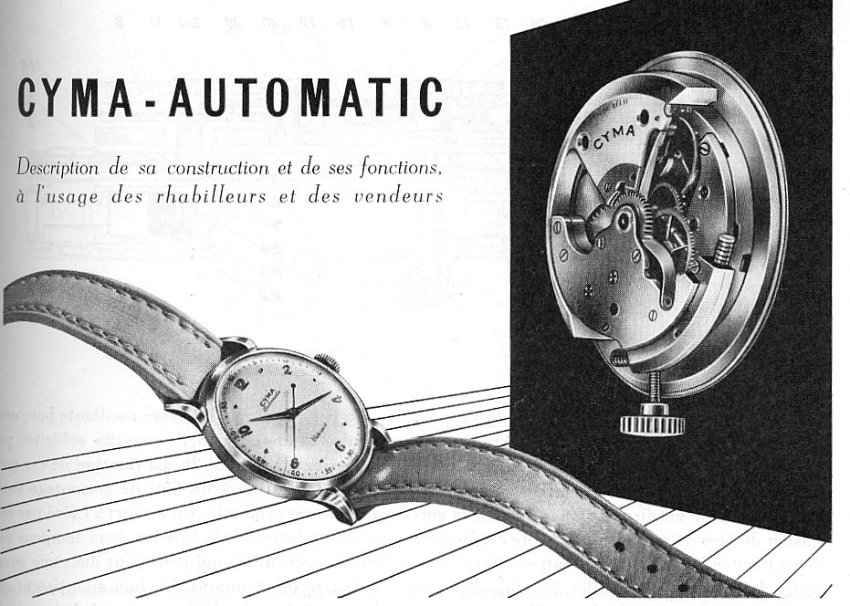
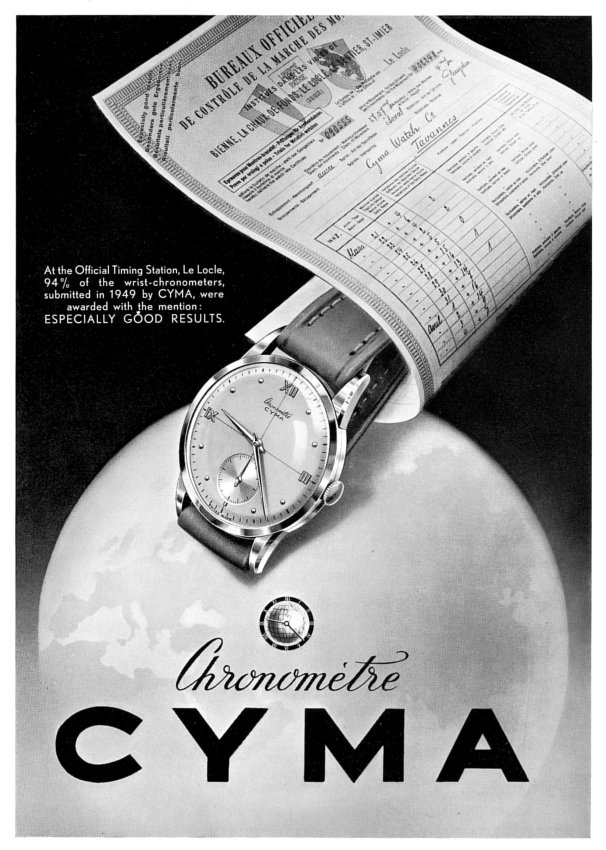
The post-war years were particularly active: launch of the first automatic watches in 1947, with a Manufacture caliber with oscillating weight, and series production of chronometers duly tested at the Le Locle control office.

1947

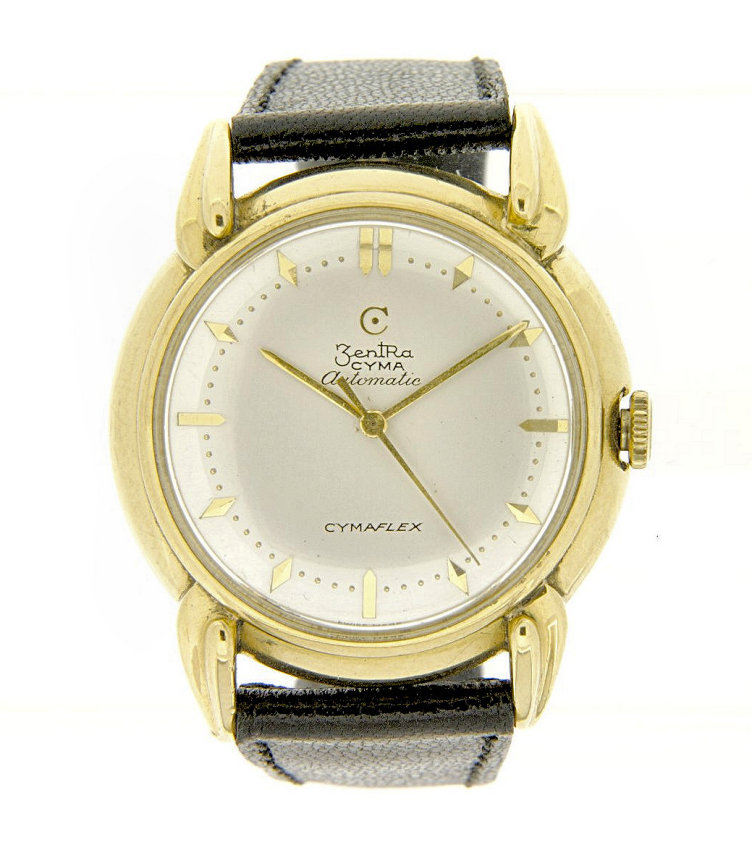
ZenTra-Tavannes automatic watch. In 1930, Tavannes joined forces with German wholesaler Markenuhr to supply watches under the ZenTra-Tavannes brand, which the wholesaler sold exclusively. This partnership led to the creation, also in 1930, of Zentra-Tavannes SA.

1951

In 1948, Schwob Frères & Co SA became Cyma Watch Co.

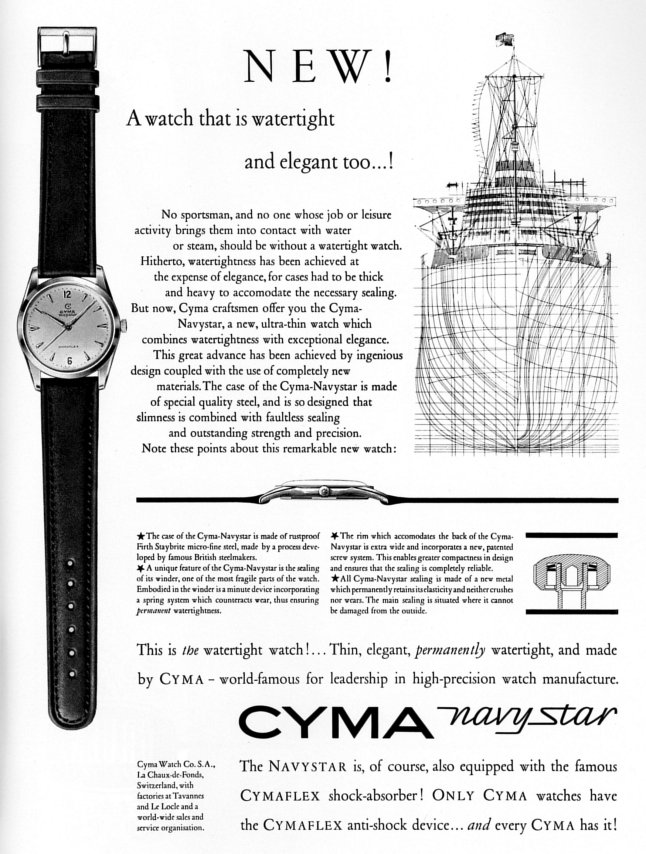
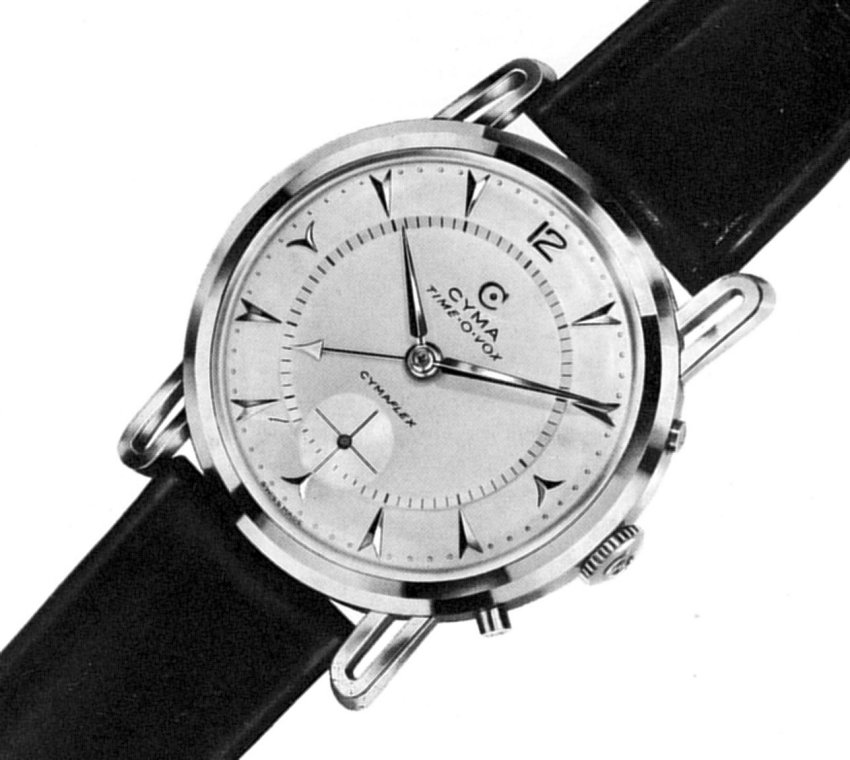
Cyma's commercial strategy is essentially based on technical excellence: manufacturing quality, sturdiness, precision. There is a brand policy, but no model policy. By the end of the 1940s, most of the major Swiss watch manufacturers already had successful models - Omega's Seamaster, Mido's Multifort, Vulcain's Cricket, Universal's Tricompax - but it wasn't until 1955, with the release of the Navystar automatic watch, and 1956, with the Time-O-Vox alarm watch, that Cyma was finally associated with model names.

1956

In 1958, Cyma launched an automatic manufacture rotor movement for ladies' watches called Cyma-Autorotor. The same principle was adapted to a caliber for men's watches, with or without date, the following year.

These were Cyma's last innovations. No significant new models were launched in the 1960s. The causes are difficult to pinpoint. After Anatole and Adrien, Maurice Schwob, Chairman of Tavannes Watch, Tavannes Machines and member of the Cyma Board of Directors, died in 1959 [32]. By 1963, the Schwob family was no longer at the helm: Charles Veillon and Ami Scholler took over the chairmanship of the boards of directors, even though the capital remained in the family [33]. There was also the competitive shock of the gradual lifting of the statut horloger, which protected the watchmaking industry until the early 1960s.

In any case, on October 13 1966, Cyma was absorbed by Chronos Holding [34]. Chronos Holding was created in 1966 by the Swiss Watchmaking Federation and ASUAG to encourage the concentration of watchmaking companies and their brands.

This takeover marks the programmed end of the Schwob family at Cyma-Tavannes.

2. Chronos-Holding

Integration into Chronos Holding enabled Cyma to use calibers from the Ébauches SA trust.

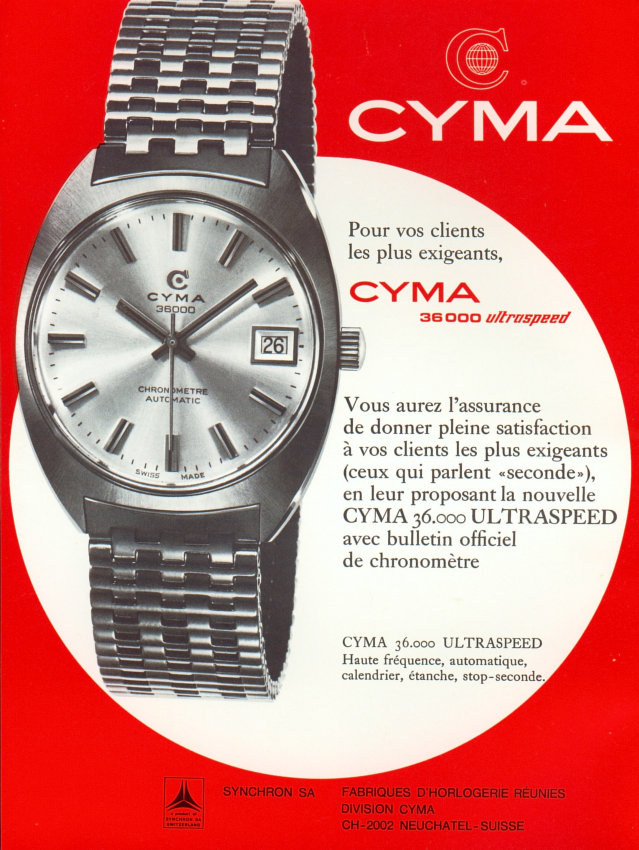
In 1968, Cyma 36,000 high-frequency movements were introduced [35]. These 36,000 A/h movements were developed at the end of the 1960s in collaboration with Fabriques d'Assortiment Réunies. They were used by many Swiss manufacturers until the mid-1970s, when they were replaced by 28,000 vph movements.

1971

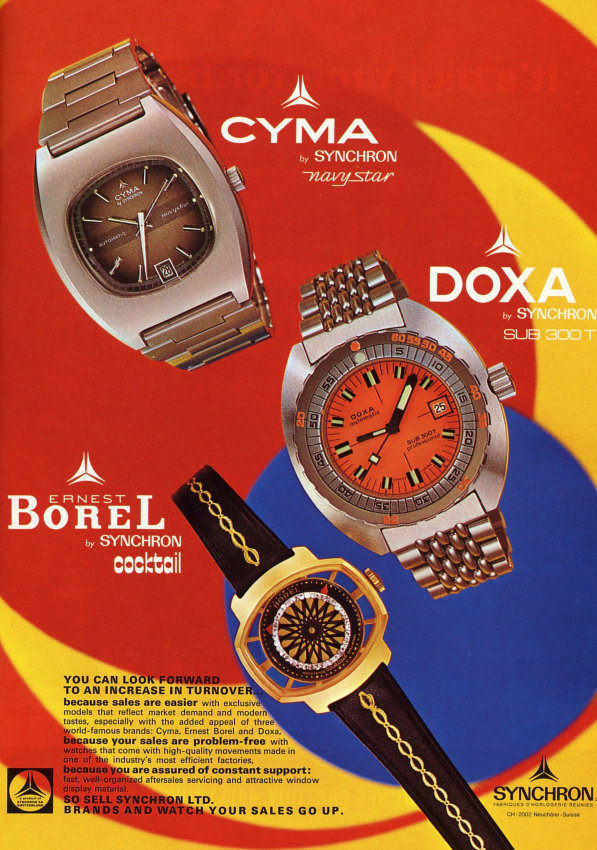
But Chronos Holding was to radically change the company, restructuring production, abandoning subcontracting and, above all, concentrating activities with the other companies that Chronos Holding bought out in 1968 to create the Synchron group: Ernest Borel and Doxa [36]. In simple terms, Cyma would sell automatic watches, Borel designer watches, in particular the revitalized Cocktail mobile dial model, and Doxa diving watches.

1973

In 1970, the Synchron group had access to the Beta quartz caliber from the Centre Électronique Horloger. Cyma quartz watches were produced at a price that made it impossible to sell them.

The following year, Ebauches SA decided to convert the Tavannes factory to the exclusive manufacture of alarm clocks and pendulettes [37]. Watches are manufactured in Le Locle for the entire Synchron group [38].

In 1972, the beautiful buildings in La Chaux-de-Fonds, the pride of the Schwob family, were sold to the commune [39].

The restructuring undertaken by Synchron was drastic. Since its creation, the group has gone from 450 to 180 employees. It has lost most of its production sites, including the largest, at Tavannes. Of its 39 calibers, only 7 remain [40].

The sales figures of Synchron, which had also absorbed Fabrique Auréole, were impressive in 1972 and 1973, but this was only a façade: debts accumulated and became colossal: over 17 million francs in 1976. In 1977, Synchron went into debt-restructuring moratorium, and in 1978 it was liquidated [41]. Doxa, Borel and Auréole were taken over by Marcel Aubry, who ran Fabrique Ciny in Le Noirmont, and Cyma was bought by Claude Guilgot (Fabrique Delvina in Geneva).

3. Guilgot period

Claude Guilgot founded Delvina in Geneva in 1958 to produce economical anchor watches [42]. The company successfully weathered the "quartz crisis" by joining forces with several other manufacturers [43] in 1972 to launch a quartz watch with LCD display: the Ditronic [44], then, in 1974, by joining forces with Buttes Watch, Milus and Pronto to create Sipra SA in order to globalize caliber purchasing and production [45].

1982

Claude Guilgot has adopted an original strategy for Cyma: to offer top-of-the-range quartz watches only in the markets he knows best: Spain, the Orient, the Middle East, South America and the United States.

To justify the term high-end, Cyma watches are made of steel or steel and gold, the crystal is sapphire, and above all, they are ultra-thin. To this end, Cyma developed its own ultra-thin quartz caliber (1.2 mm) in collaboration with PUW in Germany [46].

In 1984, the Cyma agency in New York recruited Hugh Glenn, formerly of Omega, who was to relaunch Cyma in the USA in spectacular fashion. Cyma also launched into jewelry watches.

In 1996, the United States accounted for 60% of Cyma's sales, and the company launched an original model, the Golden Duo, with two quartz modules for two time zones [47].

In 1998 Cyma adopted ETA's Autoquartz caliber, combining quartz and automatic winding [48].

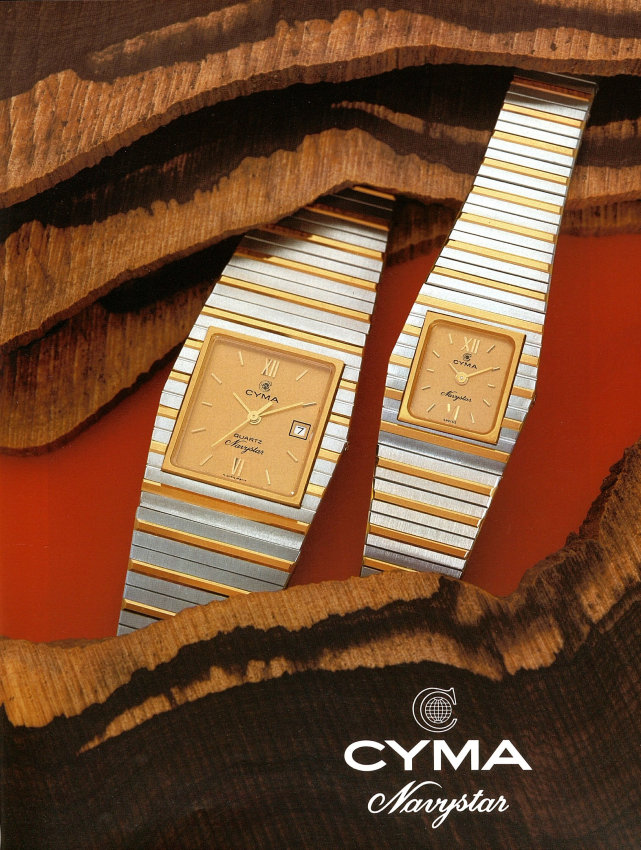
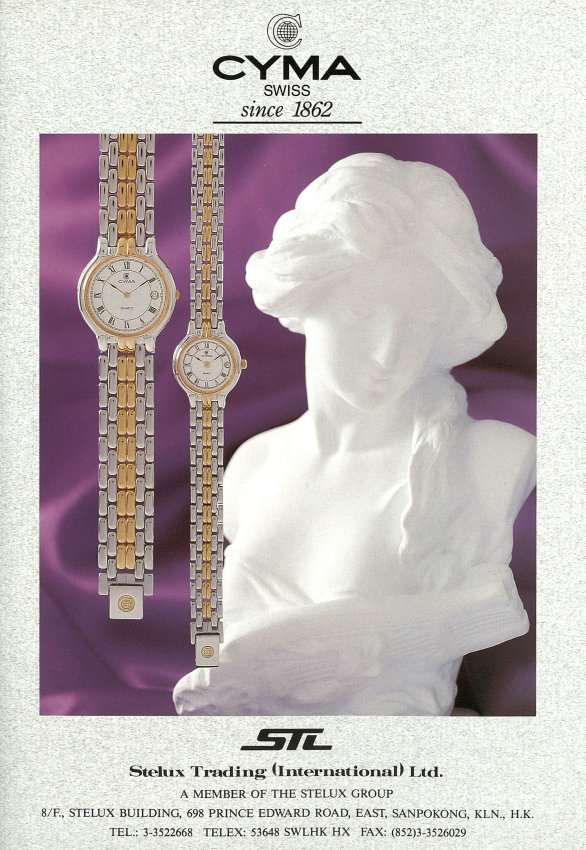
Highly exposed in the United States, Cyma did not survive the crisis of 2008 and the death of Claude Guilgot in 2010: in 2011 Cyma was acquired by the Chinese group Stelux, already owner of Universal Genève, Solvil & Titus and Pronto. From then on, Cyma was limited to Asian markets [49].

1989

Finally, in 2008, the Tavannes Watch Co brand was relaunched by the Niculescu family, Florin Niculescu having been President of Cyma USA in 2006 [50].


Acknowledgements: most of the watch archives were consulted at the Musée International d'Horlogerie in La Chaux-de-Fonds, and I would like to extend my warmest thanks to the Museum's curator, Mr. Régis Huguenin, and his team for their warm welcome.

Information about the Submarine model was provided by David Boettcher. More details are available on his website: https://www.vintagewatchstraps.com/tavannes.php

The archives of the Fédération horlogère, Le Davoine and L'Impartial are available online at www.doc.rero.ch 


[1] The history provided on the https://tavannes-watch.swiss/about-us/ website (consulted in March 2022) is quite complete

[2] Revue internationale d’Horlogerie, 1923, pp 1 

[3] The Schwobs were of Alsatian origin, as were many watchmaking entrepreneurs in La Chaux de Fonds and Le Locle, including the founders of the Marvin, Movado and Vulcain factories.

[4] http://judaisme.sdv.fr/synagog/hautrhin/g-p/hegenh/horloge/cyma.htm Consulted in February 2022

[5] In the end, 1891, the year in which the company began operations in Tavannes, was chosen as the year of creation in subsequent communications. The Tavannes Watch Co. should not be confused with the Nouvelle Fabrique de Tavannes, founded in 1902 in Tavannes by members of the Hirsch family.

[6] Revue internationale d’Horlogerie, 1914, p.1023

[7] Joël Pynson, Le chronographe de poche suisse, Editions Chronométrophilia-Simonin, 2015, p. 75

[8] Pierre-Yves Donzé, Les patrons horlogers de La Chaux-de-Fonds, Editions Alphil, 2007, p. 157. American electroplated cases were inexpensive and of excellent quality. At the end of the 19th century, they even put many Swiss box makers out of business.

[9] La Fédération horlogère, 14 septembre 1899, p.428

[10] La Fédération horlogère, 9 octobre 1902, p.489

[11] Revue internationale d’Horlogerie, 1914, p.1028. However, the escapement was modified: the monometallic balance was replaced by a compensated balance, and the balance-spring was made of nickel steel. These improvements were also used for the Submarine watch.

[12] Revue internationale d’Horlogerie, 1905, pp 876

[13] L’Impartial, 10 mars 1906, p.6

[14] La Fédération horlogère, 1908, p.470

[15] Revue internationale d’Horlogerie, 1909, p.598

[16] Revue Internationale d’Horlogerie, 1910, p. 585

[17] Revue internationale d’Horlogerie, 1910, p.585-586

[18] Revue Internationale d’Horlogerie, 1914, p. 1028

[19] Revue internationale d’Horlogerie, 1923, p.21

[20] La Fédération horlogère, 14 novembre 1925, p.847

[21] La Fédération Horlogère, 8 avril 1916, p.181. The fact that the Schwob family chose to supply only the Allies may have had something to do with the fact that part of the family was French. Many other manufacturers were boycotted: Movado, Election, Vulcain, Zénith, Le Phare and others.

[22] For a detailed history of this watch, see David Boettcher's excellent article on https://www.vintagewatchstraps.com/tavannes.php

[23] Revue internationale d’Horlogerie, 1923, p.20

[24] Journal Suisse d’Horlogerie, 1938, 11, p. 194 

[25] Journal Suisse d’Horlogerie, 1938, pp 194 

[26] Revue internationale de l’Horlogerie, 1920, p.1359

[27] La Fédération horlogère, 30 octobre 1929, p. 857. The patent for the “La Captive” watch was registered in 1928 (CH 137514). But the operating features were patented by Jean Weil of Geneva (patent CH 136713), and passed on to Schwob Frères & Cie in 1929.

[28] La Fédération Horlogère, 12 février 1936, p. 33

[29] Patent CH198769. This system was subsequently further improved and named Cymaflex in the early 1950s.

[30] Valjoux joined the Ébauches SA trust in 1944.

[31] Journal Suisse d’Horlogerie, 1941, p.53

[32] Revue internationale d’Horlogerie, 1959, 4, p.28

[33] L’Impartial, 30 janvier 1963, p.9

[34] Journal Suisse d’Horlogerie, 1967, 1, p.52

[35] Cyma had in fact been interested in high frequencies since 1964, when it joined the Communauté d'Horlogerie de Précision, a group of manufacturers who joined forces to pool their efforts in the manufacture and technical improvement of watches.

[36] Journal Suisse d’Horlogerie 1969, 4, p.402

[37] L’Impartial 17 avril 1970, p.13

[38] L’Impartial 13 novembre 1970, p.3

[39] L’Impartial, 18 février 1972, p.3

[40] L’Impartial, 16 février 1972, p. 5

[41] L’Impartial, 16 février 1978, p.1

[42] L’Impartial, 20 décembre 1984, p.11

[43] It was Buttes Watch, Glycine, Milus and Wyler

[44] Journal Suisse d’Horlogerie, 1972, 3, p.308

[45] La Suisse horlogère, Édition hebdomadaire, 1974, 3, p.73

[46] L’Impartial, 20 décembre 1984, p.11. This caliber was also used by Raymond Weil.

[47] L’Impartial, 25 avril 1996, p.9

[48] L’Impartial, 29 avril 1998, p.14

[49] Stelux Holdings International, Annual Report 2011

[50] https://tavannes-watch.swiss/about-us/ consulted in March 2022
Notes :

About Time To Tell: Time To Tell has one of the largest private digitized databases on the history of Swiss watchmaking, with over 2.3 TB of data on more than 1,000 Swiss watch manufacturers. This database has been built up over a period of some thirty years, and continues to be fed with around 50 to 100 GB of data every year. The database is made up of old documents, mainly Swiss trade journals, dating from the late 19th to the late 20th century. Most of these documents are not available on the Internet. Historical articles published on the time2tell.com website always cite the sources used.

Time To Tell is a private company, independent of any watch manufacturer.

©Time To Tell, 2023-2025 

Reproduction forbidden without authorization.

Any use of this article by artificial intelligence is strictly forbidden and will be considered an infringement of copyright.

Product Details

Product added to wishlist

Nous utilisons des cookies afin de fournir une expérience utilisateur conviviale. En naviguant sur ce site, vous acceptez la politique d'utilisation des cookies.