The true story of Driva watches

The true story of Driva watches

Driva

This La Chaux-de-Fonds-based watchmaker made a name for itself in 1937 with the launch of the first mass-produced repeater wristwatch, and in the 1970s with "concept-watches" that were far ahead of their time.
Description

Joël Pynson

June 2025

1. Creation in La Chaux-de-Fonds

The Compagnie des Montres Driva was founded in La Chaux-de-Fonds in 1924 by Louis-René-Henri Hirsch [1]. The Hirsch family was an old Alsatian family, and the patriarch, Achille Hirsch, had already established several watchmaking factories.

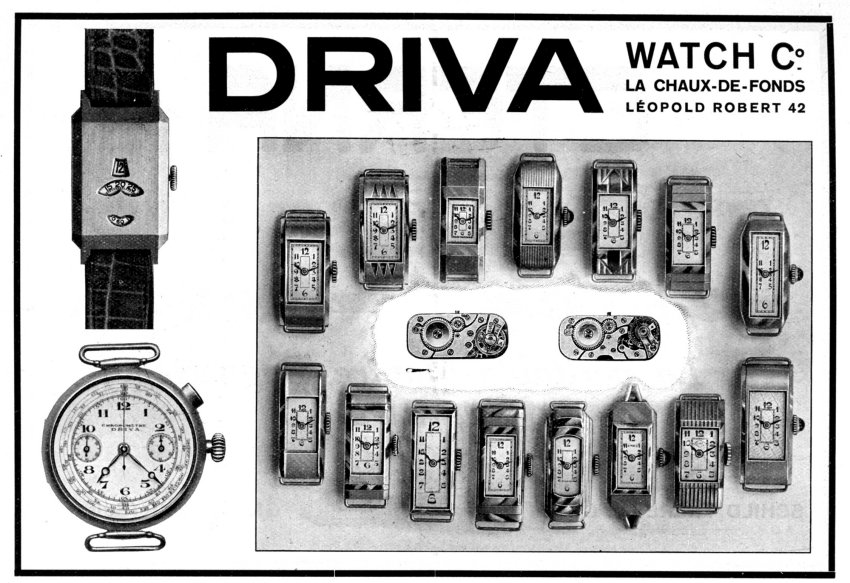
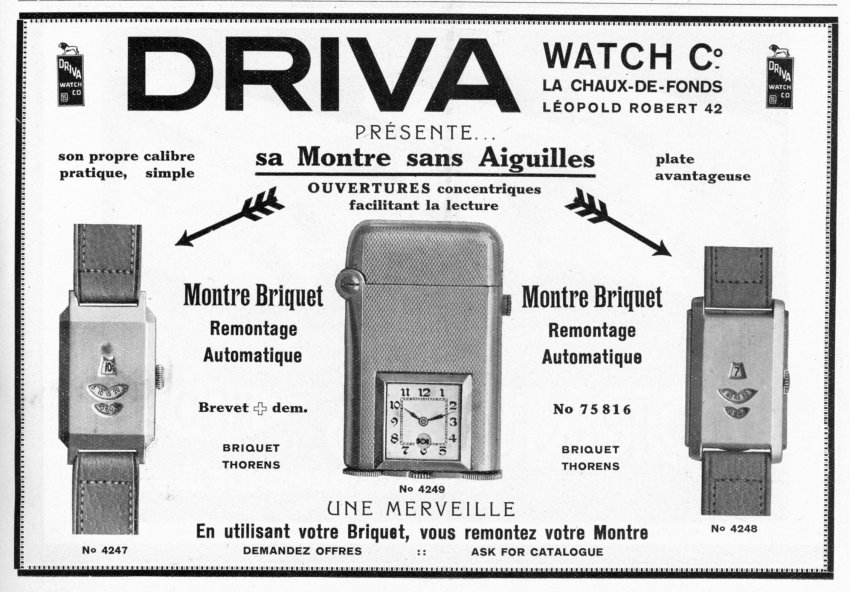
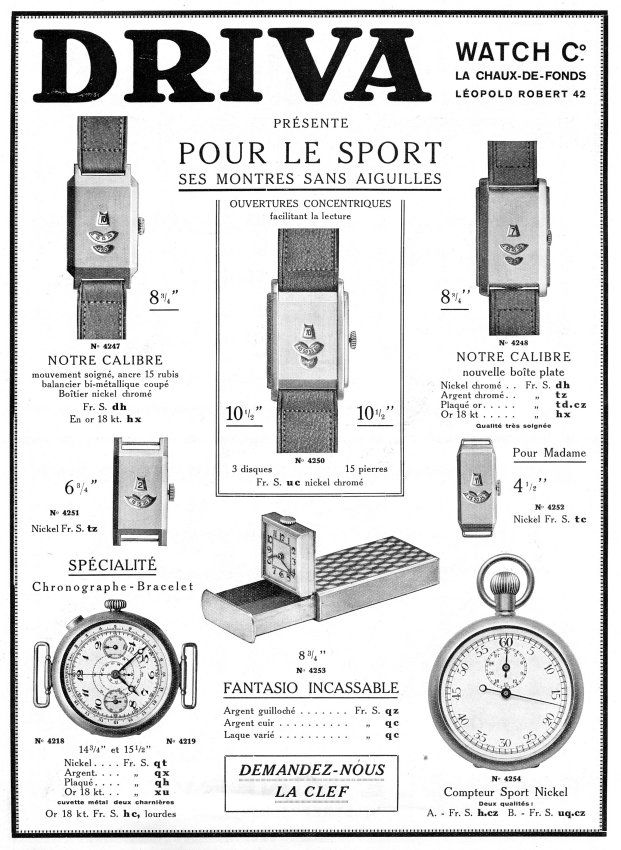
Driva is a generalist manufacturer of all kinds of wristwatches, including chronographs. It was also a creator of original models such as the automatic winding lighter watch, marketed from 1931 by Herman Thorens in Sainte-Croix, or the Ermeto type watch, Fantasio, launched the following year.

1927

1931

1931

1931

1932

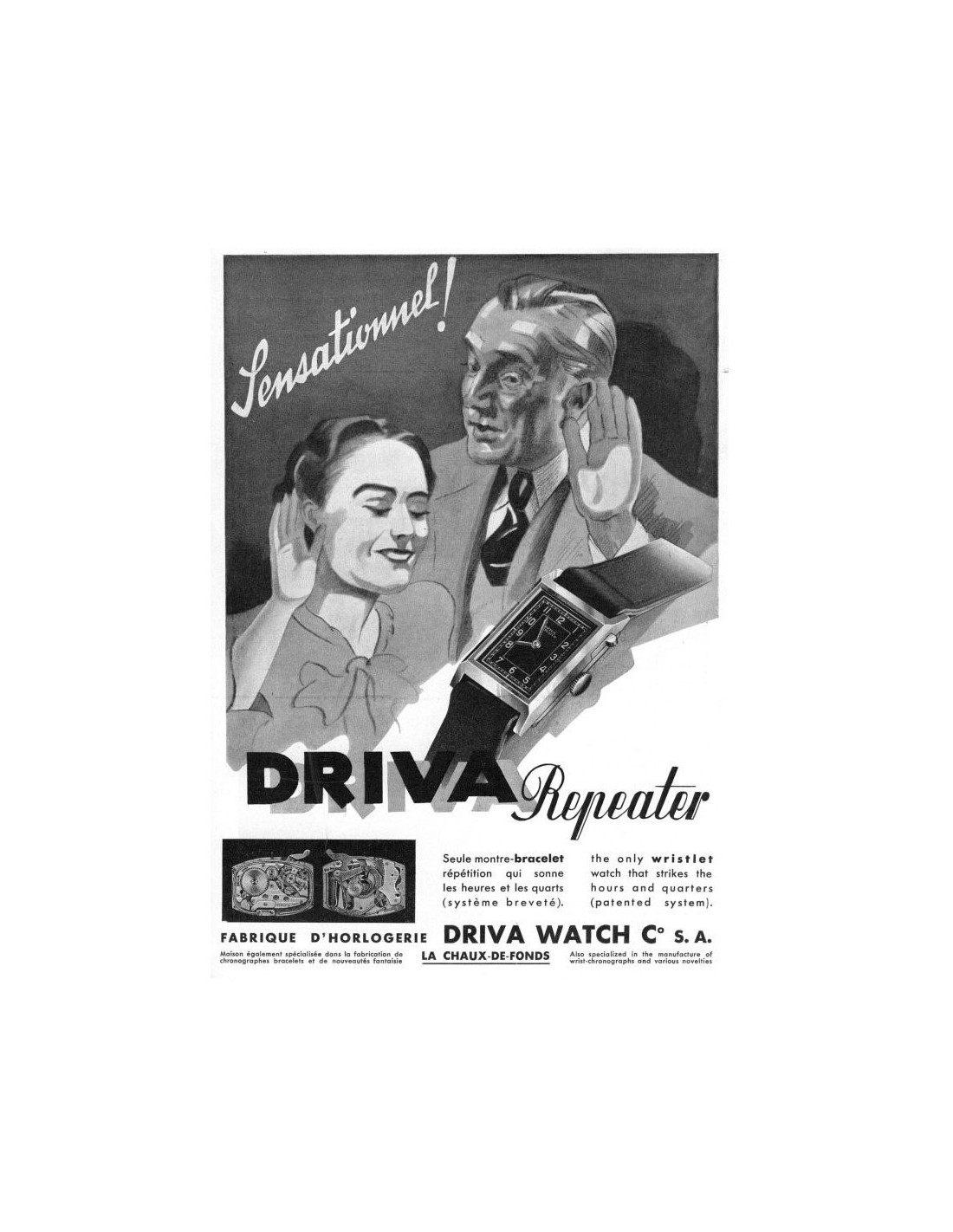
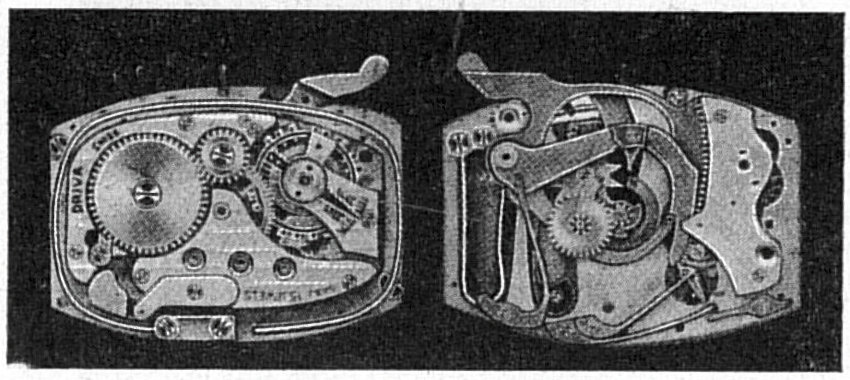
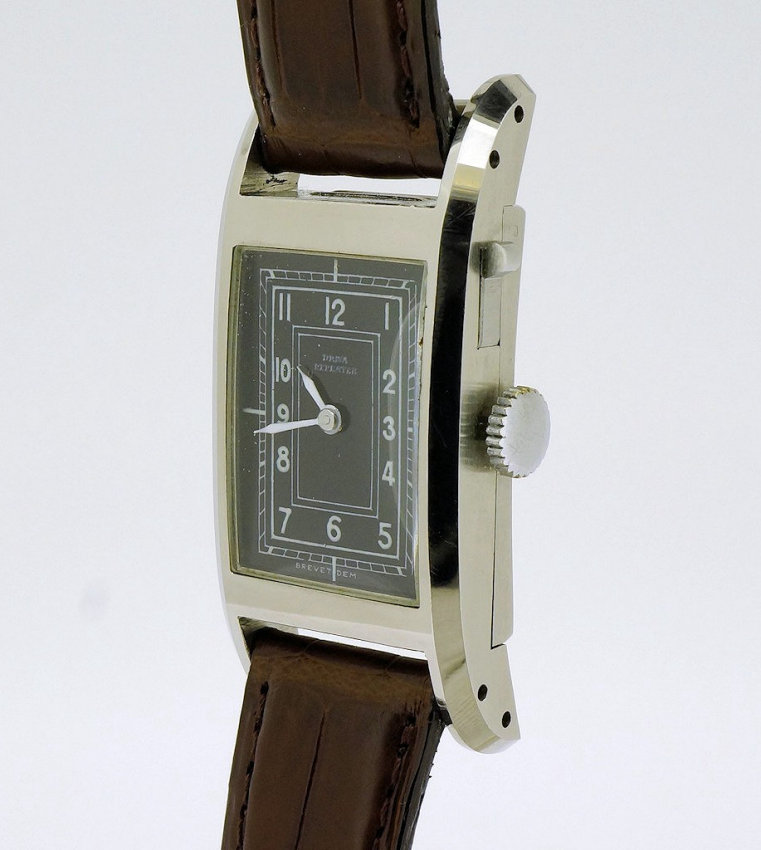
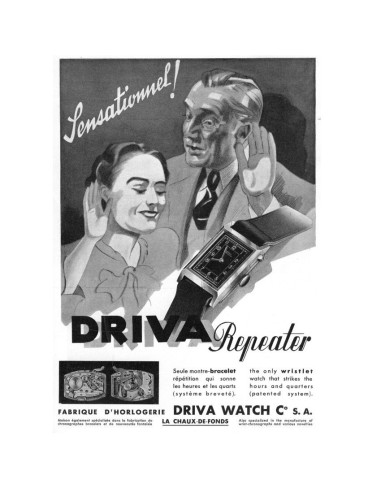
Driva's breakthrough came in 1937 with the launch of the Driva-Repeater, the first mass-produced repeater wristwatch.

This is how the watch was presented at its launch [2]:

"This company presents the first wristwatch with hour and quarter striking. It's easy to see that introducing such a mechanism into a wristwatch poses some tricky technical problems, especially since the aim is to create a robust and relatively simple striking mechanism that lends itself to mechanical manufacture. The 15.50 x 24 mm (7-11 1/2 lines) tonneau-shaped movement carries an additional 20 x 28 mm rectangular plate, which houses the striking mechanism components. The overall height of the movement is 6 mm. The tonneau-shaped gong surrounds the movement over ¾ of its circumference. The striking of the quarters is distinguished from that of the hours by the striking of 2 strokes closer together on the same gong.

The ingeniously designed striking mechanism ensures that the chimes are struck with a minimum of parts, whose functions are no more delicate than those of a pocket-watch repeater. This is the essential point of this construction, which is distinguished by the simplicity and robustness of its components, while retaining the wristwatch's normal format."

1937

Driva continues to expand with the launch of numerous new models, in particular a range of water-resistant watches.

1938

In 1939, Louis-René-Henri Hirsch decided to move his company to Geneva [3].

2. Driva Genève

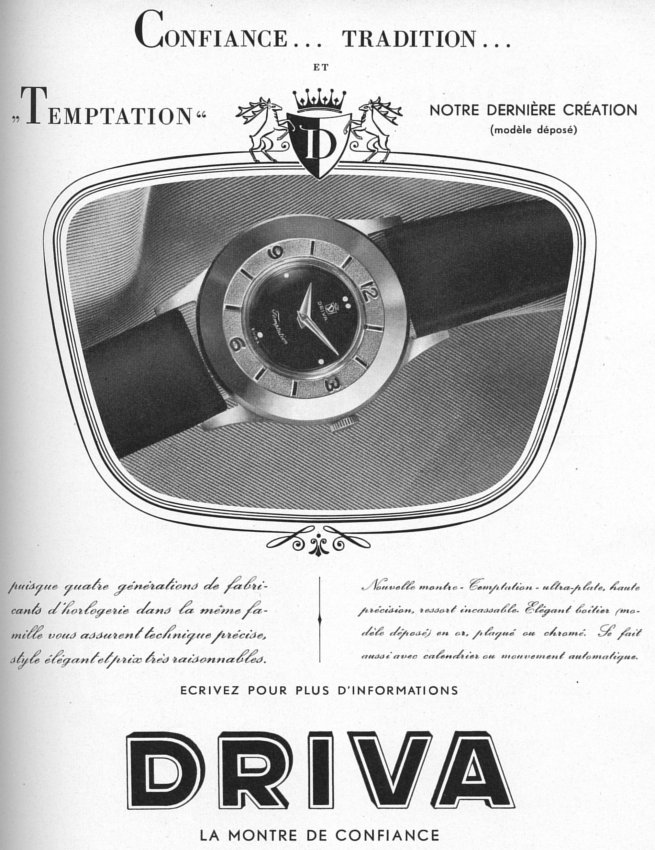
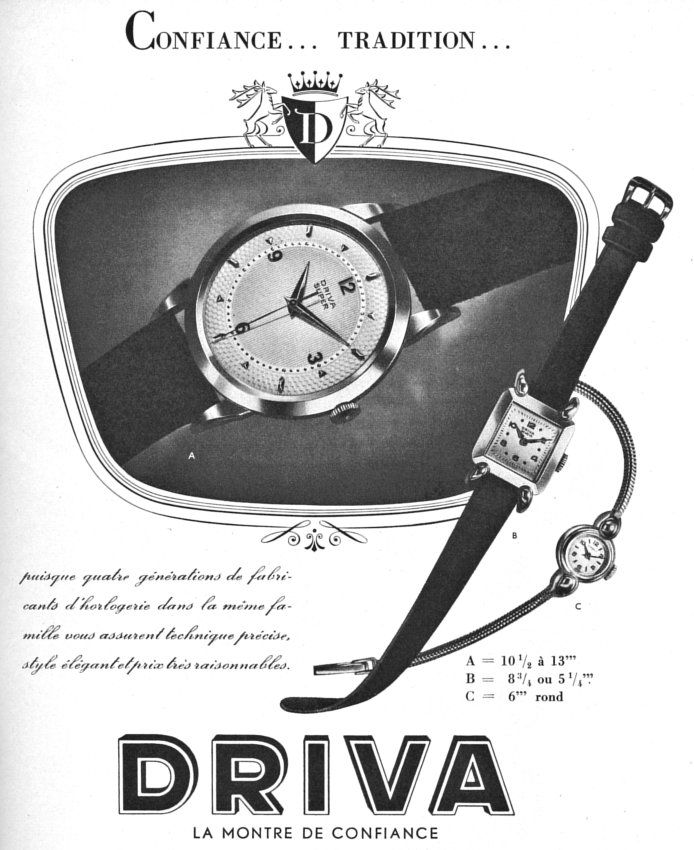
In the 1940s, Louis-René-Henri Hirsch moved to New York, and Félix Hirsch took over the management of the company [4]. Numerous classic models were launched.

1939

1943

In 1951, Roland Hirsch joins the company's Board of Directors.

1953

1953

Félix Hirsch died in 1953, and the company quickly collapsed.

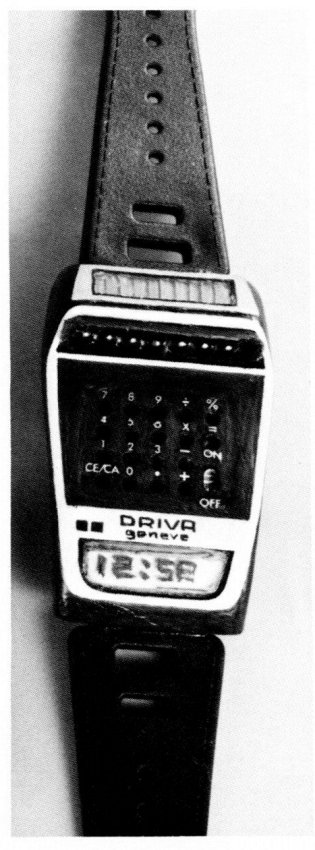
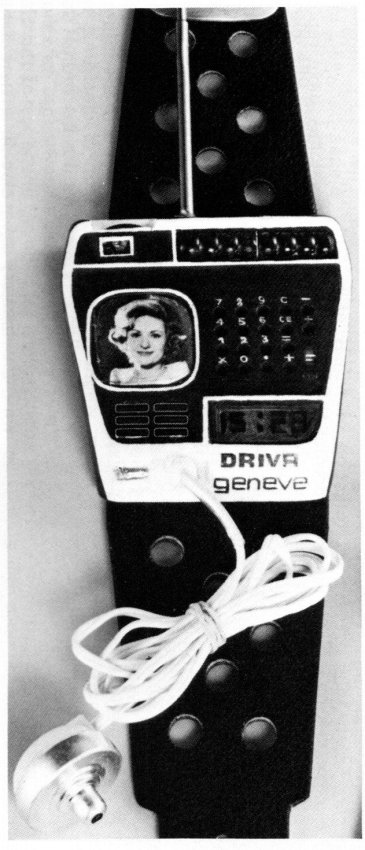
In the midst of the "quartz crisis", Roland Hirsch attempted a revival in 1976 with extraordinary electronic watches for the time: solar quartz watches with calculator, and an incredible watch with calculator, radio and television!

However, the actual functionality of these watches is questionable. There was probably no technology of this type available in Switzerland: electronic modules at that time came from the USA [5]. Miniaturization of the TV screen in particular was impossible in 1976. So it was more a case of "concept watches", perhaps designed to relaunch the brand.

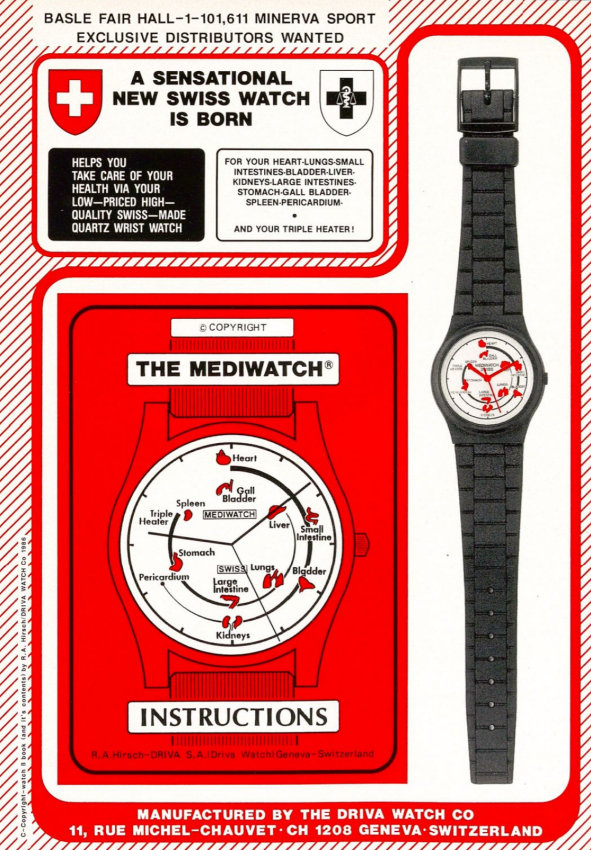
The end of the road for the company came in 1988 with the launch of the Mediwatch, a simple quartz watch featuring the different organs of the body on the dial and the time of day to take care of them according to traditional Chinese medicine! A sad end for a traditional watchmaker.

1988

[1] FOSC 1924

[2] Journal Suisse d'Horlogerie, 1937, 1-2, p. 46

[3] FOSC 1939

[4] FOSC 1944

[5] Joël Pynson, La " crise du quartz " et l'horlogerie suisse, Chronométrophilia, 2021, pp. 97-116

The FOSC (Feuille Officielle Suisse du Commerce) is available on E-periodica

Notes :

About Time To Tell: Time To Tell has one of the largest private digitized databases on the history of Swiss watchmaking, with over 2.3 TB of data on more than 1,000 Swiss watch manufacturers. This database has been built up over a period of some thirty years, and continues to be fed with around 50 to 100 GB of data every year. The database is made up of old documents, mainly Swiss trade journals, dating from the late 19th to the late 20th century. Most of these documents are not available on the Internet. Historical articles published on the time2tell.com website always cite the sources used.

Time To Tell is a private company, independent of any watch manufacturer.

©Time To Tell, 2025 

Reproduction forbidden without authorization.

Any use of this article by artificial intelligence is strictly forbidden and will be considered an infringement of copyright.

Product Details

Product added to wishlist

Nous utilisons des cookies afin de fournir une expérience utilisateur conviviale. En naviguant sur ce site, vous acceptez la politique d'utilisation des cookies.