• New
The True Story of Century Time and Vacuum-Sealed Watches

The True Story of Century Time and Vacuum-Sealed Watches

Century

Patented by Hans-Ulrich Klingenberg, vacuum watches were marketed by several Swiss manufacturers beginning in the 1960s. Klingenberg also founded the company Century Time, which is still in business today.
Description

Joël Pynson

November 2025

1. Getting Started at Glycine

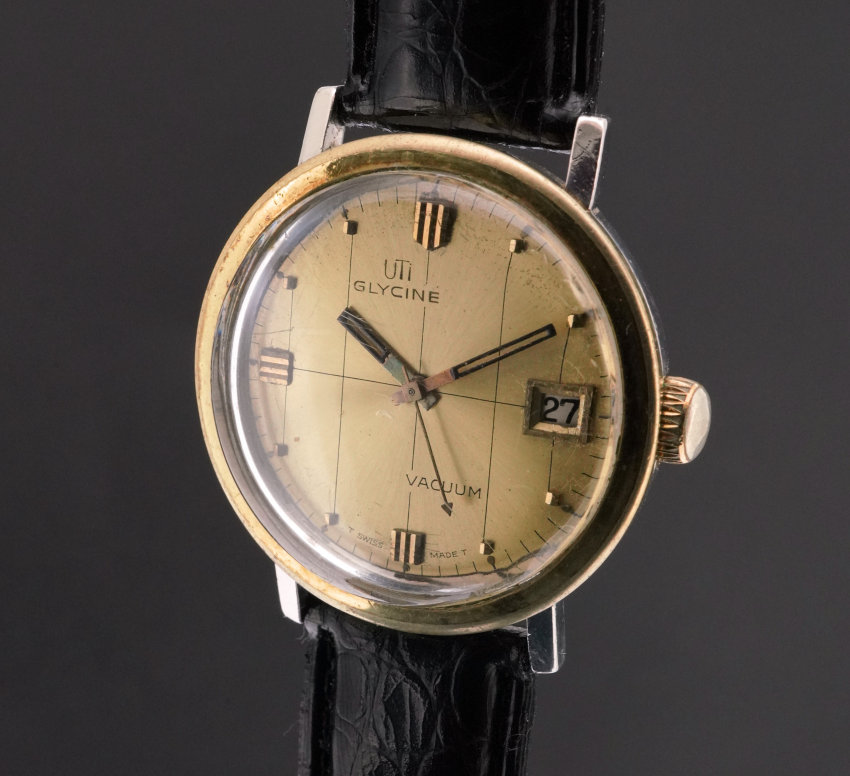
The history of vacuum-sealed wristwatches began in the early 1950s in Biel, at the Glycine factory: to protect the movements being shipped to countries around the world, they were placed in a small box that was evacuated of air using a simple needle. This allowed the movements to be preserved in optimal conditions, even after long months of storage under sometimes difficult conditions, since there was no longer any moisture in the box. Hence the idea that a watch could also benefit from this treatment [1].

The first Glycine Vacuum automatic watches were launched in 1960. They featured a one-piece case and mineral glass, which was more water-resistant than acrylic glass. It was the significant vacuum created inside the case that held the glass in place, although the bezel extended slightly over the glass in case the vacuum failed to hold.

There were numerous advantages: no moisture inside the case, no dust, and therefore no oxidation of the parts or oils; greater accuracy; and water resistance equivalent to a depth of 250 meters.

Due to the vacuum, the watch’s timing had to be adjusted, as the balance wheel spun faster. This also served as an indicator in the event of a loss of vacuum in the case: the watch would begin to lose time by about 15 seconds per day.

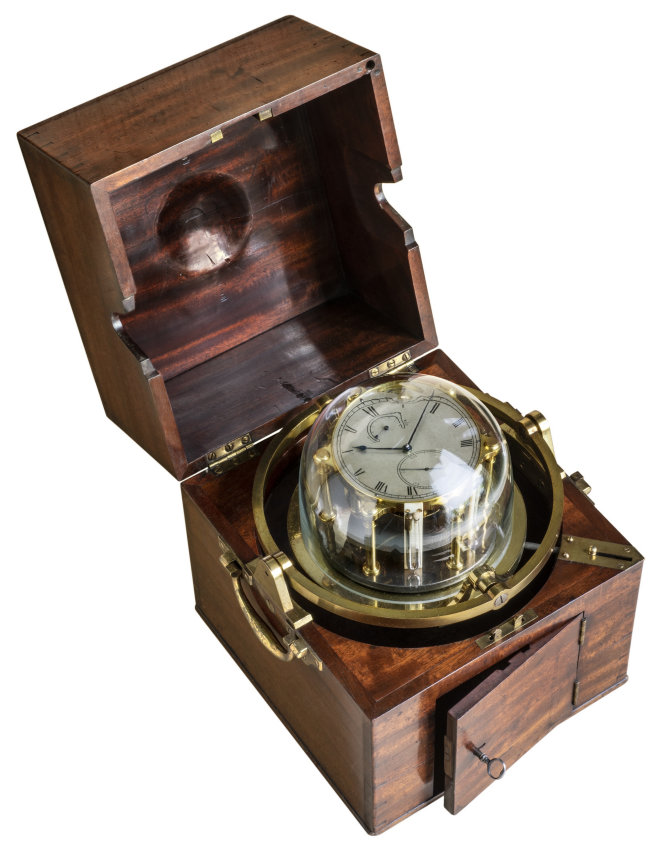
Joseph Manton vacuo chronometer - Credit : tobiasbirch.com

The principle of the vacuum in a watch movement was already known: Joseph Manton, in London, had filed a patent on the subject as early as 1807 and had manufactured “in vacuo chronometers” that had been tested at the Greenwich Observatory [3]. But thanks to more modern techniques, it became possible to consider patenting an improvement to the process, which was done in 1959.

Curiously, the patent [2] for vacuum cases was held by Hans-Ulrich Klingenberg, sales manager for the U.S. and Asia at Glycine & Altus [4], and not by the Glycine factory itself. This likely explains why other manufacturers, such as Jaquet-Girard and Marvin [5], also launched vacuum-sealed watches, and why, a few years later, Hans-Ulrich Klingenberg decided to start manufacturing watches himself.

2. From Vacuum Chronometer to Century Time

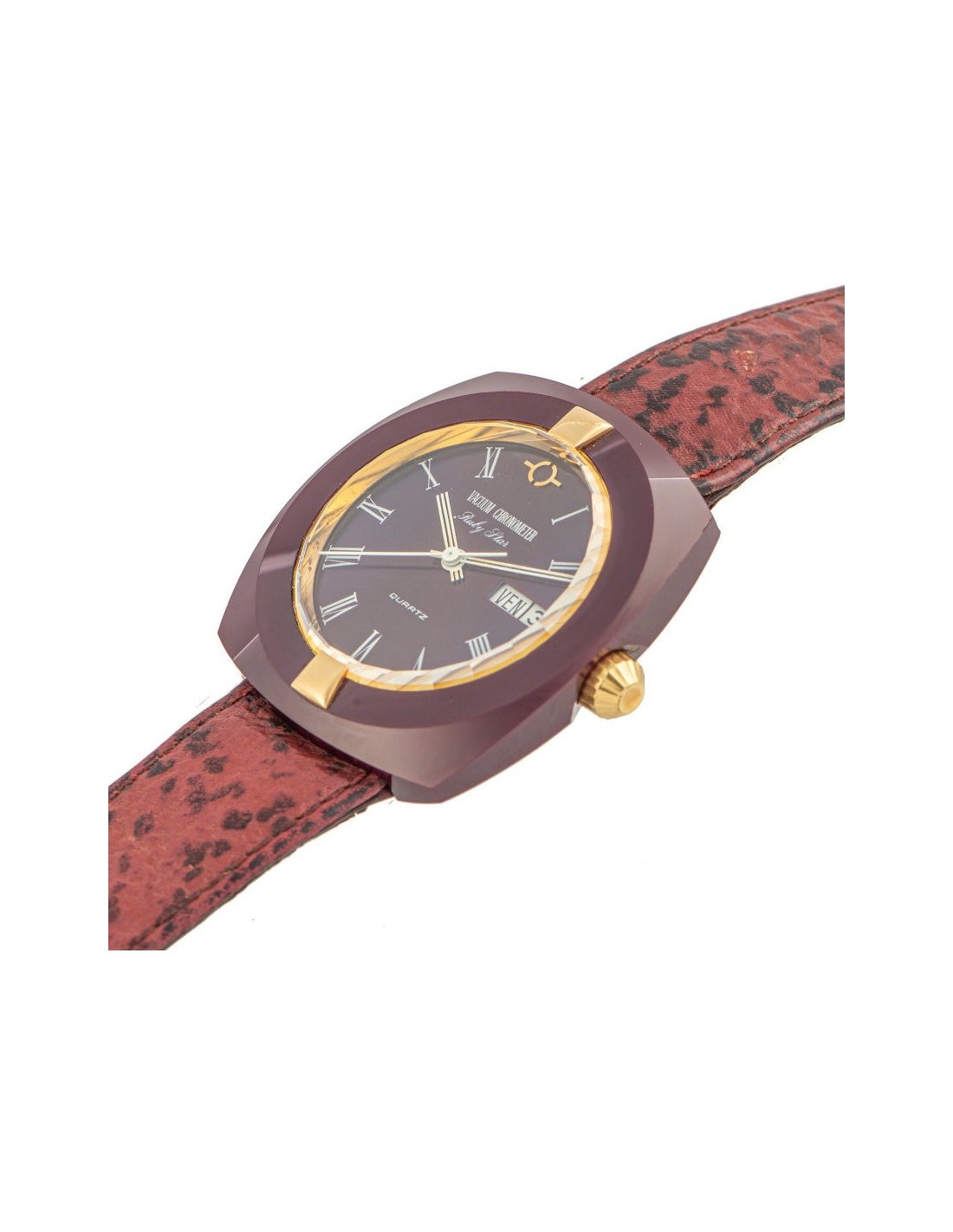
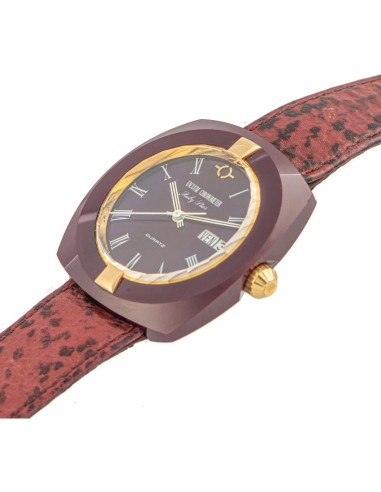
Hans-Ulrich Klingenberg founded the company Vacuum Chronometer in Biel in 1966 [6]. That same year, he registered the brand’s logo, consisting of two hemispheres, as a tribute to the Magdeburg hemispheres, which had been used to demonstrate the existence of a vacuum in the 17th century [7].

In 1967, he registered the Century trademark and founded the company Chronotech to market the watches he designed [8].

1972

1975

Credit : antiquorum

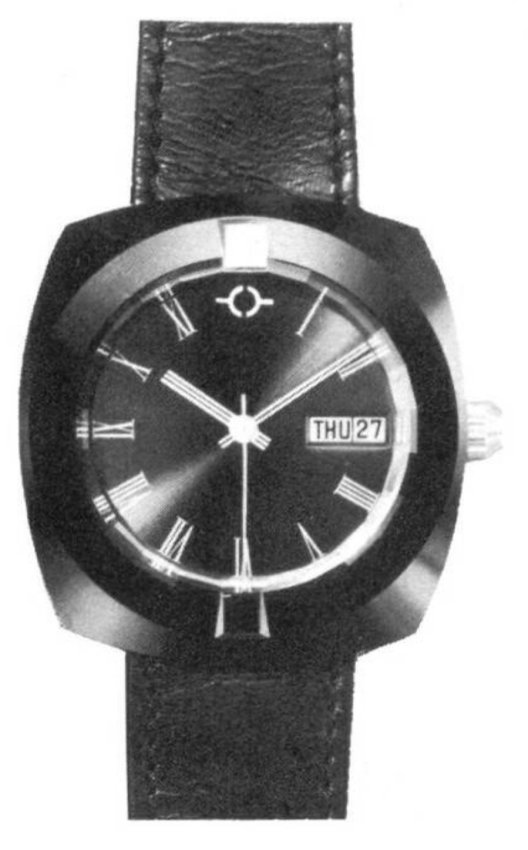
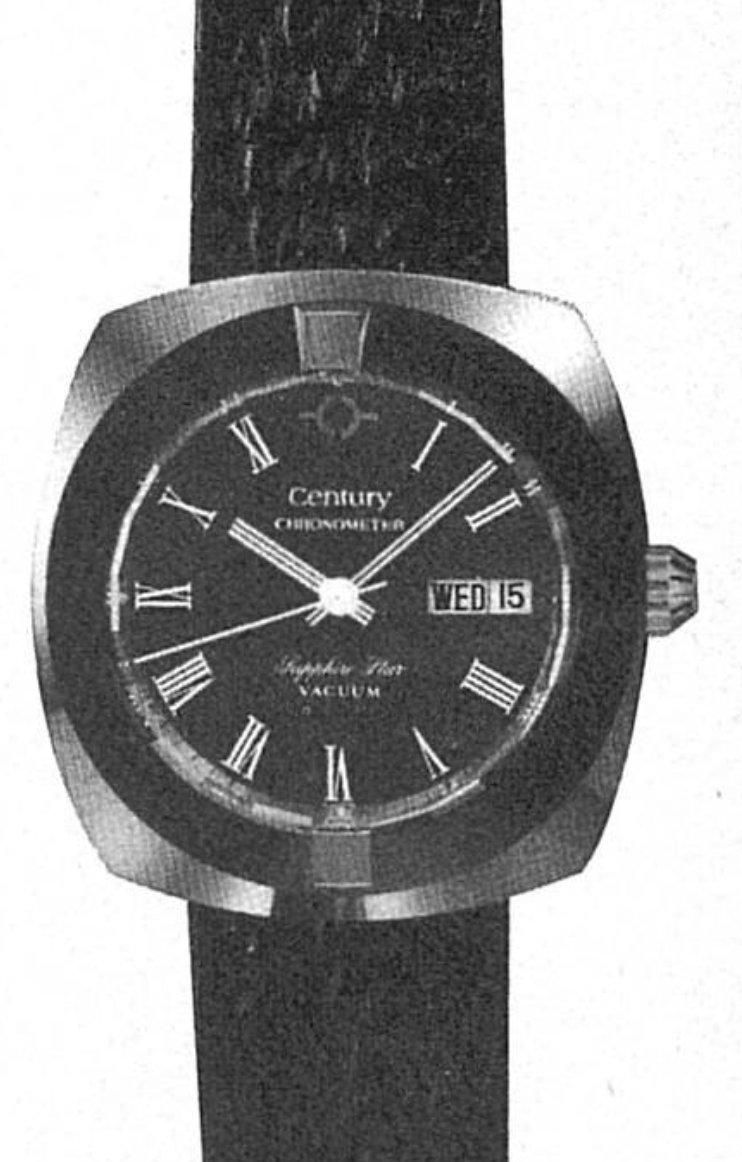
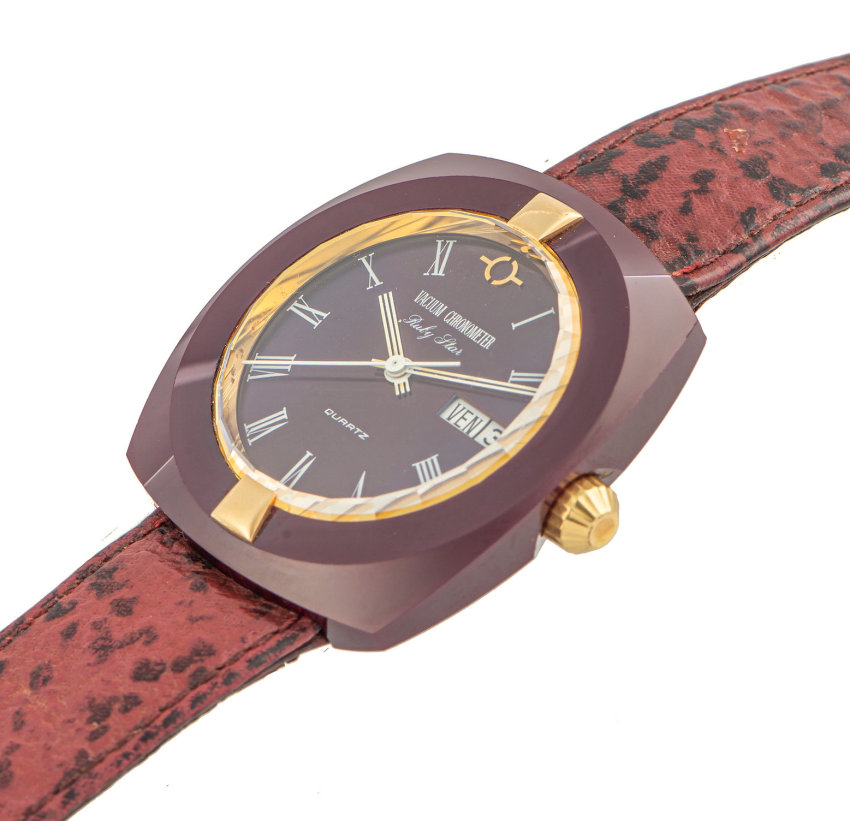
The first Vacuum Chronometer watches are easy to recognize: the case is made of highly durable synthetic corundum, the crystal is sapphire, the faceted crown is distinctive, and two small tabs at 12 o’clock and 6 o’clock rest lightly against the crystal; their purpose is to hold the crystal in place in the event that the vacuum inside the case is lost.

The watches are also produced as private-label models for other brands such as Waltham, Glycine, and Longines.

In 1975, Hans-Ulrich Klingenberg founded the Century Time company in Biel, and from then on, only the Century brand appeared on the dials.

1977

1977

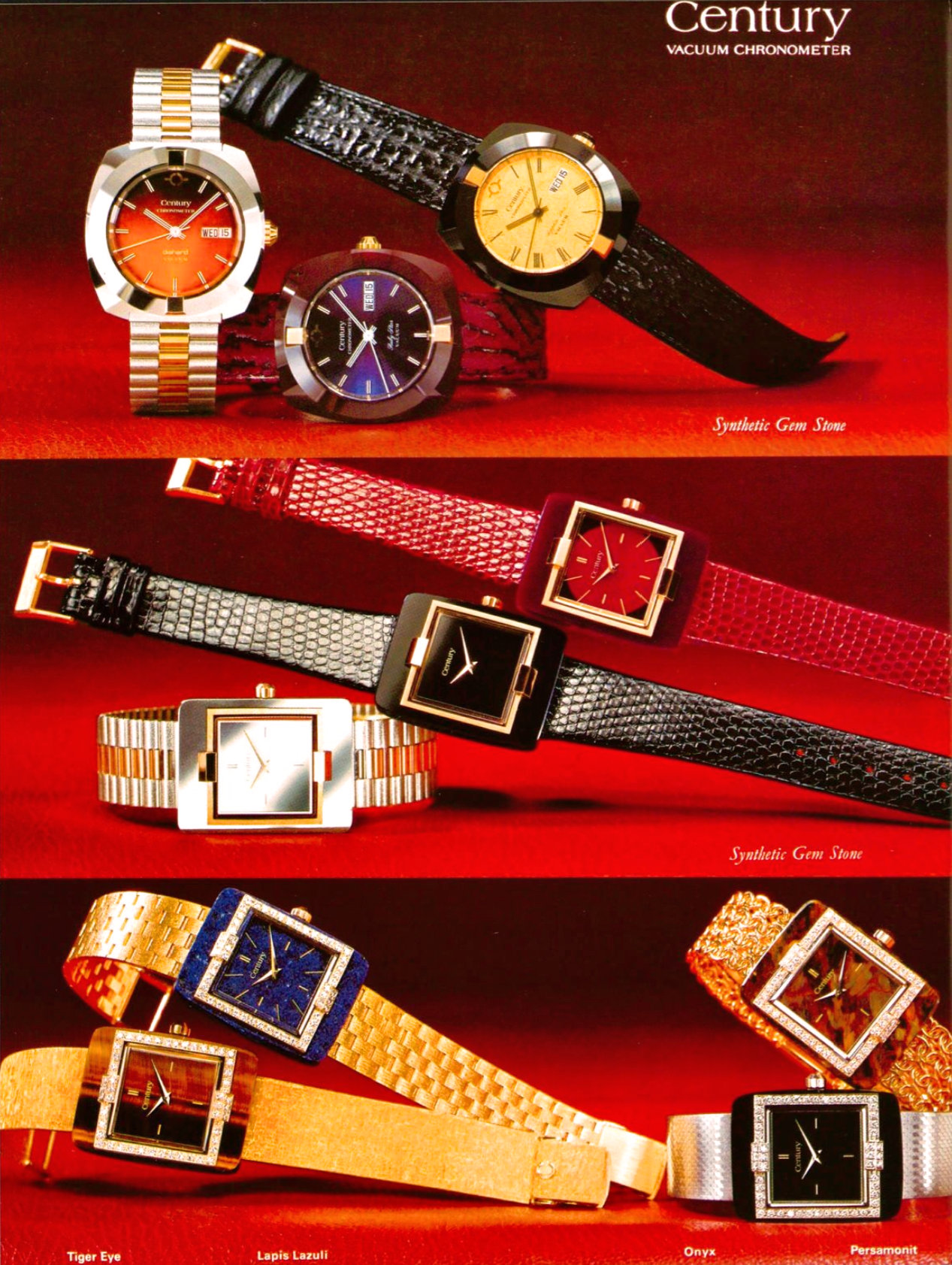
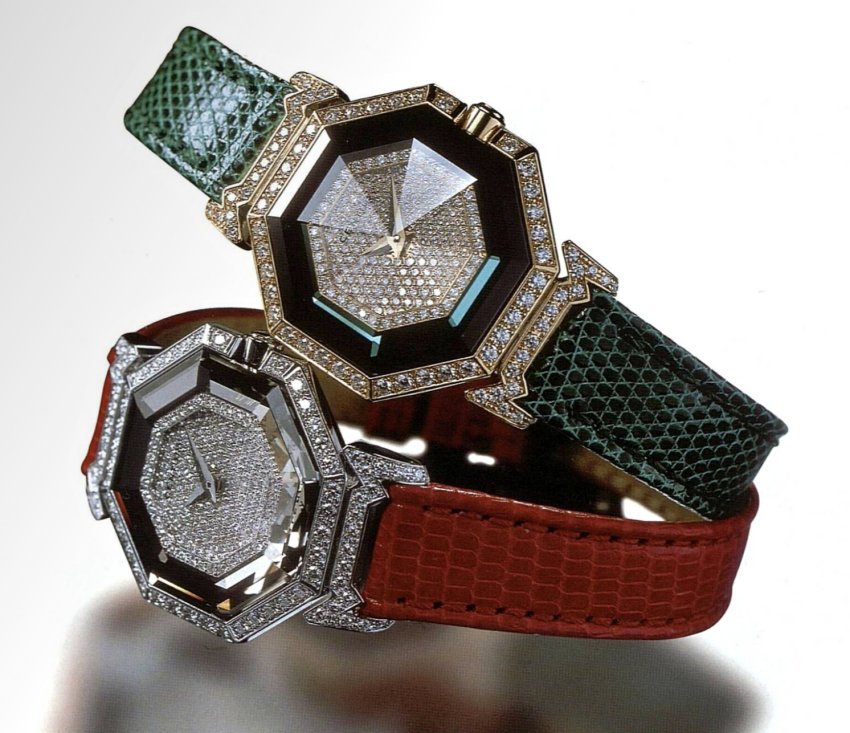
Watches are becoming increasingly luxurious, crafted from precious metals, and the company specializes in materials that are extremely scratch-resistant, such as boron carbide, with numerous patents filed in this area [10].

In 1984, Century Time unveiled a watch made from a single block of sapphire [9], and in 1987, Century Time created a platinum and sapphire watch for the optical manufacturer Leica [11]

The highly original design of Century Time watches was quickly copied by Asian manufacturers, leading to a high-profile case during the Basel Fair in 1991: at the company’s request, the Basel Fair Arbitration Commission ordered the removal of copies of these watches from five companies accused of counterfeiting [12].

1999

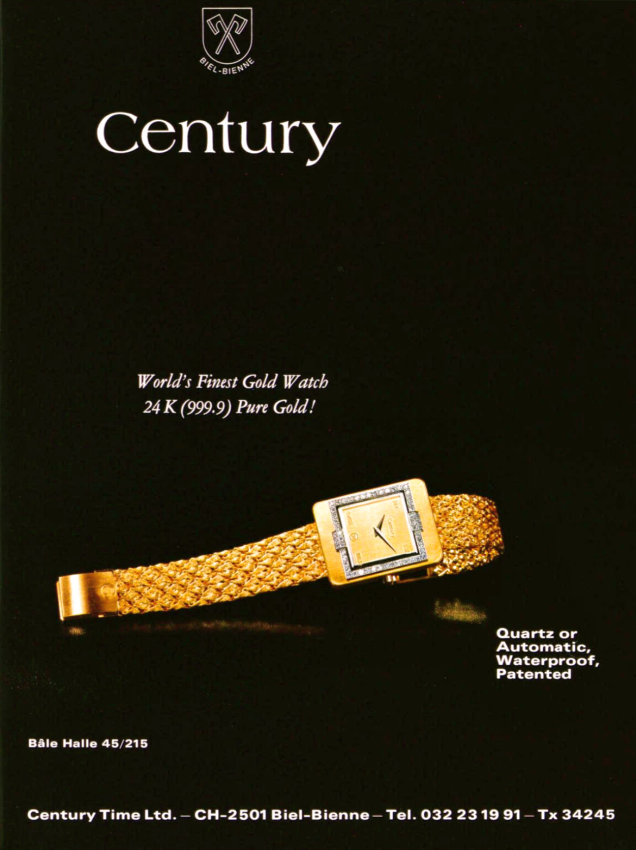
In 1995, Century Time—which had become Century Time Gems—moved to Nidau, and Philip Klingenberg, the son of Hans Ulrich, became the company’s director [13]. Production shifted toward increasingly luxurious watches, featuring cases made of cut sapphire and set with diamonds.

This production continues today: https://century.ch/


[1] Journal Suisse d’Horlogerie, 1961, 1, p. 90-91

[2] CH 355 742

[3] https://www.tobiasbirch.com/antique-clock/antique-clocks/marine-chronometer-exhibition

[4] Europa Star Asia, 1959, 4, p. 25

[5] Joël Pynson, La montre-bracelet Suisse, Éditions Time To Tell, 2024, pp. 322-323

[6] FOSC 1966

[7] https://fr.wikipedia.org/wiki/H%C3%A9misph%C3%A8res_de_Magdebourg

[8] FOSC 1967

[9] Europa Star Europe, 1984, 3, p. 22

[10] For example CH 532 125 and GB 1 282 009

[11] Europa Star Europe, 1987, 6, p. 19

[12] Europa Star Europe, 1991, 3, p. 34

[13] FOSC 1993

The FOSC (Swiss Official Gazette of Commerce) is available at E-periodica

Notes:

About Time To Tell: Time To Tell has one of the largest private digitized databases on the history of Swiss watchmaking, with over 2.5 TB of data on more than 1,000 Swiss watch manufacturers. This database has been built up over a period of around 30 years and continues to be updated with around 50 to 100 GB of data each year. The database consists of historical documents, mainly Swiss trade journals, dating from the late 19th century to the late 20th century. Most of these documents are not available on the Internet. The historical articles published on the time2tell.com website always cite the sources used.

Time To Tell is a private company, independent of any watch manufacturer.

©Time To Tell, 2026

Reproduction without permission is prohibited.

Any use of this article by artificial intelligence is strictly prohibited and will be considered a violation of copyright.

Product Details

Product added to wishlist

Nous utilisons des cookies afin de fournir une expérience utilisateur conviviale. En naviguant sur ce site, vous acceptez la politique d'utilisation des cookies.