• New
The True Story of Era Watches

The True Story of Era Watches

Era

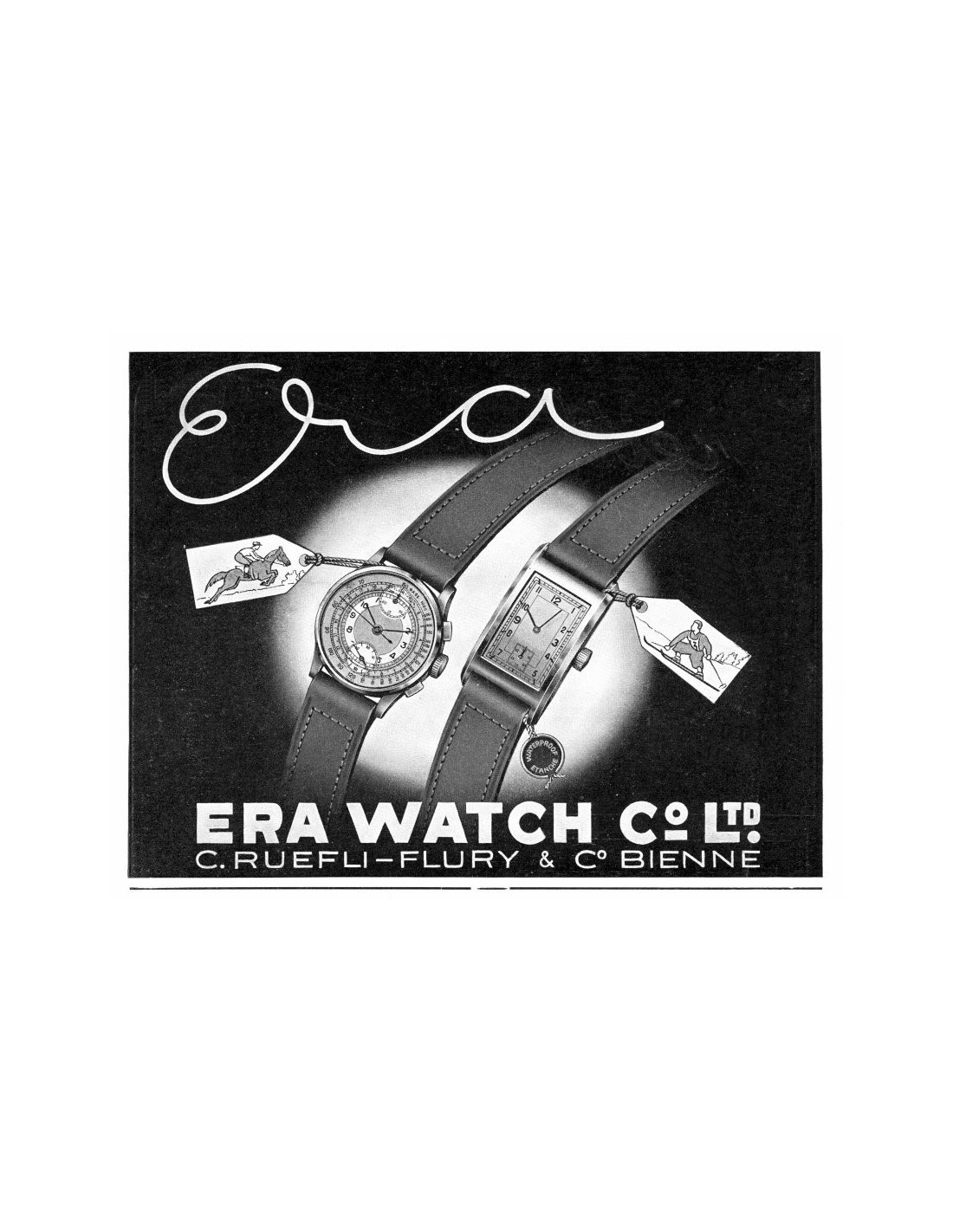
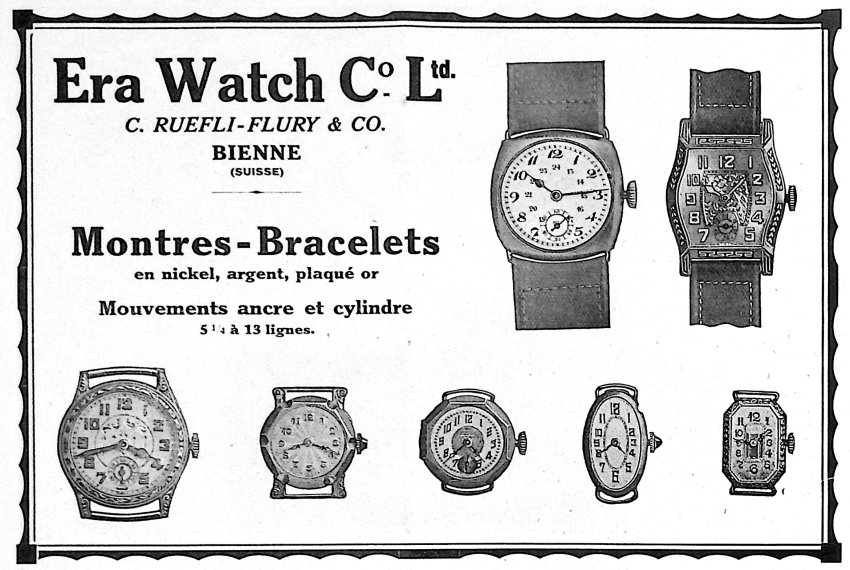
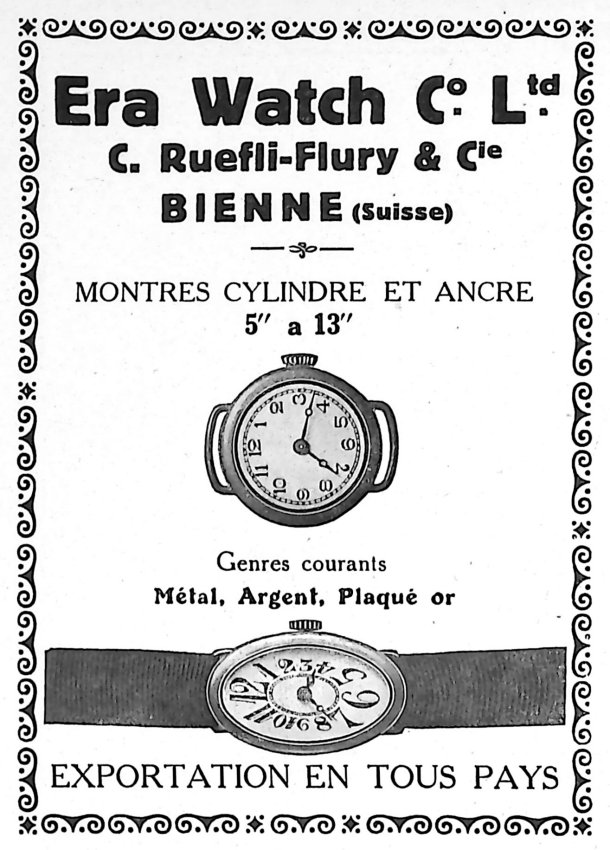
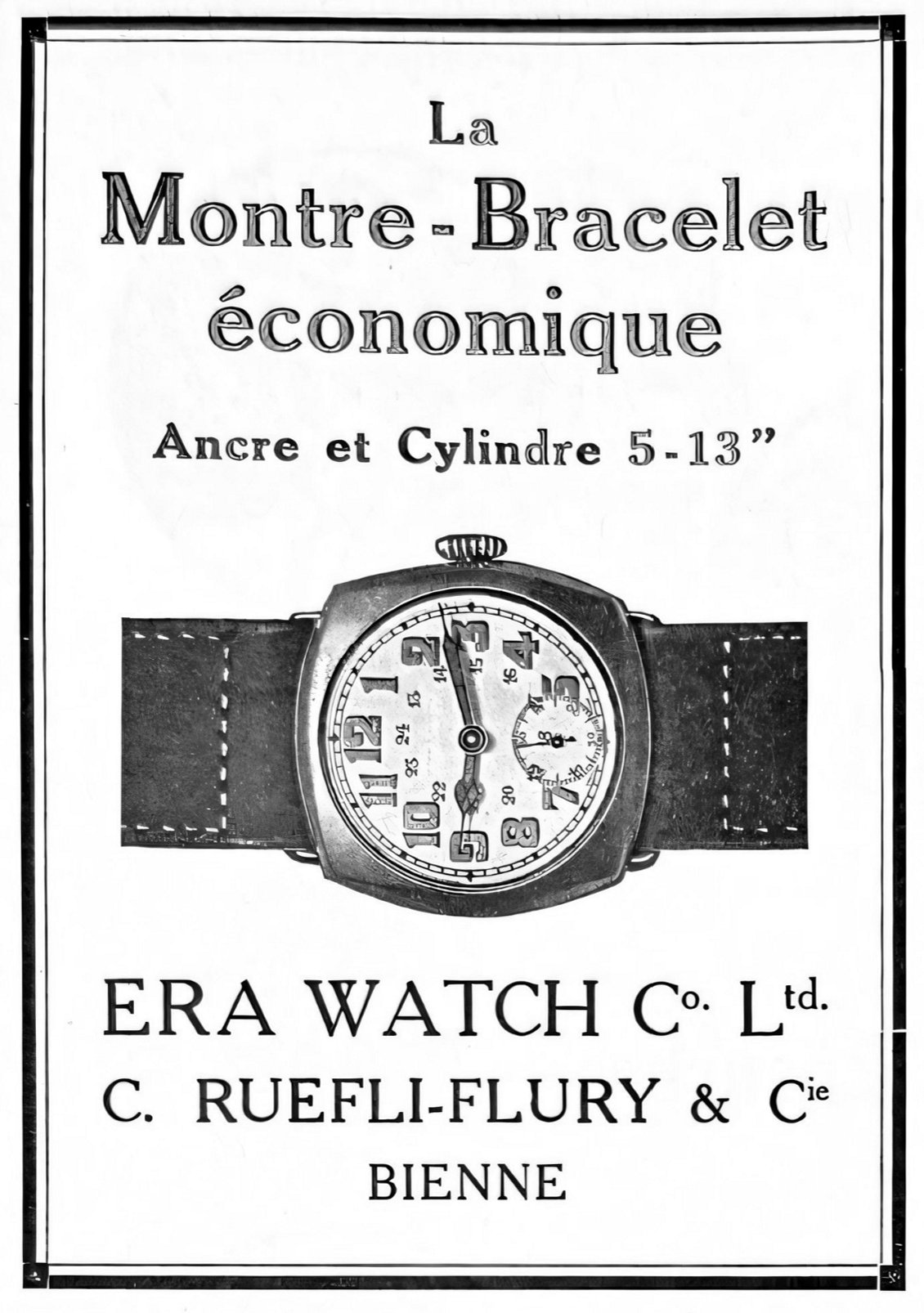
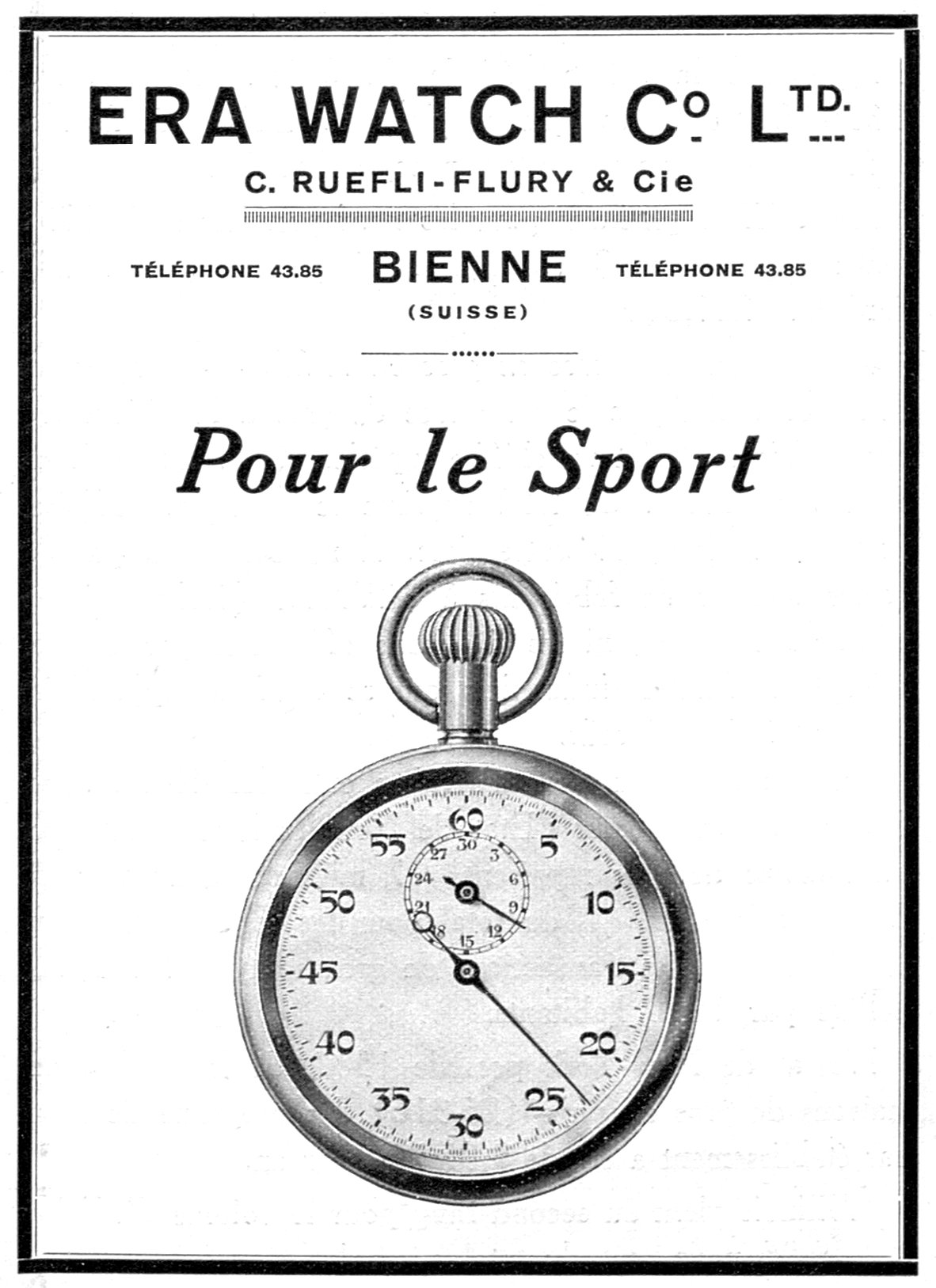
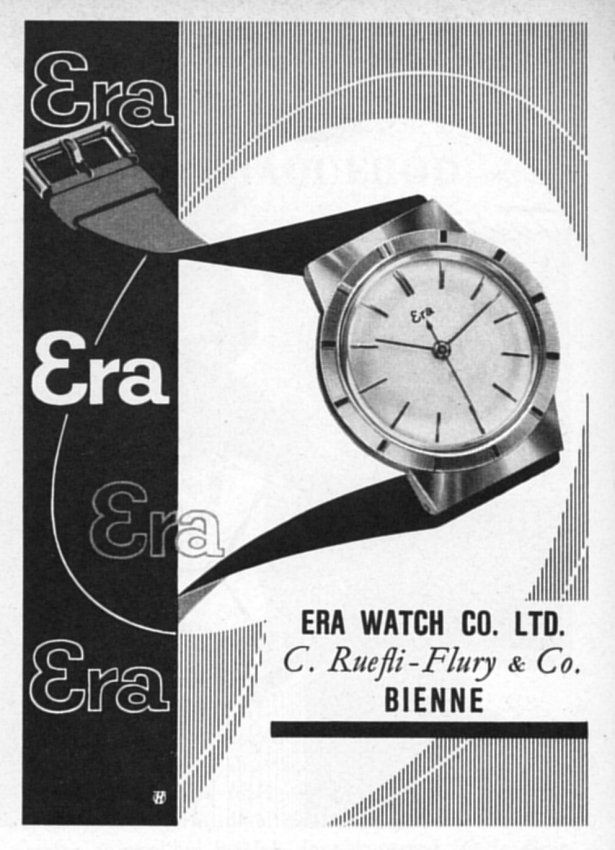
The watchmaking workshop founded by Christian Ruefly-Flury in 1884 gave rise to two renowned brands: Era and Edox. These brands followed one another, and chronologically speaking, Era was the first to emerge.
Description

Joel Pynson

January 2026

1. Founded in Biel

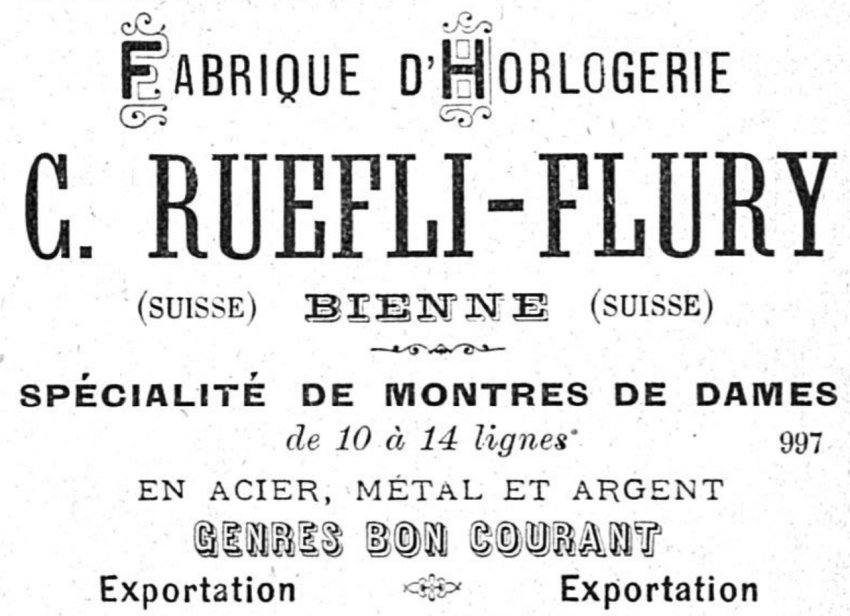
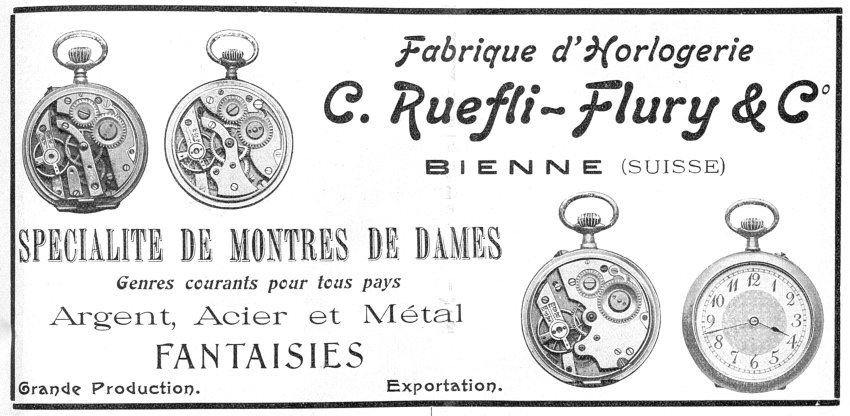
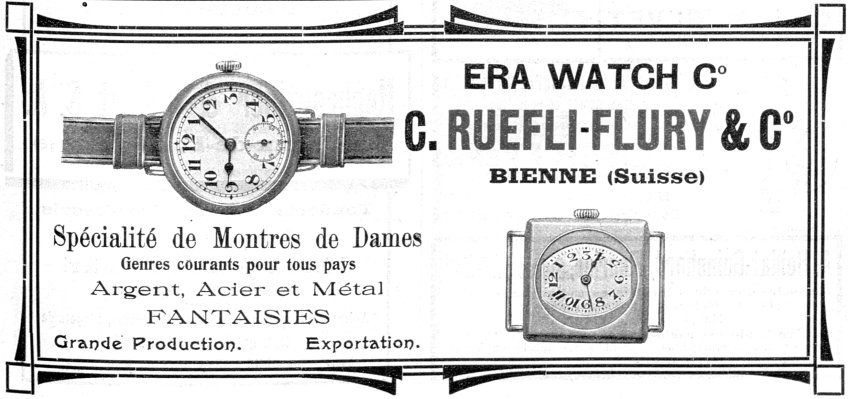
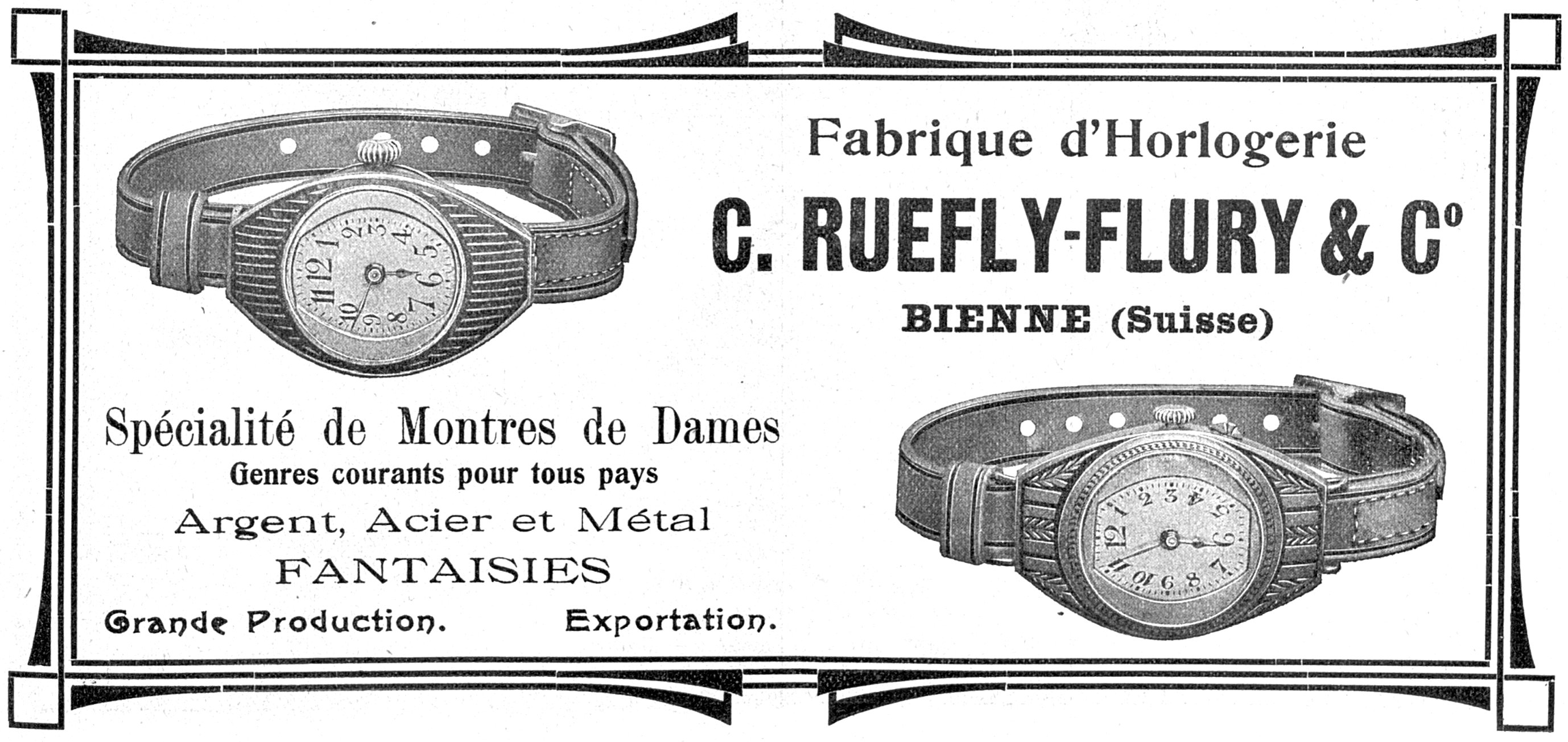
Christian Ruefly-Flury (or Ruefli-Flury) opened a shop in Biel in 1884 [1]. Like many watchmakers in Biel at the time, he specialized in ladies’ watches.

1893

1910

The Era trademark was registered in 1909, and that same year Christian Ruefly-Flury went into partnership with Robert Kaufmann, who was already working at the company, and the firm became C. Ruefli-Flury & Cie [2].

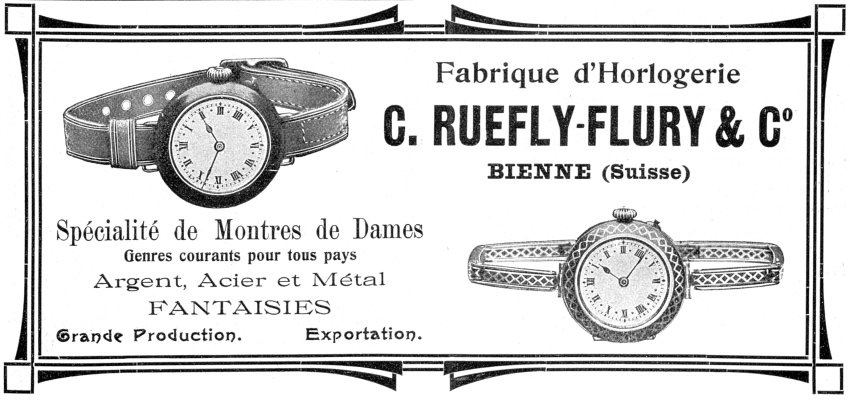
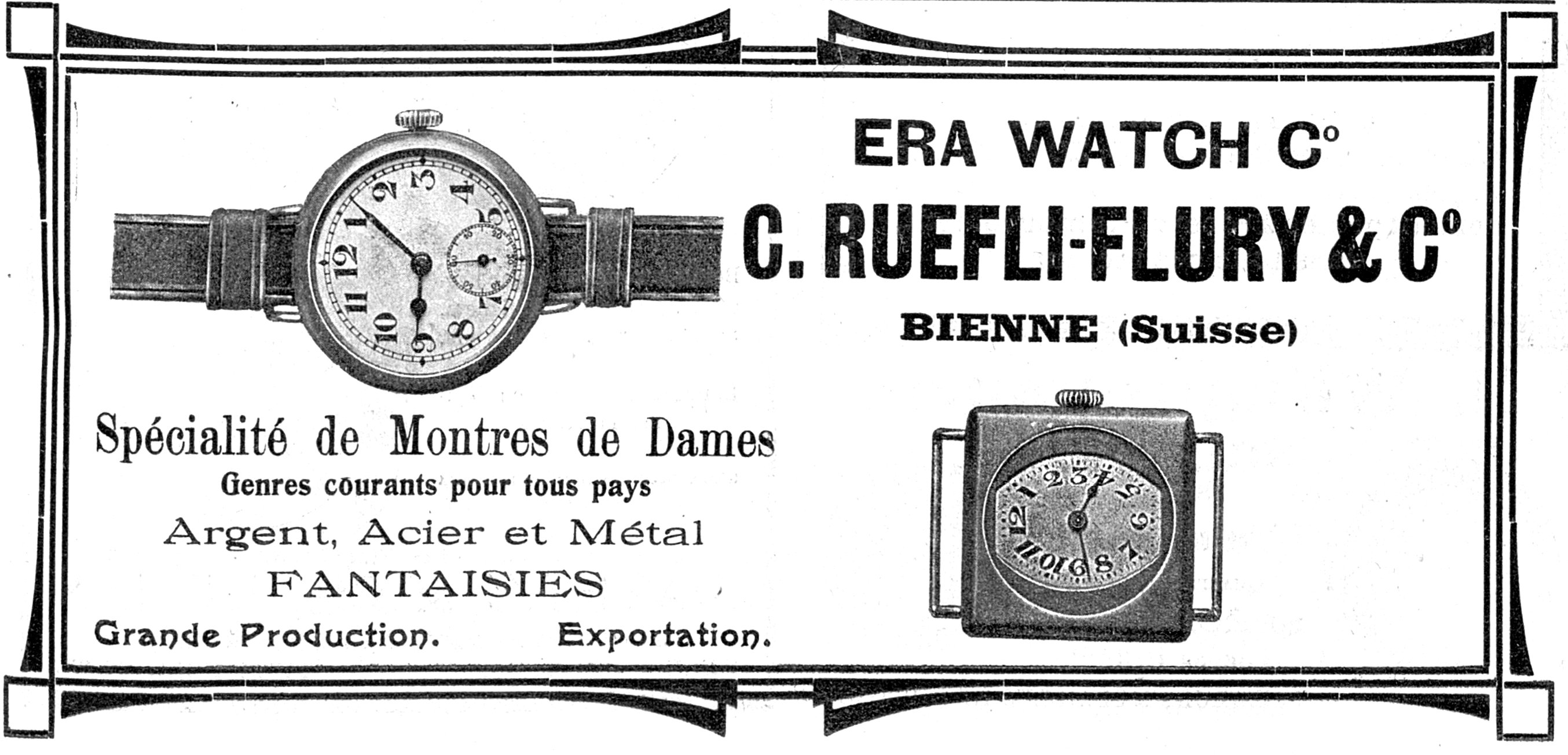
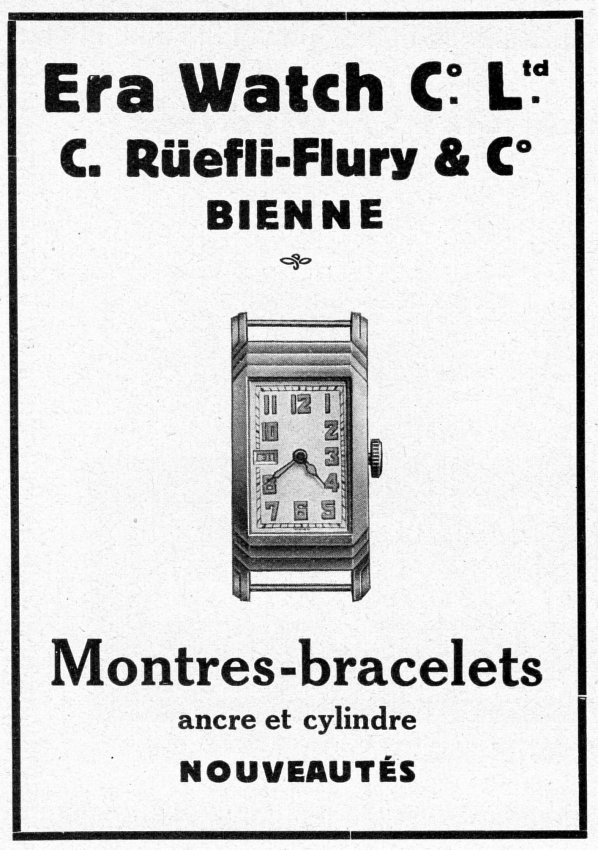
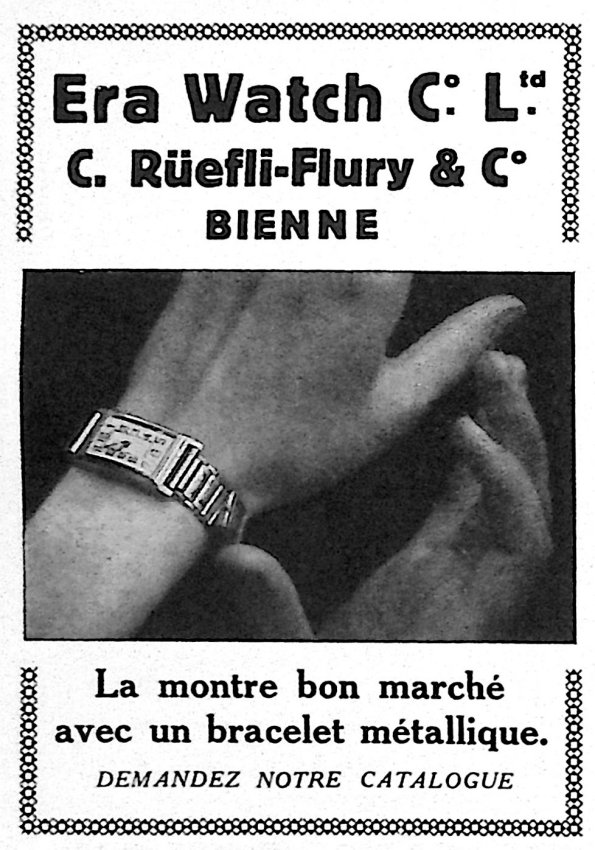
By 1912, the factory was producing ladies’ wristwatches.

In 1916, the company added “Era Watch” to its name [3].

1912

1913

1913

1917

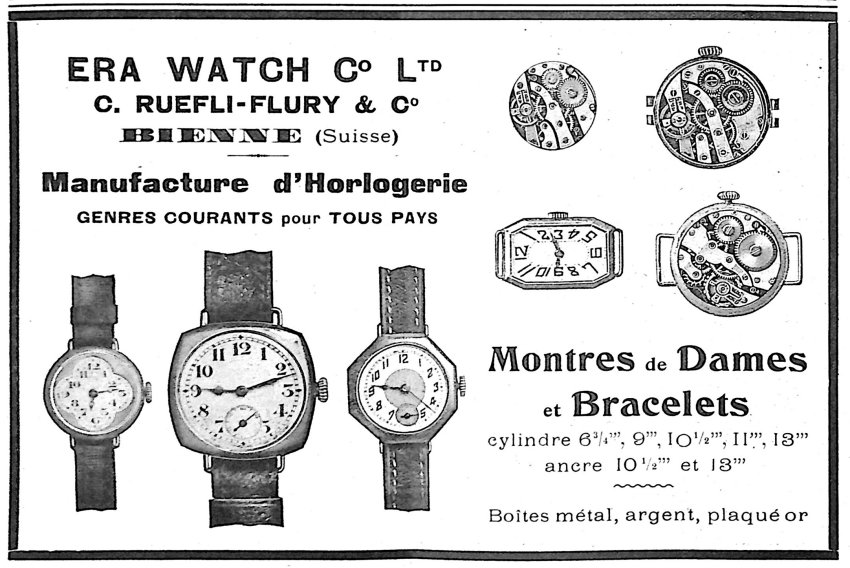
Following the death of Christian Ruefly-Flury in 1921, Robert Kaufmann took over the company in 1922 [4]. It was likely around this same time that Era Watch began manufacturing its own movements, thereby becoming a watch manufacturer. In 1924, the name “Montres Viso” was added to the company’s name.

1922

1929

1926

1927

In 1929, the company became a public limited company, and Montres Viso became an independent company [5].

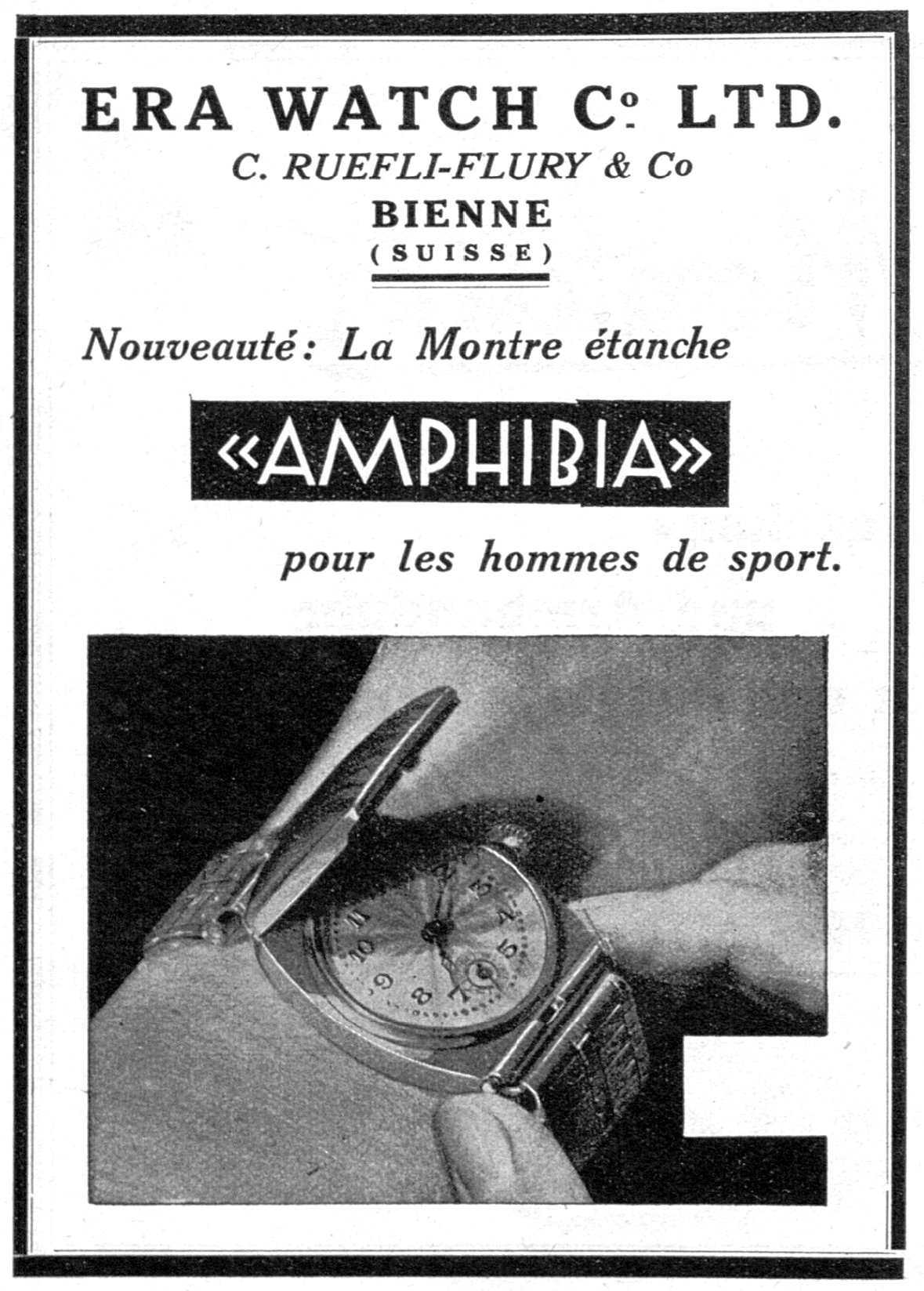
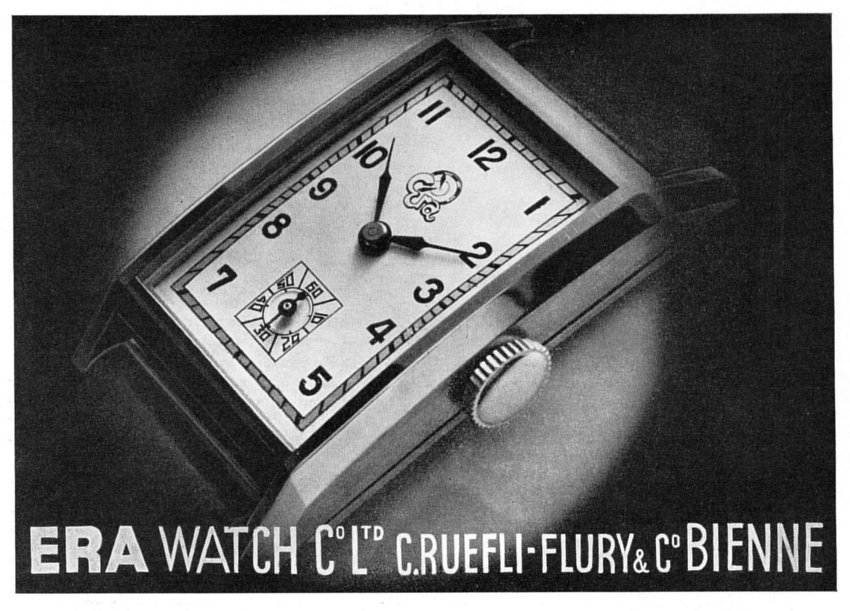
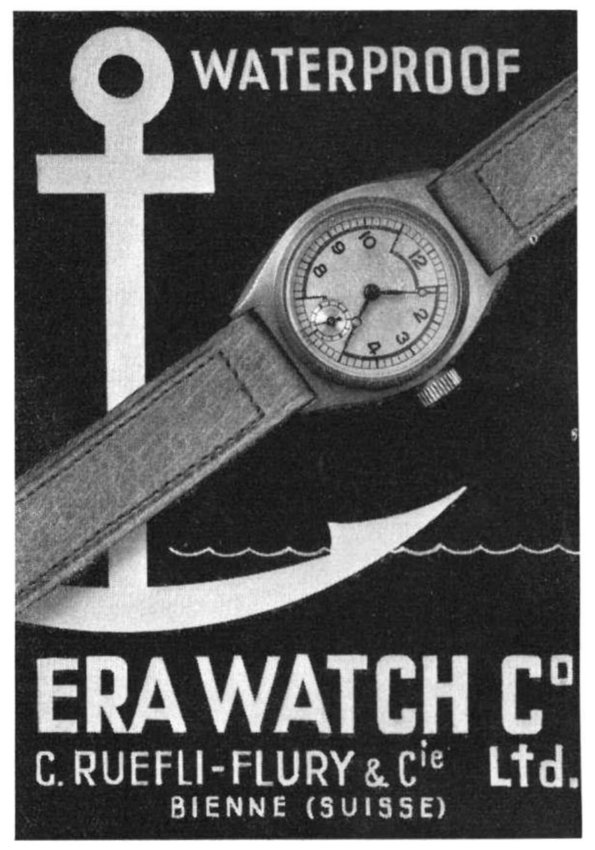
Despite the economic difficulties of the 1930s, Era Watch remained particularly active and produced remarkable watches, such as the water-resistant Amphibia model in 1931 and one of the first watches with a date window in 1932.

1931

1931

1932

1933

In 1933, Eduard Rothenbüler became managing director, and Victor Flury, Robert Kaufmann’s nephew, joined the board of directors. He, in turn, became managing director in 1949.

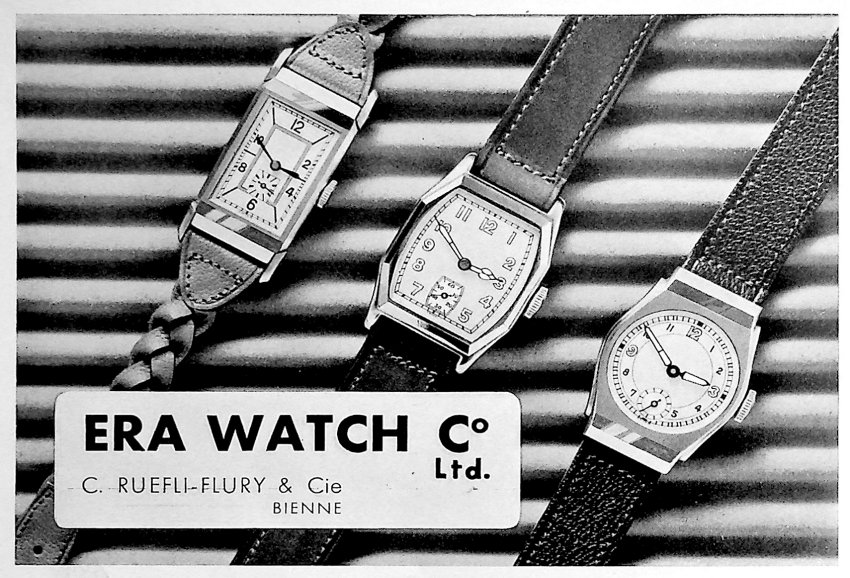
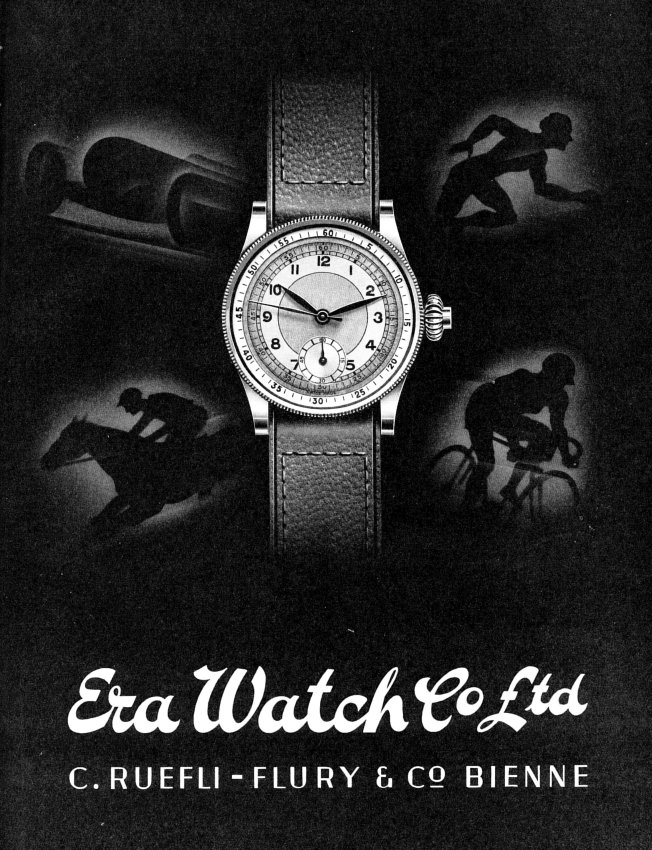
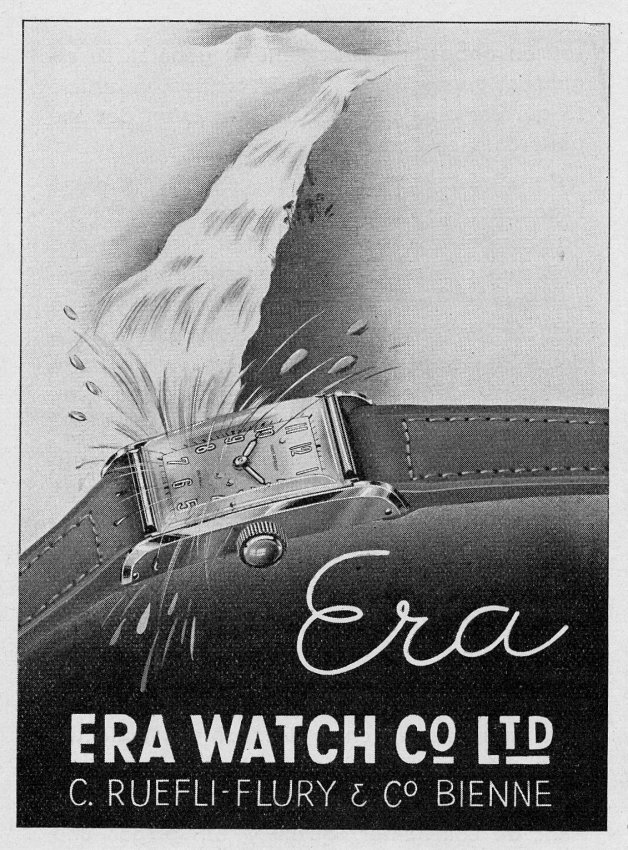
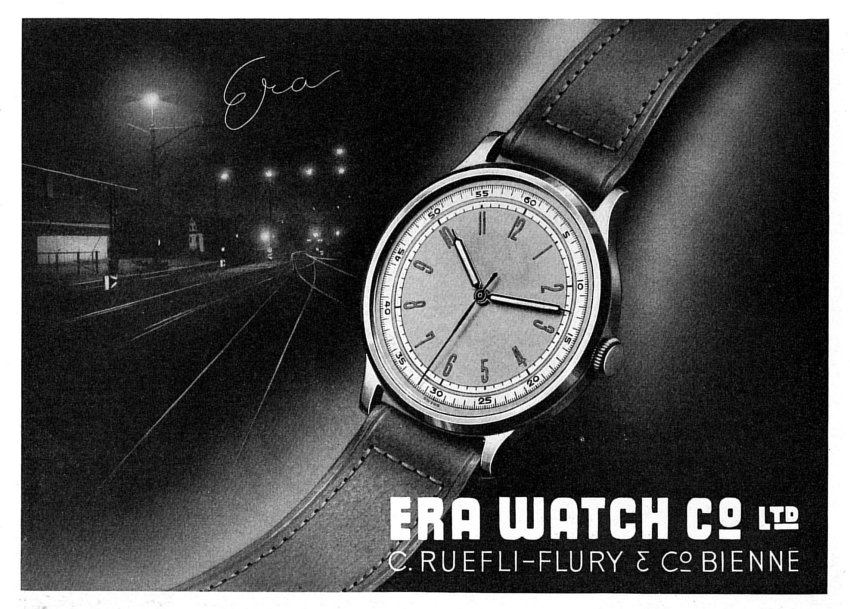
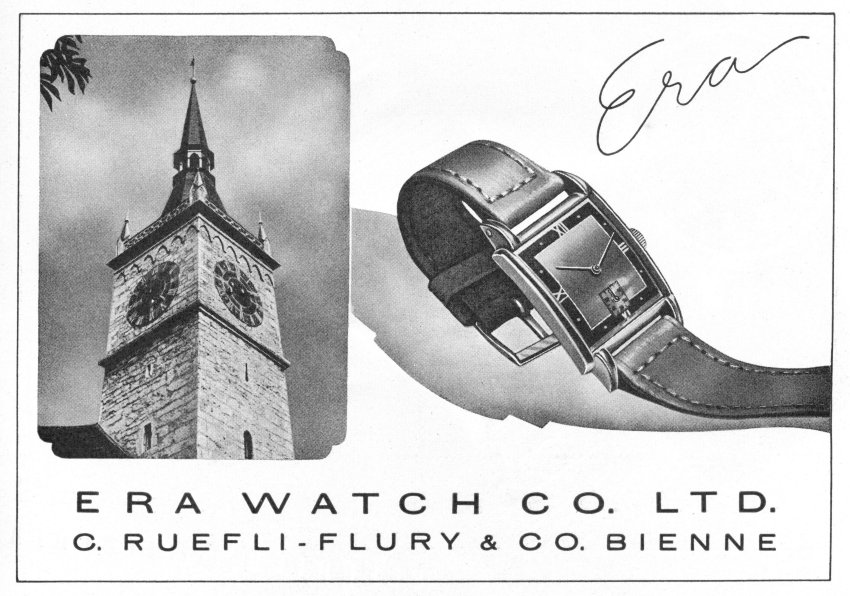
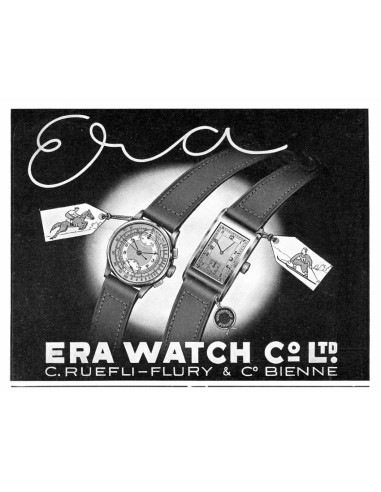
The models evolved and diversified: water-resistant watches, rectangular watches, chronographs, and more.

1936

1937

1937

1939

1939

1941

1943

1945

Following the creation of Ébauches SA, Era Watch transferred its movement manufacturing operations to the trust and thus returned to its role as a watch case manufacturer.

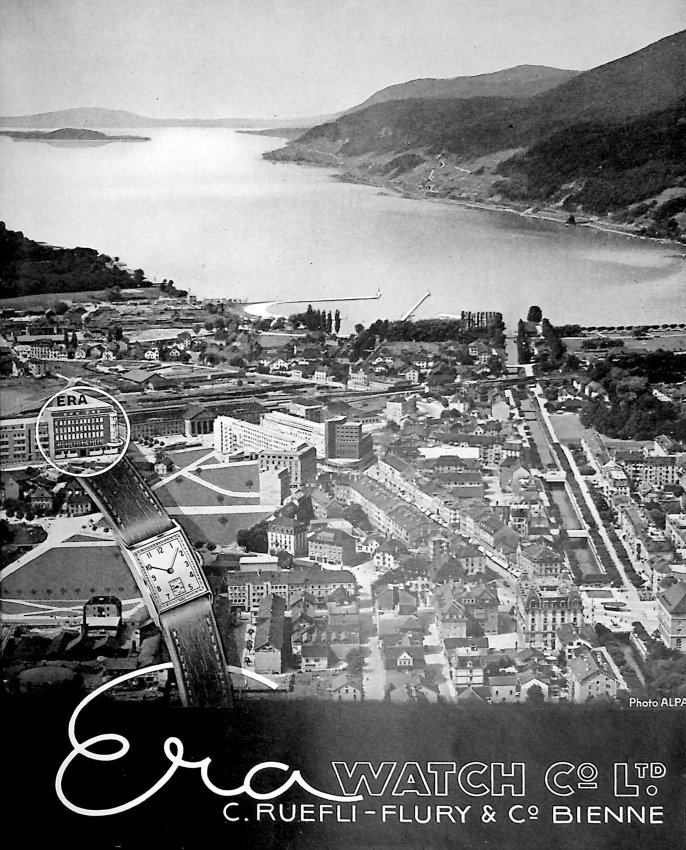
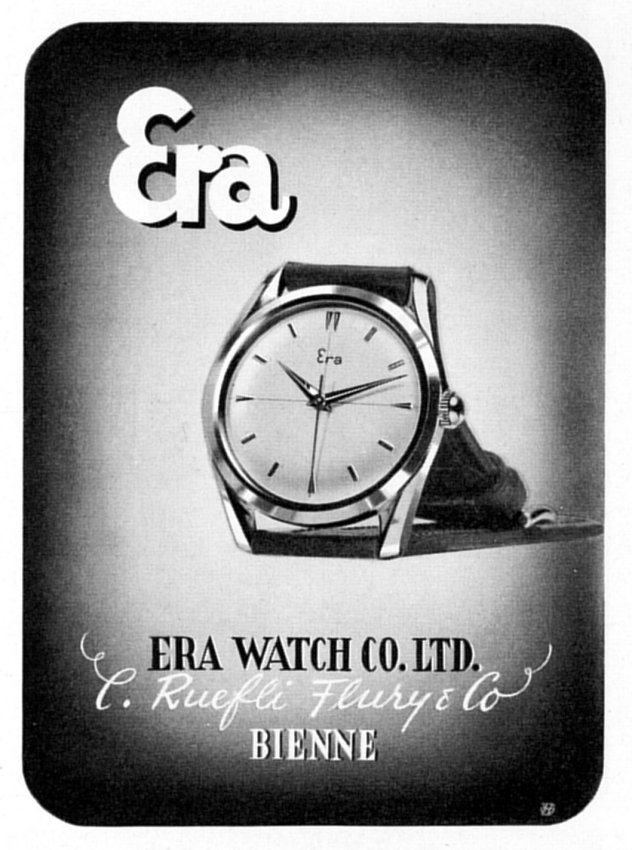
In 1955, Era Watch opened new facilities in Biel. New, very classic models were launched until 1959: it was in fact from that date onward that the Era brand disappeared, replaced by the Edox brand, which the company had registered in 1928.

1956

1958

The company retained the name Era Watch, even after Robert Kaufmann’s death in 1965. Victor Flury then became chairman of the board of directors [6].

A significant event took place in 1971: Era Watch joined the General Watch Holding Group [7].

2. Era Watch and General Watch

After the end of the watchmaking status that had protected Swiss manufacturers, ASUAG encouraged companies to merge in order to streamline production and better withstand foreign competition.

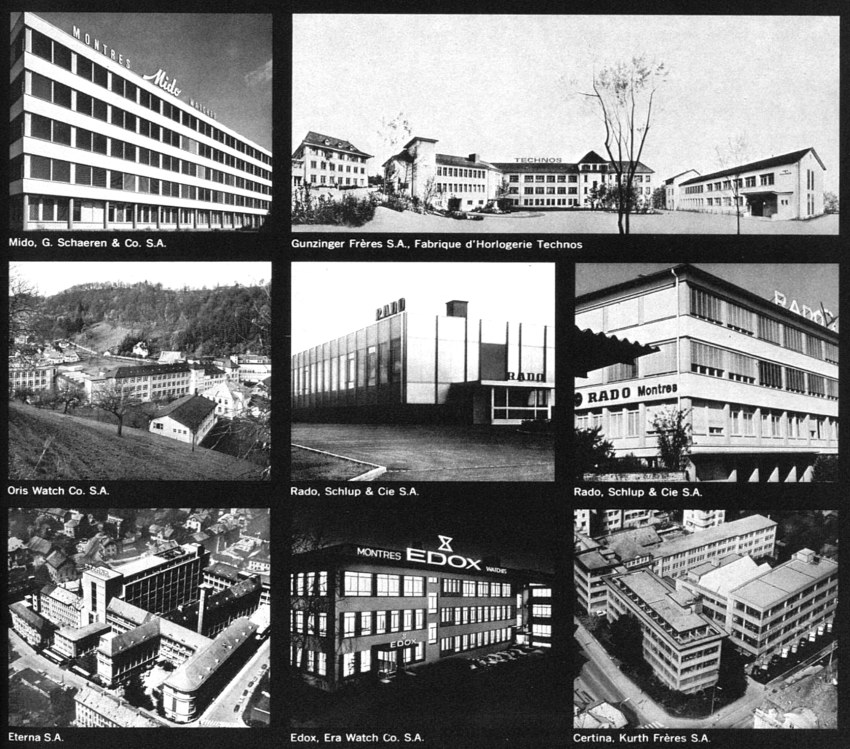
This led to the creation in Biel of General Watch Holding, which, at its founding in 1971, brought together seven manufacturers: Certina, Era, Eterna, Mido, Oris, Rado, and Technos. This holding company employed approximately 3,500 people and accounted for 10% of all watches manufactured in Switzerland.

1971

Era Watch got off to a promising start within the holding company: the firm, which now employed 350 people, opened new facilities in Biel in 1971 and released numerous models, still under the Edox brand [8].

But with the advent of the first quartz watches, difficulties began. In 1977, ASUAG merged Era Watch and Technos into a single entity [9]. In 1981, Certina was merged with Era and Technos, with watch production based in Granges and administration in Biel [10].

As the economic situation became increasingly concerning, ASUAG spun off Technos and Era Watch in 1983 [11].

Era Watch was then taken over by a new company that would carry on the business: Montres Edox in Biel. 

See also: Edox


[1] FOSC 1884

[2] FOSC 1909

[3] FOSC 1916

[4] FOSC 1922

[5] FOSC 1929

[6] FOSC 1965

[7] Journal Suisse d’Horlogerie, 1971, 2, p. 138

[8] La Suisse Horlogère, édition hebdomadaire, 1971, 6, p. 212

[9] La Suisse Horlogère, édition hebdomadaire, 1977, 40, p. 949

[10] La Suisse Horlogère, édition hebdomadaire, 1981, 19, p. 13

[11] Revue de la Fédération Horlogère, 1983, 17, p. 13

The FOSC (Swiss Official Gazette of Commerce) is available at E-periodica

Notes:

About Time To Tell: Time To Tell has one of the largest private digitized databases on the history of Swiss watchmaking, with over 2.5 TB of data on more than 1,000 Swiss watch manufacturers. This database has been built up over a period of around 30 years and continues to be updated with around 50 to 100 GB of data each year. The database consists of historical documents, mainly Swiss trade journals, dating from the late 19th century to the late 20th century. Most of these documents are not available on the Internet. The historical articles published on the time2tell.com website always cite the sources used.

Time To Tell is a private company, independent of any watch manufacturer.

©Time To Tell, 2026

Reproduction without permission is prohibited.

Any use of this article by artificial intelligence is strictly prohibited and will be considered a violation of copyright.

Product Details

Product added to wishlist

Nous utilisons des cookies afin de fournir une expérience utilisateur conviviale. En naviguant sur ce site, vous acceptez la politique d'utilisation des cookies.