The main models of Pronto watches

The main models of Pronto watches

Pronto

Description

Joël Pynson

February 2025

Updated March 2025, January 2026

- Verdal Type Tour de France

Pronto registered the Verdal and Type Tour de France trademarks in 1947.
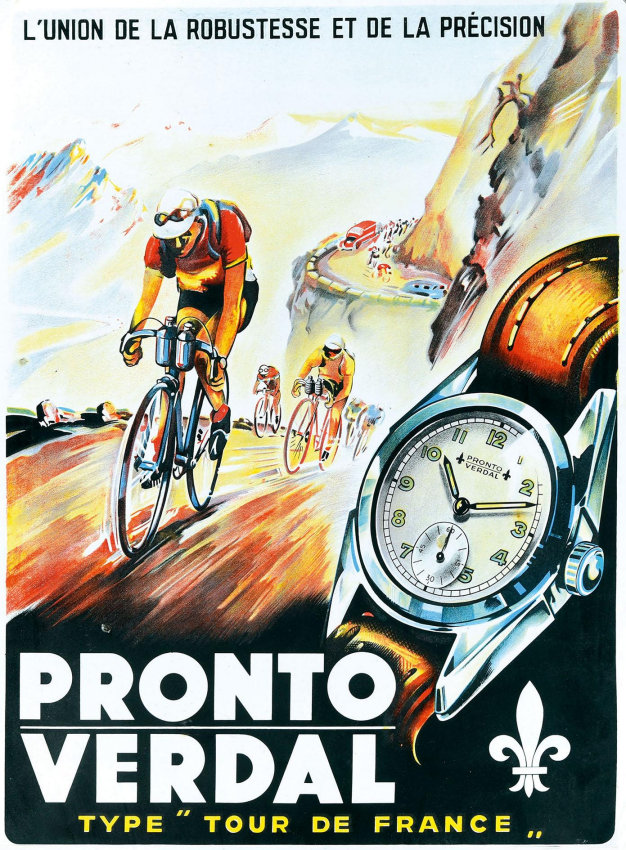
1949 - Credit invaluable.com

It was apparently a brand intended for the Belgian market, and the Type Tour de France was a simple, economical, manual-winding model, of which there were many versions until the 1970s.

- Datograf and Pronto-Master

1950

1947

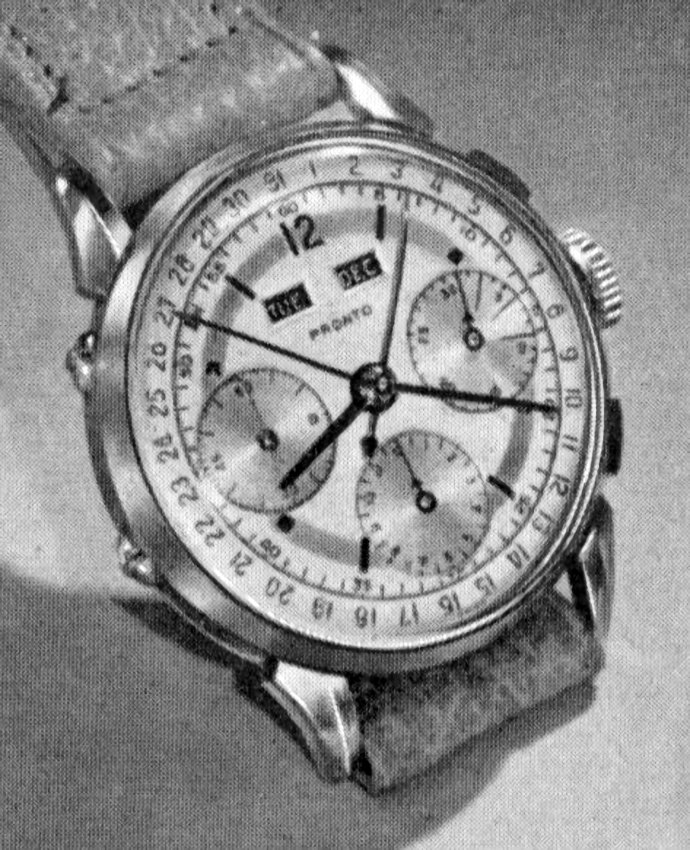
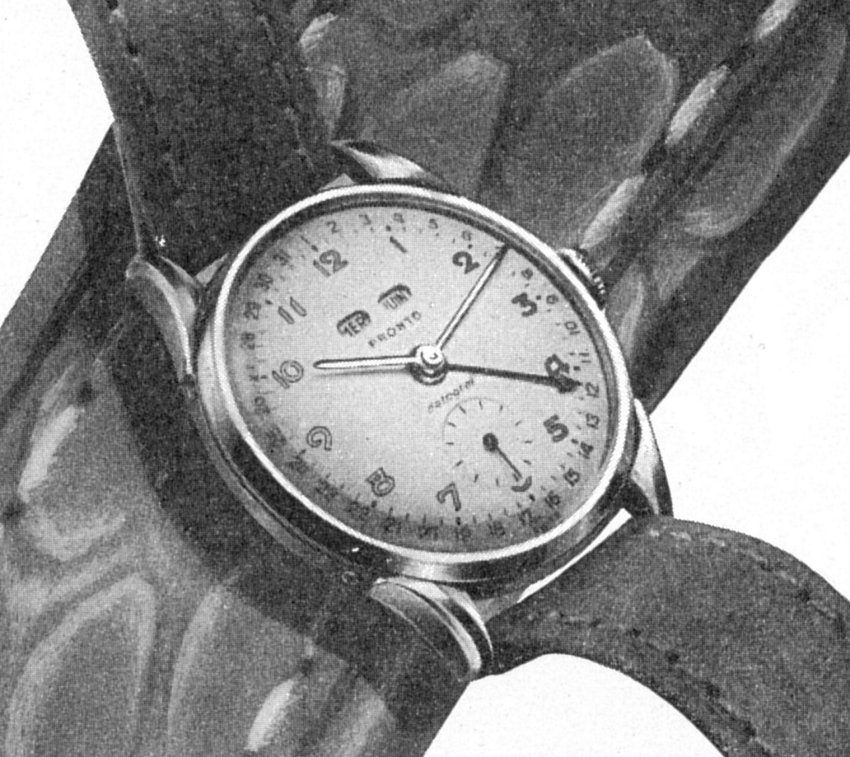
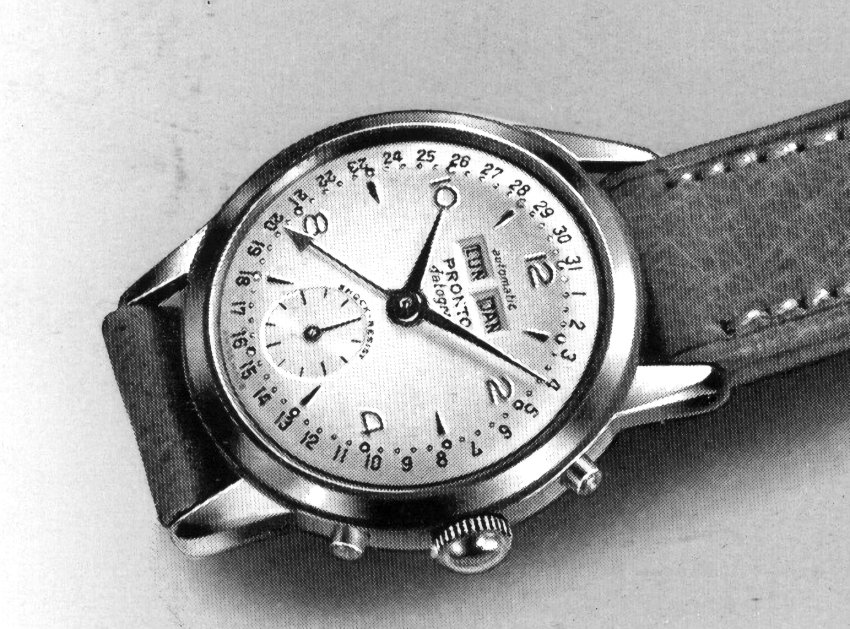
Pronto had already produced watches with needle calendars around 1942. The Datograf model, around 1949, was a watch with a full calendar, with or without moon phases, and manual winding. Pronto also produced versions with chronographs, some with gold cases.
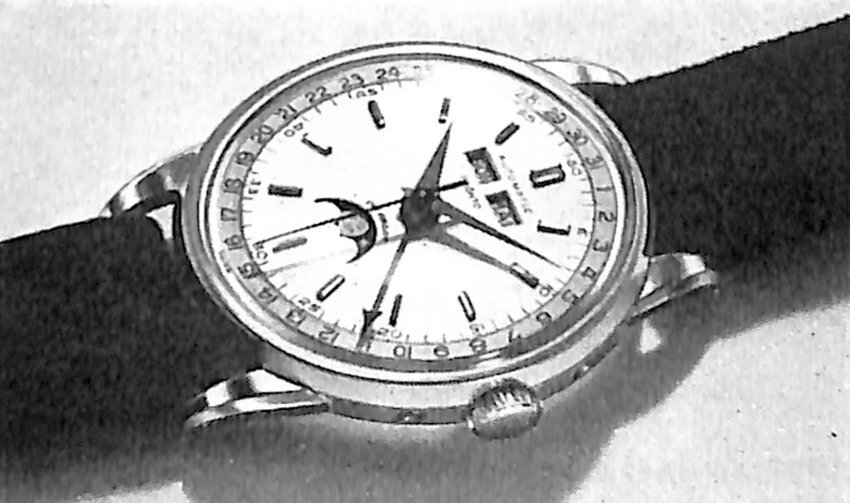
As for the Pronto-Master, launched in 1950, it was Pronto's top-of-the-line model: full calendar, moon phases, automatic winding, and gold case.

- Reserv-O-Graf

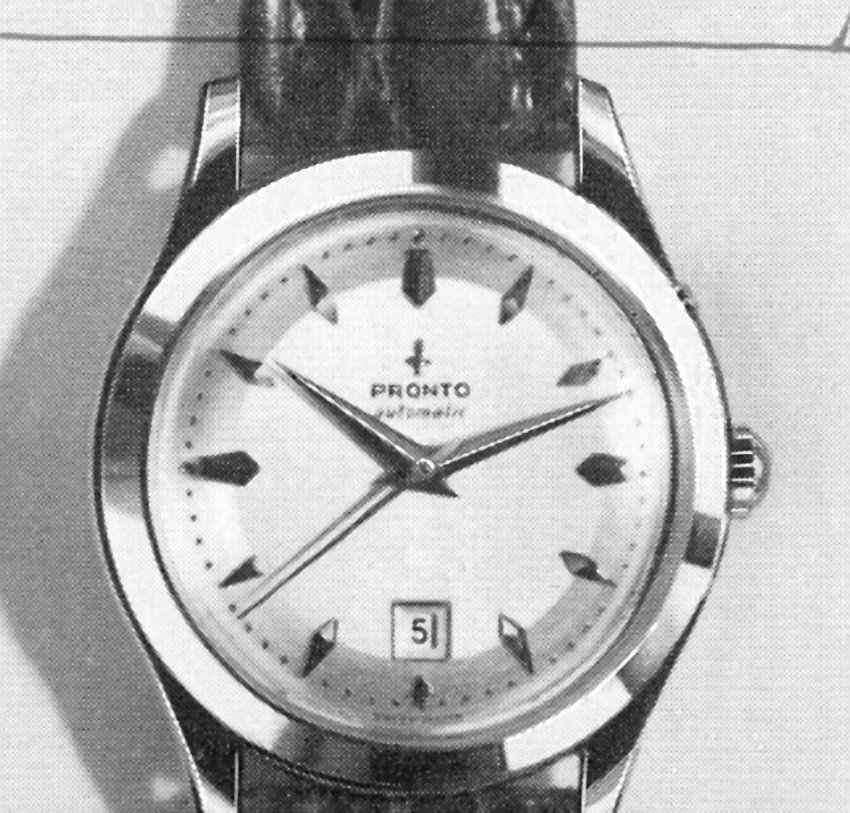
Launched in 1953, the Reserv-O-Graf model was an automatic watch with a power reserve indicator at 12 o'clock.

- Vampire

1953

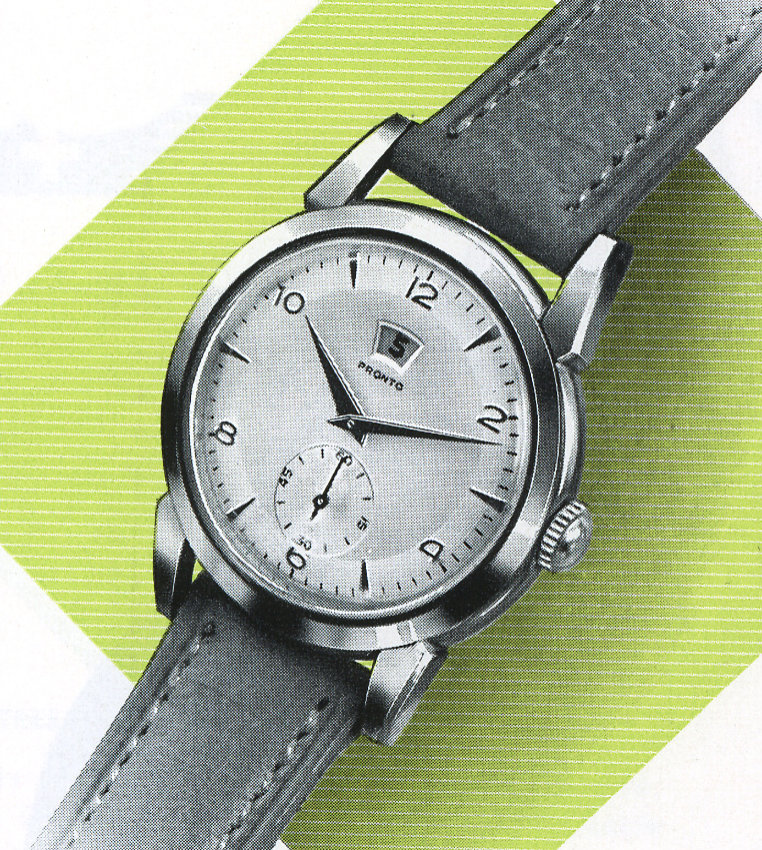
Launched in 1953, this automatic model was designed to be thinner than the other automatic watches in the range, and it was water-resistant.

- Tropic-Matic

1955

This attractive automatic water-resistant watch, launched in 1955, had a "submerged crown," meaning it was hidden by the bezel, giving it a more elegant look. It was available in several versions:

- Reserv-O-graf, with a power reserve indicator at 12 o'clock,

- Solodate, with a date window. Pronto had already launched models with date windows at 12 o'clock and 6 o'clock, but it was ultimately the classic 3 o'clock position that prevailed.

1953

1954

- Tropic-Master

1956

1956

1967

Launched in 1956, this is Pronto's iconic model, and it was manufactured for many years in multiple variations.

For example, it was available with manual or automatic winding, with a date display, with a recessed crown, and also in square versions.

- PolyDate and SpeedDate

1963

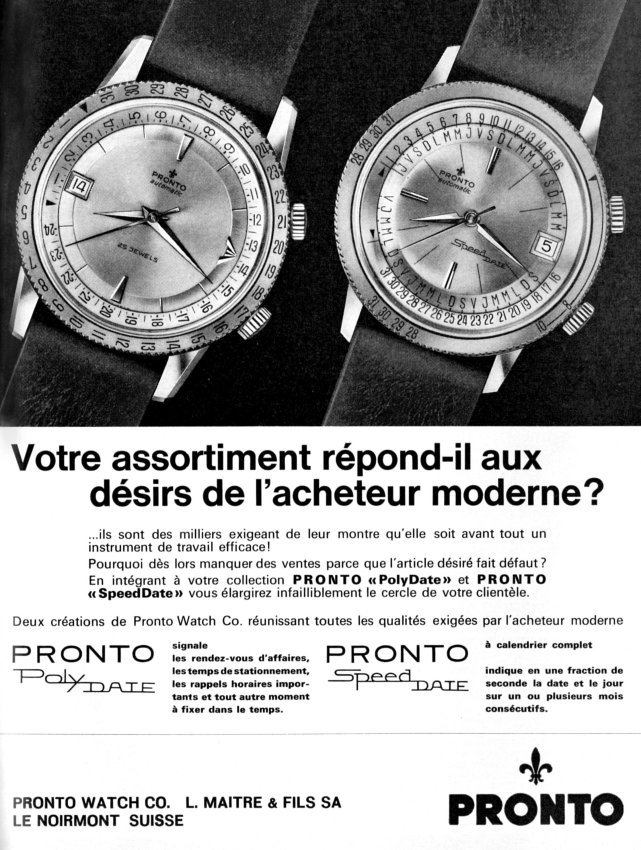
These two original models, launched in 1964, were designed for businessmen.

The first, PolyDate, uses two movable bezels, one under the glass, controlled by a second crown, and the other on the outside, to store a specific date and time. In the illustration above, for example, the arrow-shaped index at 3 o'clock reminds the wearer of an appointment on the 19th at 1:30 p.m.
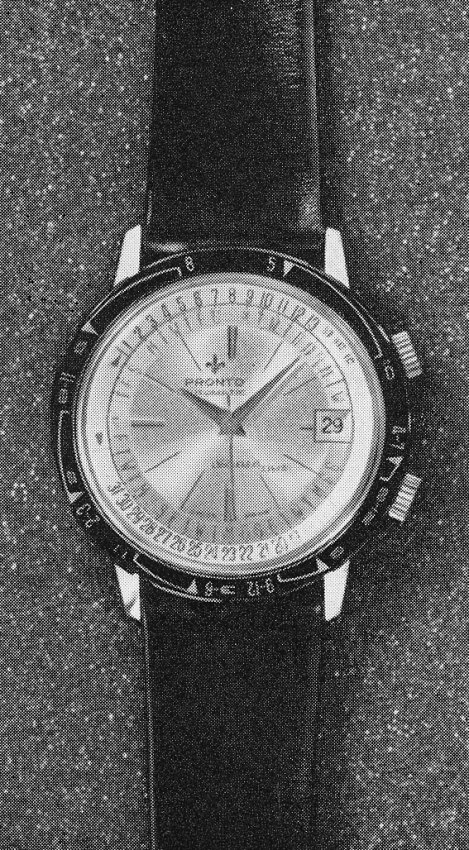
The second, SpeedDate, uses two movable bezels, one under the glass, controlled by a second crown, and the other on the outside, to display the day for any date. Thus, in the illustration above, the 5th of the month is a Monday, and the 25th, for example, will be a Sunday.

Both models had a waterproof Compressor case from the renowned case manufacturer Piquerez.

- Sportal and Submersible

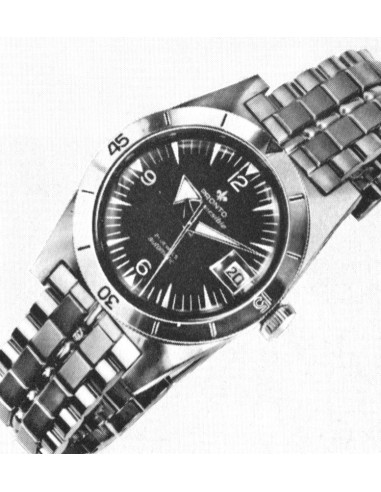
Launched in 1966, the Sportal model was a watch with clean lines. The Submersible model, launched around the same time, was a beautiful diving watch, made entirely of steel and water-resistant to 200 meters.

- Scopic

1969

1970

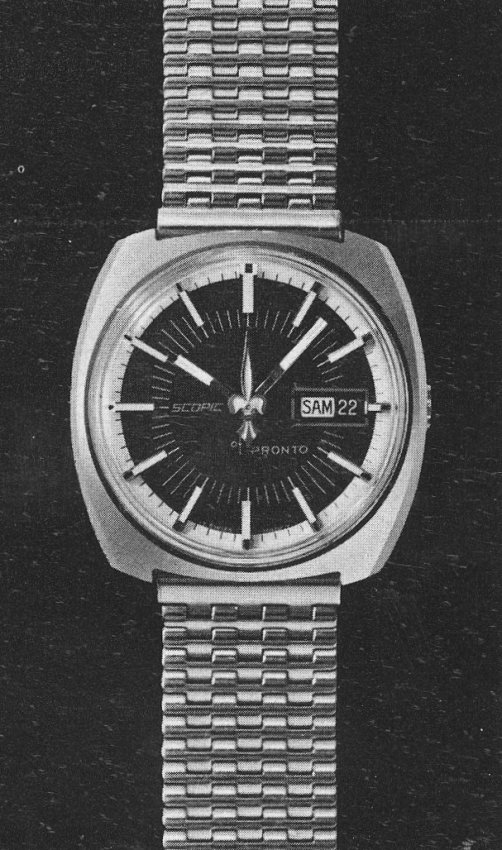
This 1969 model has a dial with a 3D effect because the hour markers are actually placed under the glass rather than on the dial. It is an automatic watch with day and date display, very fashionable in the late 1960s.

- Madison Square

1971

These square or square-curved models were launched in 1971. They were water-resistant and came in versions with date or day and date displays.

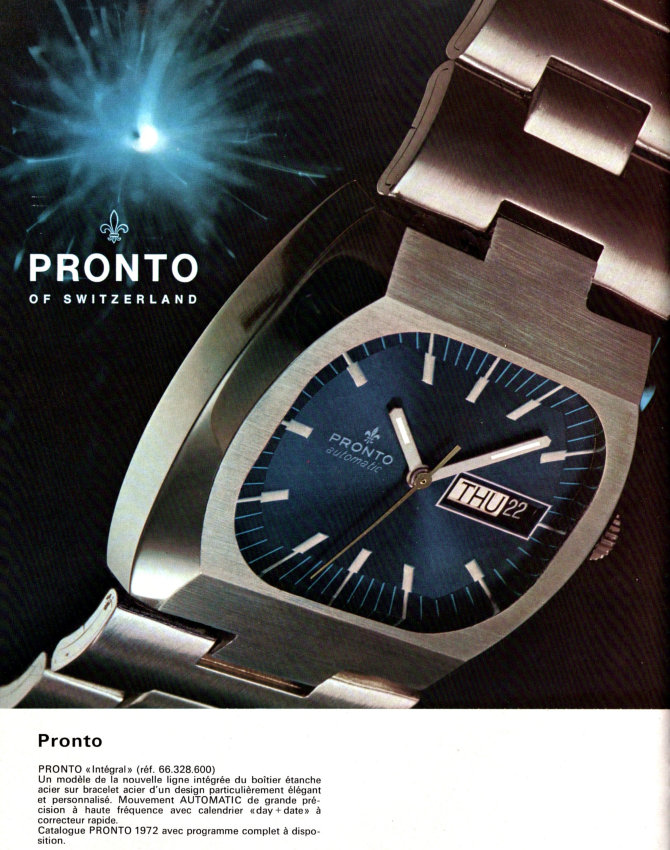
- Intégral

1972

It is an automatic model with day and date display, made of steel with an integrated bracelet. It was launched in 1972.

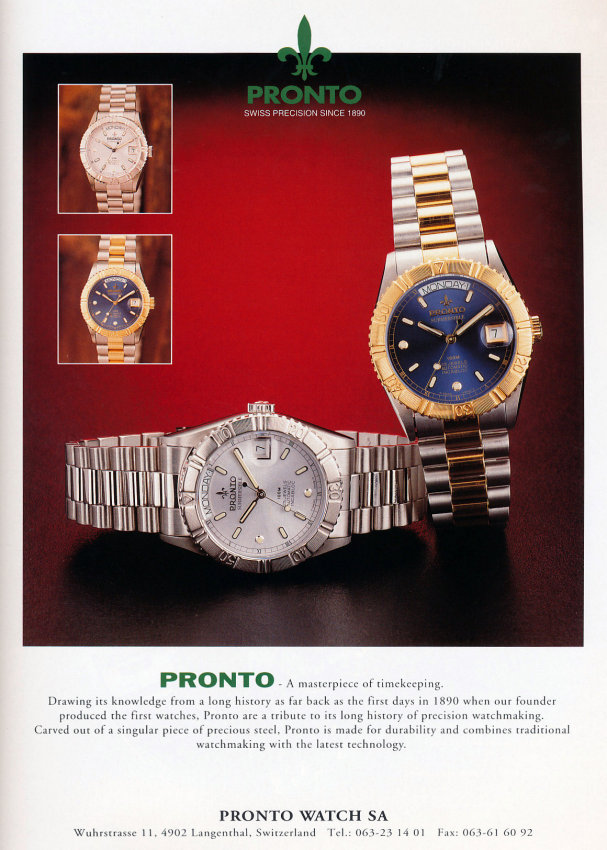
- Submersible II

1994

1994

This is a model from Pronto's final period, automatic with a monobloc case, inspired by Rolex's Day-Date models.


Notes :

About Time To Tell:

Time To Tell has one of the largest private digitized databases on the history of Swiss watchmaking, with over 2.3 TB of data on more than 1,000 Swiss watch manufacturers. This database has been built up over a period of around 30 years and continues to be updated with around 50 to 100 GB of data each year. The database consists of historical documents, mainly Swiss trade journals, dating from the late 19th century to the late 20th century. Most of these documents are not available on the Internet. The historical articles published on the time2tell.com website always cite the sources used.

Time To Tell is a private company, independent of any watch manufacturer.

©Time To Tell, 2025-2026

Reproduction without permission is prohibited. Any use of this article by artificial intelligence is strictly prohibited and will be considered a violation of copyright.

Product Details

Product added to wishlist

Nous utilisons des cookies afin de fournir une expérience utilisateur conviviale. En naviguant sur ce site, vous acceptez la politique d'utilisation des cookies.