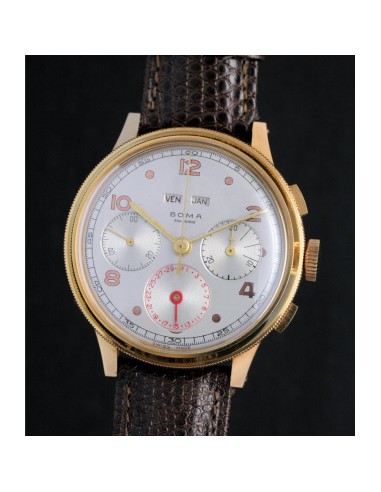
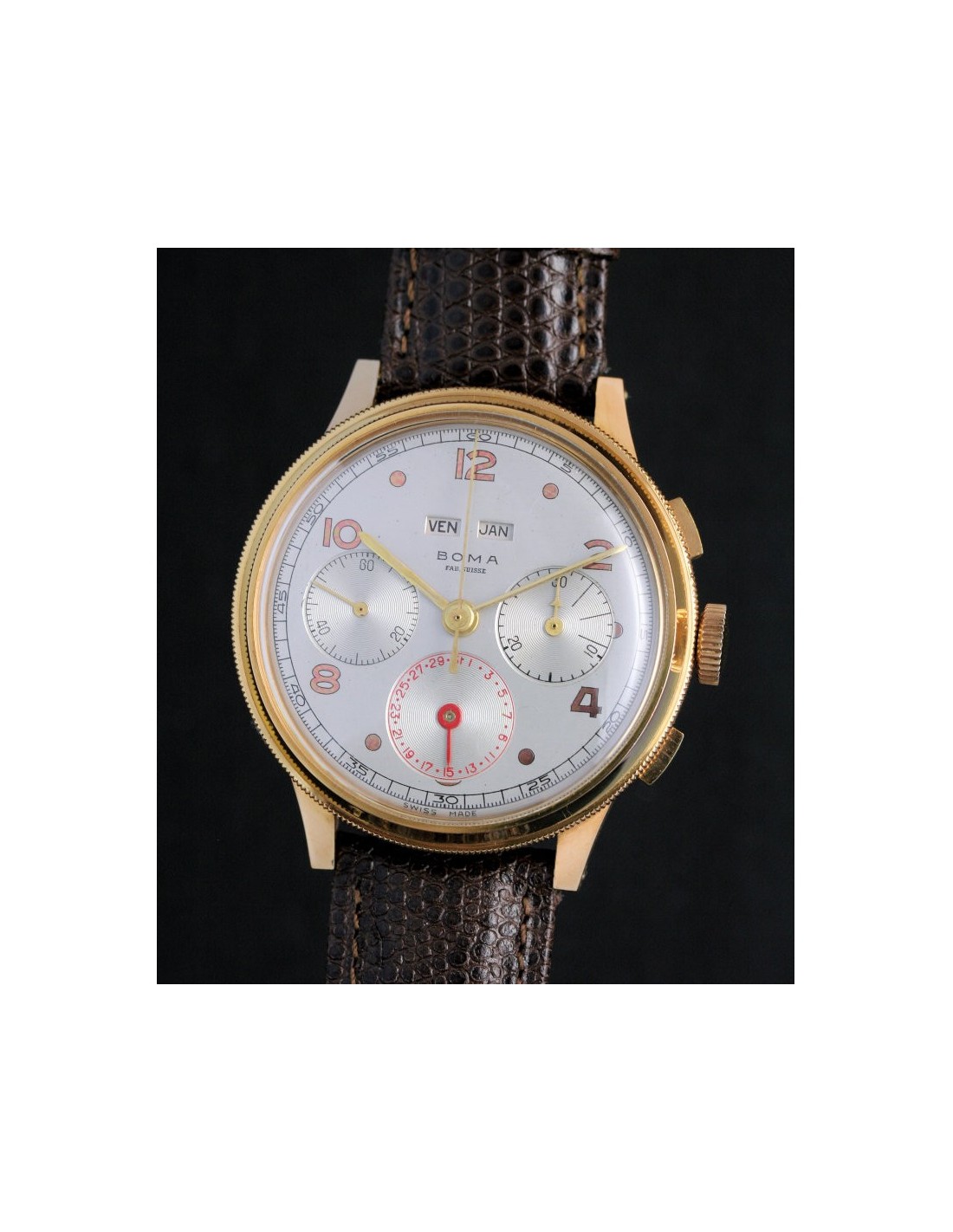
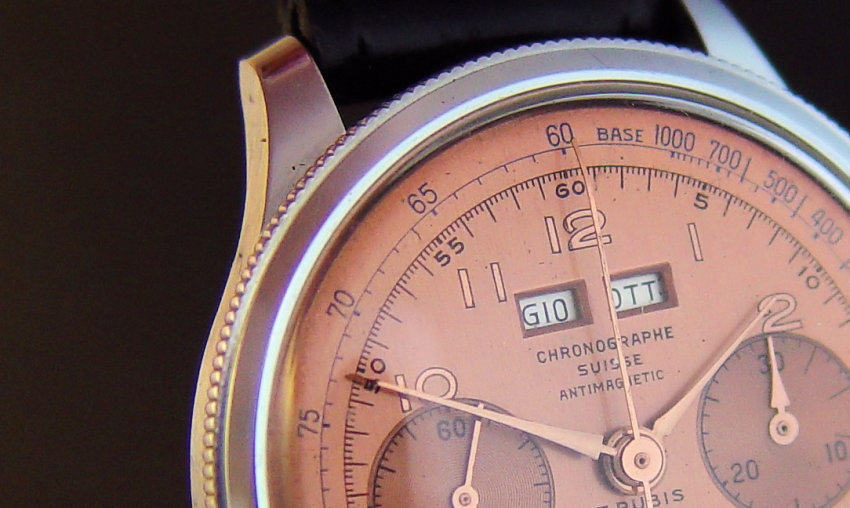
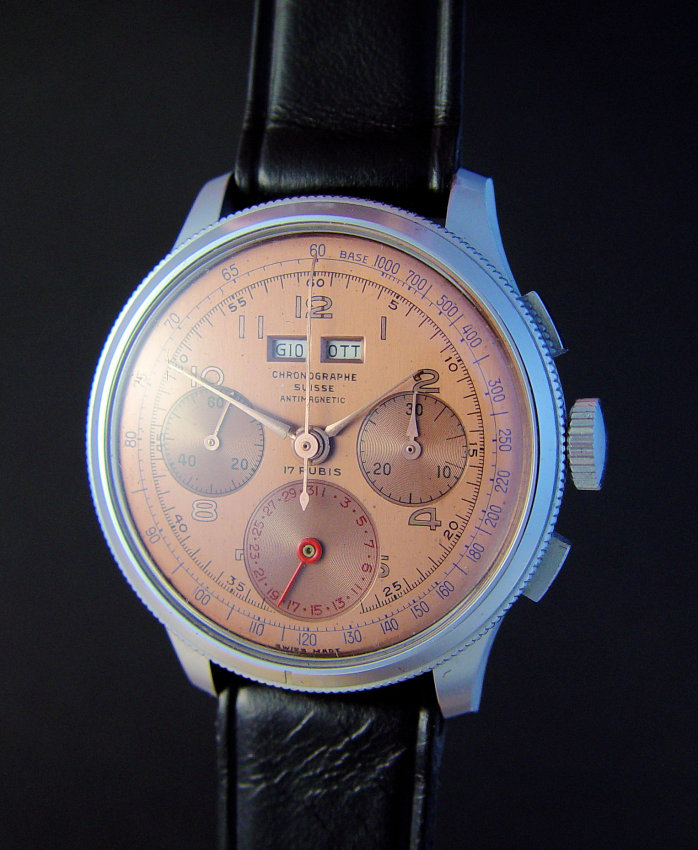
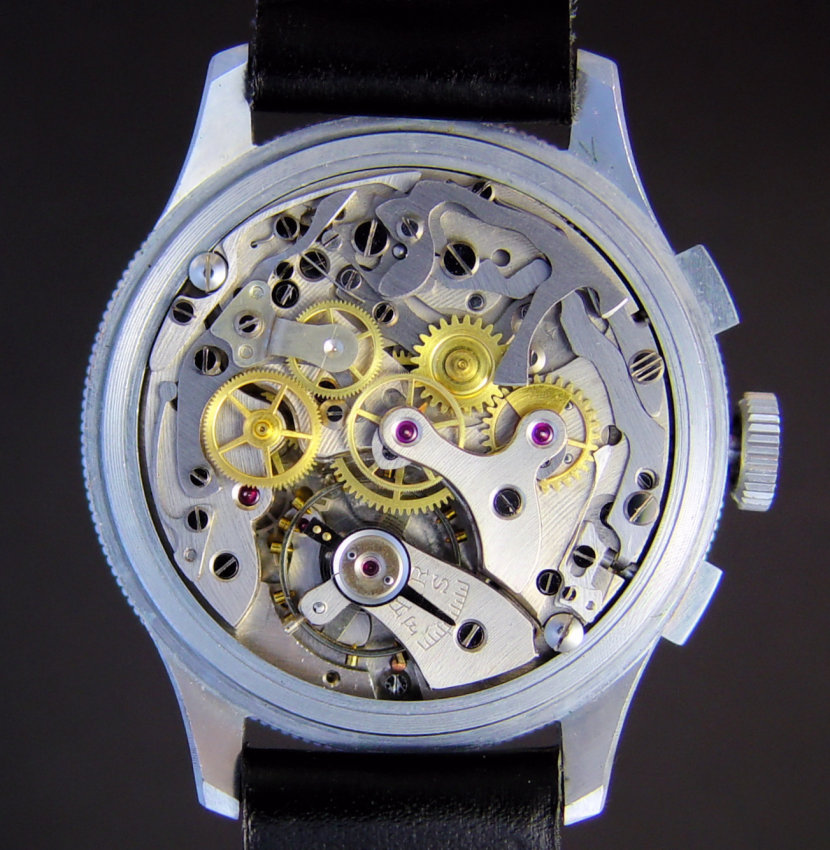
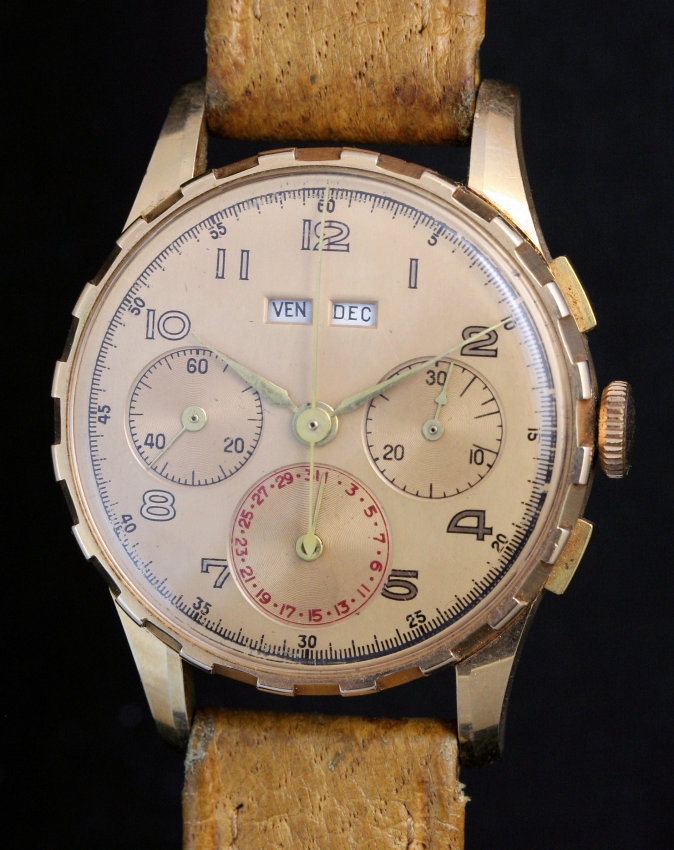
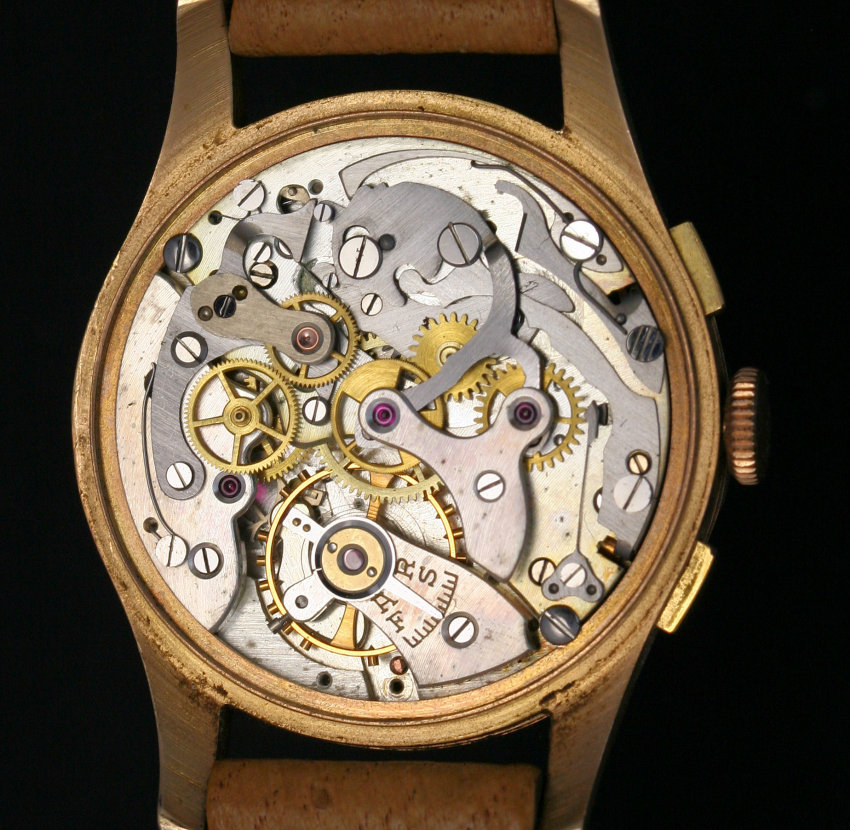
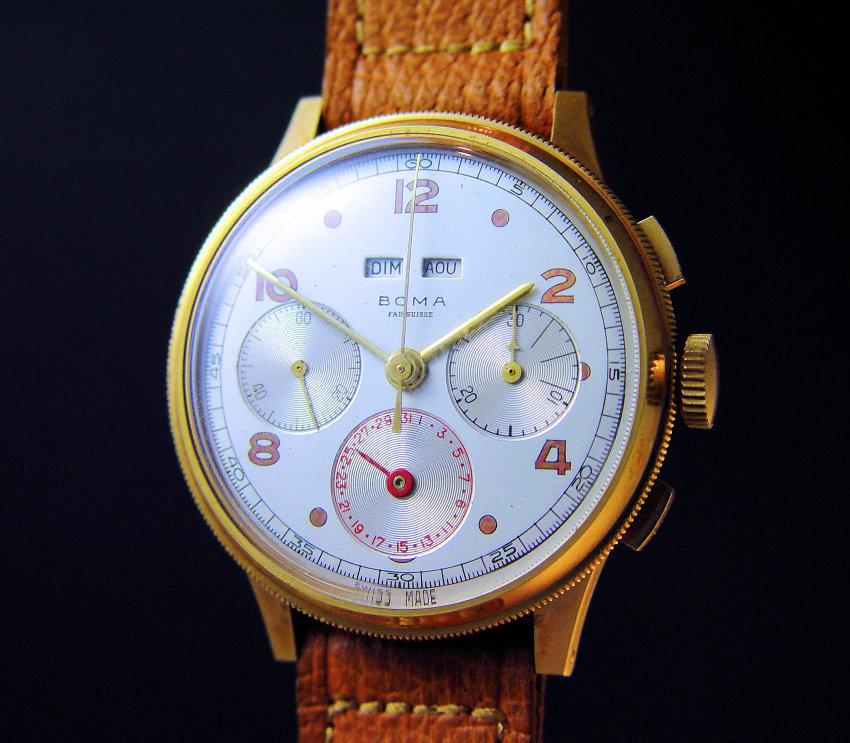
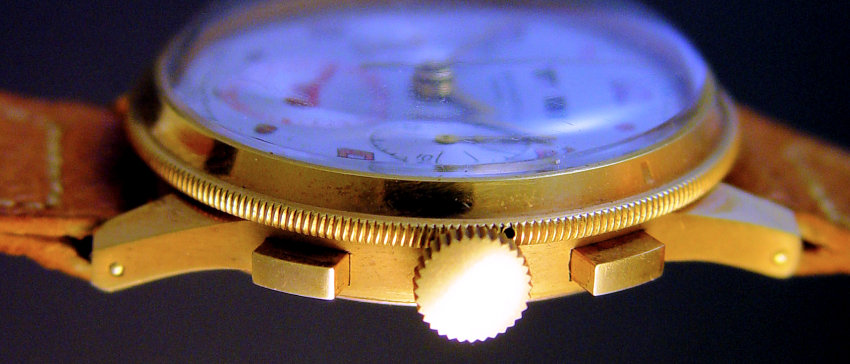
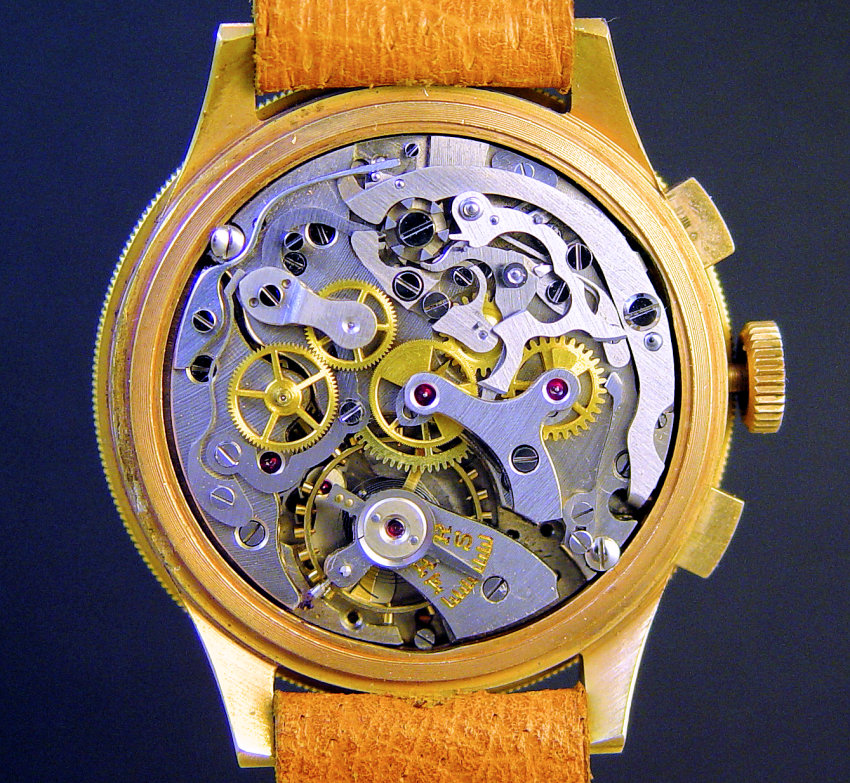
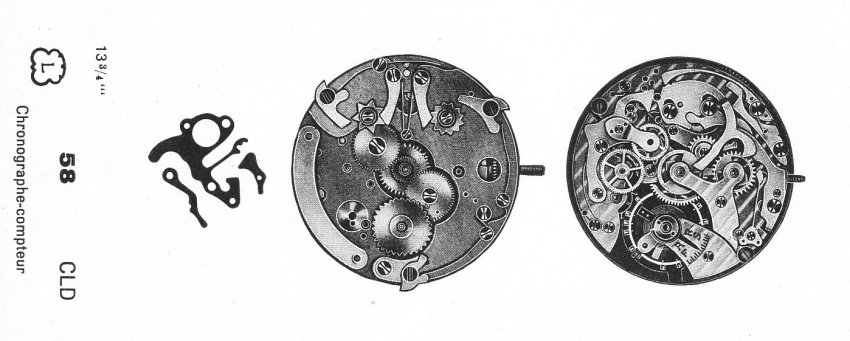
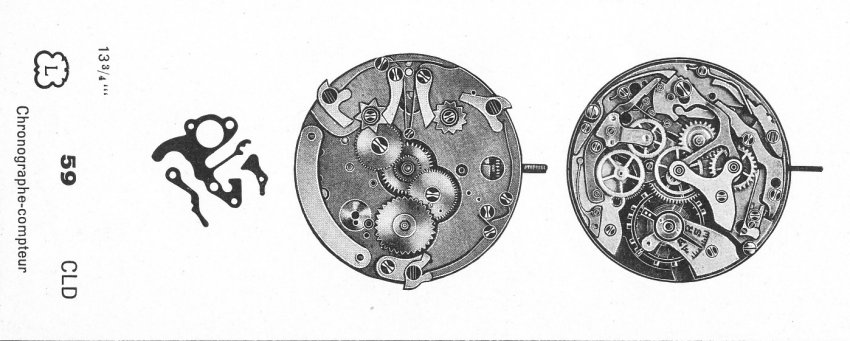
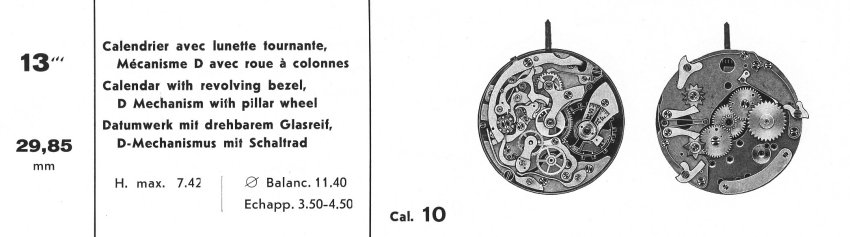
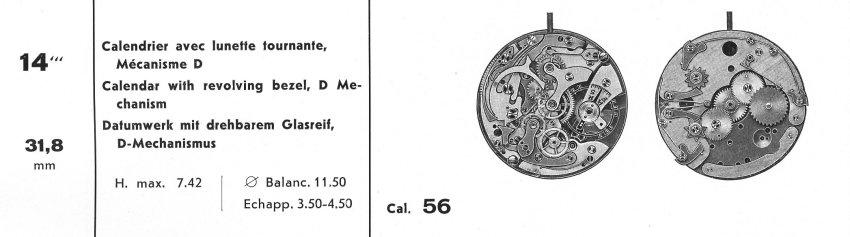
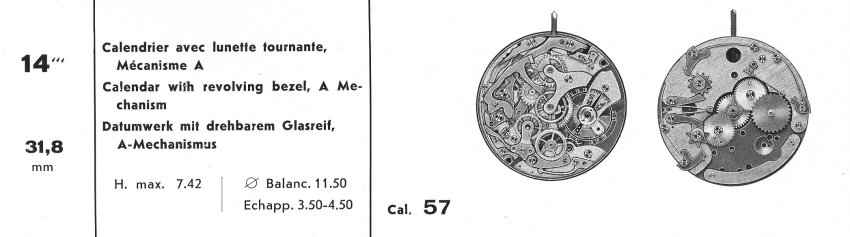
These calibers are sometimes referred to as the “Landeron 185” [1]. The problem is that the Landeron 185 itself is equipped with conventional pushers. An analysis of period documentation is therefore necessary to characterize these attractive chronographs more precisely.
A few rare attempts were made in the 1930s, but it was in the early 1940s that the first chronographs with calendar functions appeared: Angélus and its Chronodato in 1942, Universal with the rare Dato-Compax in 1942, and, most notably, the Tri-Compax in 1943. These companies were manufacturers and therefore did not rely on Ebauches SA for their movements.
Given the success of these chronographs, it’s easy to imagine that the “établisseurs"—a term used to describe companies like Breitling, Heuer, Doxa, Le Phare, Léonidas, Record, and many others, which did not manufacture their own movements—must have put pressure on Ebauches SA to obtain chronograph-calendar calibers. The response was slow but substantial. The first chronograph-calendar caliber offered by Ebauches SA was the Valjoux 72C in 1946, followed by the 88 the following year. But as early as 1948, the trust’s two other chronograph movement manufacturers, Venus and Landeron, introduced no fewer than 13 new calendar calibers, with 10 more in 1950 [2]! A wide variety of combinations were available: date, day, month, moon phases, date via a central hand, date via a hand at 12 o’clock or 6 o’clock…
At Vénus, customers could even request an additional split-seconds hand, and at Landeron, an innovative way to adjust the calendar functions: a mechanism controlled by a rotating bezel, which eliminated the unsightly small pushers around the edge of the case.
Five Landeron calibers are equipped with this rotating bezel adjustment: the 58 and 59, launched in 1948, and the 10, 56, and 57, launched in 1950.