The true story of Solvil and Titus

The true story of Solvil and Titus

Solvil et Titus

Solvil et Titus is often criticized for using the name of famous timekeeper Paul Ditisheim without authorization. On closer examination, the company, while lacking the genius of the man who lent them his name, has nevertheless respected what made it famous: chronometers and jewelry watches.

Description

Joël Pynson

March 2025

1. Created by Paul Ditisheim

Paul Ditisheim founded his watchmaking factory in La Chaux-de-Fonds in 1892 [1].

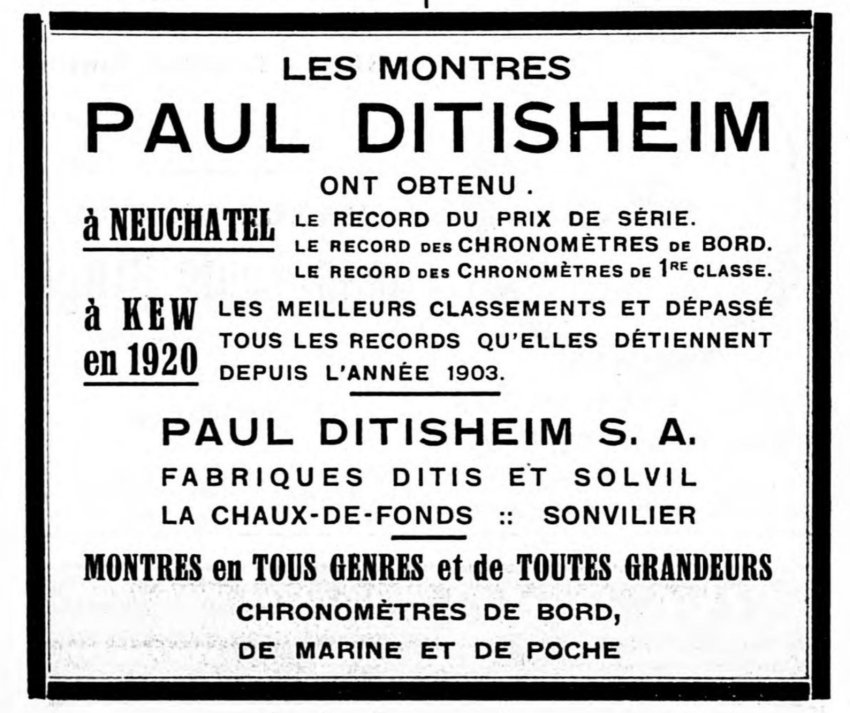
An exceptional watchmaker, he quickly became a legendary figure in chronometry, shattering records at the Neuchâtel and Kew competitions, and securing a wealthy clientele with his complicated and jewel watches, decorated by the finest artists of his day.

But the First World War put an abrupt halt to his rise. He decided to produce more economical watches, which would undoubtedly be easier to market in wartime.

To this end, he transformed his company into a public limited company, Paul Ditisheim SA, and Eugène Butticaz took over its management.

In 1918, Paul Ditisheim registers the Solvil and Titus trademarks.

1922

As the workshops in La Chaux-de-Fonds were unsuitable for mass production of watches, Paul Ditisheim helped found the Fabrique Solvil in Sonvilier, which Eugène Butticaz took over in 1920.

The aftermath of the First World War was disastrous for Swiss watchmakers, creating a long-lasting crisis.

In 1922, the Ditisheim family joined Paul's company, probably to support it. They were Jules, Georges and Henri. But they themselves were already involved in the watchmaking business, and must have experienced the same economic difficulties.

As the situation worsened, Paul Ditisheim left for Paris in 1924, but remained on the board of Fabrique Solvil.

1926

The turning point came in 1927: Fabrique Solvil became Fabrique Solvil des Montres Paul Ditisheim, taking the name of the famous watchmaker. Two years later, Paul Ditisheim SA went bankrupt, and Paul Ditisheim withdrew from Fabrique Solvil. He was no longer involved in any company in Switzerland.

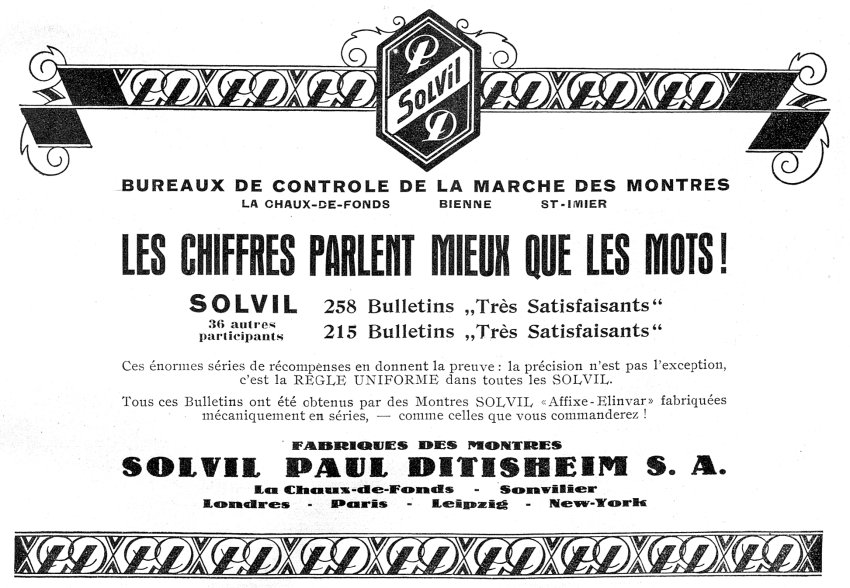
The situation at Fabrique Solvil was not much better: in 1928, the company was in debt-restructuring moratorium, but escaped bankruptcy in 1929. It then moved to La Chaux de Fonds with a war chest: the name Paul Ditisheim and the Ditis, Solvil and Titus brands he had created.

However, nothing was decided yet and, as is often the case, it would take the arrival of a providential man to save the company.

2. La Fabrique Solvil des montres Paul Ditisheim

Despite the departure of Paul Ditisheim, the Solvil factory did not lose its reputation.

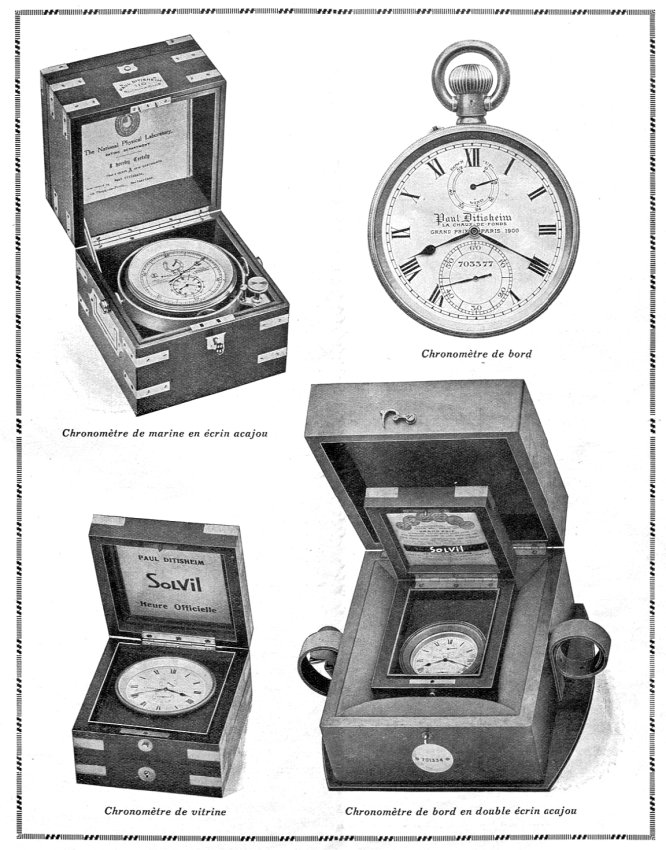
The chronometry department continued to supply marine and shipboard chronometers to numerous ministries, scientific institutes and learned societies [2]. Solvil-Paul Ditisheim chronometers are used, for example, on the famous Graf Zeppelin airship, and in 1930 the company wins several Premiers Prix at the Neuchâtel Observatory precision competition, thanks in particular to the setter Werner-A Dubois [3].

1928

Then came the man who was to change Solvil's destiny: Paul-Bernard Vogel.

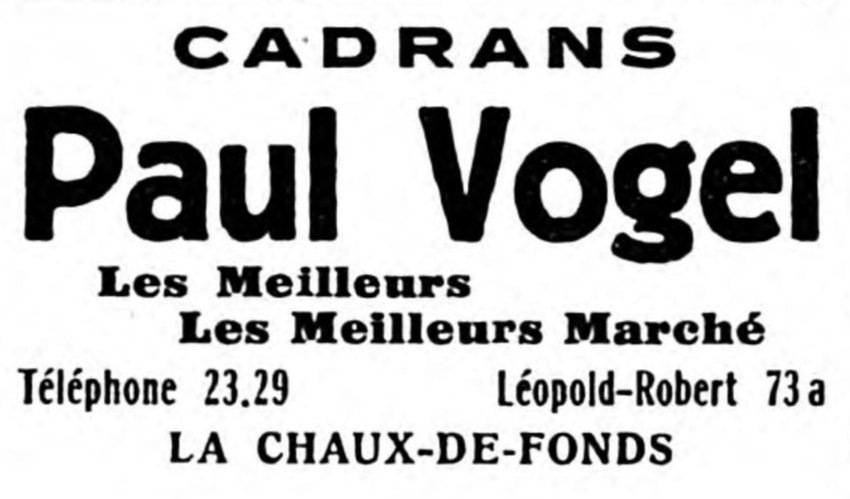
Paul Vogel was a dial manufacturer who had been based in La Chaux-de-Fonds since 1923 [4]. In 1931, he took control of Fabrique Solvil and sold his company to Oscar Helfer and Guillaume Hüning, two dial makers previously based in Porrentruy.

1931

1932

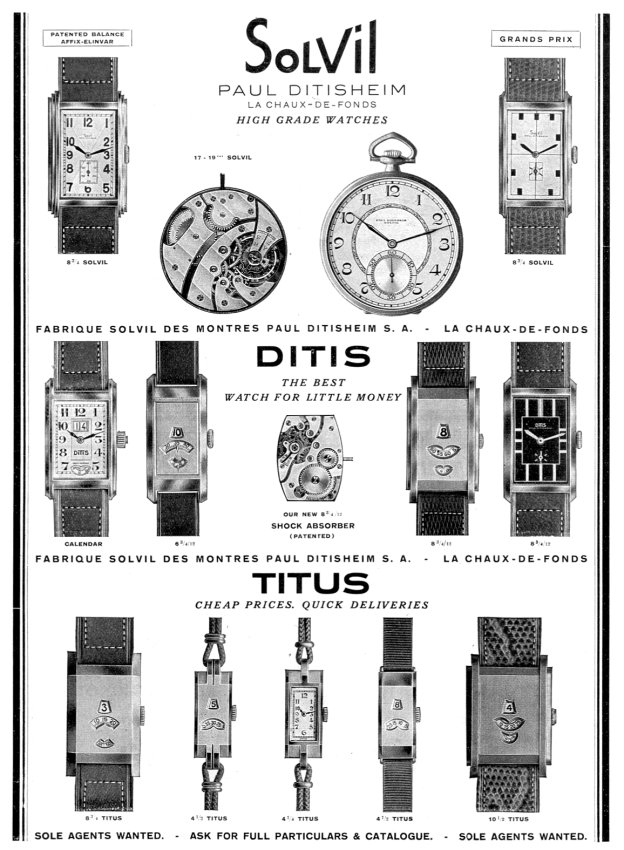
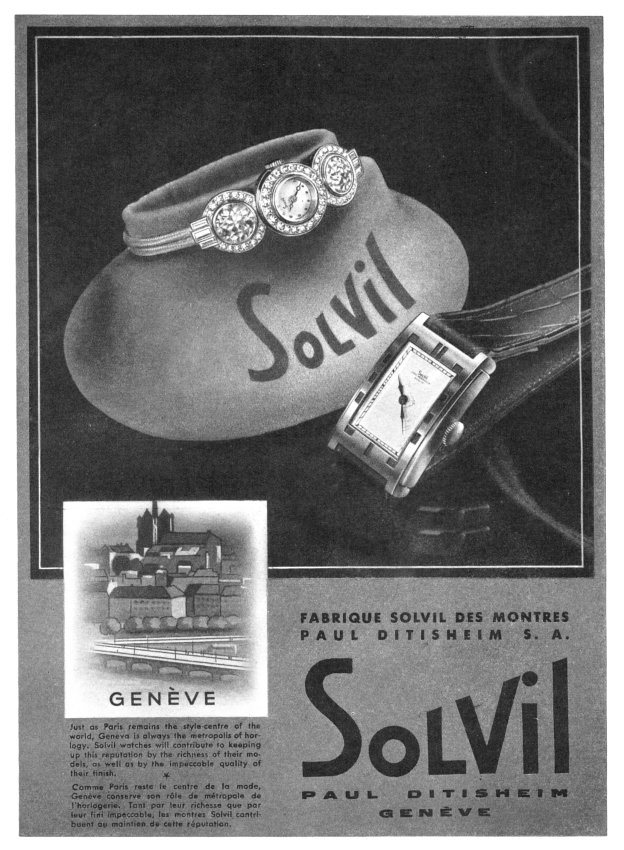
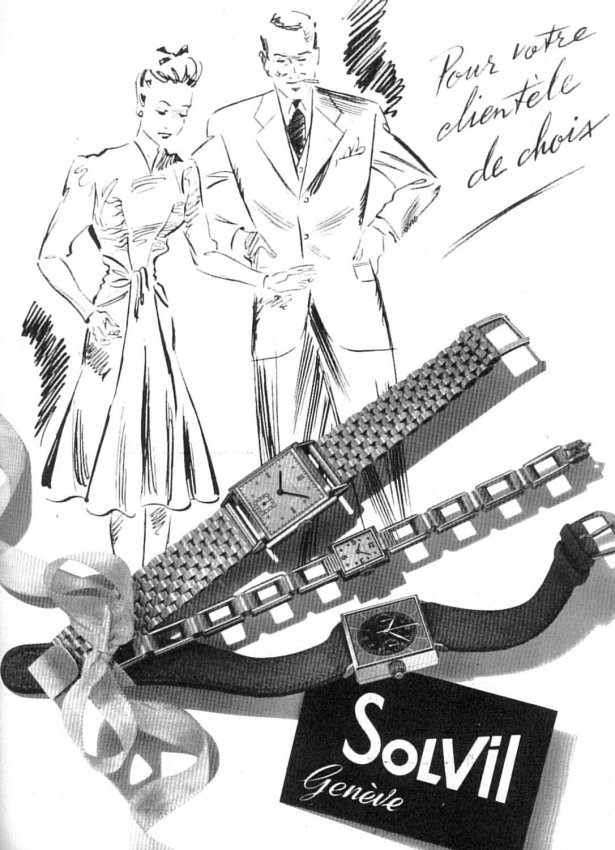
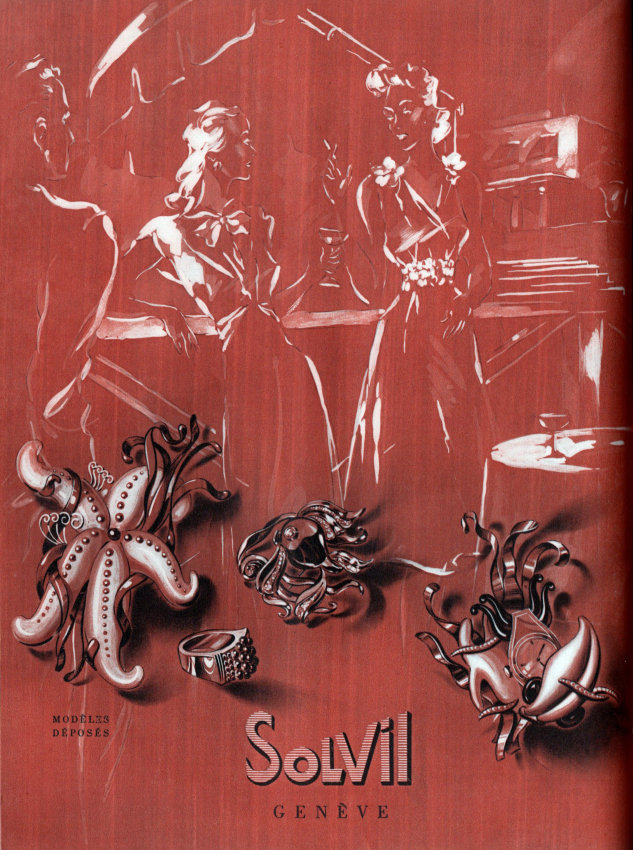
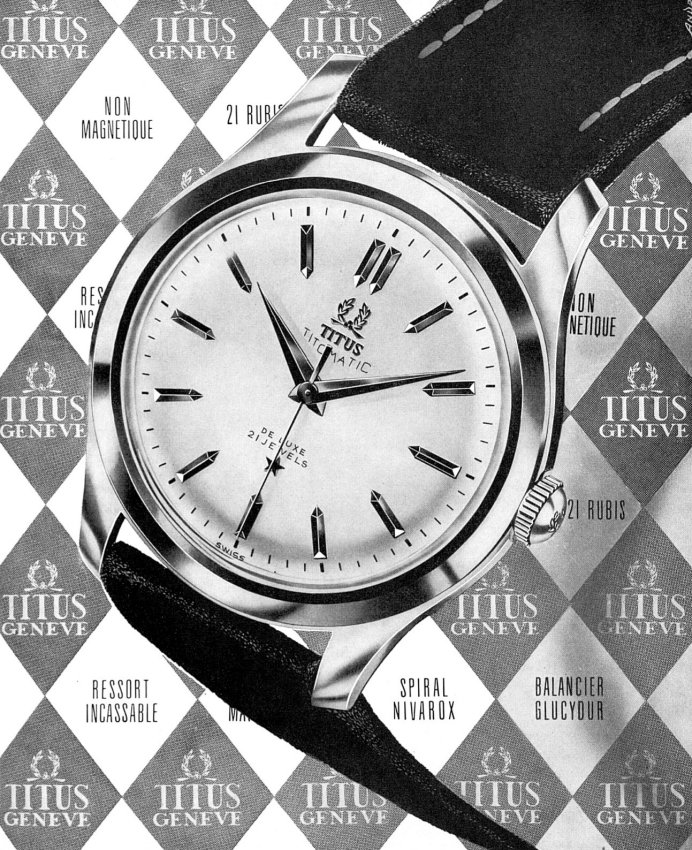
The watch ranges were reorganized: the Solvil brand was reserved for high-end watches and chronometers, the Ditis brand for mid-range watches, and the Titus brand for inexpensive watches.

Discreetly, other manufacturers help Solvil complete its ranges. The Ditis range, for example, includes watches produced by Helvétia in Bienne.

Paul Vogel went on to completely reorganize the company. In 1933 he created two additional companies, Titus SA and Ditis SA [5], and in 1936 he took the radical step of transferring the entire business to Geneva [6].

The choice of Geneva was no accident. Paul Vogel needed the prestige of the city of Calvin to implement his strategy: to make extraordinary jewel-watches for a wealthy clientele. Exactly what Paul Ditisheim was doing. But Paul Vogel was to succeed where Paul Ditisheim had failed, relying on the manufacture of high-quality, mass-produced watches to provide the resources needed to produce exceptional timepieces.

3. Solvil in Geneva

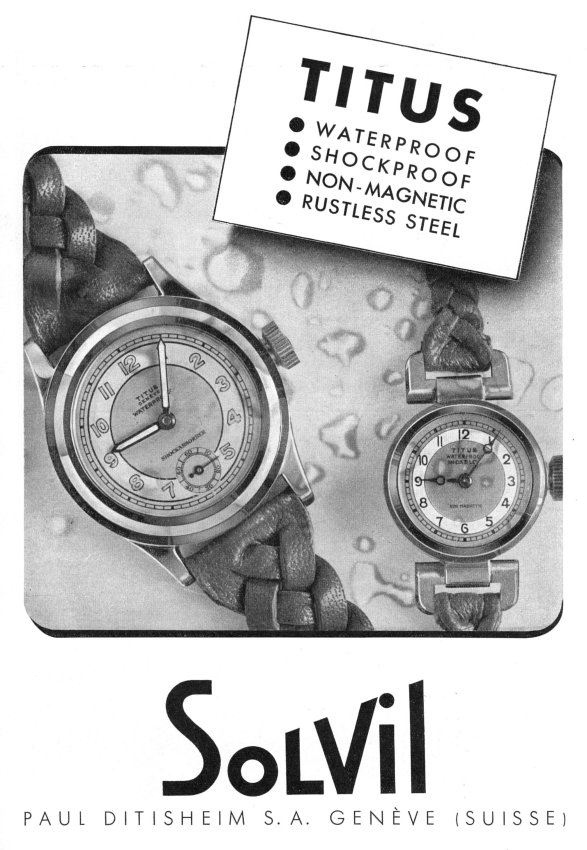
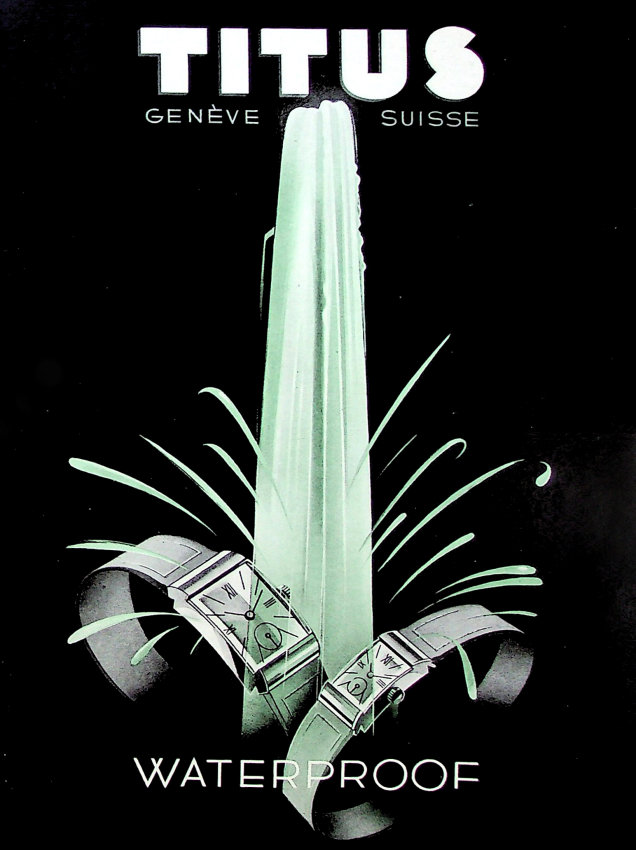
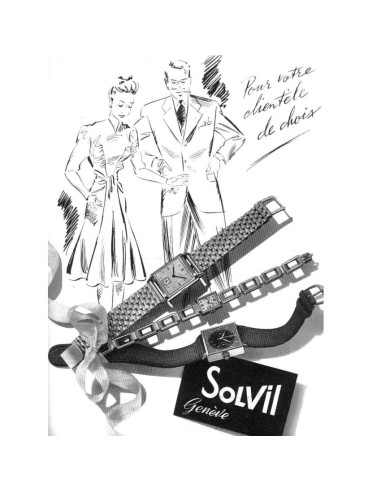
Paul Vogel implements his strategy to the letter. The Solvil brand is reserved for on-board chronometers, still in production, elegant watches in precious metals, and jewelry watches. The Titus brand is reserved for simpler watches of excellent quality, with a feature that will be emphasized: water-resistance. Water-resistant Titus watches came in many versions: round, some with automatic winding as early as 1938, and above all rectangular, thanks to a special stainless steel case with a glass screwed onto the case [6].

1937

1941

1937

1938

But Paul Vogel's masterstroke came in 1942.

In fact, 1942 was the bimillennial year of the city of Geneva. Numerous festivities were planned, despite the difficult international situation. Paul Vogel organized a meeting to which he invited some fifty of the most important figures in Geneva's watchmaking and luxury goods industries [7]. He proposed that they create an exhibition showcasing Geneva's watchmaking and jewelry expertise, bringing together both antique pieces from museums and collectors, and contemporary pieces presented by local manufacturers. The idea was enthusiastically received, and the first " Montres et Bijoux de Genève " exhibition was organized, with Paul Vogel appointed chairman of the organizing committee.

1942

1943

The exhibition, held in the salons of the Grand Hôtel de Russie, was a success. From then on, it became the annual meeting place for Geneva's watchmaking and luxury industries, welcoming more and more companies and related exhibitions over the years.

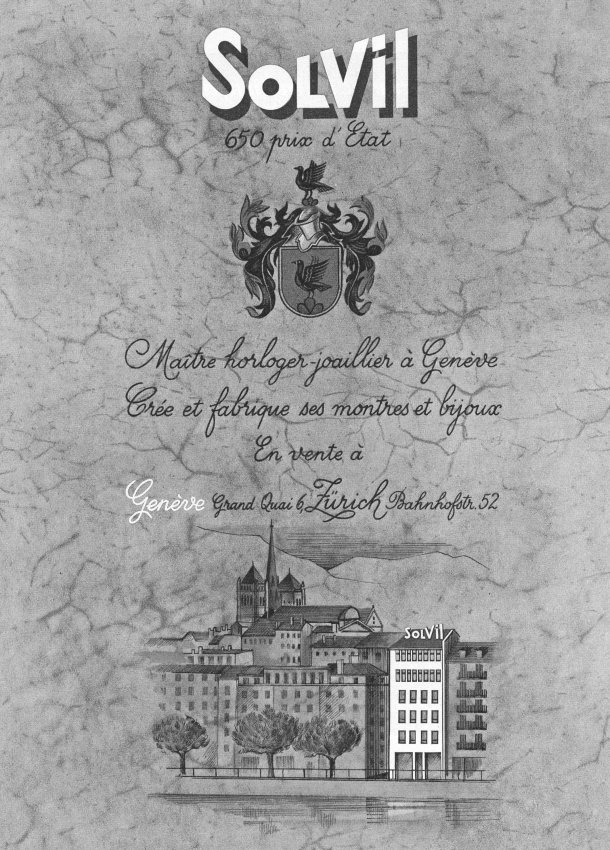
In 1947, Solvil moved into a magnificent building on the Grand Quai, facing the Rhône [8]. The sales rooms were on the first floor, the administrative areas on the upper floors, and the spacious workshops, equipped with modern equipment, were located on the top floor to take advantage of the daylight.

1948

The Solvil and Titus brands continue to divide their product ranges, with Titus producing more and more chronographs.

1950

1950

In 1952, Paul Vogel's son, Paul-René, joined the company, and international markets were explored, particularly in Asia, where the Titus name was increasingly recognized.

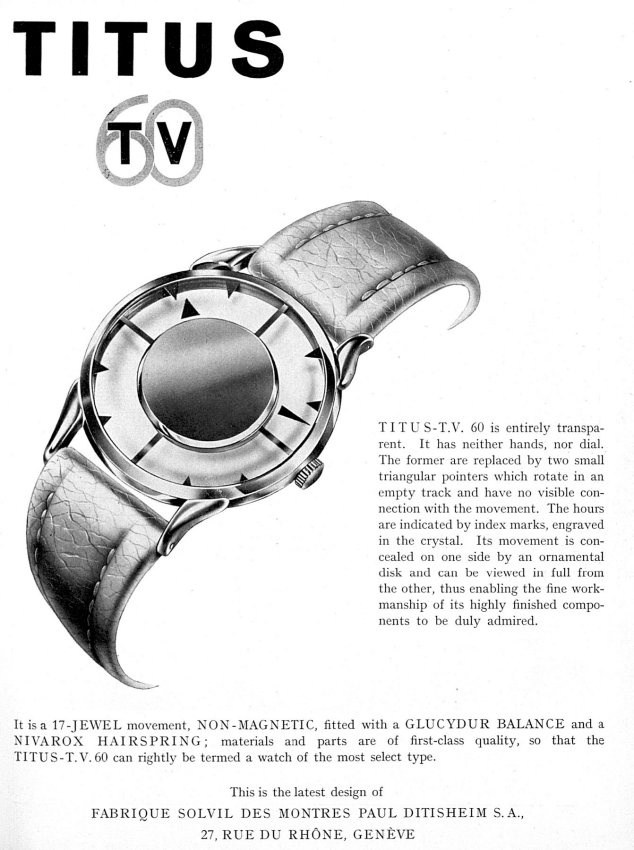
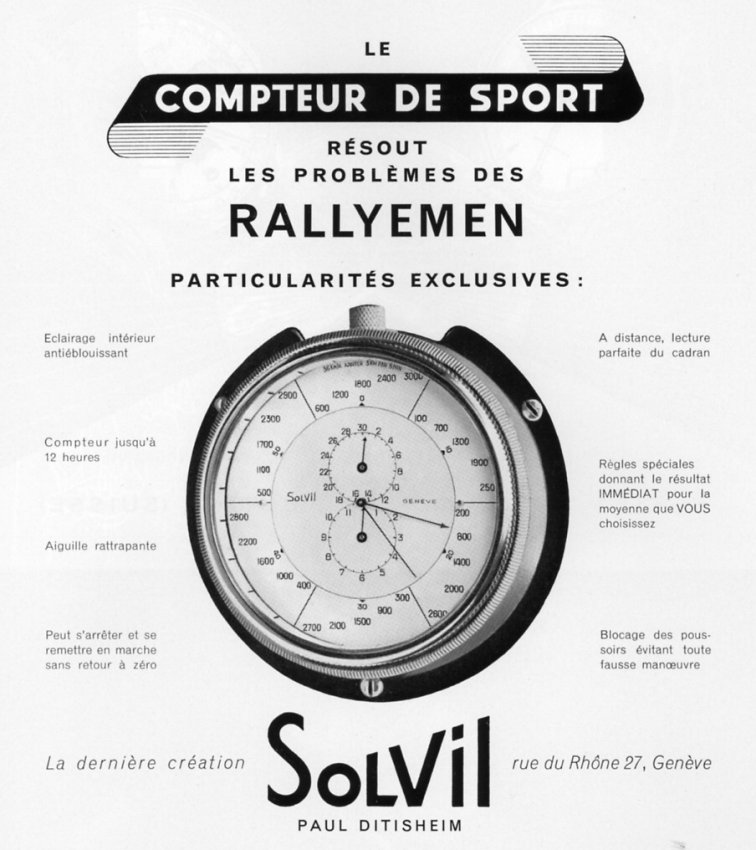
New models appear: in 1953 a sports counter that can be fixed to a desk or dashboard, and a Titus TV60 watch where the hands are replaced by transparent discs bearing simple arrows for hours and minutes; and in 1954, new automatic watches.

1953

1953

1954

The name Paul Ditisheim and the manufacture of on-board chronometers having become incidental, the company was renamed Fabrique des Montres Solvil et Titus in 1956 [9].

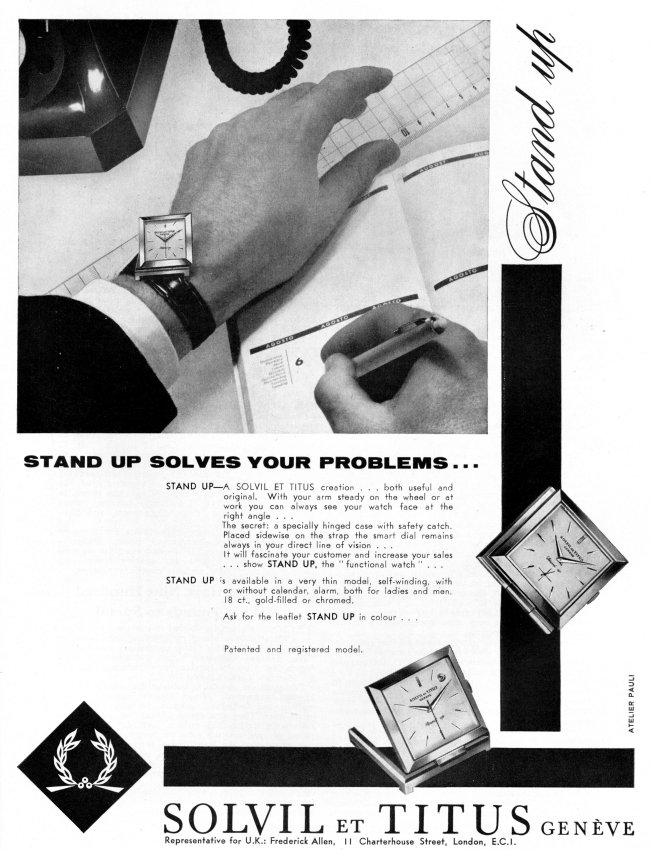
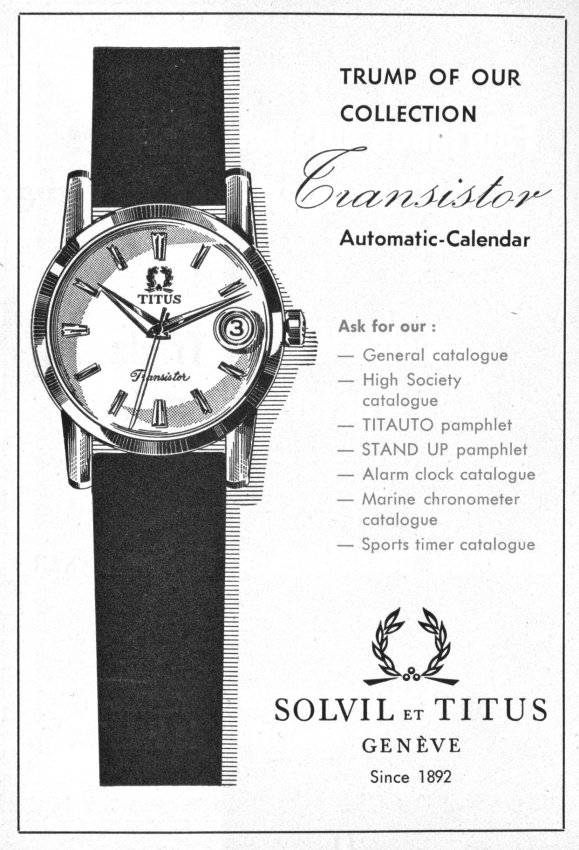
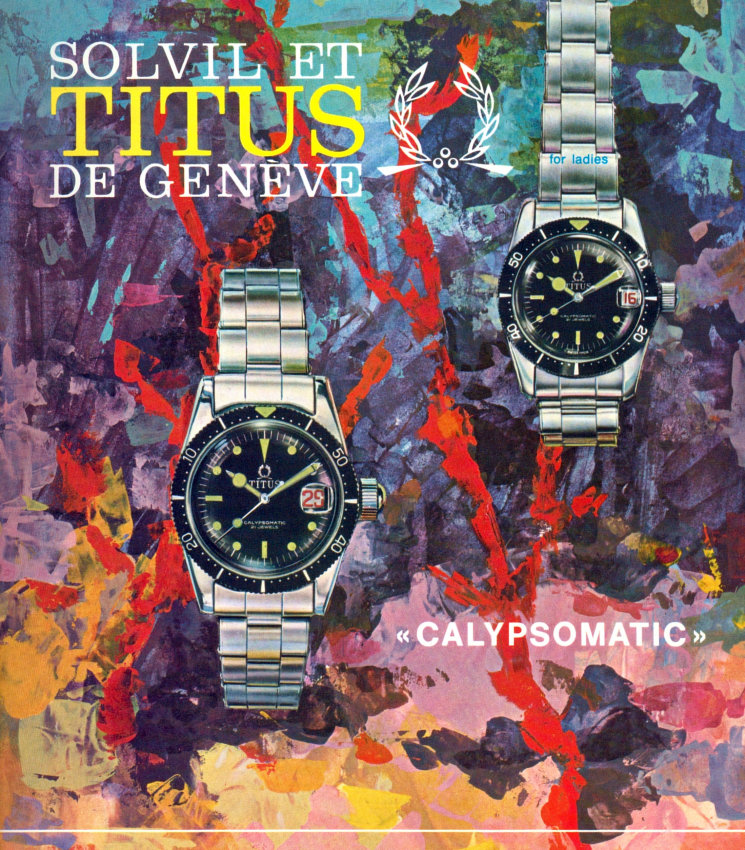
A succession of new models followed, including the Stand-Up watch in 1959, whose case could be raised for easier reading, the Transistor automatic watch with date in 1960, the Royal Time automatic watch with day and date in 1962, and the beautiful Calypsomatic diver's watch launched in 1966.

1959

1960

1966

4. Solvil et l’électronique

Paul Vogel and his son were to follow closely the progress of electronics in time measurement.

Hamilton in the USA launched its first "electronic" watch in 1957, and LIP launched its own the following year in France. Ébauches SA in Switzerland was also working on a watch of this type.

These were hybrid systems, where an intermittent electromagnetic field powered a conventional spiral balance.

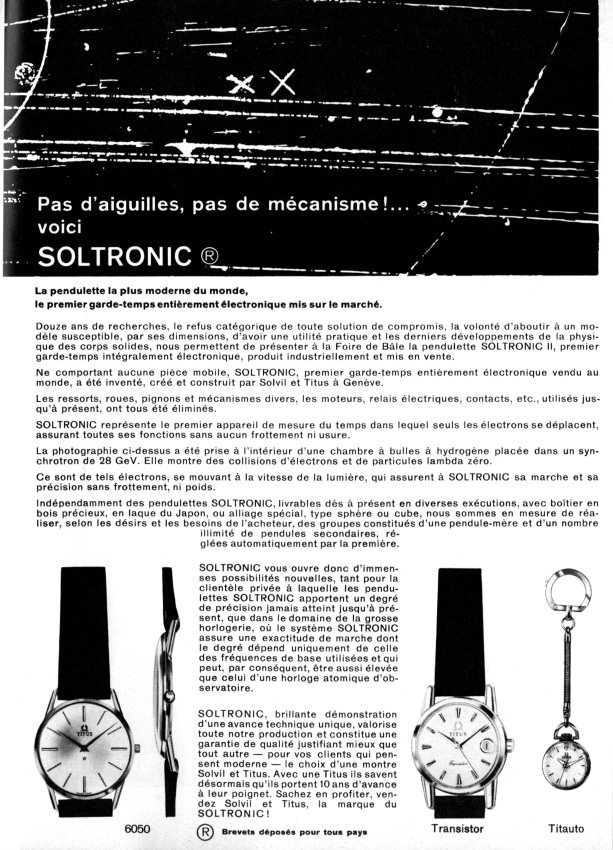
Paul Vogel and his son wanted to go even further and develop an entirely electronic watch, without any mechanical parts. To achieve this, they set up their own research laboratory, and joined forces with the Laboratoire de Recherches Physiques in Geneva, and the Physics Research Laboratory in New York [10].

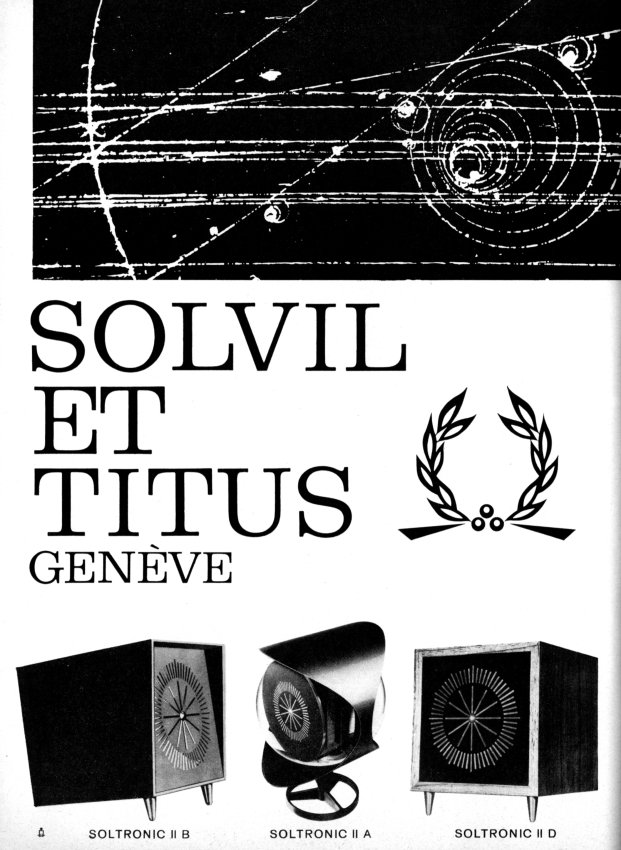
The results of this work came to fruition in 1962 with the presentation at the Montres et Bijoux exhibition in Geneva of the Soltronic clock, which had no moving parts and told the time by means of luminous indexes.

1963

In the years that followed, the dimensions of Soltronic clocks were progressively reduced, with the smallest, in 1965, measuring just 6 cm3.

But the dream of an entirely electronic wristwatch never materialized. Embarking on this adventure alone certainly required resources that an isolated company could not provide.

5. Integration into the Société des Garde-Temps

In the 1960s, Switzerland witnessed a vast wave of mergers and acquisitions of watchmaking companies [11]. It was linked to the end of the statut horloger, introduced during the crisis period of the 1920s-1930s, which regulated the watchmaking industry by, for example, requiring authorization for company start-ups or takeovers.

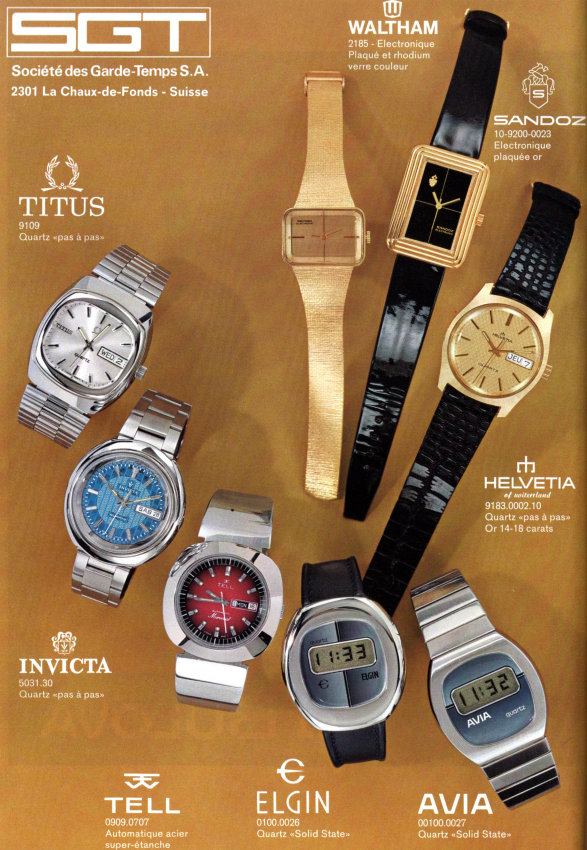
Société des Garde-Temps(SGT) was created on September 20, 1968 in Neuchâtel, to bring together 6 Swiss watchmakers under a single holding company: Degoumois & Cie, Fleurier Watch, Helvétia, William Mathez, Silvana and Eugène Vuilleumier [12]. The creation of SGT was driven by Jean-Victor Degoumois, who was involved in all the holding companies.

Solvil & Titus joined the SGT holding company in 1969 [13], and in 1970 two other companies joined: Invicta SA and Compagnie des montres Sandoz SA [14]. This integration also included the famous American company Waltham Watch Co. which was owned by Invicta, Avia and Sandoz.

1974

1974

SGT, of which Jean-Victor Degoumois is Chairman of the Board, is now the third-largest Swiss watchmaking group, behind ASUAG and SSIH. Its production capacity is 3.8 million anchor watches a year, representing 10% of total Swiss watch exports. The group owns 16 factories and employs around 1,500 people [15].

Paul-Bernard Vogel died in 1972.

Integration gave Solvil & Titus new production capacities and access to new technologies, such as quartz watches from 1974.

But with so many companies, rationalization was essential. In 1971, Solvil & Titus absorbed E. Vuilleumier and W. Mathez, and the company moved to Neuchâtel, abandoning its Geneva roots.

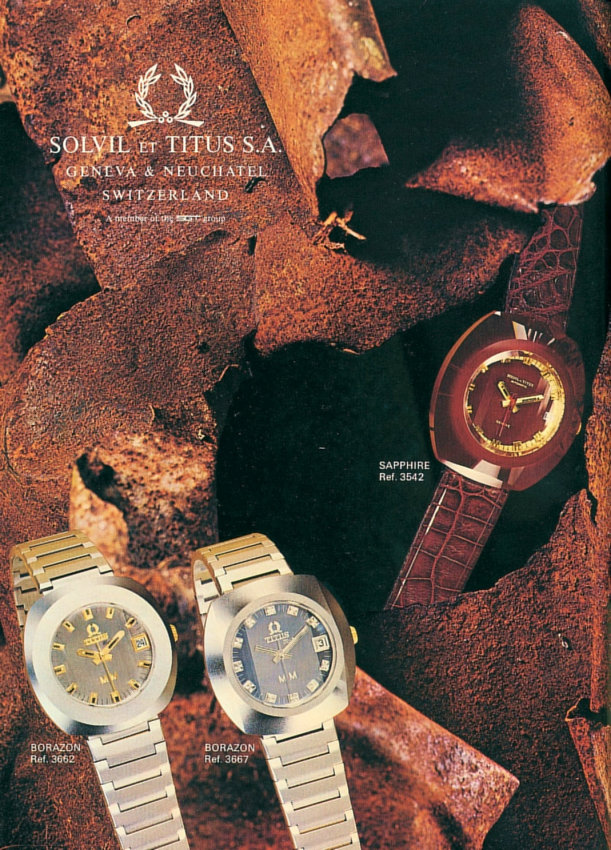
The new Solvil & Titus ranges were rather eclectic and did not aim for the top end of the market.

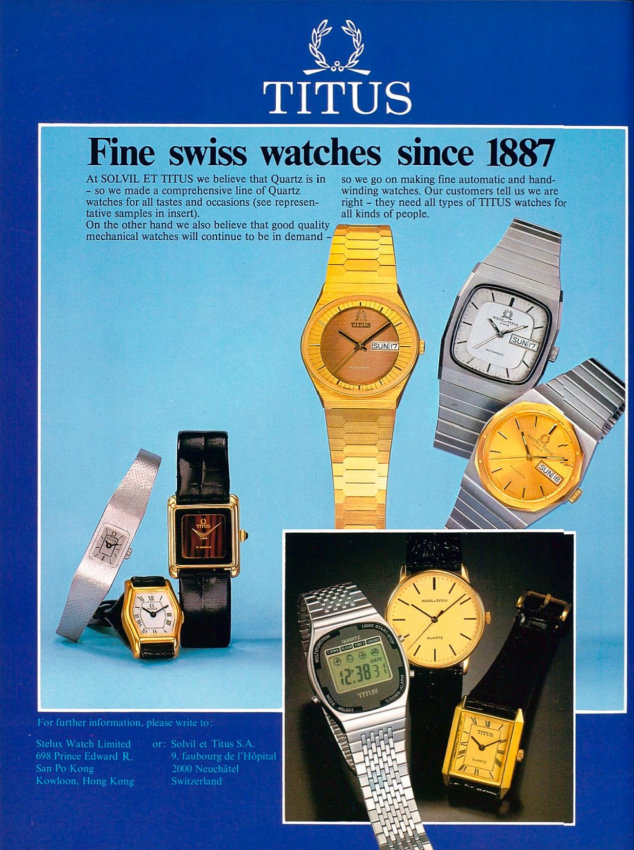
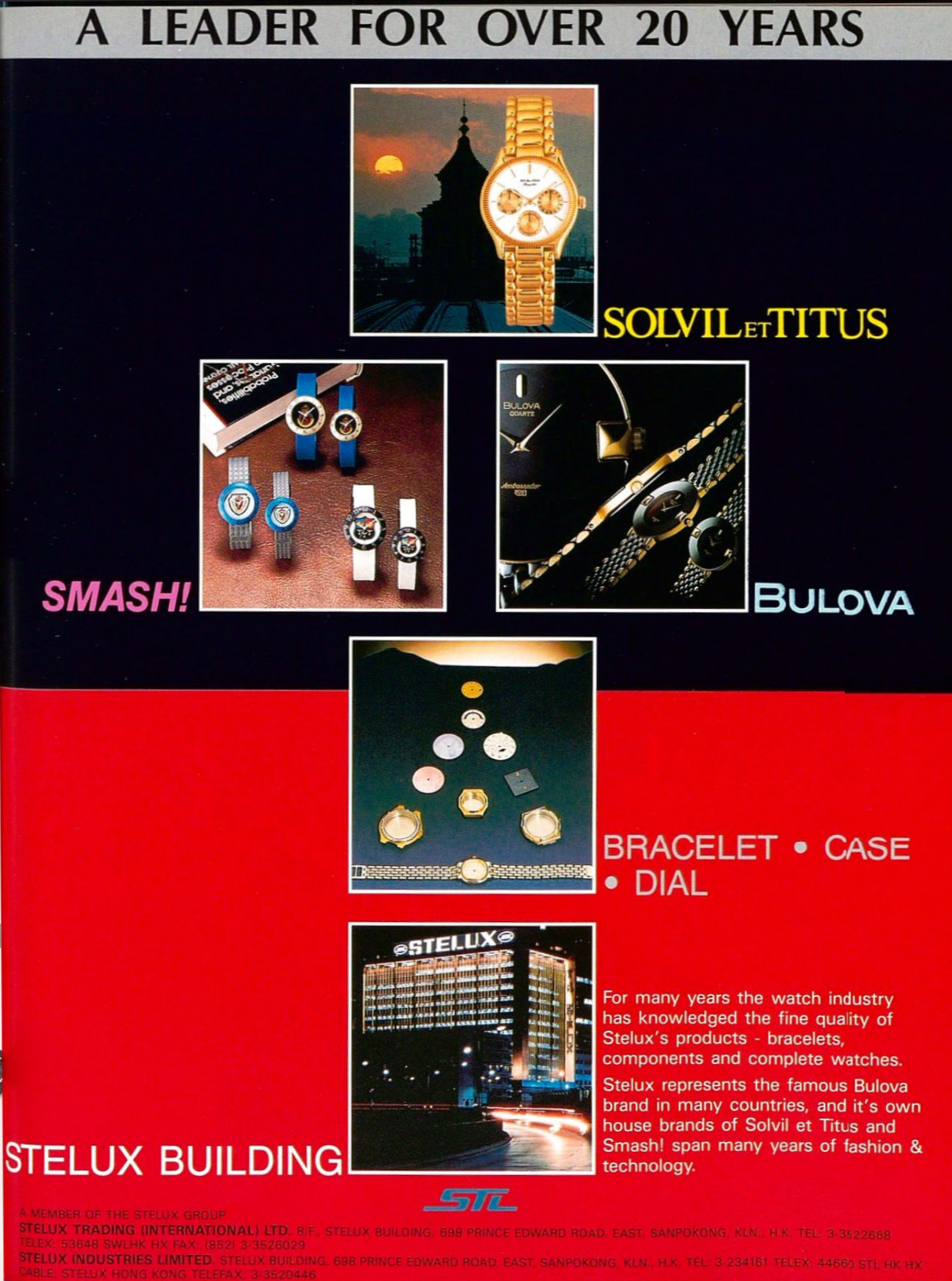
In 1976, Solvil & Titus left SGT and was taken over by the Hong Kong Stelux group.

1979

1989

In 1981 the head office is transferred to Biel [16]. A new range of quartz wristwatches is launched, mainly for the Asian market. In 1996, the company was again transferred to Geneva, but the brand was mothballed.


[1] For the history of the Paul Ditisheim companies, see the article dedicated to him here.

[2] Revue Internationale de l'Horlogerie, 1931, 8, p. 87

[3] La Fédération Horlogère, 1931, 13, p. 103

[4] FOSC 1923

[5] FOSC 1933

[6] Journal Suisse d'Horlogerie, 1938, 7-8, p. 143

[7] La Suisse Horlogère, 1965, 3, pp. 3-6

[8] Journal Suisse d'Horlogerie, 1947, 7-8, pp. 357-359

[9] FOSC 1956

[10] Europa Star Asia, 1962, 74, 6, pp. 6-7

[11] For more information on the 1960s watchmaking concentrations in Switzerland, see Joël Pynson, La montre-bracelet Suisse, 2024, pp. 260-267.

[12] FOSC 1968

[13] FOSC 1969

[14] FOSC 1970

[15] Bulletin d'informations horlogerie bijouterie, 1970, 686, pp. 1-2

[16] FOSC 1981

Notes :

About Time To Tell: Time To Tell has one of the largest private digitized databases on the history of Swiss watchmaking, with over 2.3 TB of data on more than 1,000 Swiss watch manufacturers. This database has been built up over a period of some thirty years, and continues to be fed with around 50 to 100 GB of data every year. The database is made up of old documents, mainly Swiss trade journals, dating from the late 19th to the late 20th century. Most of these documents are not available on the Internet. Historical articles published on the time2tell.com website always cite the sources used.

Time To Tell is a private company, independent of any watch manufacturer.

©Time To Tell, 2025

Reproduction forbidden witho ut authorization.

Any use of this article by artificial intelligence is strictly forbidden and will be considered an infringement of copyright.
Product Details

Product added to wishlist

Nous utilisons des cookies afin de fournir une expérience utilisateur conviviale. En naviguant sur ce site, vous acceptez la politique d'utilisation des cookies.