The true story of Agon watches and the golden age of Roskopf watches

The true story of Agon watches and the golden age of Roskopf watches

Agon

Agon was once one of the largest manufacturers of Swiss watches. But these were Roskopf-type watches, popular but not highly esteemed by the makers of the "beautiful Swiss anchor watch". Like all manufacturers of this type of watch, Agon did not survive the "quartz crisis".
Description

Joel Pynson

July 2025

1. The Triebold Dynasty

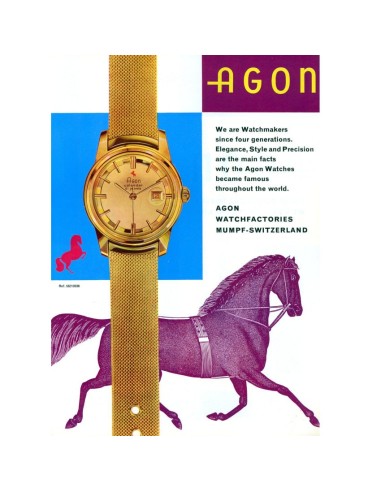
Robert Triebold established his watchmaking factory in Mumpf in 1937. Mumpf is located in the far north of Switzerland, on the border with Germany, which lies just across the Rhine. Today, it is not considered a watchmaking region. However, for much of the 20th century, millions of watches were manufactured there, now forgotten, known as "Roskopf" watches.

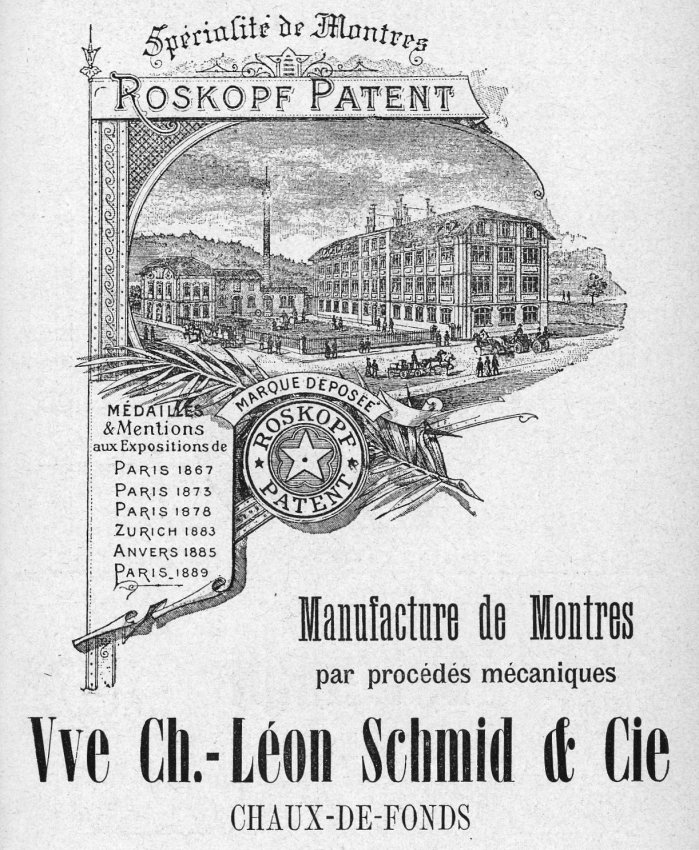
Roskopf watches owe their name to Georges-Frédéric Roskopf, a watchmaker of German origin who, in 1867, created a simplified and very inexpensive watch that he called "La Prolétaire" (The Proletarian), which was a huge success. Many manufacturers then began producing this type of watch in Switzerland, especially since there was no protection for inventions in Switzerland at that time.

1894

The first Roskopf watches did not have rubies, nor did the escapement, where rubies were replaced by pins or dowels. Before World War II, however, Roskopf watches had made considerable progress, with some movements featuring jeweled pivots and the use of high-quality springs. The main difference from the classic anchor escapement watch was in fact the use of a pin escapement.

Due to the watchmaking status introduced in Switzerland following the crisis of the 1920s and 1930s, Roskopf watch manufacturers were not allowed to produce anchor watches. This is why they focused on improving their manufacturing quality, so that Roskopf watches became completely reliable while remaining very competitively priced.

In 1949, Robert Triebold's factory became Agon Watch [3]. It was a Roskopf watch factory, but also a finishing company, which assembled watches for other manufacturers.

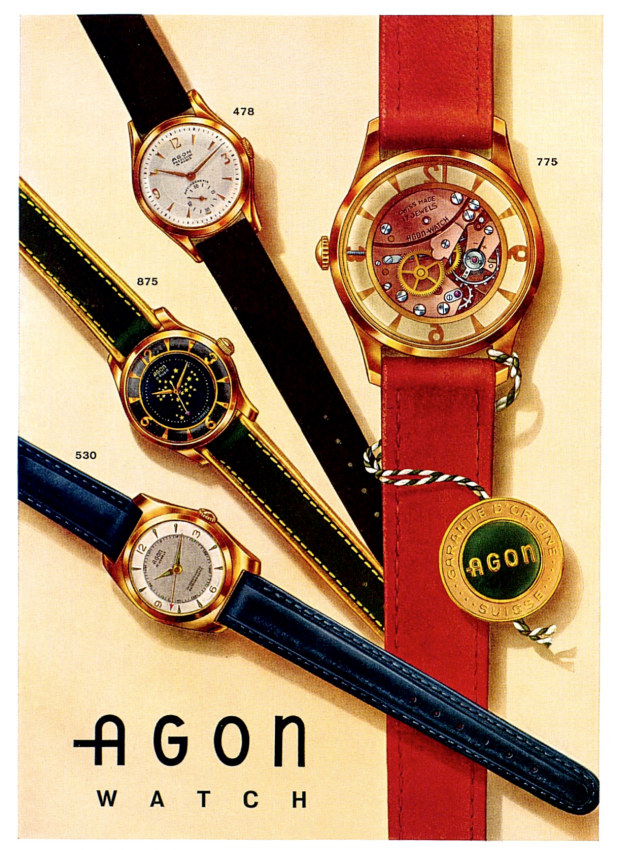
It was in the 1950s that the factory experienced considerable growth. Demand for affordable watches was very high, particularly in the United States, where this type of watch sold in large quantities outside traditional channels, in general stores and by mail order.

It was also during this period that the second generation of Triebolds arrived: Eddie, who became director, and Othmar, who took over technical management.

1955

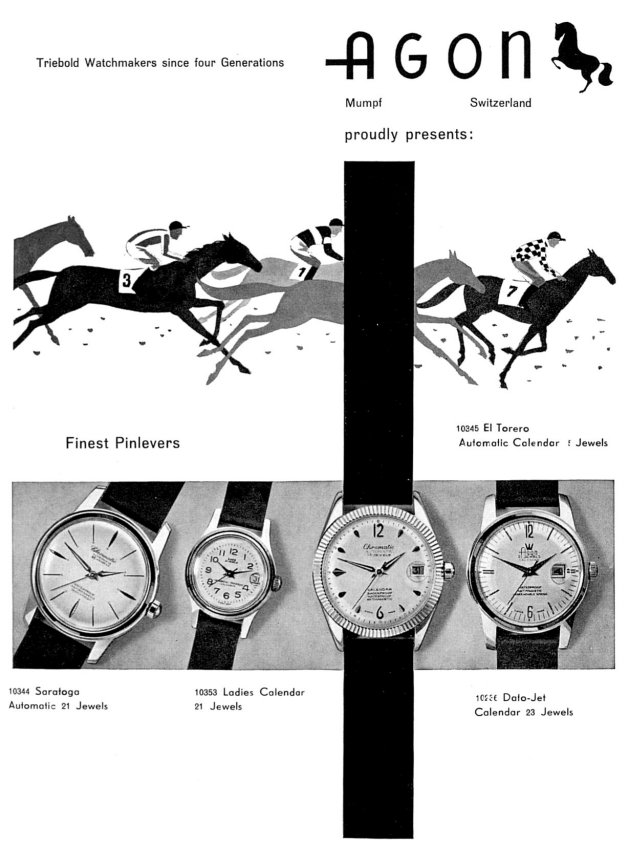
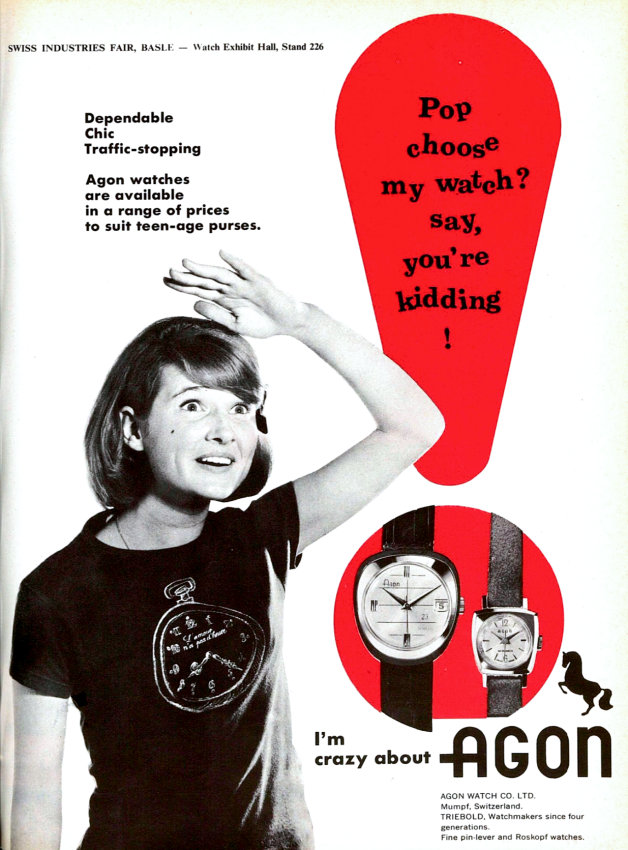
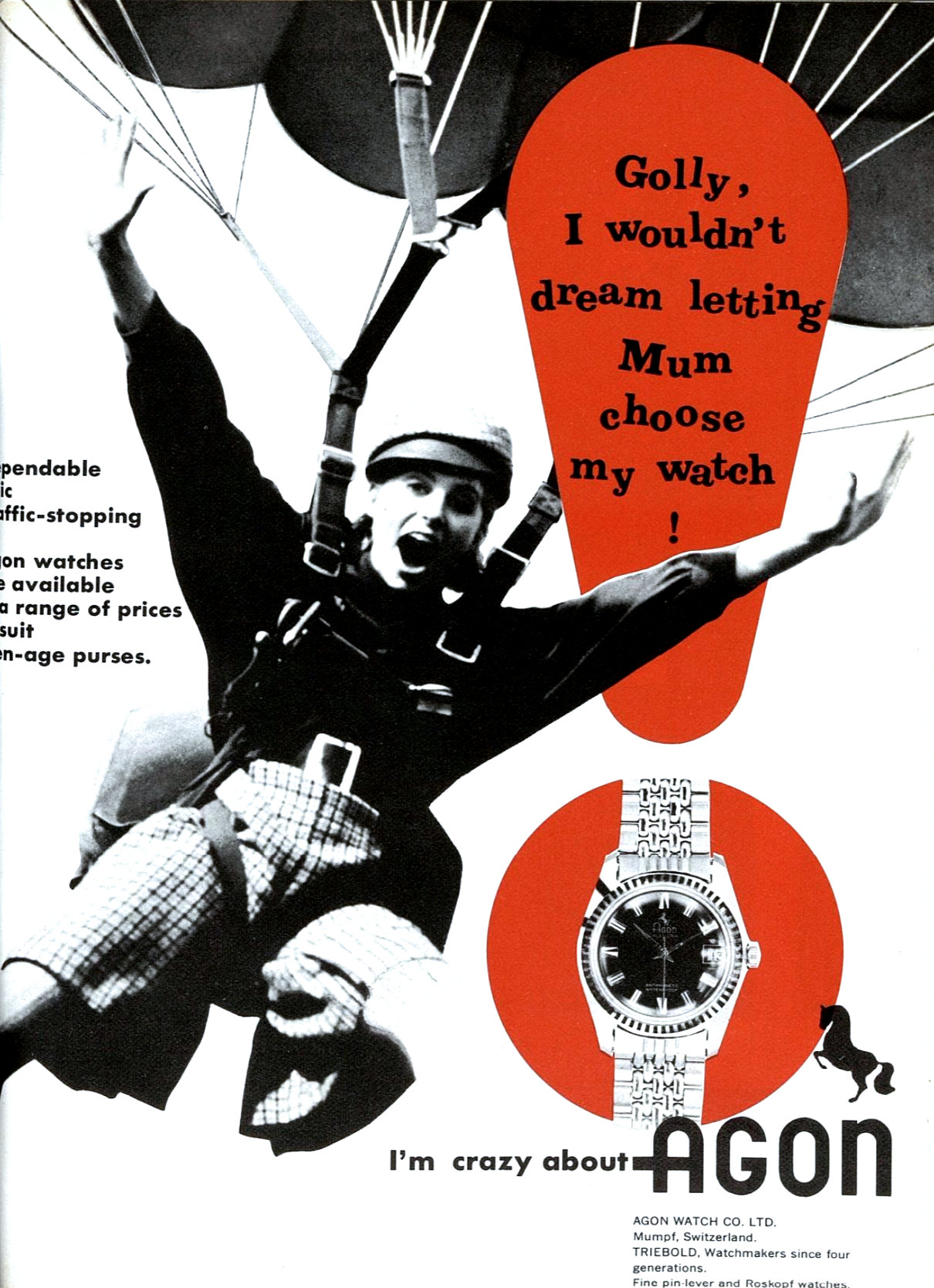
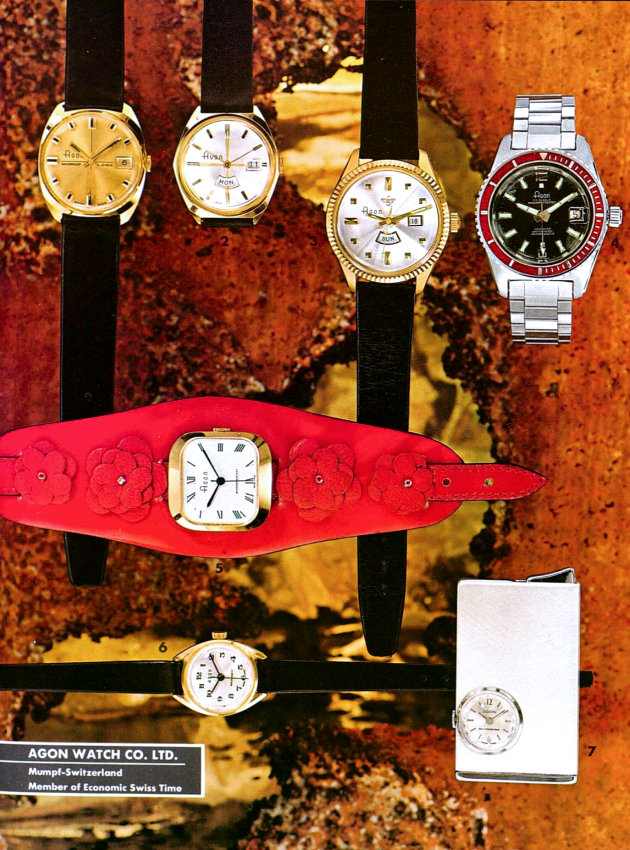
New models were released at a rapid pace and followed the technical evolution of the Roskopf watch: from the early 1960s, calendar watches, automatic watches under the name Chromatic, diving watches in 1964, watches with day and date calendars in the same year, etc.

1961

1961

1964

1964

1964

1967

In 1963, Agon had a branch in Cornol, employed 160 people, and produced more than a million watches per year, which were sold in nearly 60 countries [3]. With the end of watchmaking status in the mid-1960s, Agon was also able to produce classic anchor watches.

But foreign competition is becoming very strong for affordable watches. Some countries, such as France with Mortima, now have their own Roskopf watch factories, but there is one giant in particular in the United States: Timex. In 1963, Timex sold more than 8 million watches worldwide, and more than 12 million two years later [2].

In 1967, the four largest Swiss watch manufacturers in Roskopf decided to join forces and created Economic Swiss Time Holding: these were Buler, Ferex, Basis, and Agon [4].

2. Economic Swiss Time Holding (ESTH)

ESTH's objectives are simple: streamline production, provide good after-sales service, and conquer new markets.

The group has several modernized production centers: Mumpf, Rheinfelden, Basel, Cornol, and Tavannes. At the same time, Roskopf movement manufacturers, particularly Ébauches Bettlach, which is part of Ébauches SA, are offering an increasing number of specialized movements, including automatic, alarm, and chronograph movements.

The group launched numerous models and business flourished. In 1970, the group's total production reached 5 million units.

Anchor watch manufacturers were beginning to grow frustrated with this double-digit growth, especially as Timex continued to gain market share around the world. This explains why SSIH (Omega-Tissot-Lémania) decided in 1971 to buy ESTH in order to expand its range of affordable watches [5]. Economic Swiss Time Holding then became simply Economic Swiss Time [6].

3. Economic Swiss Time (EST)

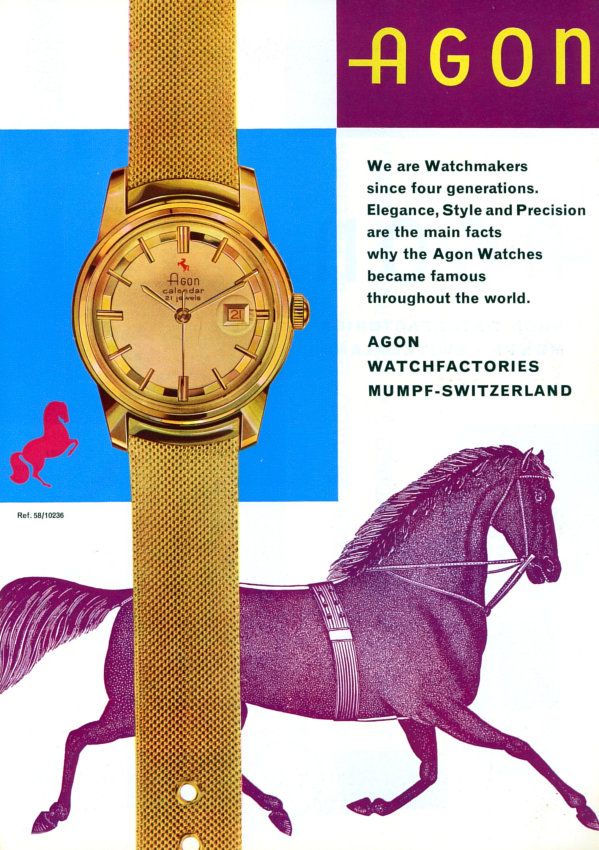
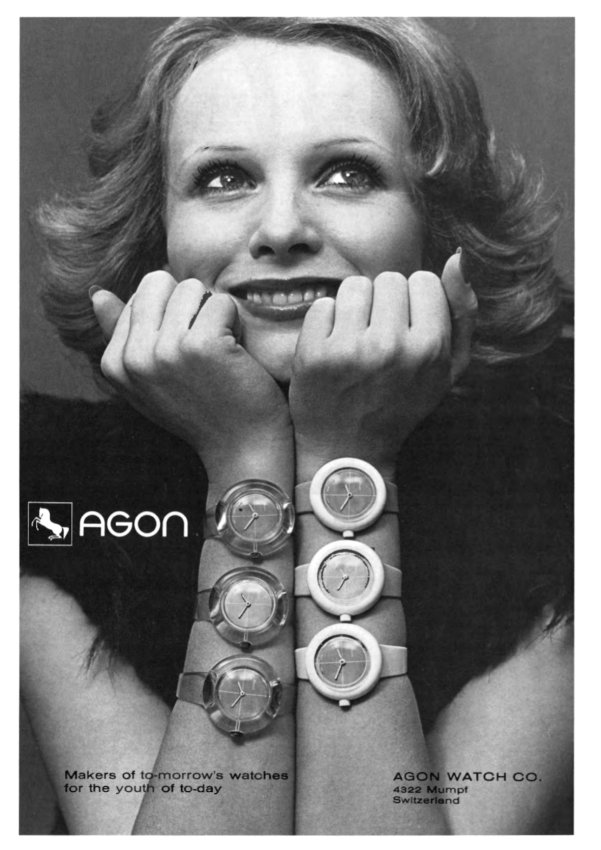
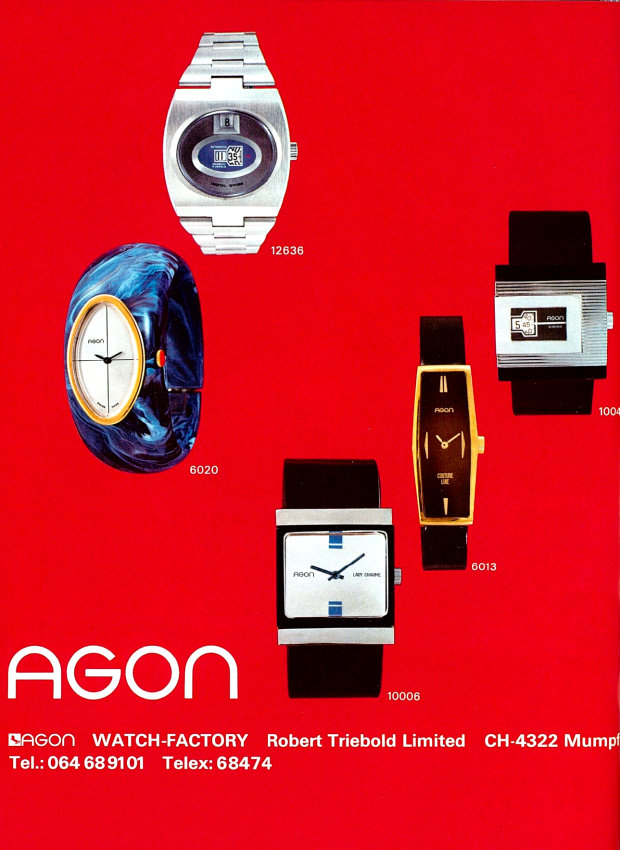
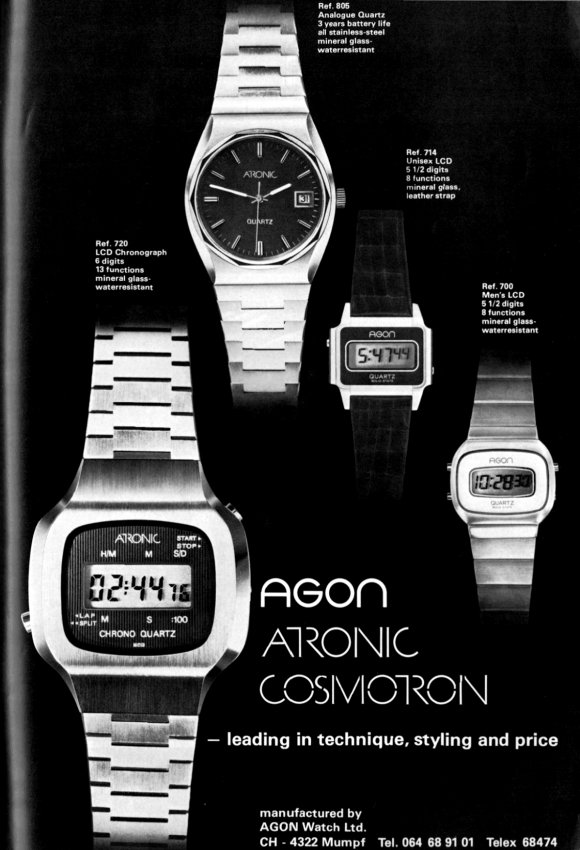
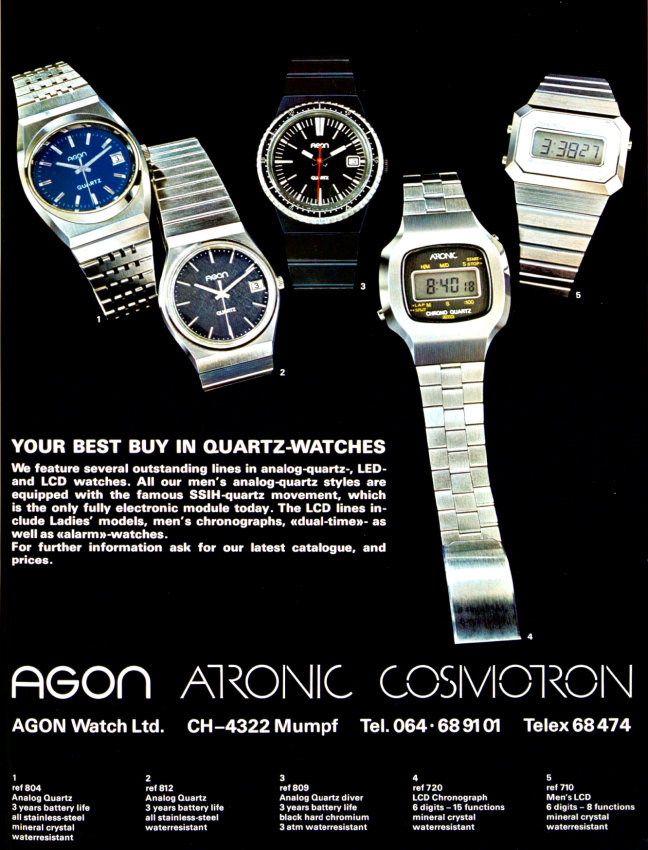
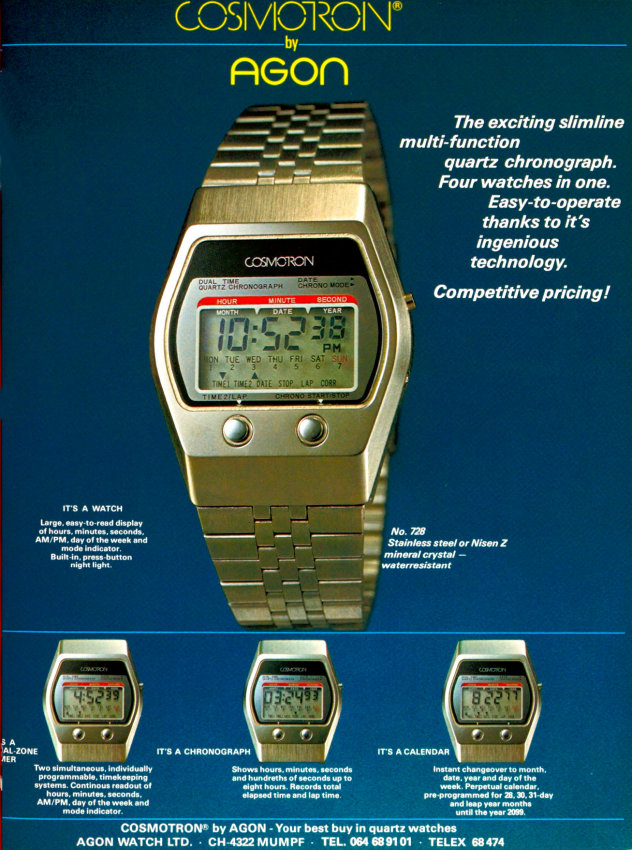
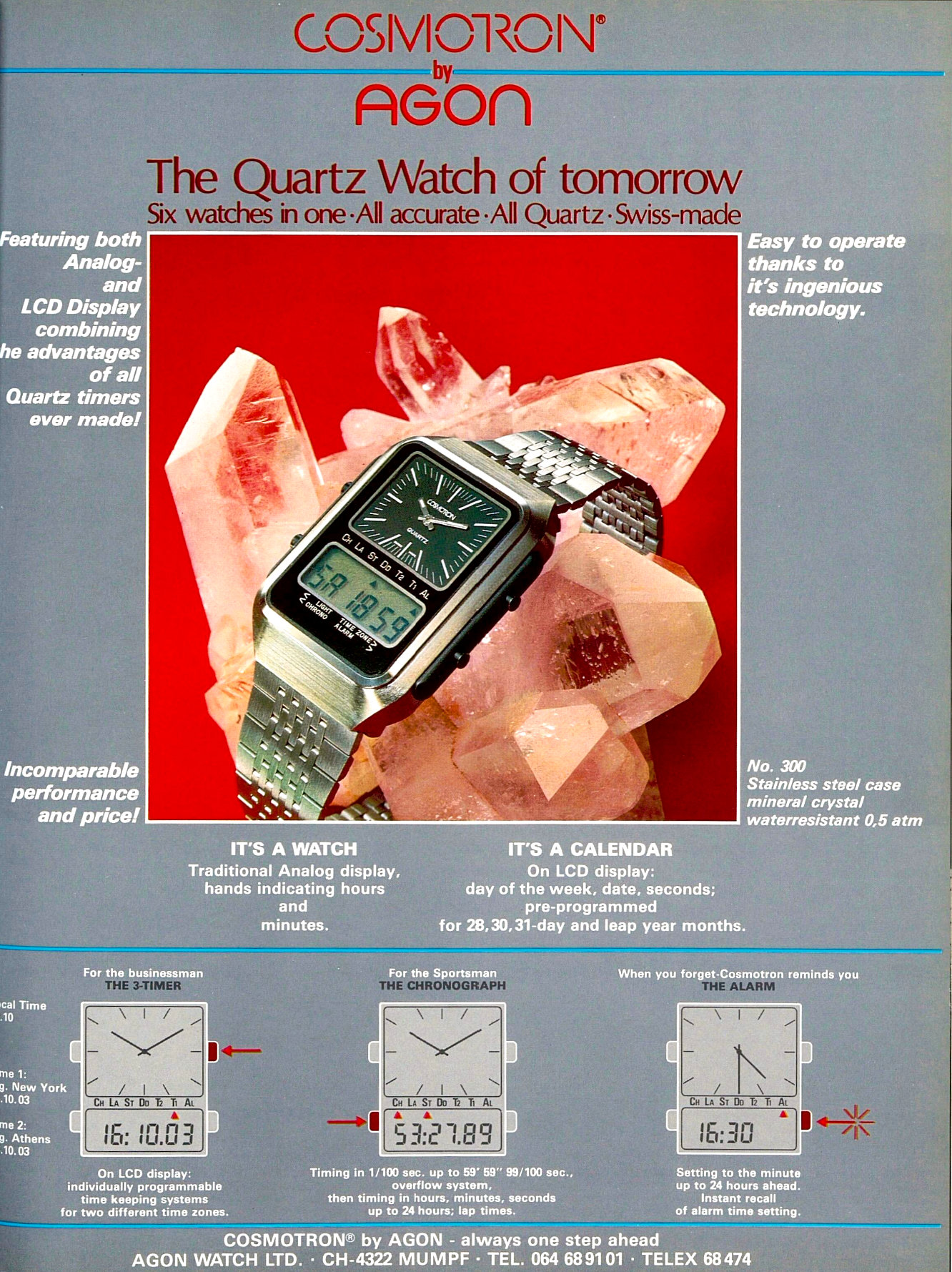
Othmar Triebold joined the EST board of directors and the Agon brand was retained. New models followed one after another, first mechanical, then quartz, starting in 1976 under the names Atronic and Cosmotron, when the price of quartz modules made it possible to produce competitively priced watches.

1973

1974

1976

1977

1977

1978

At the end of the 1970s, EST produced nearly one million quartz watches per year [7], but falling prices for American and then Asian quartz watches, coupled with the appreciation of the Swiss franc against other international currencies, meant that the Swiss budget watch industry was unable to survive.

In 1981, SSIH sold Economic Swiss Time to Reinhard von der Crone, who did not use the Agon brand [8].

Economic Swiss Time went bankrupt in 1995.

[1] FOSC 1937

[2] For more information on Roskopf wristwatches, see Joël Pynson, La montre-bracelet Suisse (The Swiss Wristwatch), Éditions Time To Tell, 2024, pp. 268–271.

[3] Europa Star, 1963, 24, 5, pp. 108-111

[4] Swiss Watchmaking Journal, 1967, 4, p. 447

[5] Swiss Watchmaking Journal, 1971, 1, p. 138

[6] FOSC 1971

[7] Europa Star Europe, 1989, 3, p. 82

[8] FOSC 1981

The FOSC (Swiss Official Gazette of Commerce) is available on E-periodica.

Notes :

About Time To Tell: Time To Tell has one of the largest private digitized databases on the history of Swiss watchmaking, with over 2.3 TB of data on more than 1,000 Swiss watch manufacturers. This database has been built up over a period of thirty years and continues to be updated with approximately 50 to 100 GB of data each year. The database consists of historical documents, mainly Swiss trade journals, dating from the late 19th century to the late 20th century. Most of these documents are not available on the Internet. The historical articles published on the time2tell.com website always cite the sources used.

Time To Tell is a privately owned company, independent of any watch manufacturer.

©Time To Tell, 2025

Reproduction prohibited without permission.

Any use of this article by artificial intelligence is strictly prohibited and will be considered a violation of copyright.

Product Details

Product added to wishlist

Nous utilisons des cookies afin de fournir une expérience utilisateur conviviale. En naviguant sur ce site, vous acceptez la politique d'utilisation des cookies.