Main Invicta-Seeland watch models

Main Invicta-Seeland watch models

Invicta

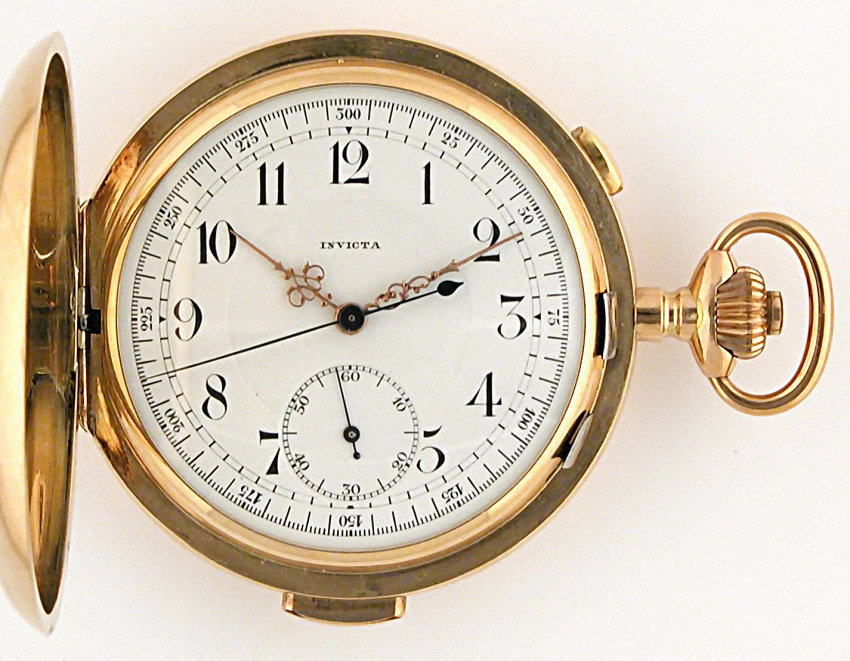
Invicta produced many pocket chronographs, but is best known for its models from the 1930s to the 1960s.

Description

Joël Pynson

February 2025

Main Invicta-Seeland watch models

- pocket repeater chronograph

Even though Invicta's complicated chronographs were based on a Barbezat-Baillot caliber, the repeater gearing had a shape specific to Invicta.

This is what makes it possible today to attribute this type of watch to the La Chaux-de-Fonds factory.

- calendar counter

The addition of a calendar to a sports counter is highly unusual. Invicta's may be unique. The model was registered in 1912 [20]. However, a calendar is not useless on a counter if you want to mark a performance with a date.

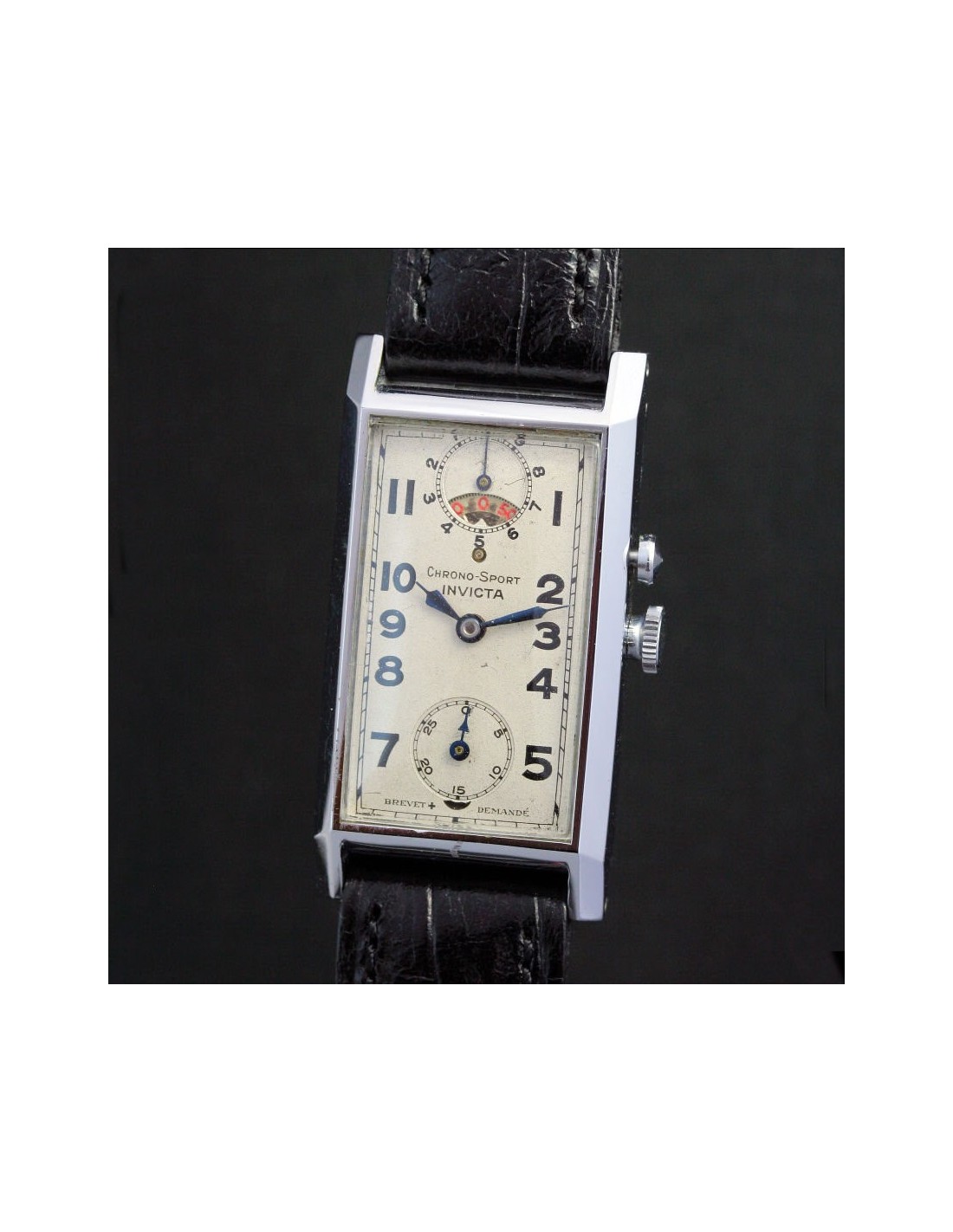
- Invicta Chrono-Sport

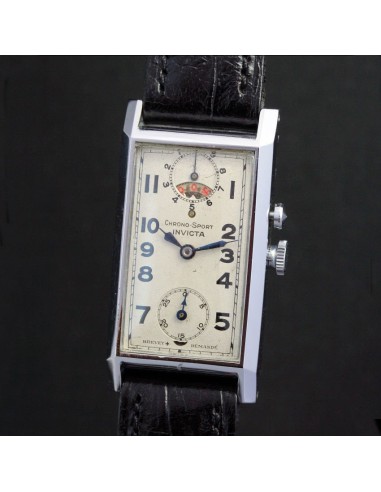
This is certainly Invicta's most famous and sought-after model.

It's a rectangular chronograph, designed on the basis of a Henri Jacot-Guyot patent dated March 24, 1932 [21].

It features a small round pusher above the crown, a semicircular aperture at 12 o'clock to count down the seconds, and a 30-minute counter at 6 o'clock. Only 50 examples of this beautiful watch were made [22].

- automatic watches

Invicta was one of the first Swiss manufacturers to offer automatic watches, back in 1933. These were probably EMSA calibres.

Invicta had in fact registered two patents on self-winding calibers, and these were passed on in 1933 to the Autorem company, which marketed EMSA calibers manufactured by Glycine.

For more information on these calibers, see Glycine.

- Invicta Secontrol

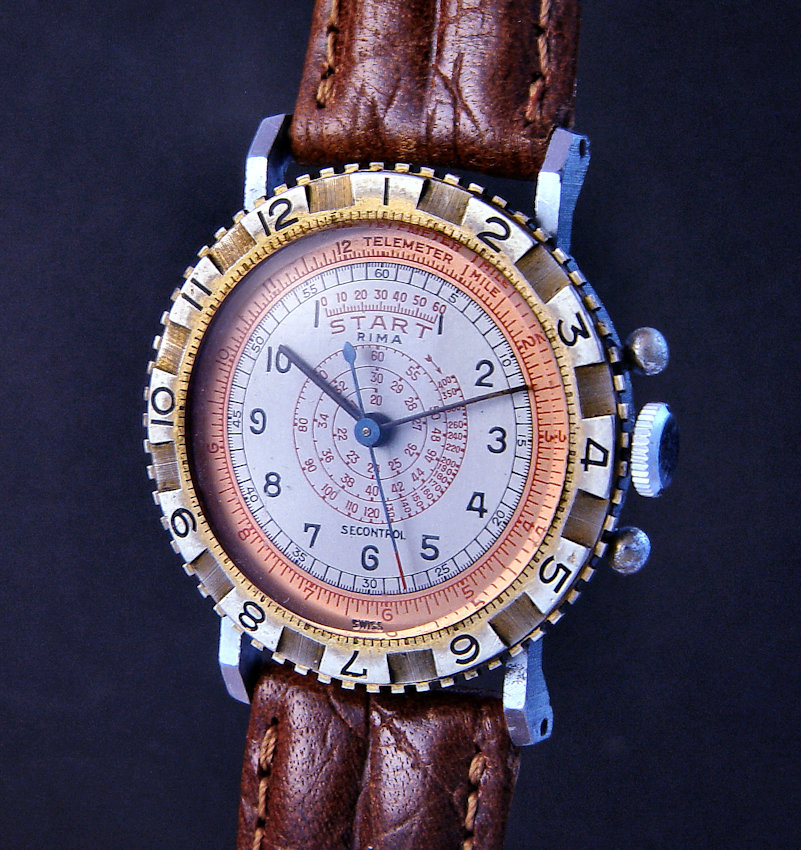
In 1940, Invicta presented two amazing watches: the rare Time Log chronograph and the Secontrol watch.

1940

These two watches are distinguished by their notched rotating bezels and rather similar dials with telemeter, tachometer and a "Time Start Indicator".

The Secontrol is a Stop en vol watch, i.e. the second hand runs continuously, but can be stopped by the lower pusher, then reset to zero by the upper pusher, but as soon as pressure is released the hand resumes its course.

Rima was an importer from New York 

Like the Chrono-Sport, the Secontrol was patented by Henri Jacot-Guyot [23], including the small spherical pushers often found on this watch.

- Invicta Graphomatic

With the success of Ernest Borel's Cocktail watch, launched in 1953, several Swiss manufacturers came up with their own versions.

1955

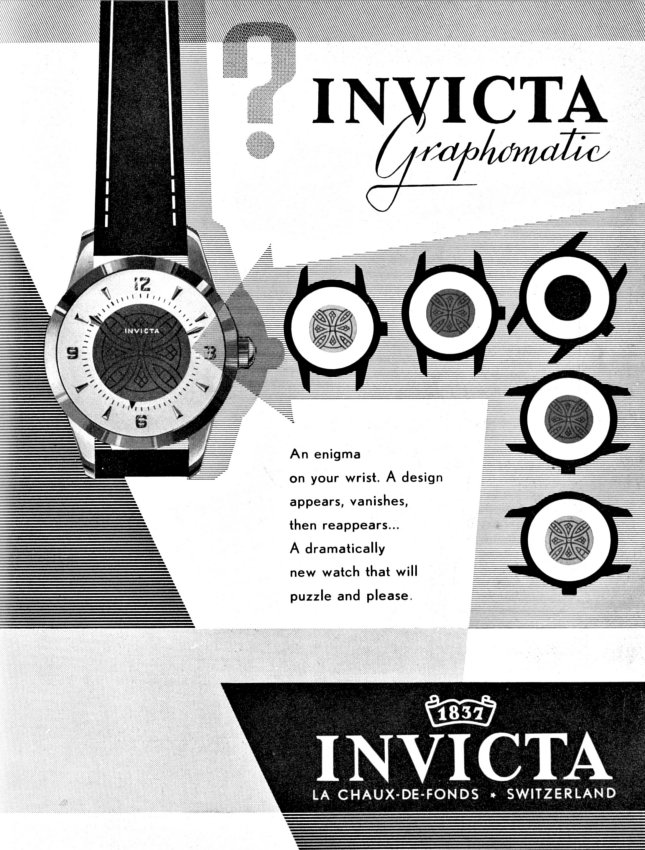
In 1955, Invicta introduced the Graphomatic model, in which the seconds hand is replaced by a polarizing disc. As the disk rotates, the pattern behind it on the dial appears periodically.

- Invicta Memory

1955

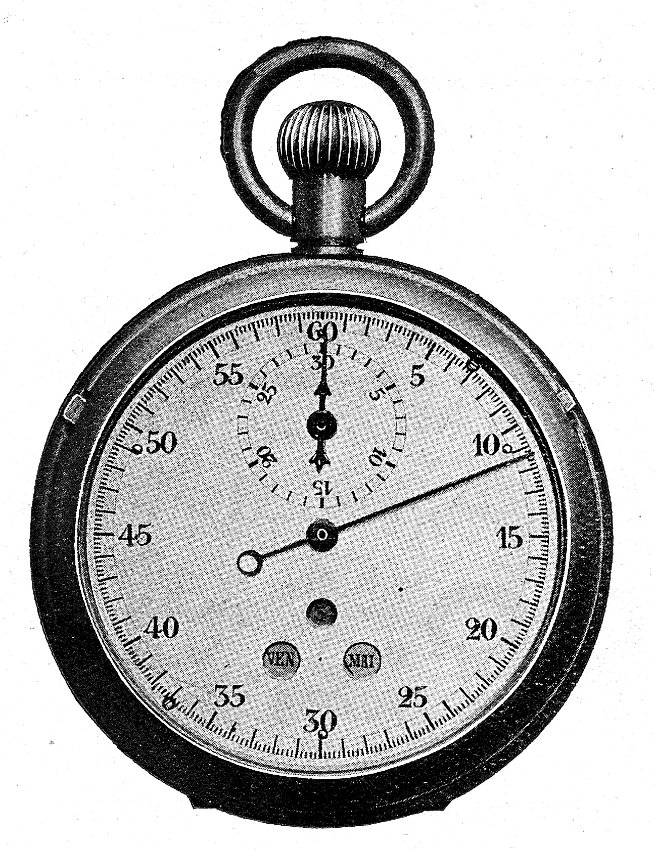
Also in 1955, Invicta launched a classic alarm wristwatch on an Alertic base from Ebauches SA, and a curious Memory Watch with an additional crown at 9 o'clock, presumably to rotate a central disc designed to recall a particular time.

This watch is extremely rare.

- Invicta Electric

Like many other Swiss manufacturers, Invicta launched an electric watch in 1961, thanks to Ébauches SA's provision of the Landeron 4750 caliber, whose spiral balance is maintained by a battery-powered electric system [24].

Poorly accepted by watchmakers and offering no increase in precision, this caliber was a commercial flop.

- Invicta Eurostar

1967

Launched in 1966, this is an automatic watch with a two-tone dial and mirror effect on the sides.

It was Invicta's last model before integration into SGT.


See also: Seeland


[20] FOSC 1912

[21] Patent CH 161 093

[22] Helmut Kahlert, Richard Mühe, Gisbert L. Brunner, Wristwatches. History of a century's development, Editions Schiffer, 1999, 4th edition, p. 338.

[23] Patent CH 214 664

[24] La Suisse Horlogère, 1961, 3, p. 32

The archives of Fédération Horlogère, Davoine and l'Impartial are available online at www.doc.rero.ch

The archives of Journal Suisse d'Horlogerie, Europa Star, Revue Internationale d'Horlogerie and Suisse Horlogère are available at The Watch Library

The FOSC (Feuille Officielle Suisse du Commerce) is available on E-periodica

Notes :

About Time To Tell: Time To Tell has one of the largest private digitized databases on the history of Swiss watchmaking, with over 2.3 TB of data on more than 1,000 Swiss watch manufacturers. This database has been built up over a period of some thirty years, and continues to be fed with around 50 to 100 GB of data every year. The database is made up of old documents, mainly Swiss trade journals, dating from the late 19th to the late 20th century. Most of these documents are not available on the Internet. Historical articles published on the time2tell.com website always cite the sources used.

Time To Tell is a private company, independent of any watch manufacturer.

©Time To Tell, 2025 

Reproduction forbidden without authorization. Any use of this article by artificial intelligence is strictly forbidden and will be considered an infringement of copyright.
 

Product Details

Product added to wishlist

Nous utilisons des cookies afin de fournir une expérience utilisateur conviviale. En naviguant sur ce site, vous acceptez la politique d'utilisation des cookies.