• New
Eberhard Jumping Hour Chronograph

Eberhard Jumping Hour Chronograph

Eberhard

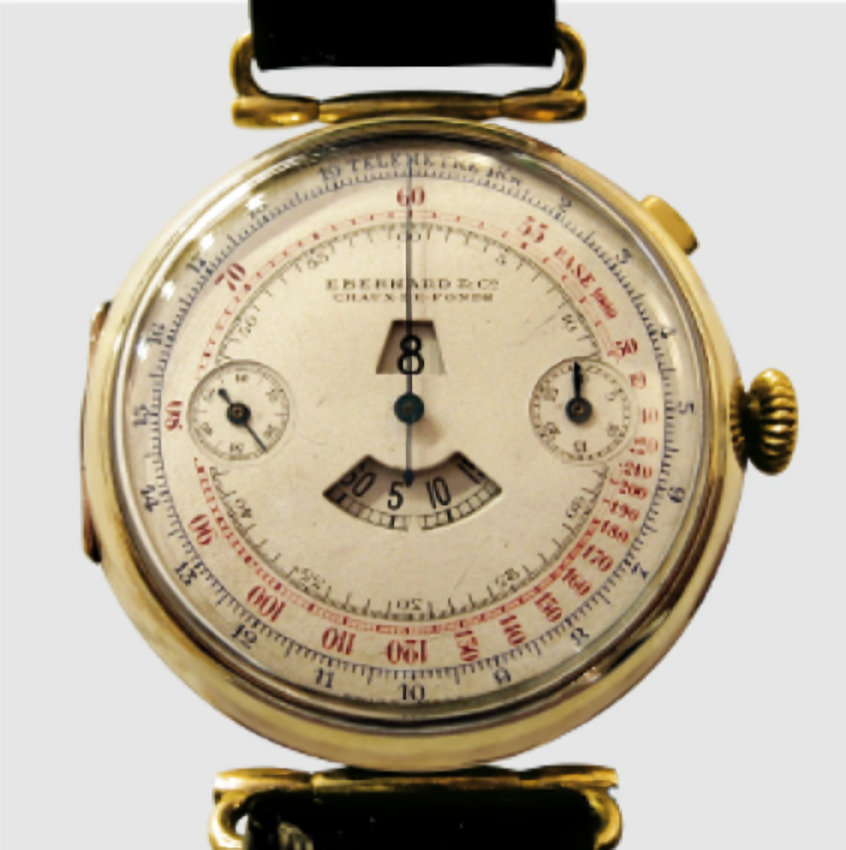
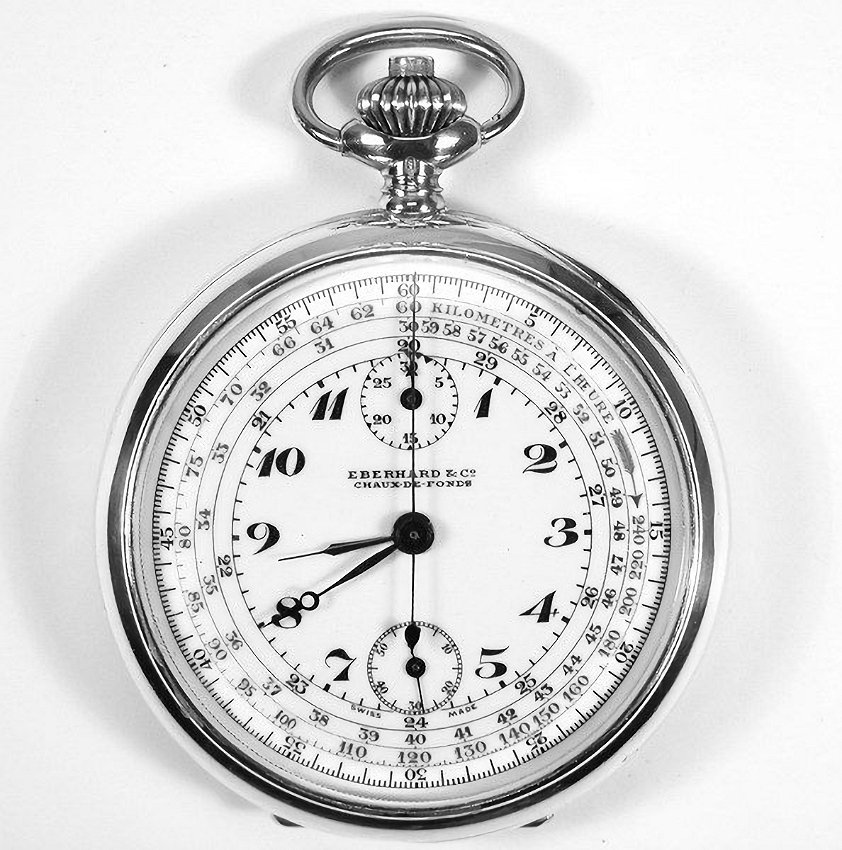
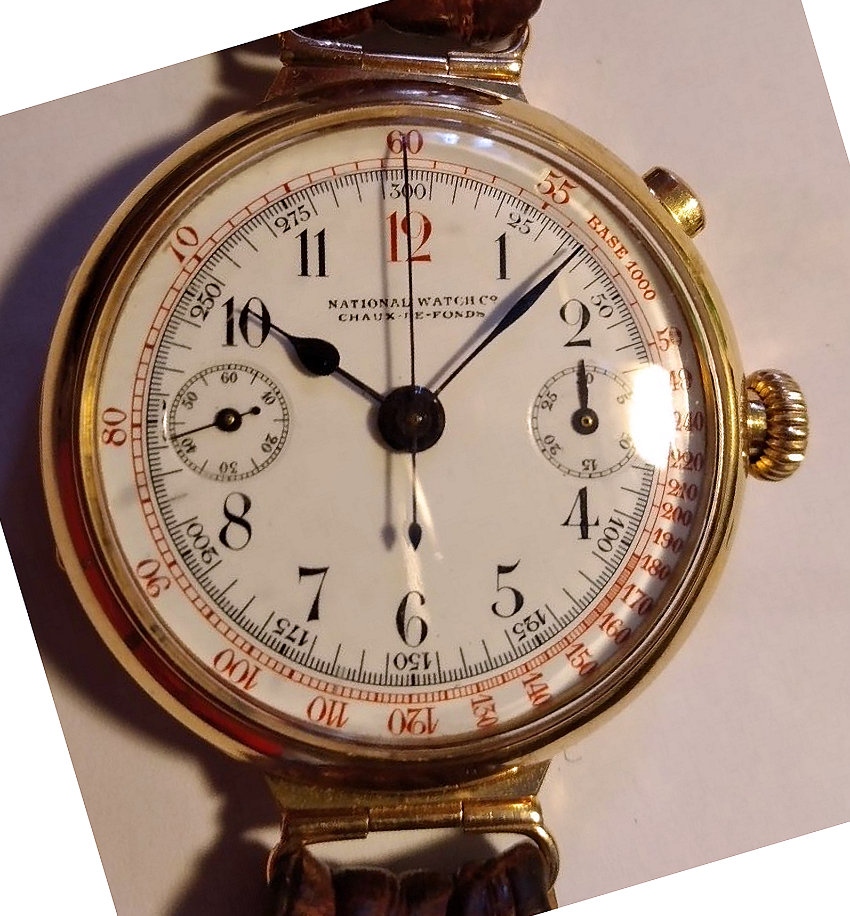
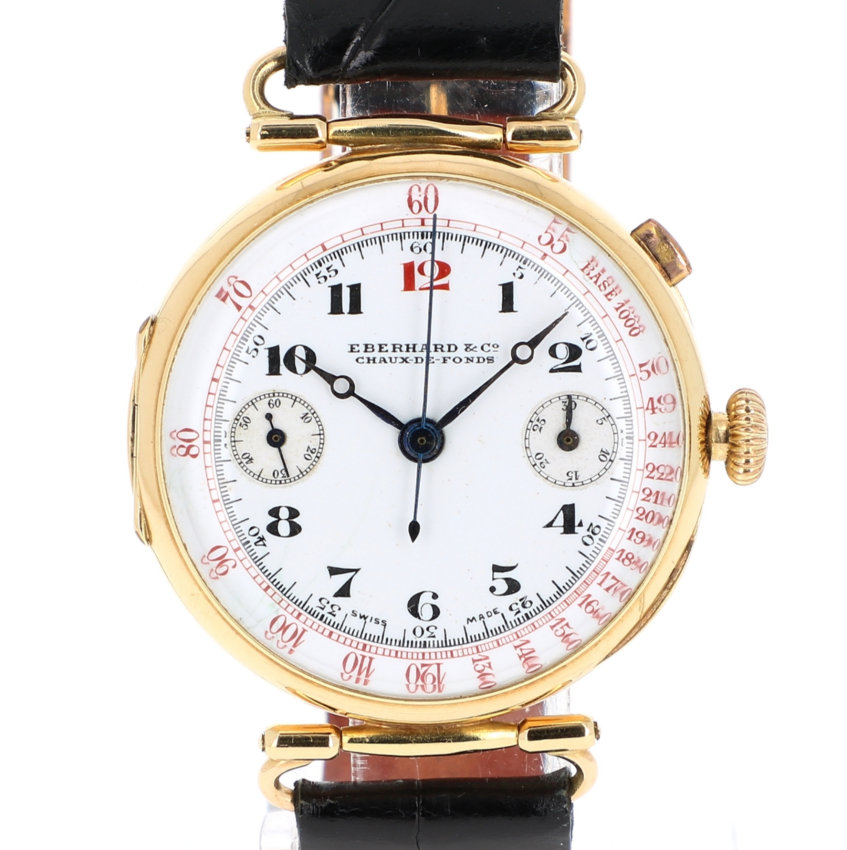
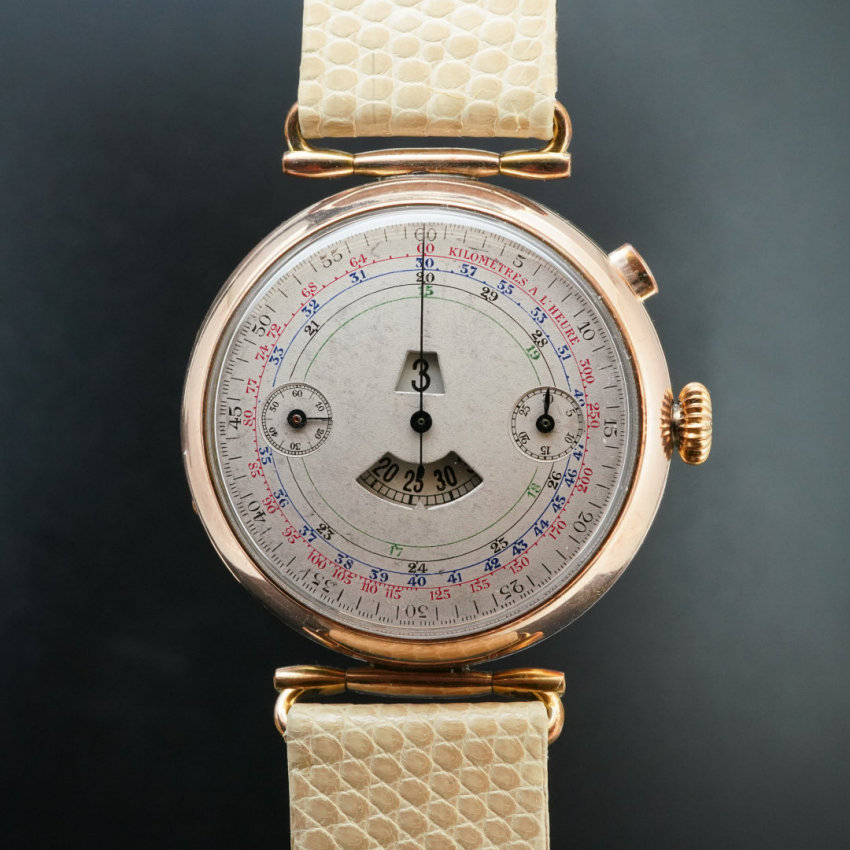
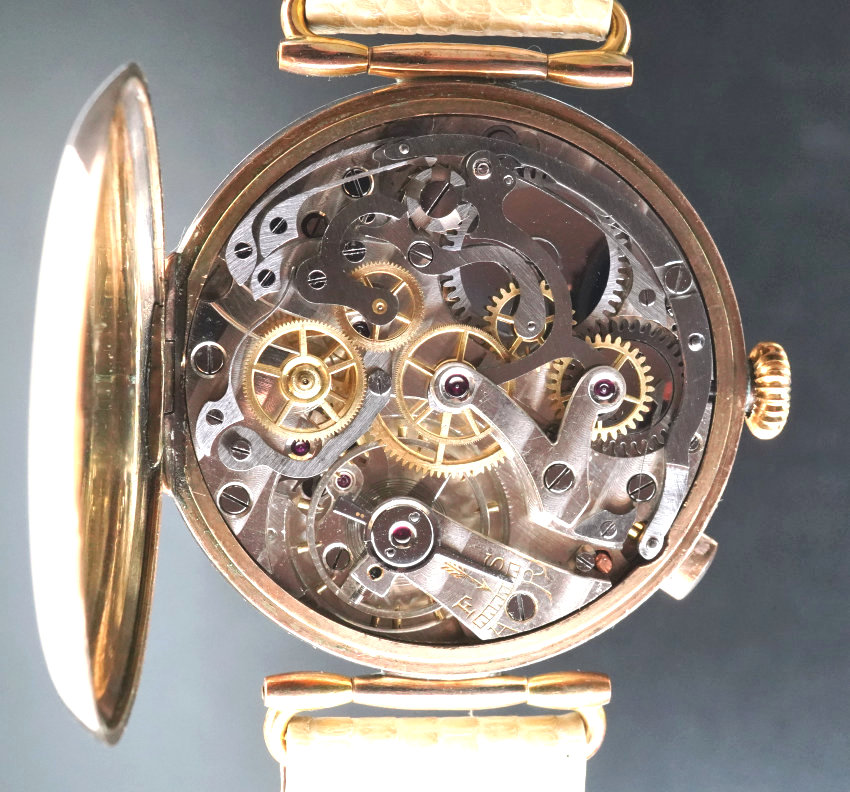
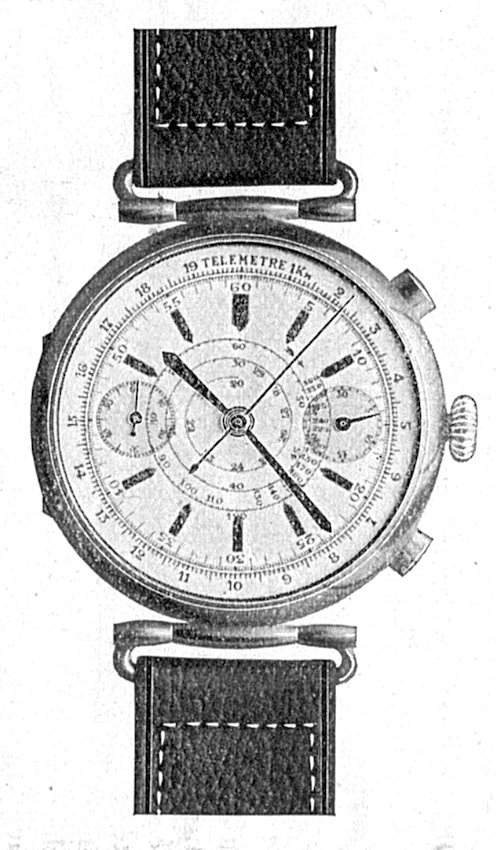
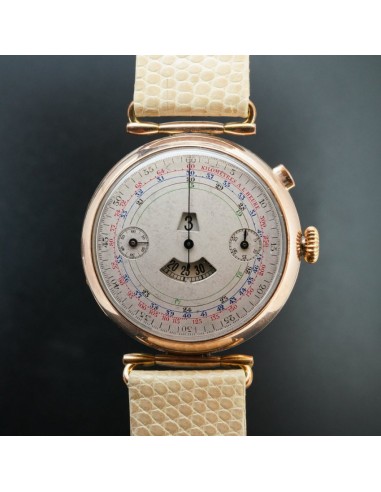
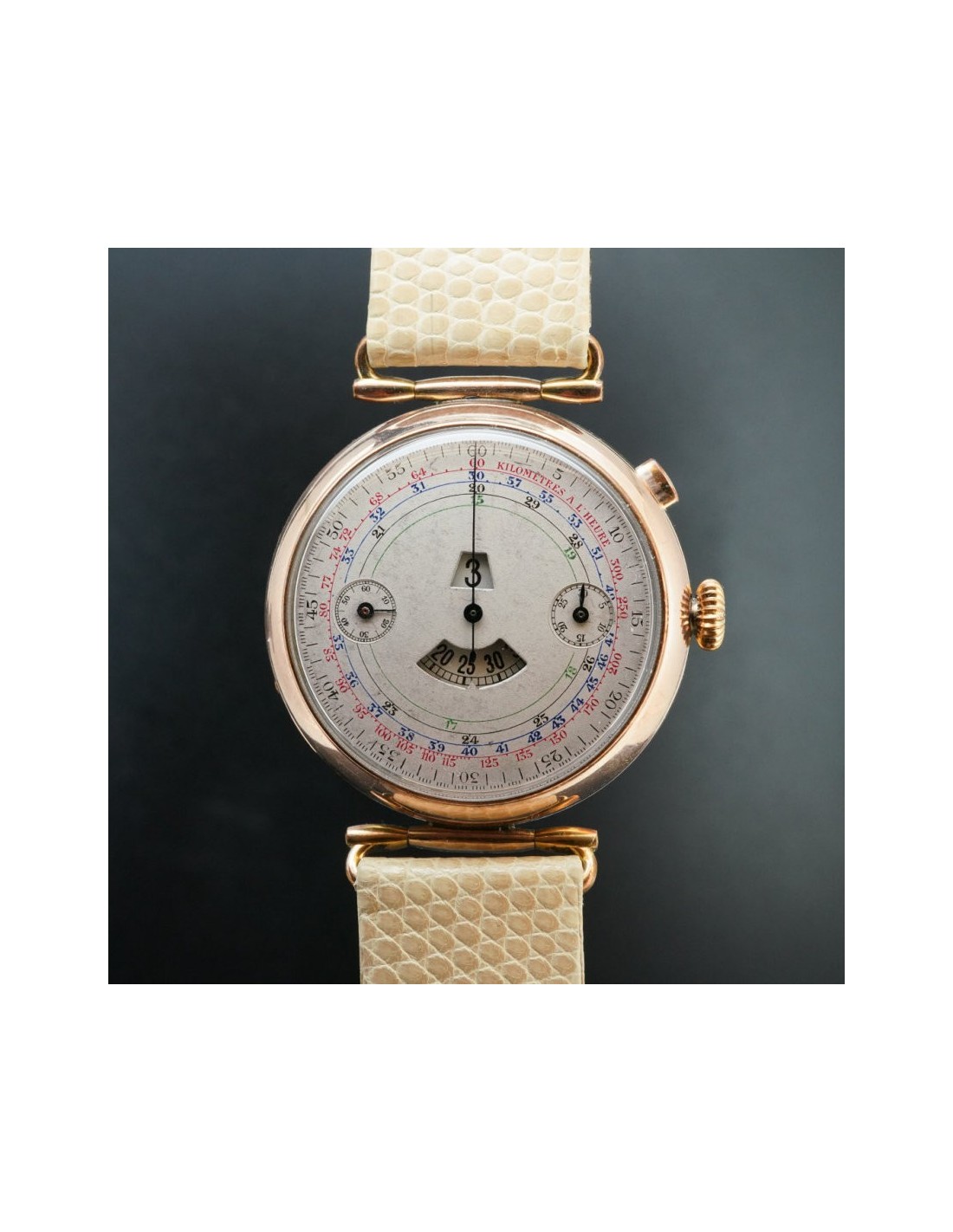
We’re all familiar with the rare Eberhard chronograph with a jumping hour. The recent discovery of an anonymous chronograph with a jumping hour led me to explore the subject a bit further and uncover Breitling’s involvement.

Description

Joël Pynson

June 2026

We’re all familiar with the rare Eberhard chronograph with a jumping hour. The recent discovery of an anonymous chronograph with a jumping hour led me to explore the subject a bit further.

Thanks to Nicola and Emilio at https://orologi.forumfree.it/ for their help with the Eberhard documentation.

In this article, I’ll try to demonstrate:

1. that Eberhard jumping-hour chronographs were manufactured by Breitling

2. that they date not from the 1920s but rather from the 1930s

Credit eberhard-co-watches.ch

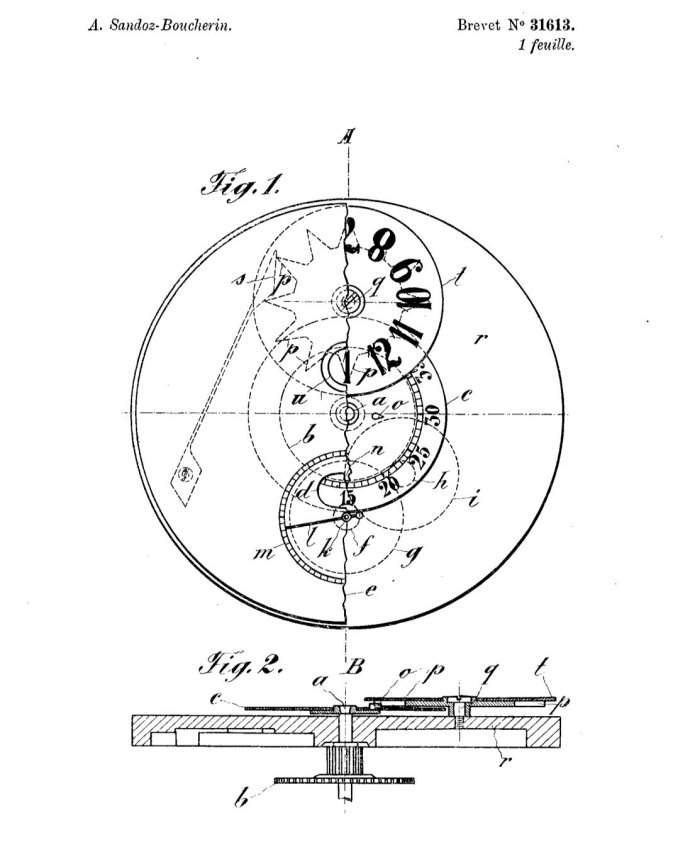
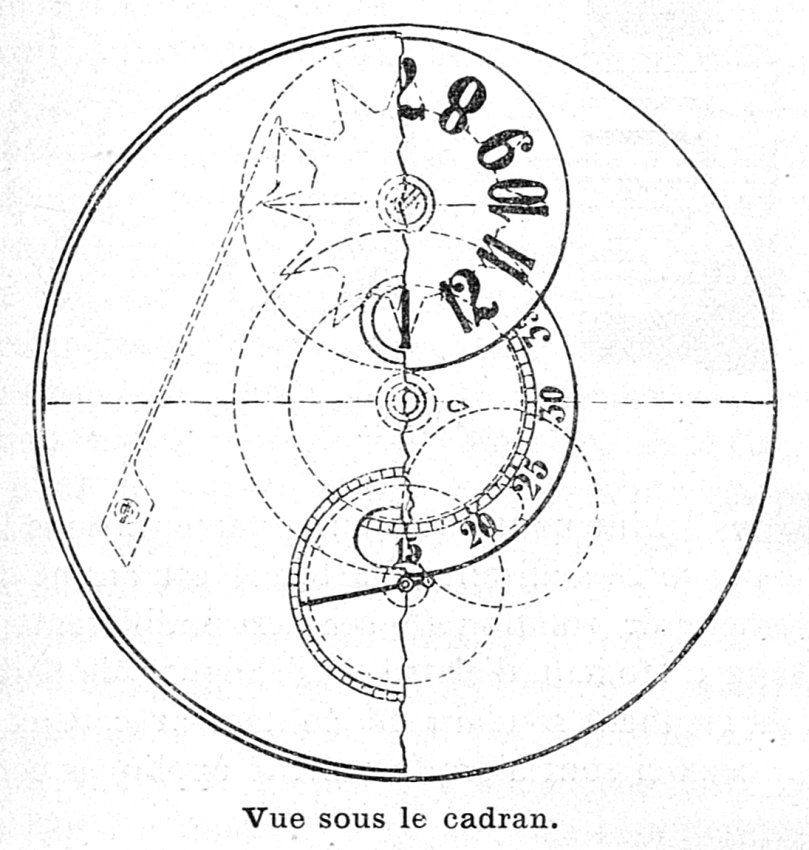
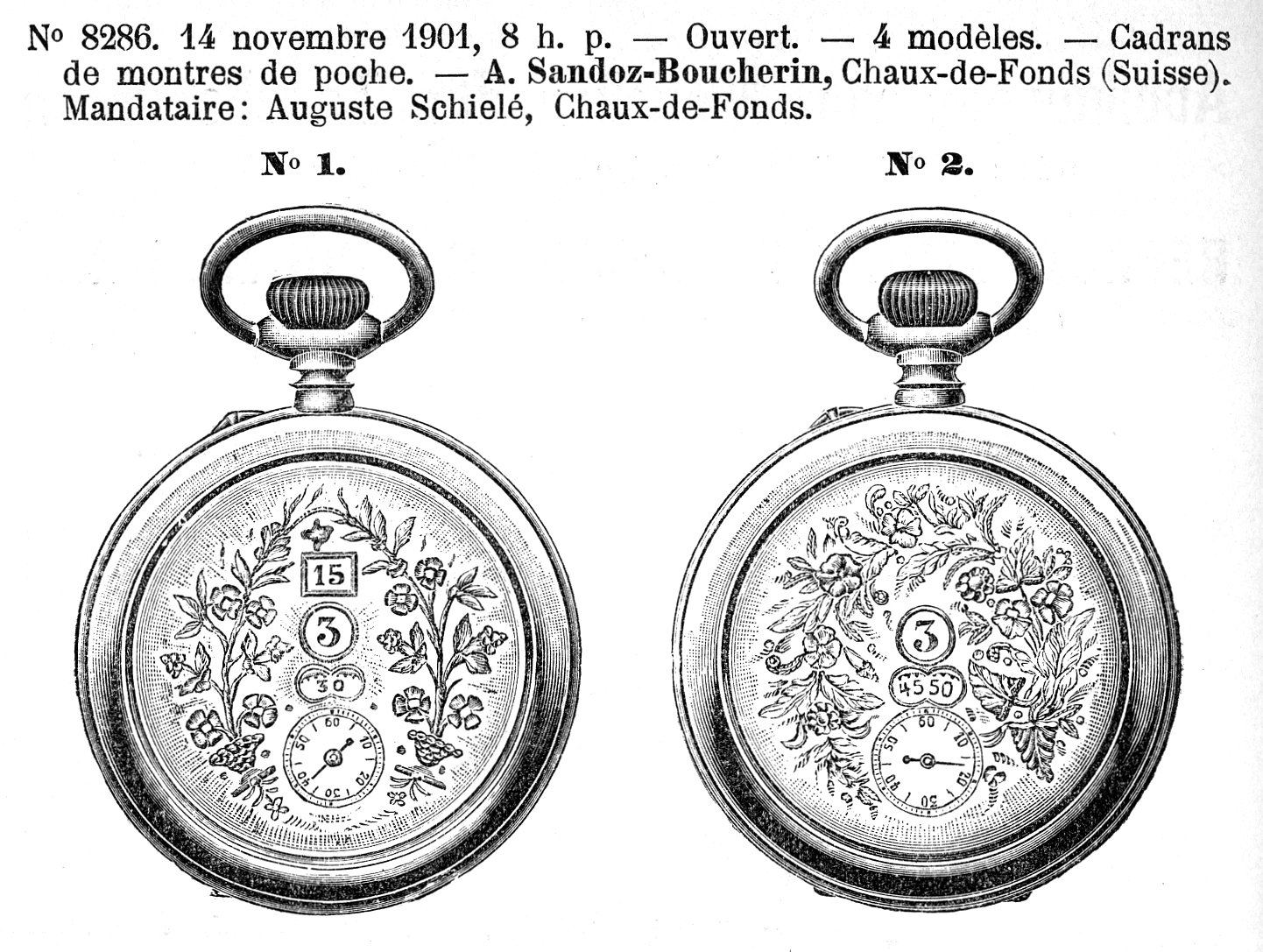
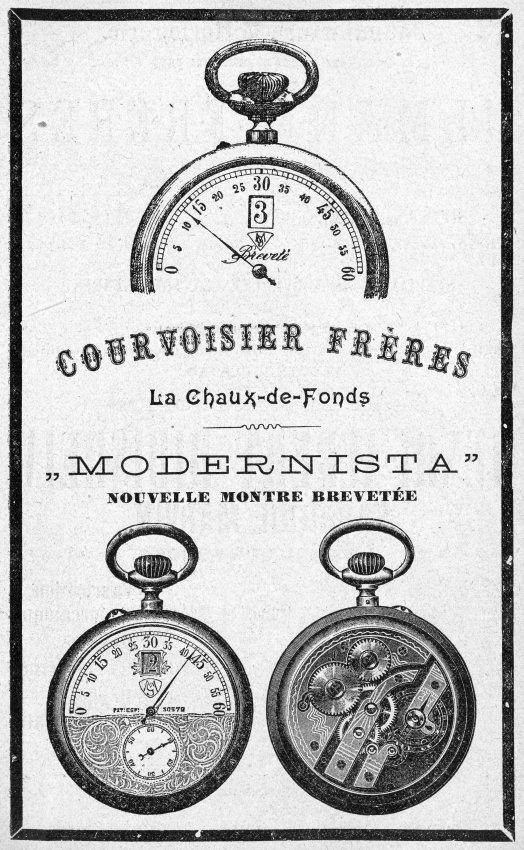
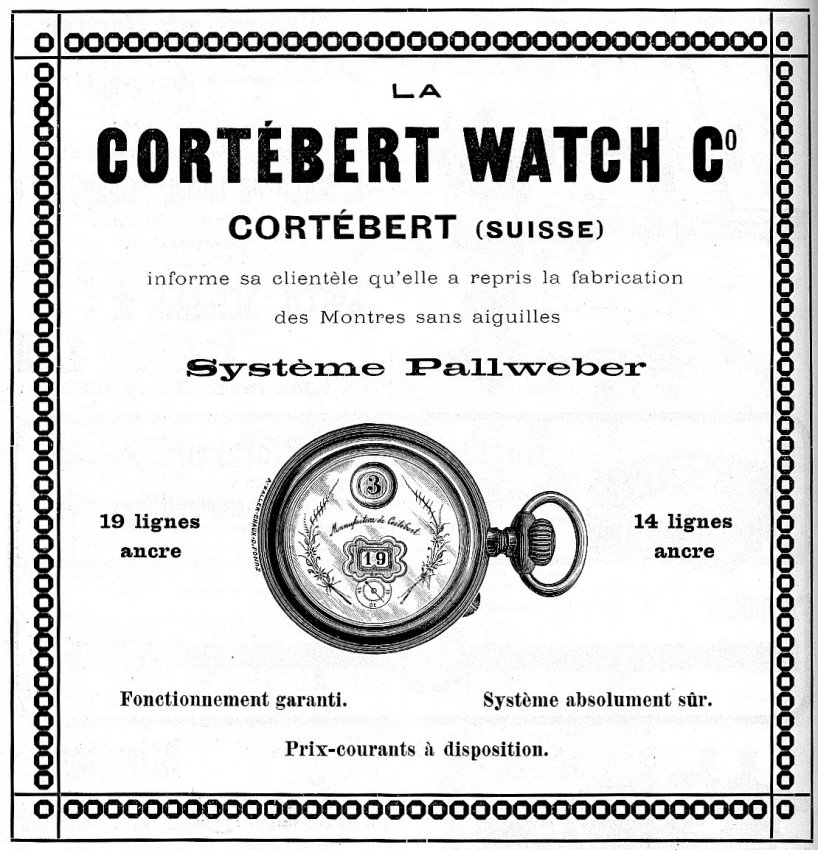
According to Eberhard and other sources [1], this watch dates from the 1920s and is based on a 1905 patent by Adamir Sandoz-Boucherin [2], which was transferred to Eberhard in 1906. Eberhard also acquired a 1905 patent by Gustave Adrien Quartier for a watch of the same type [3].

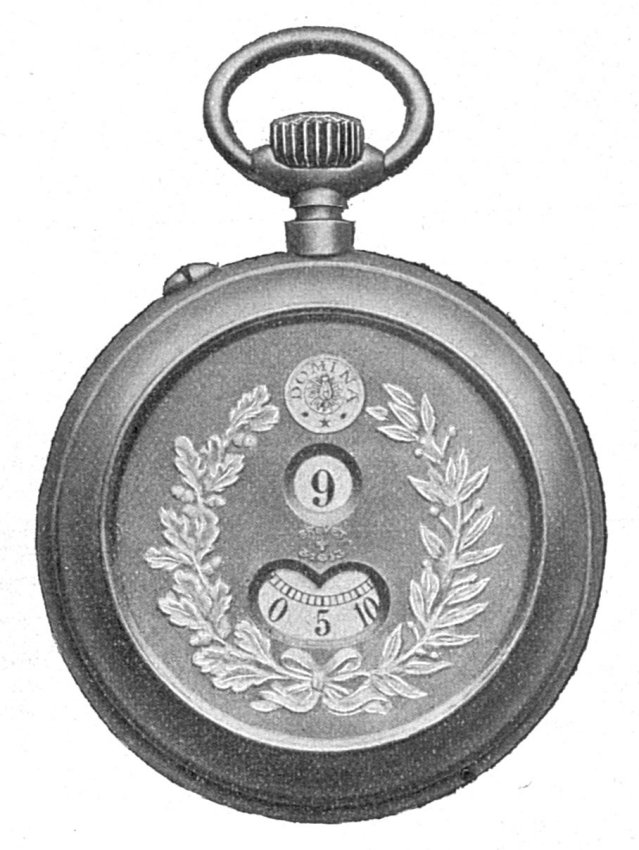
This hypothesis does not seem very realistic. For one thing, the Sandoz-Boucherin patent predates the jumping-hour chronograph by a considerable margin. Eberhard did indeed use this patent as early as 1906, but for Domina-brand pocket watches with Roskopf-type movements, not for chronographs [4].

Domina 1906

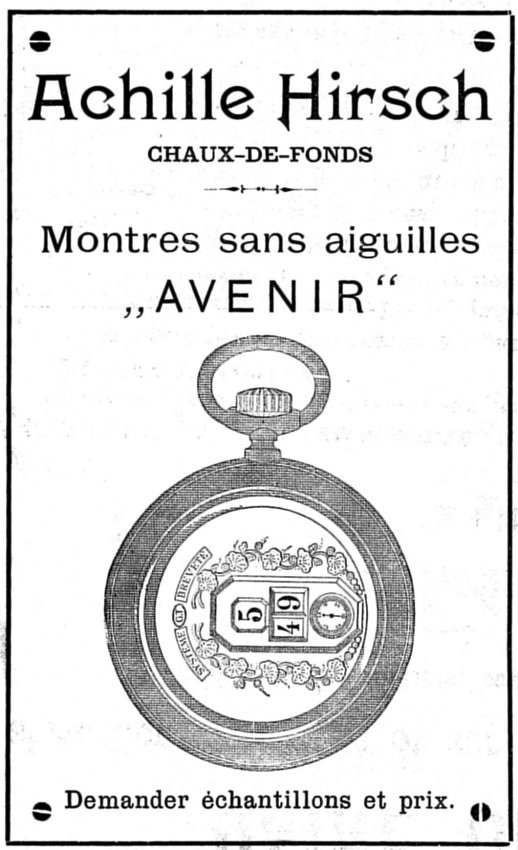
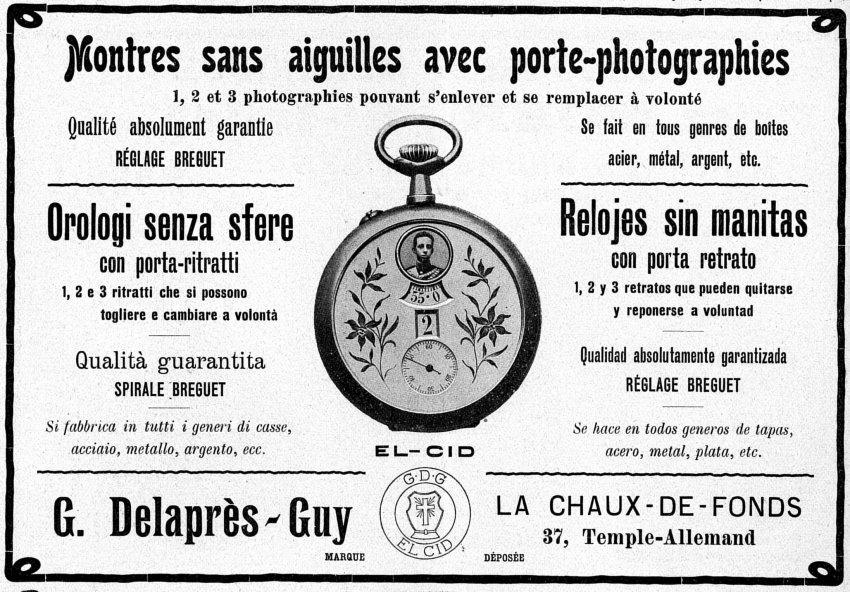
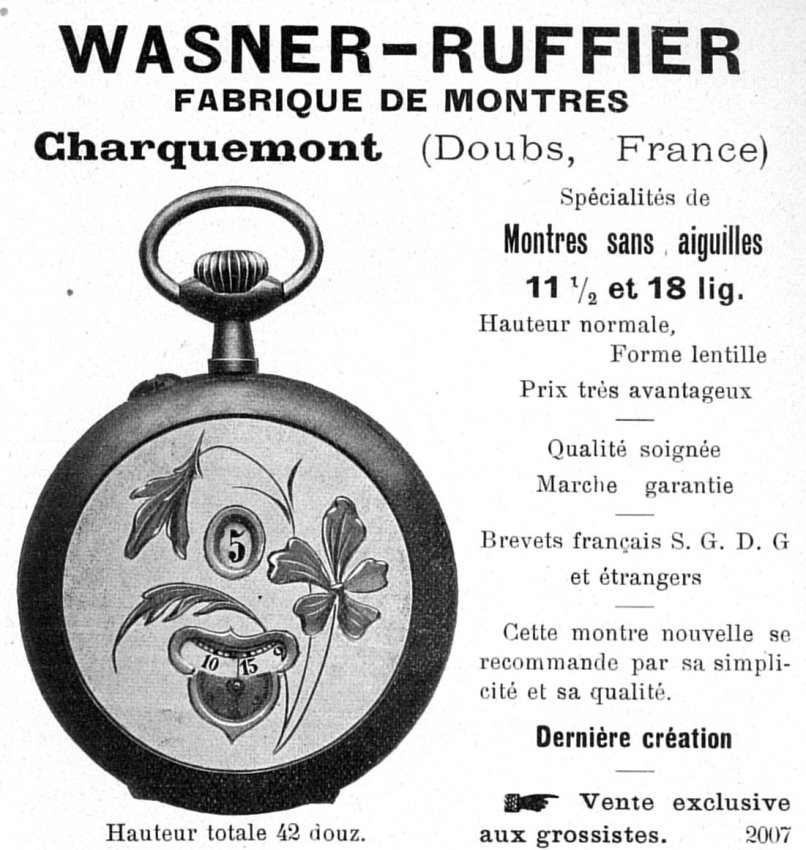
Jumping-hour watches have always appeared in waves throughout the history of Swiss watchmaking. For example, several manufacturers, including Eberhard, produced them between 1900 and 1910, after which these watches fell out of fashion [5].

1901

1906

1907

1908

1909

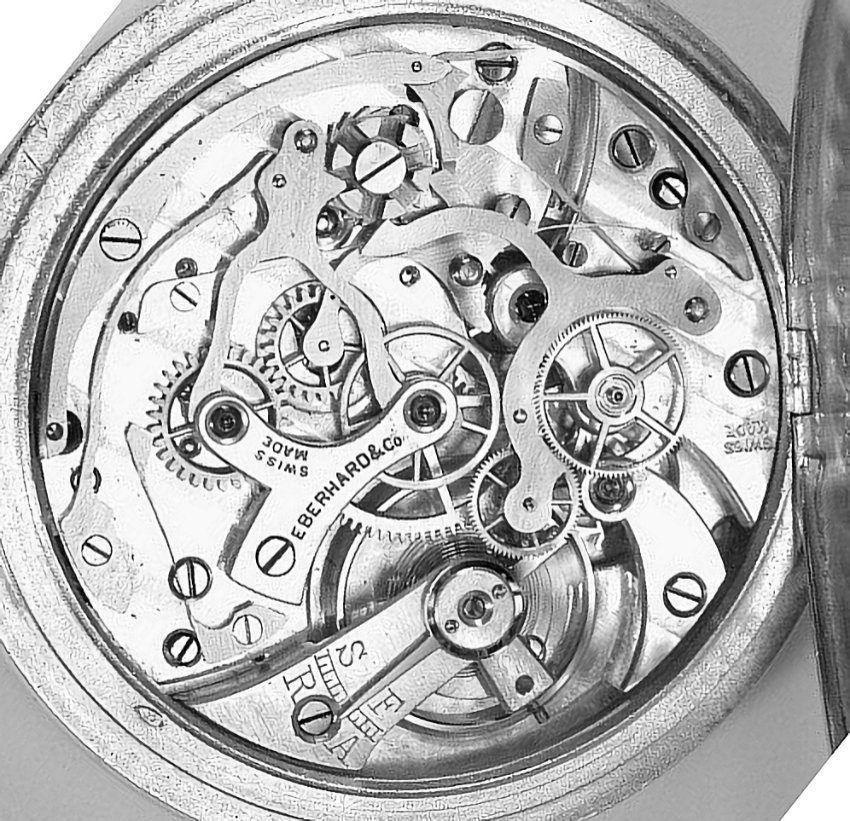
Eberhard and Breitling have a long history of collaboration. In fact, prior to 1935, Eberhard frequently used Breitling movements in its chronographs.

Calibre Breitling

You can also find National Watch chronographs—a brand used by Eberhard until 1918—equipped with the famous Breitling 1915 caliber and its pusher at the 2 o'clock position.

Credit Arno Favarelli on aisor.it

Breitling Catalog, c. 1930

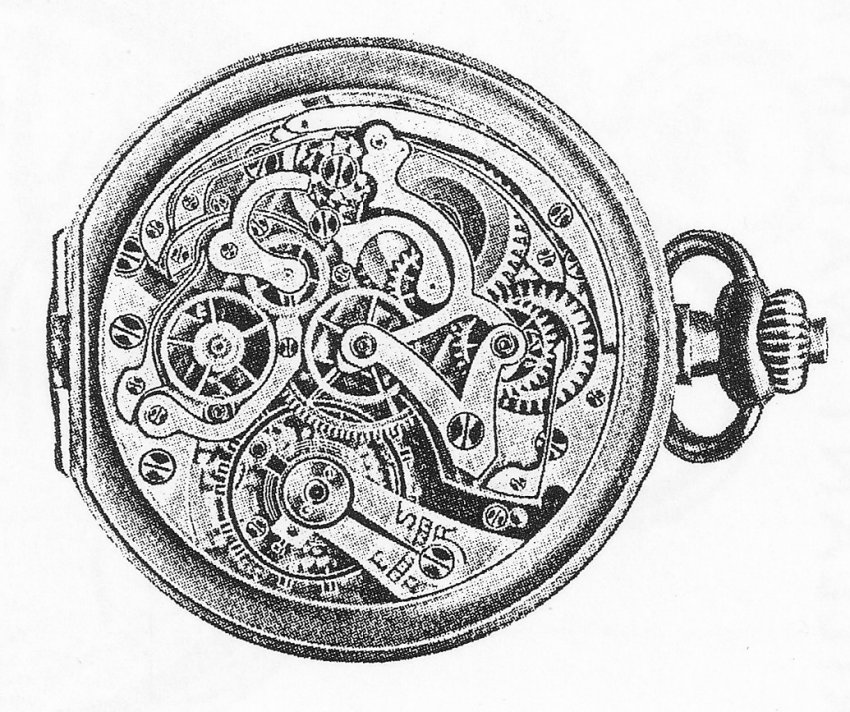
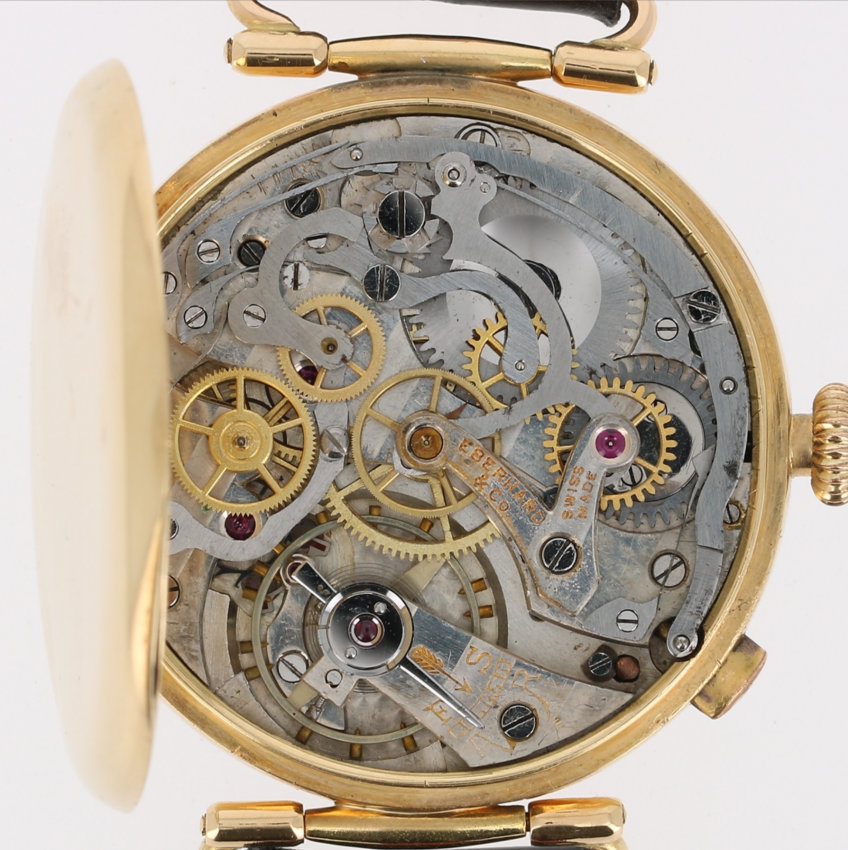
This caliber was used by Breitling in pocket chronographs and wristwatch chronographs, and by Eberhard in wristwatch chronographs.

Credit watch-montre-paris.com

Breitling c. 1930

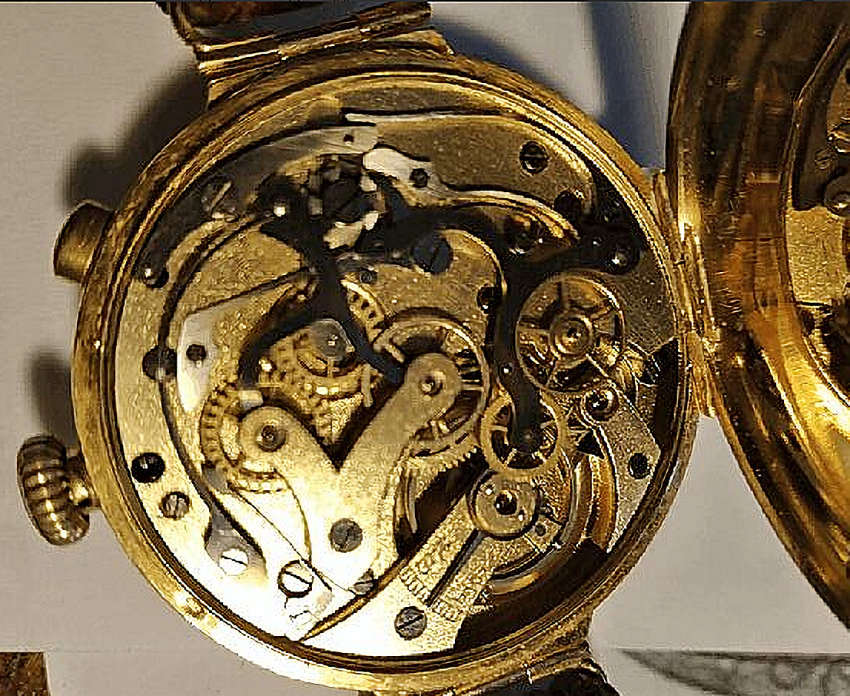
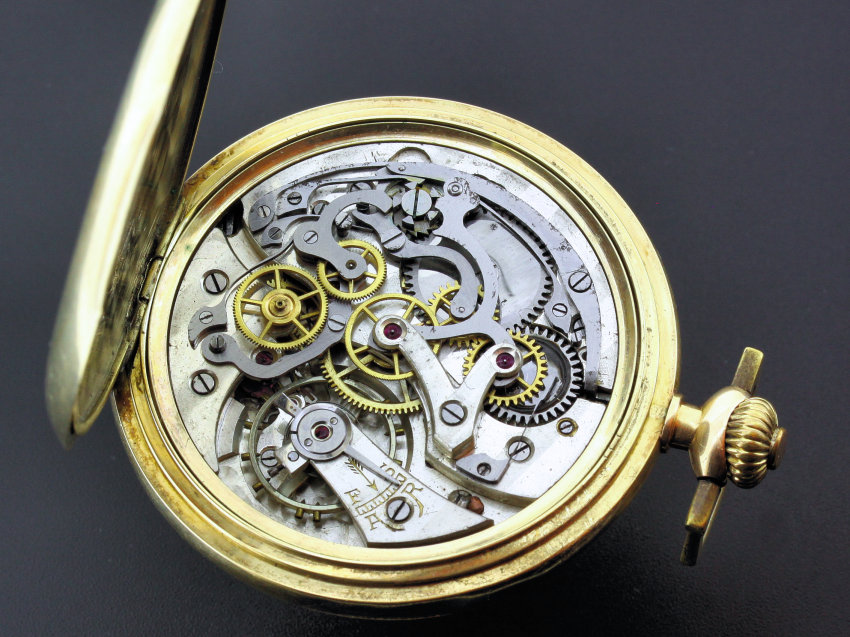
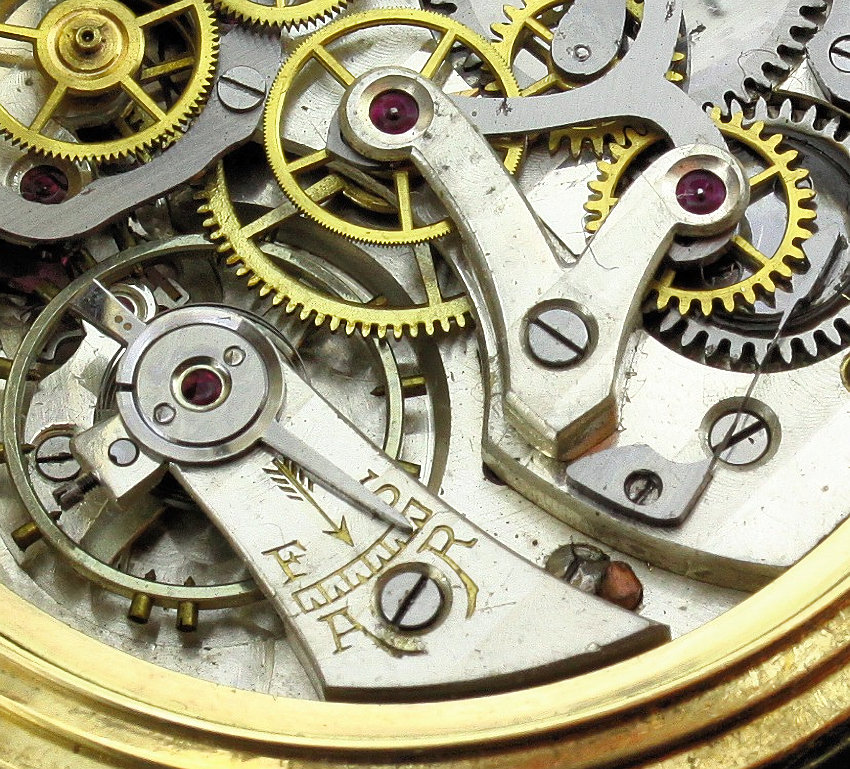
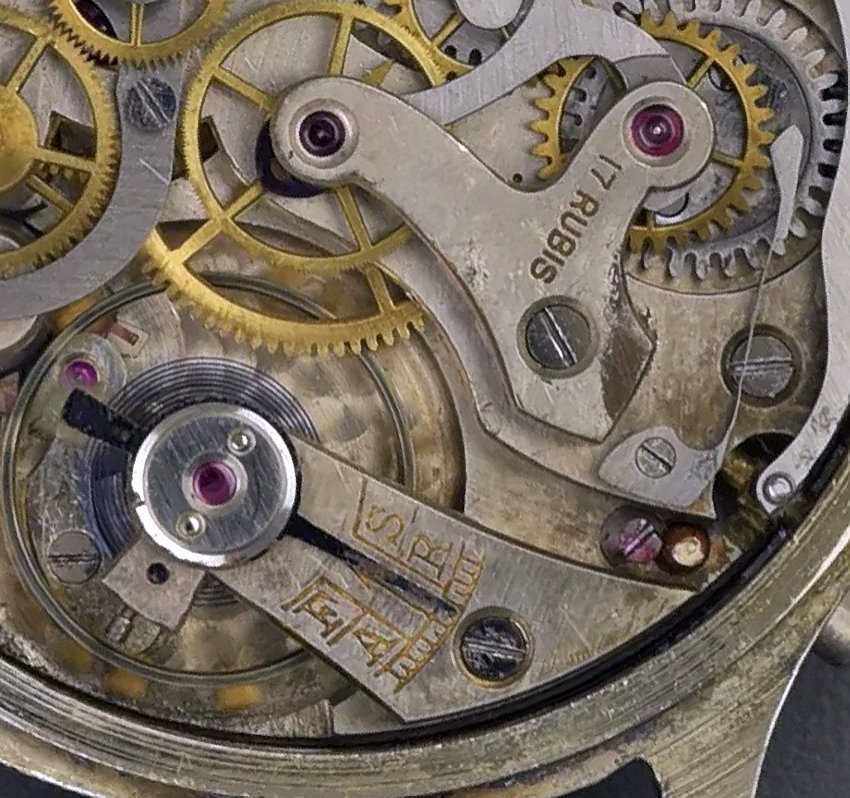
Breitling used Landeron movements, but what were once called “chronograph components”—that is, certain parts such as the bridges and the hammer—were unique to Breitling. This can be seen by comparing the bridges and the hammer of the two calibers:

Breitling Movement Details

Landeron Movement Details

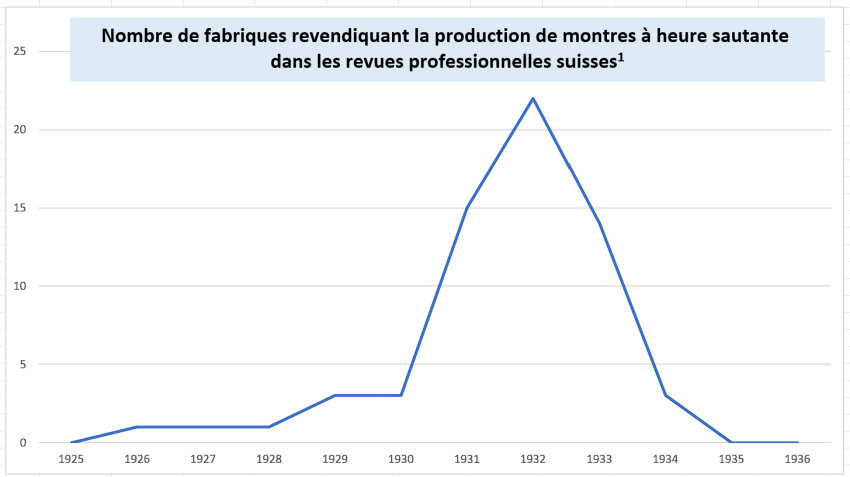
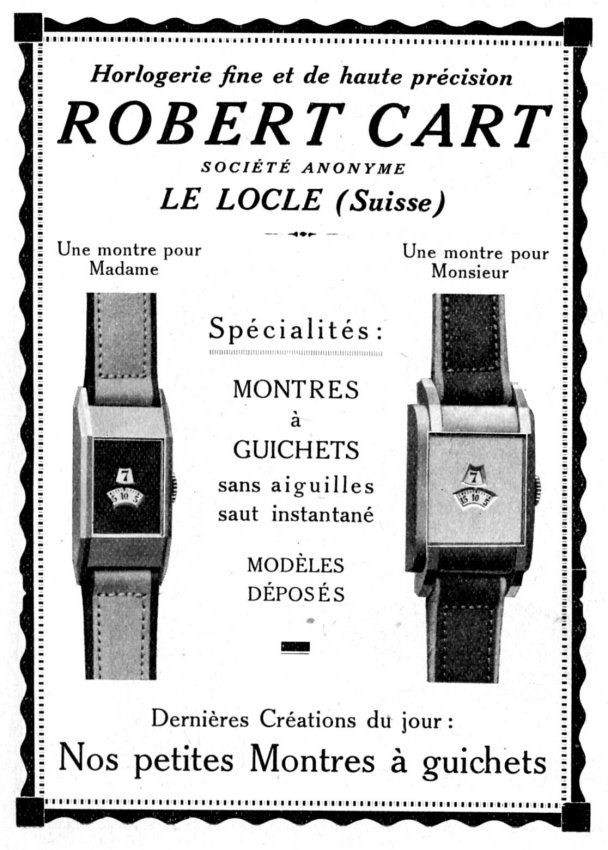
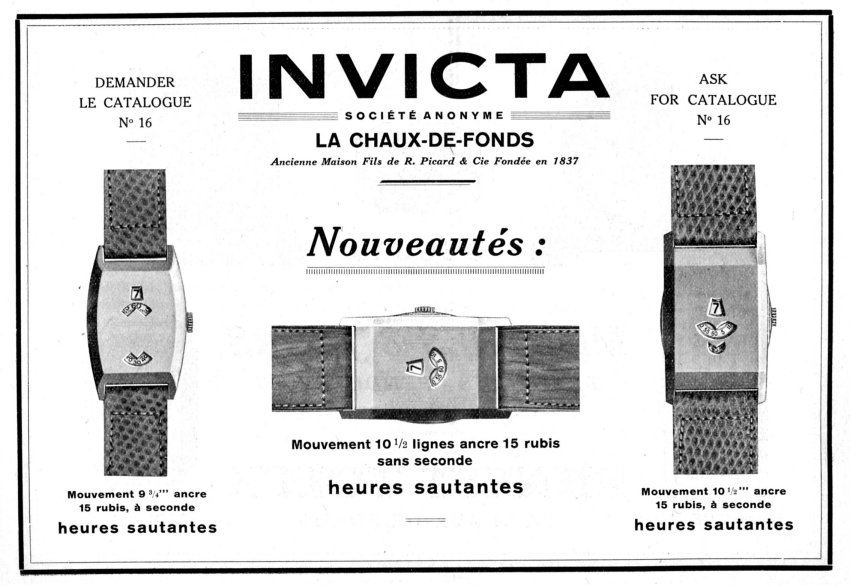
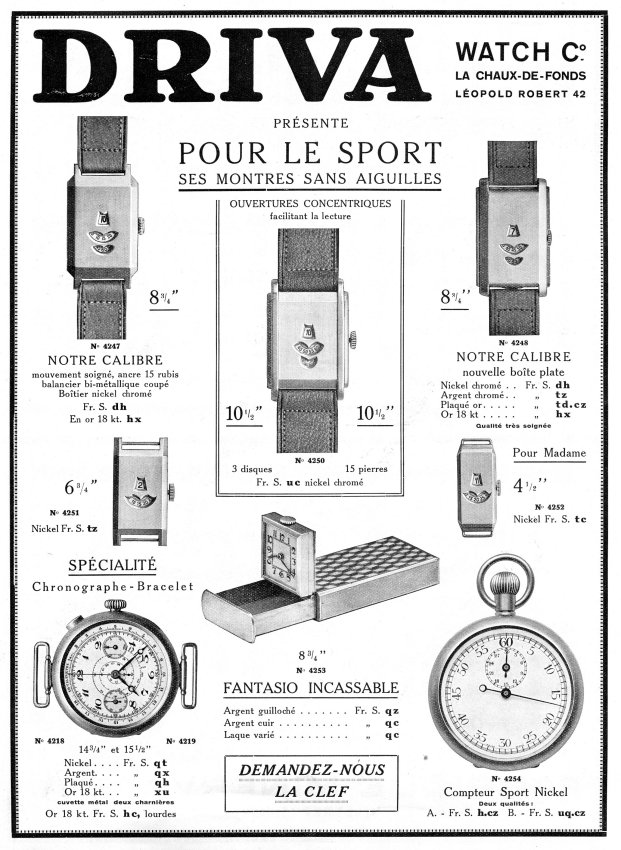
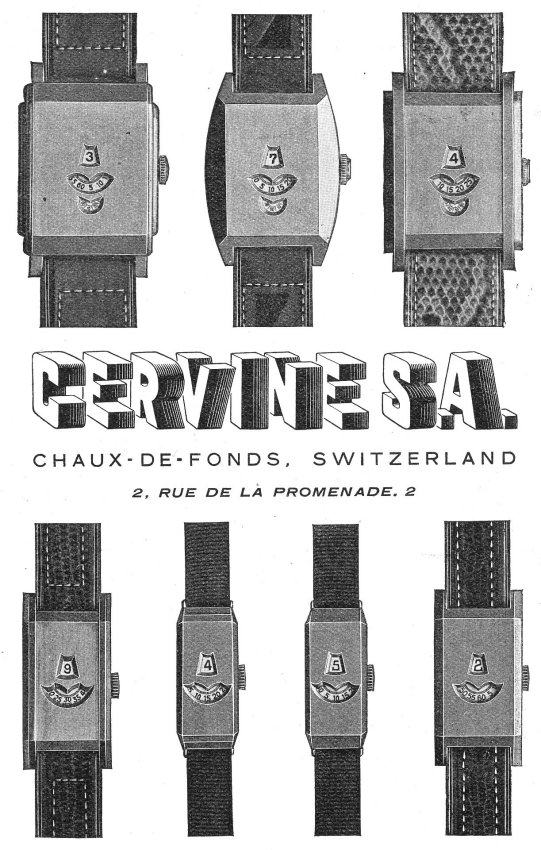
The first wristwatches with a jumping hour mechanism appeared in the late 1920s, initially in small batches at Audemars Piguet & Co. in 1926, then in increasing numbers in 1929, peaking in 1932. They were no longer offered after 1936. The Sandoz-Boucherin and Quartier patents used for the Domina watches were by then in the public domain, but other patents had been filed that were more specific to wristwatches [6].

Number of manufacturers claiming to produce jumping-hour watches in Swiss trade journals. Journals analyzed: Journal Suisse d’Horlogerie, Revue Internationale d’Horlogerie, La Fédération Horlogère, and L’Indicateur Davoine

1931

1931

1932

1933

To produce a wristwatch chronograph with a jumping hour mechanism, the necessary components had to be available from suppliers, since neither Eberhard nor Breitling was able to manufacture them. However, these components did not become commonplace until the early 1930s.

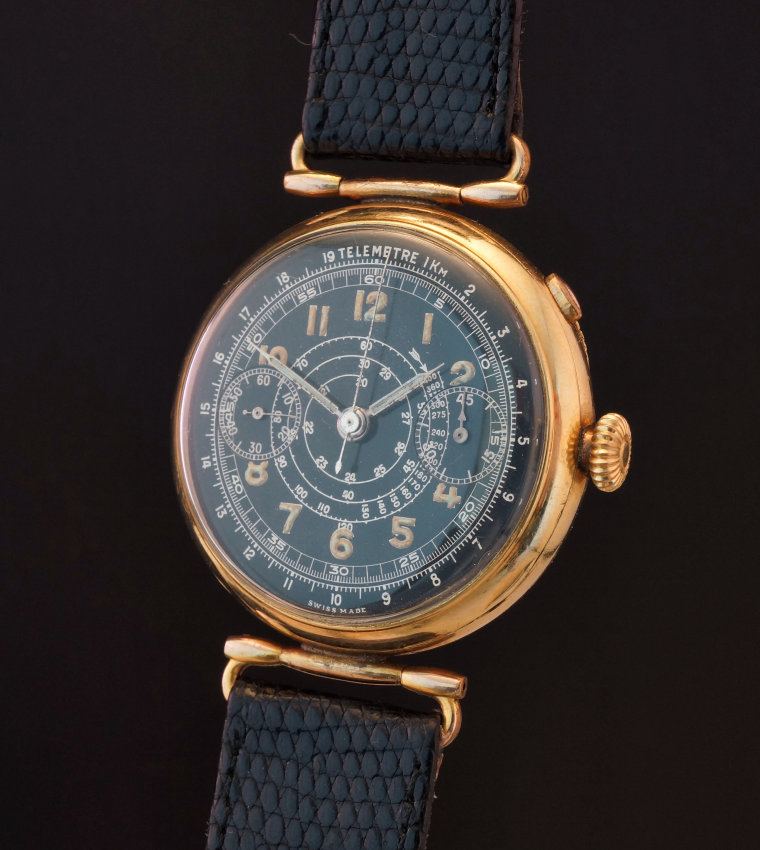
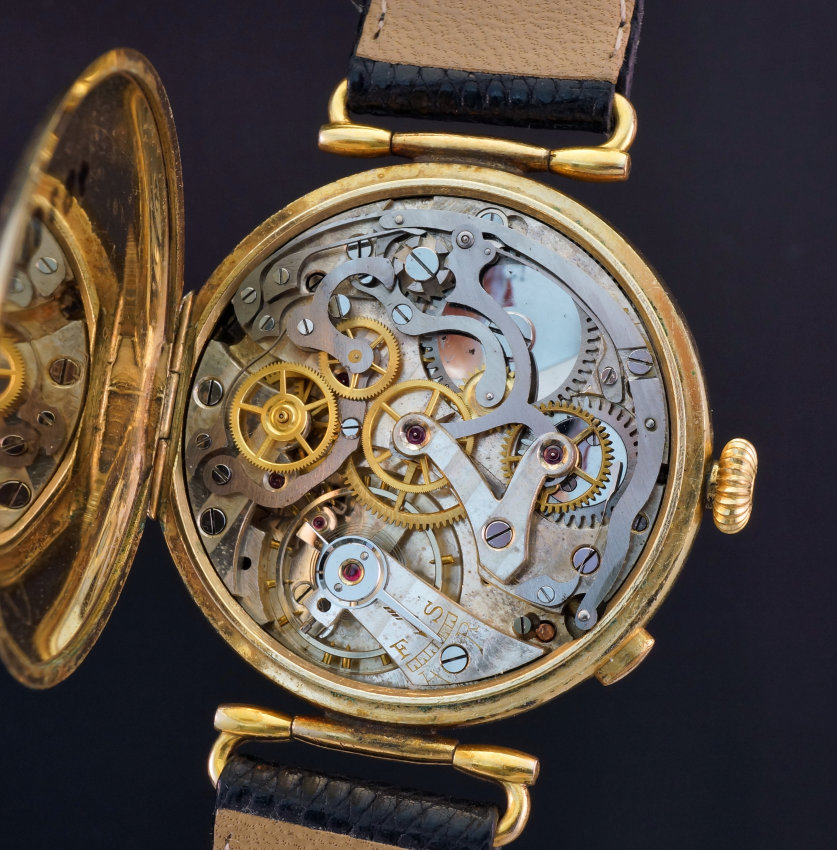
The caliber found in these jumping-hour chronographs is the Breitling caliber already used by Eberhard. However, there are identical chronographs that do not bear the Eberhard signature:

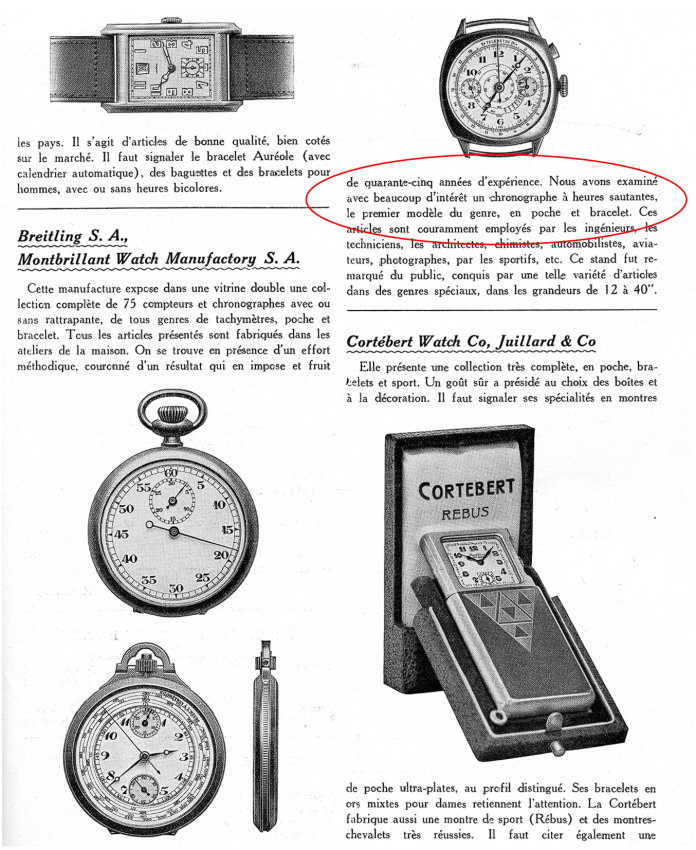
An article in the *Revue Internationale d’Horlogerie* discusses the watch exhibition held in La Chaux-de-Fonds in 1932 [7]. Regarding the Breitling booth, the reviewer states: “We examined with great interest a jumping-hour chronograph—the first model of its kind—available in both pocket and wristwatch versions.”

One might believe that a journalist specializing in watchmaking is being sincere when he says he saw this type of watch for the first time.

Breitling did not sign its dials at that time, so it is highly likely:

- that the unsigned jumping-hour chronographs were Breitling chronographs,

- that those signed “Eberhard” were also produced by Breitling,

- and that these chronographs date from the early 1930s.

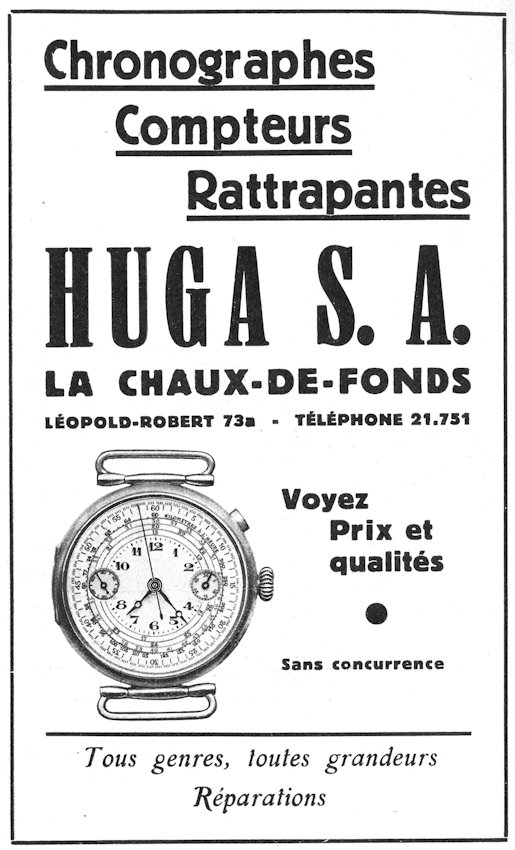
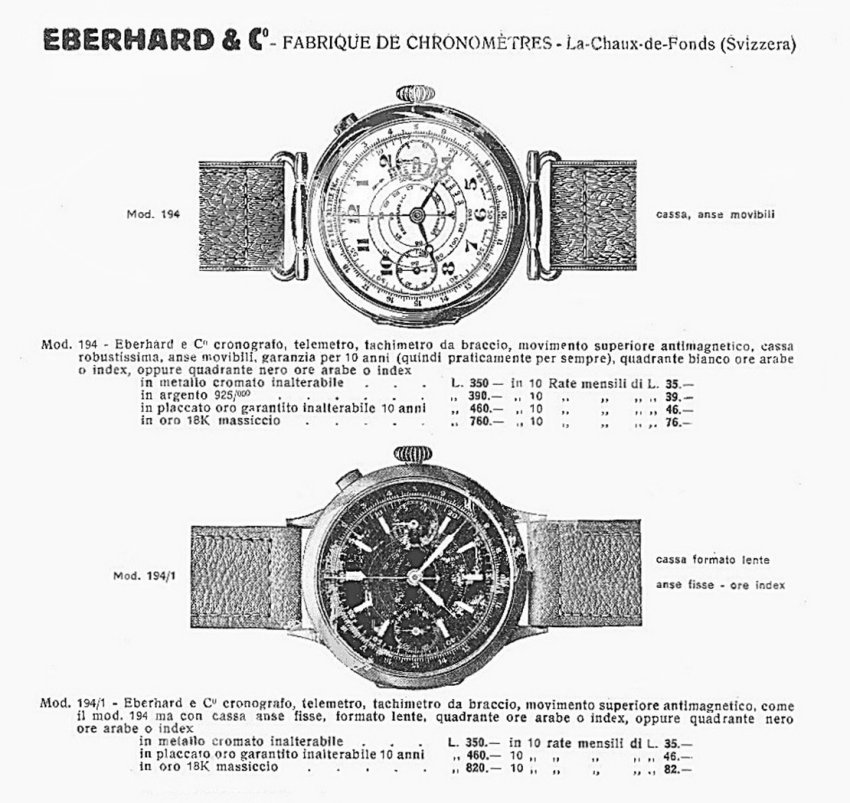
One might point out that the lugs on these chronographs are more reminiscent of the 1920s. However, identical cases appear in a 1934 Huga document, a 1934 Breitling document, and a 1935 Eberhard document, which does not rule out production around 1932.

1934

1935 – Credit Emilio [8]

Breitling 1934

Furthermore, the date of 1932 is perfectly consistent with the craze for this type of watch at the time.

Of course, any new information will help advance this fascinating history of Swiss watchmaking. 

[1] Example: https://orologi.forumfree.it/?t=69942767&st=45

[2] Swiss Patent No. 31,613

[3] Swiss Patent No. 33,814

[4] For more information, see Eberhard 

[5] This is due to the nature of digital displays: they show a specific time, but not the relative time. An analog display, on the other hand, shows not only the exact time but also its relative position within the day: at 10:00 a.m., for example, I “see” that I have two hours left before lunchtime, and at 5:00 p.m., I “see” that there isn’t much time left before 6:00 p.m. and the end of the workday. It is the human brain’s perception of a “time scale” that makes it easier to understand. This explains the trendiness of this display style and its periodic decline in popularity, as we’ve seen, for example, with quartz watches. It’s possible, however, that younger generations, accustomed to checking the time on their smartphones, may remain skeptical of an analog watch face.

[6] For example, patents CH 121,377 filed in 1926, CH 153,245 filed in 1930, and CH 155,824 filed in 1931

[7] Revue Internationale de l’Horlogerie, 1932, 19, p. 221
Notes:

About Time To Tell: Time To Tell has one of the largest private digitized databases on the history of Swiss watchmaking, with over 2.5 TB of data on more than 1,000 Swiss watch manufacturers. This database has been built up over a period of around 30 years and continues to be updated with around 50 to 100 GB of data each year. The database consists of historical documents, mainly Swiss trade journals, dating from the late 19th century to the late 20th century. Most of these documents are not available on the Internet. The historical articles published on the time2tell.com website always cite the sources used.

Time To Tell is a private company, independent of any watch manufacturer.

©Time To Tell, 2026

Reproduction without permission is prohibited.

Any use of this article by artificial intelligence is strictly prohibited and will be considered a violation of copyright.

Product Details

Product added to wishlist

Nous utilisons des cookies afin de fournir une expérience utilisateur conviviale. En naviguant sur ce site, vous acceptez la politique d'utilisation des cookies.