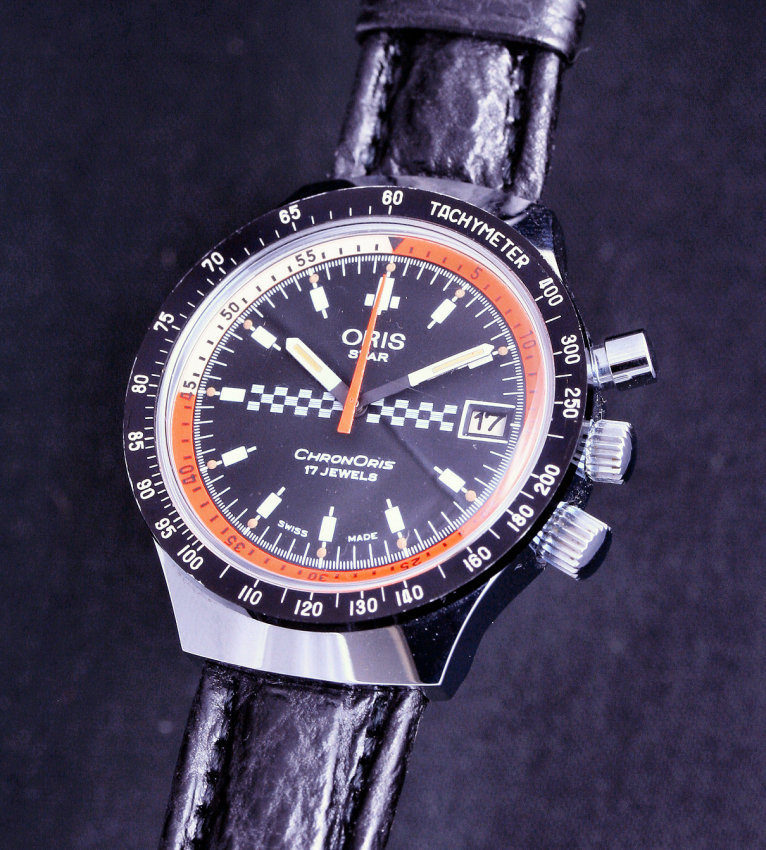
Swiss chronographs regained their prestige in the 1960s after a major promotional campaign organized by the Federation of Swiss Watchmakers, which was supported by chronograph manufacturers who launched successful new models such as the Heuer Carrera and the Breitling Top Time. The appearance of the first automatic chronographs in 1969 also had a considerable impact and probably overshadowed the release of a chronograph without a counter by a company that, once again, no one expected: Oris.
Oris was founded in 1904 by Georges Christian and Paul Cattin in Holstein. The Oris brand originated from the Lohner & Nägelin company, which went bankrupt in 1903 [7]. From 20 employees at its inception, the company grew to 668 in 1953 and then 770 in 1965, specializing in the Roskopf caliber, with a pin lever escapement, which it brought to an exceptional level of quality, since in 1953, 113 watches sent to the Le Locle Control Office obtained a Chronometer Certificate [8].
Subsequently, with the relaxation of the rules governing the manufacture of movements in Switzerland, Oris began manufacturing ruby anchor movements.
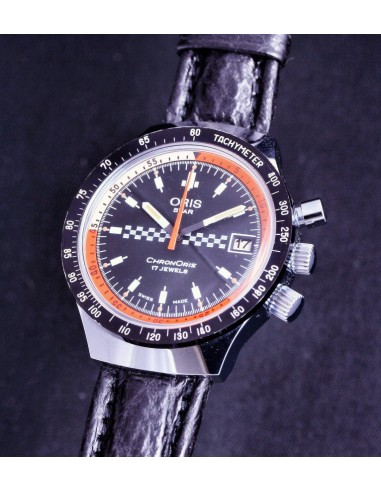
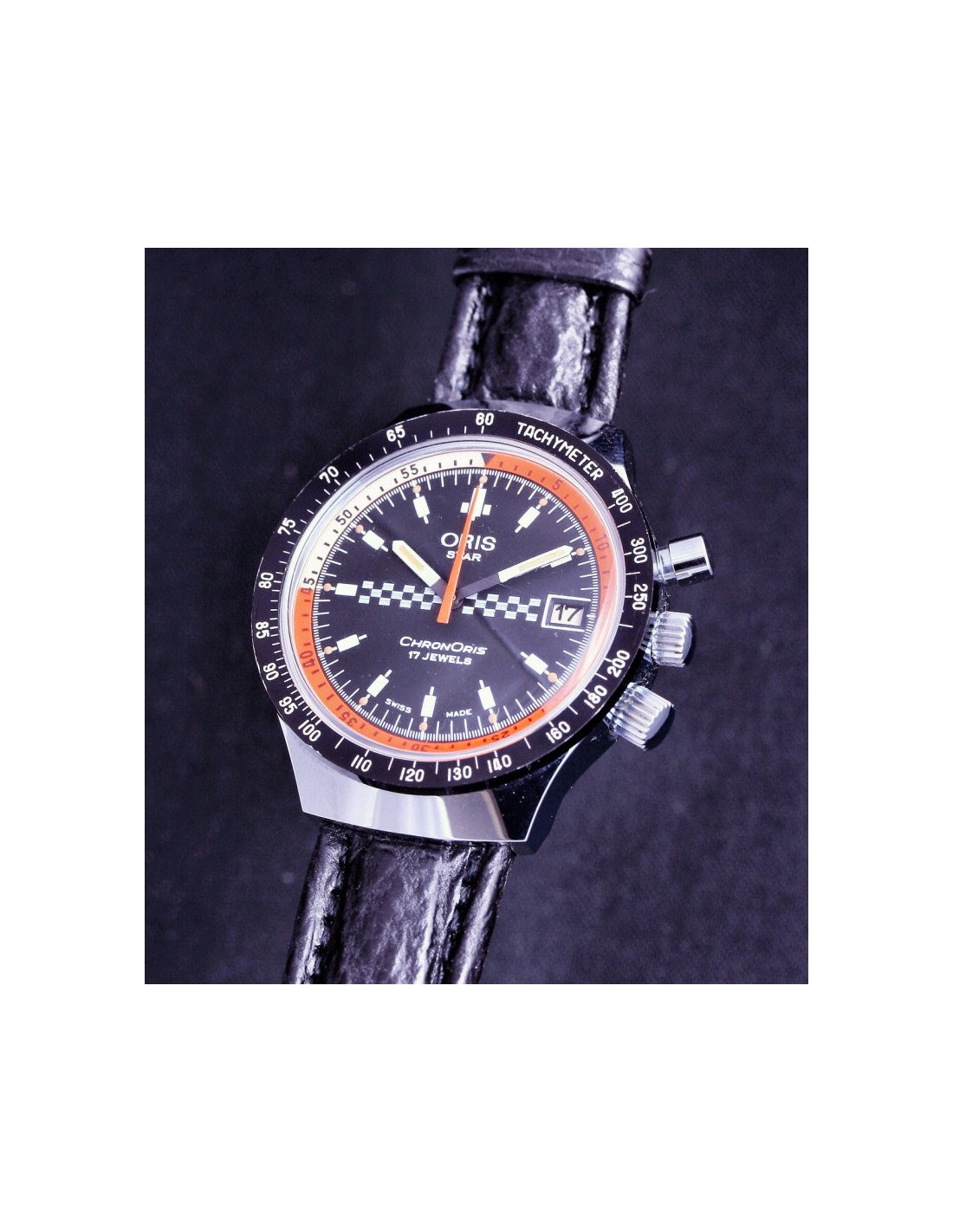
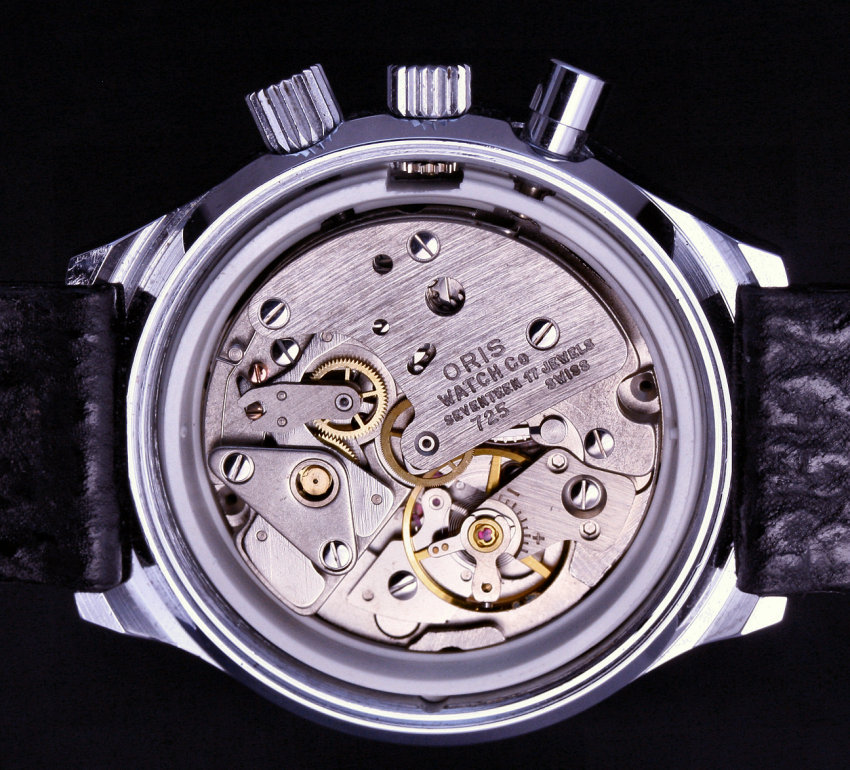
To manufacture its chronograph, Oris called on the specialist in chronographs and modular movements: Dubois Dépraz. This resulted in 1970 in the ChronOris, a chronograph without a counter, caliber Oris 725, 27.50 mm, featuring a small column wheel module 2 mm high and also displaying the date in a window at 3 o'clock. The watch appears to have a second push-button, but this is in fact a crown used to control an inner rotating bezel that acts as a minute counter. 27,000 ChronOris watches were manufactured [9].
To be continued...