Chronographs without counters and "stop" watches – Part 3: "Stop" watches

Chronographs without counters and "stop" watches – Part 3: "Stop" watches

Description

Joël Pynson

December 2005, updated January 2026

"Stop" watches are watches that allow the counter hand to be reset to zero. Compared to a chronograph, however, there is always one function missing: either the hand cannot be held at zero, in which case we call it a "stop-en vol" ("stop-in-flight") watch, or once the hand has been started and then stopped, it cannot be held in position without pressing the push button, which we will refer to as a "chrono-stop" watch.

The English terminology is problematic because "stopwatch" is sometimes used to mean "timer." To avoid confusion, French terminology will be used.

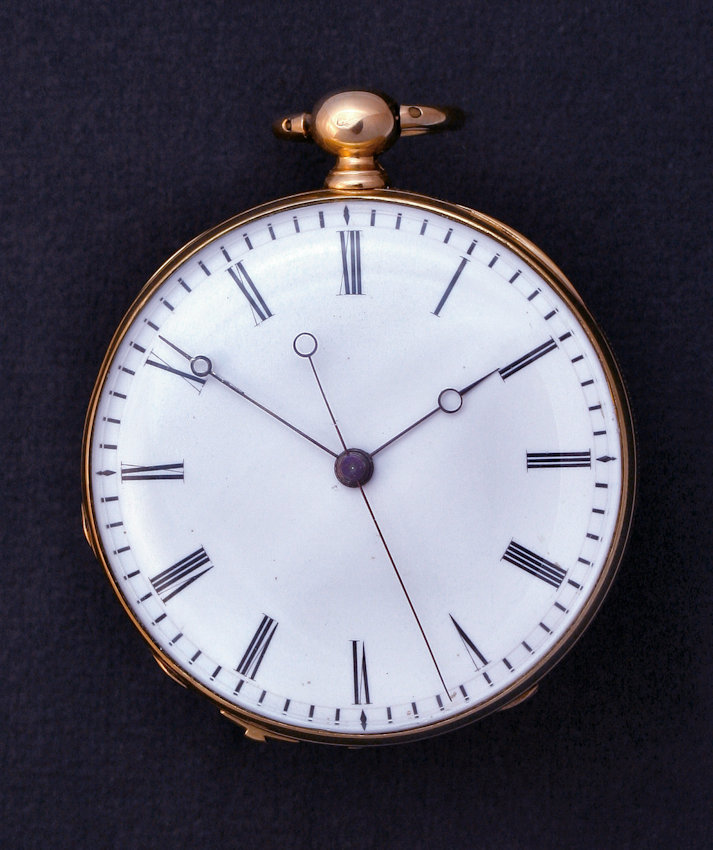
Stop watches have distant ancestors such as the independent dead-seconds watch, invented by Geneva watchmaker Jean-Moïse Pouzait in 1777, which existed long before the first chronographs. This watch has a central hand that jumps once per second, like most modern quartz watches, and this hand can be stopped at will using a small lever, without stopping the watch itself.

Watch with independent deadbeat seconds. The seconds hand beats every second and can be stopped at will using a small lever on the case middle.

Wristwatches that work in the same way do exist: in 1955, the Chézard movement manufacturer offered a jumping seconds movement whose hand could be stopped by pressing the crown. This movement was used in particular by Doxa.

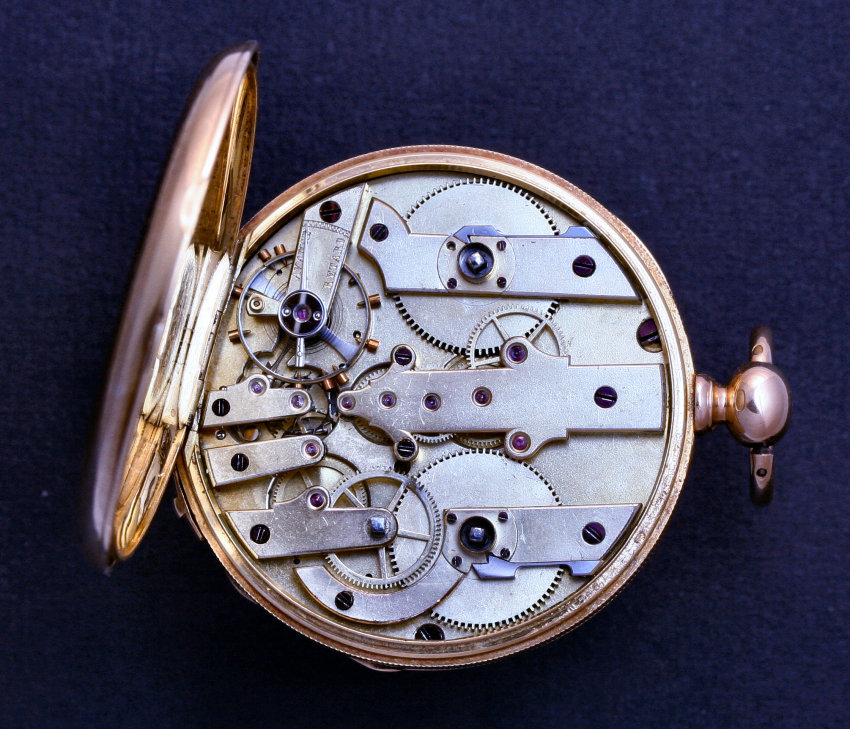
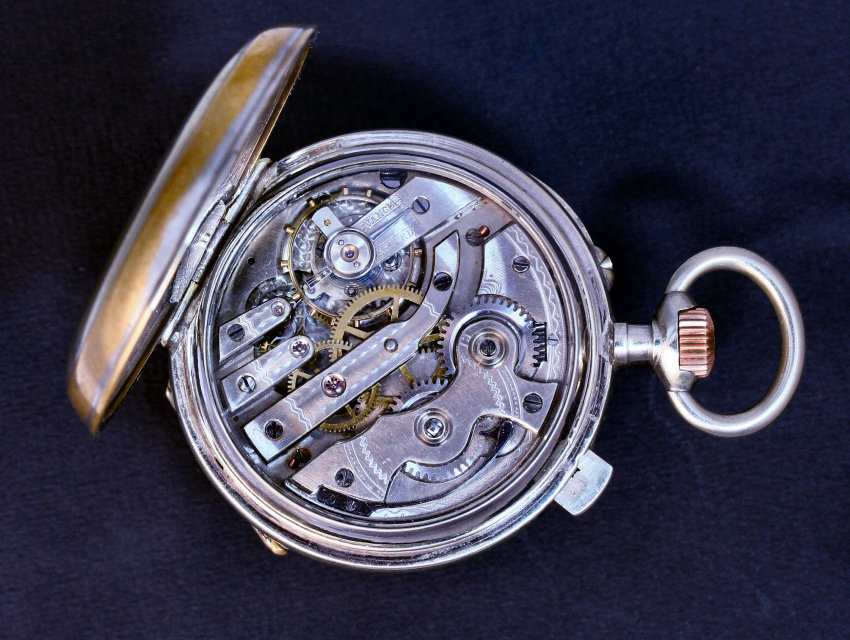
But the closest ancestor is the Gurzelen Chronoscope. Gurzelen was a brand owned by Louis Brandt & Sons, the company that would later become Omega. This watch, which dates from around 1885, has two auxiliary counters, one for minutes and the other for hours, whose hands can be reset to zero by pressing a push-button at 11 o'clock. As soon as the pressure on this push-button is released, they immediately resume their course.

1885 Gurzelen chronoscope. Both counters run continuously and can be reset to zero using the push button at 11 o'clock.

As with chronographs without counters, it was in the mid-1930s, when demand for this type of watch was high, that the first stopwatches appeared. Some manufacturers took an interest in them, and Ébauches SA supplied movements of this type to watchmakers.

3.1 Manufacture Stop watches

- Mimo

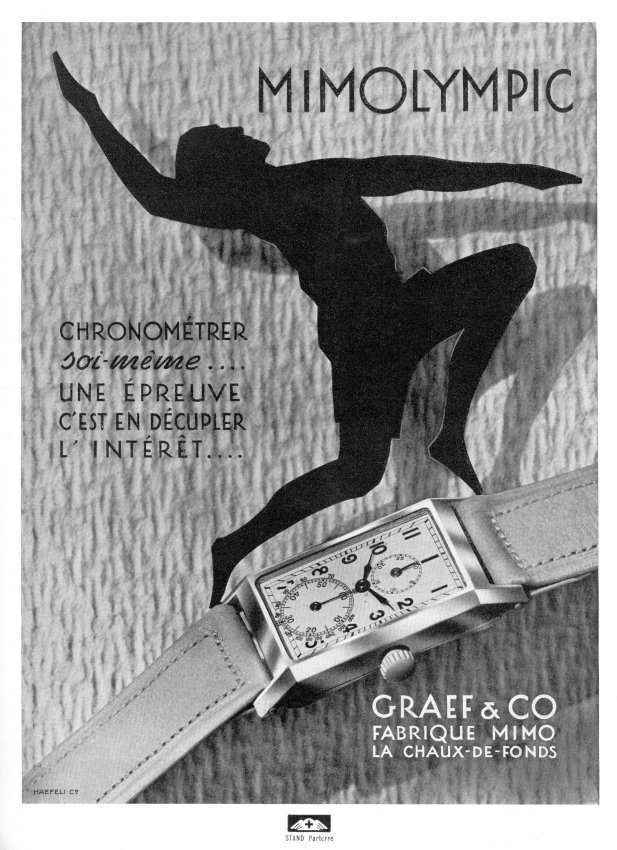
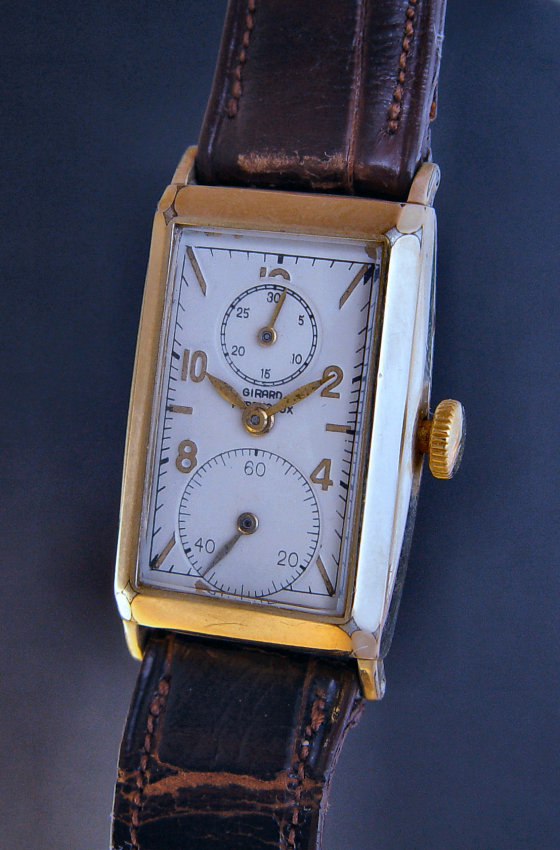
Mimo, Manufacture Internationale de Montres en Or, was founded in 1889 in La Chaux-de-Fonds by Otto Graef. In 1930, Mimo acquired the long-established Girard-Perregaux & Co. [1].

The Mimolympic watch was released in 1936, the year of the Berlin Olympic Games, which were hugely successful with 49 countries registered and nearly 4,800 participants, despite an international boycott campaign.

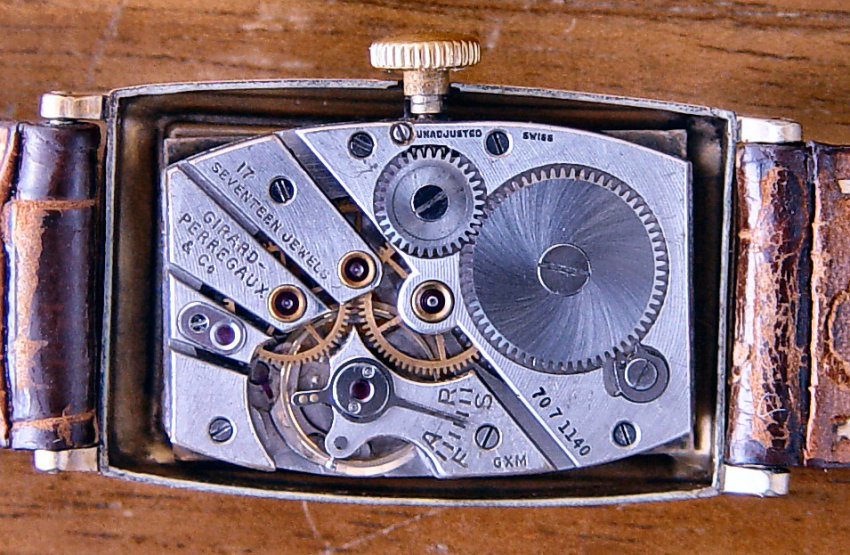
It is a rectangular stop-en vol watch with a beautiful movement based on the Mimo 72 caliber of 7.75/11 lines. On the dial side, there are two subdials, one at the top for minutes and the other at the bottom for seconds. Pressing the crown resets these two hands to zero and they start again as soon as the pressure is released. Some Mimolympic watches are marked Girard-Perregaux. The Mimo brand was gradually phased out in favor of Girard-Perregaux.

1936

- Rolex

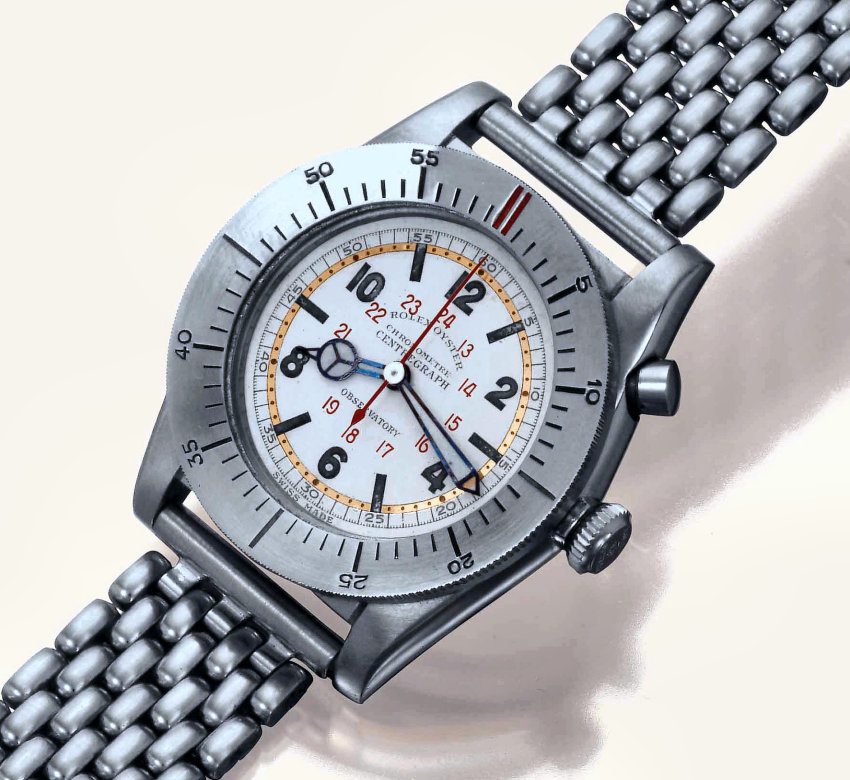
Shortly thereafter, around 1937, the famous Rolex company released a rare stop-en vol watch: the Centregraph or Zerograph with a push button at 2 o'clock. The movement was a Rolex manufacture caliber, unlike Rolex chronographs, which were all equipped with Valjoux movements.

- Longines

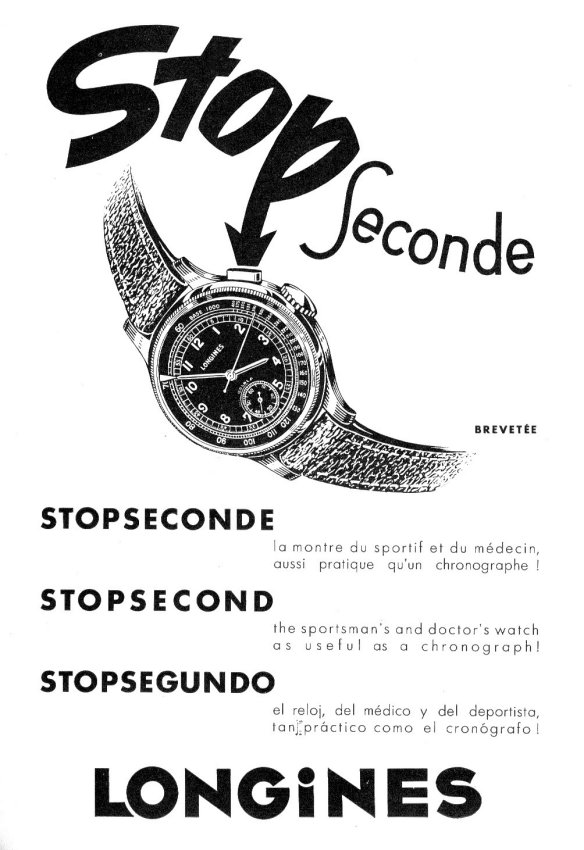
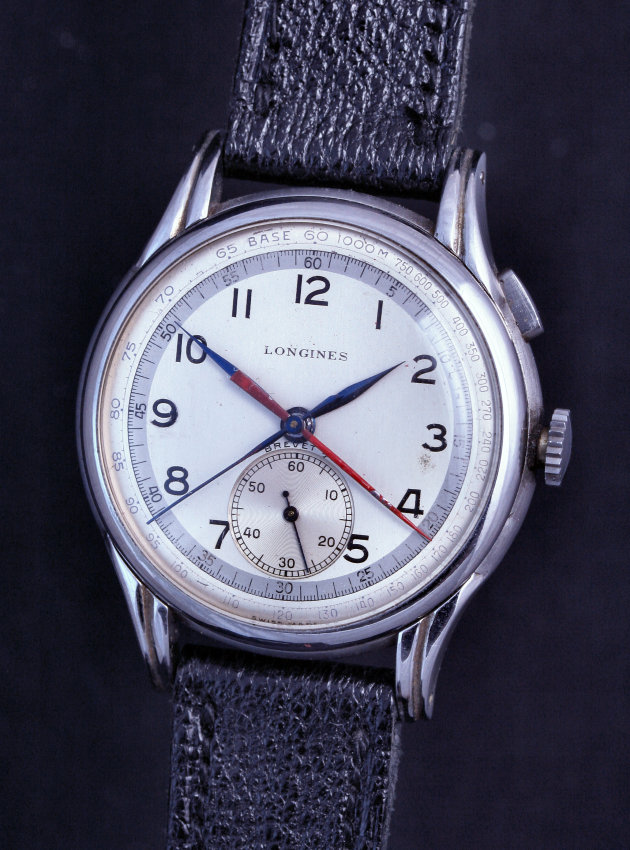
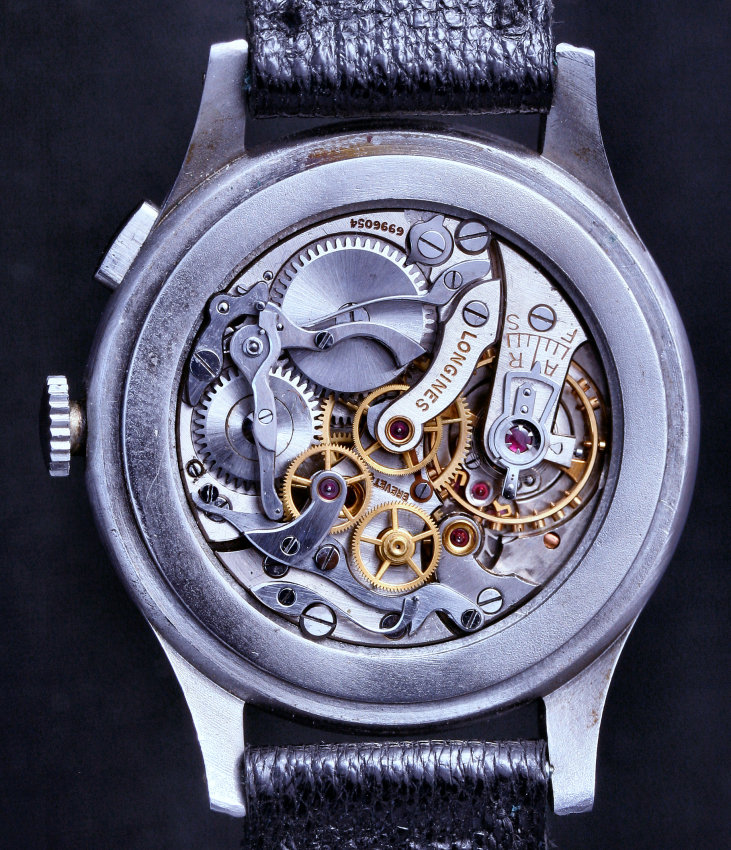
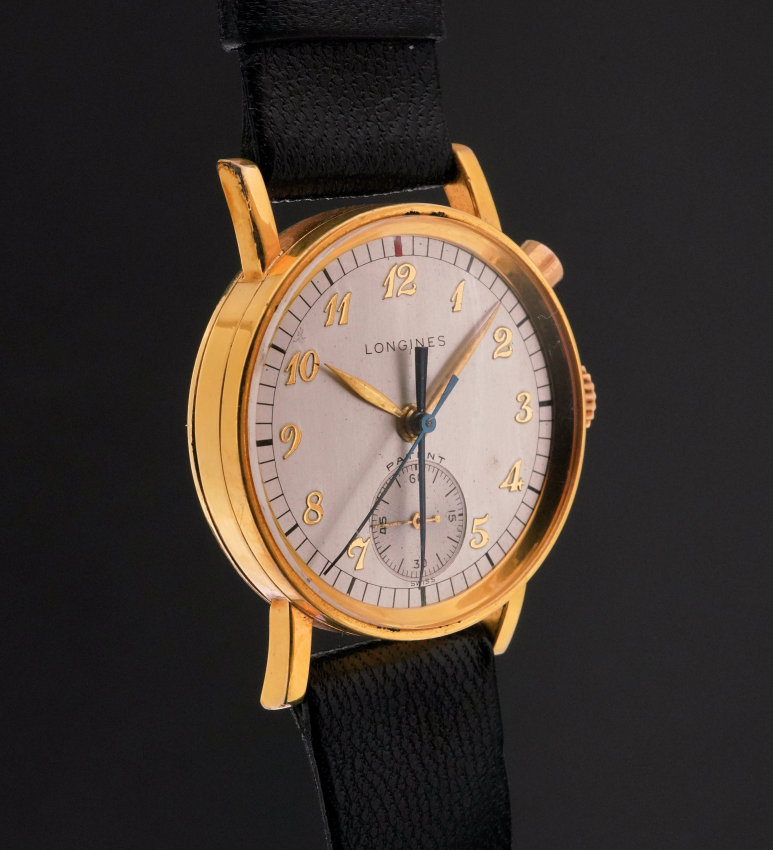
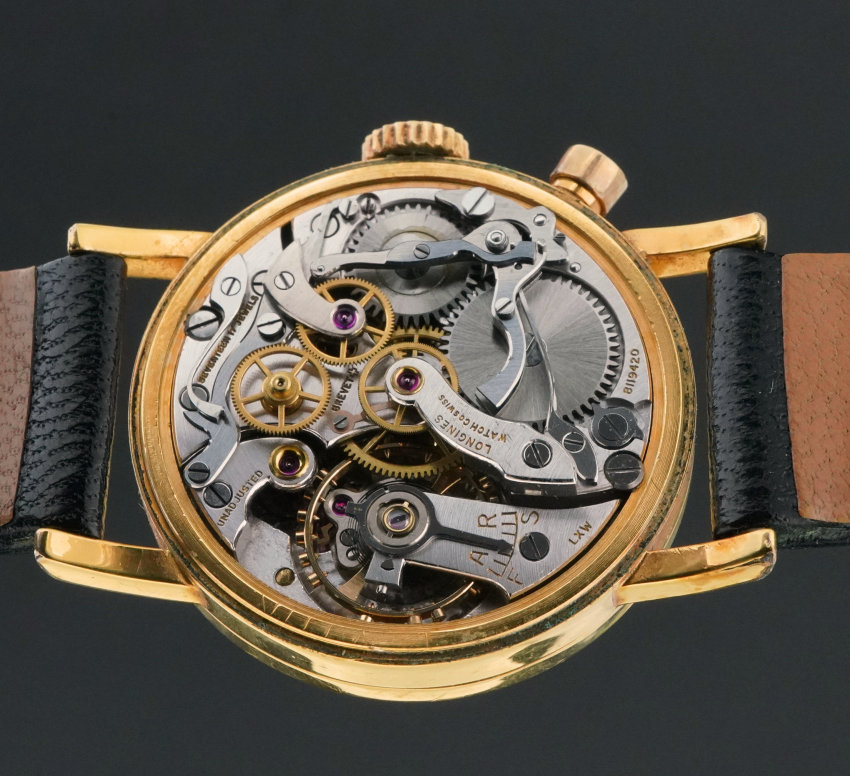
In 1939, Longines, a major company in the history of Swiss watchmaking in general and chronographs in particular, launched its Stop watch. Longines' origins date back to 1832 when Auguste Agassiz established a watchmaking counter in St Imier. His nephew, Ernest Francillon, succeeded him and turned it into a Manufacture in 1866 [2].

1939

Longines named this watch Stop Seconde, and there are two versions: one where the push-button resets the central seconds hand to zero, and another from 1941 where the push-button also resets a central minute counter to zero.

- Invicta

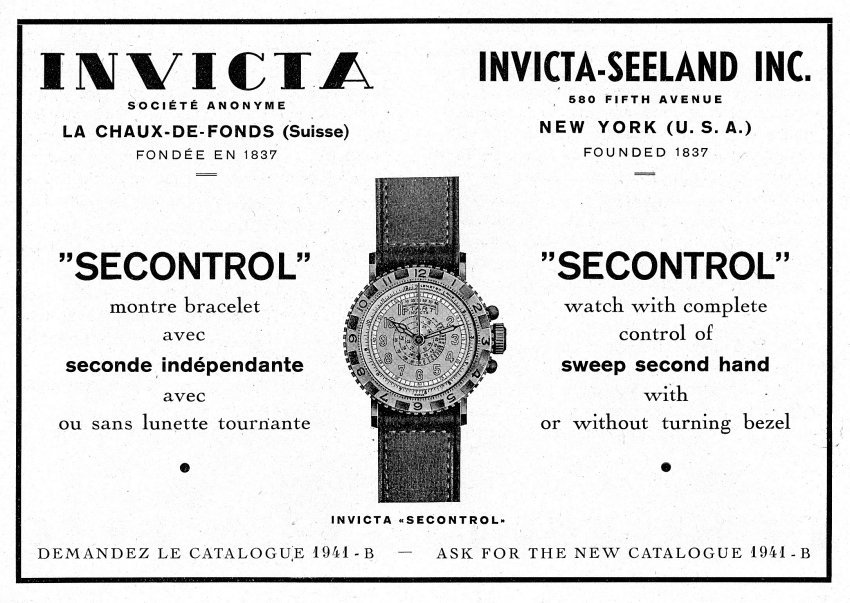
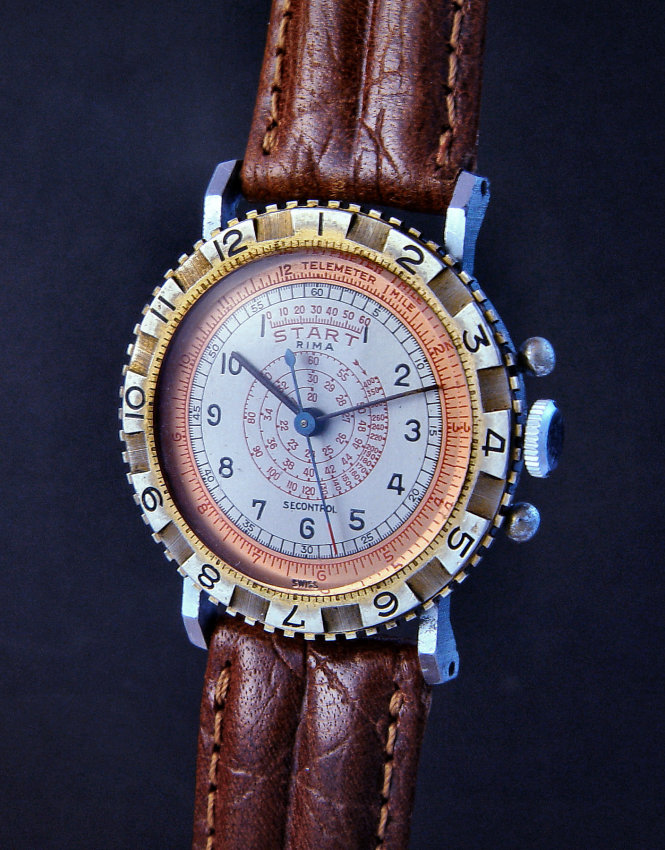
In 1940, Invicta released its own stop watch watch called Secontrol. Invicta, formerly Maison Fils de Raphaël Picard et Co., based in La Chaux-de-Fonds and dating back to 1837, also marketed its watches in the United States under the name Seeland [3].

The chronograph was one of the company's specialties. The Invicta Secontrol has two small round pushers near the winding crown and a rotating bezel for counting minutes and hours. It was developed by Henri Jacot-Guyot, a remarkable watchmaker from Neuchâtel who was responsible for numerous innovations in the field of column-wheel-free chronographs and who had already collaborated with Invicta on the development of a remarkable and rare rectangular chronograph, the Chrono-Sport of 1932.

1941

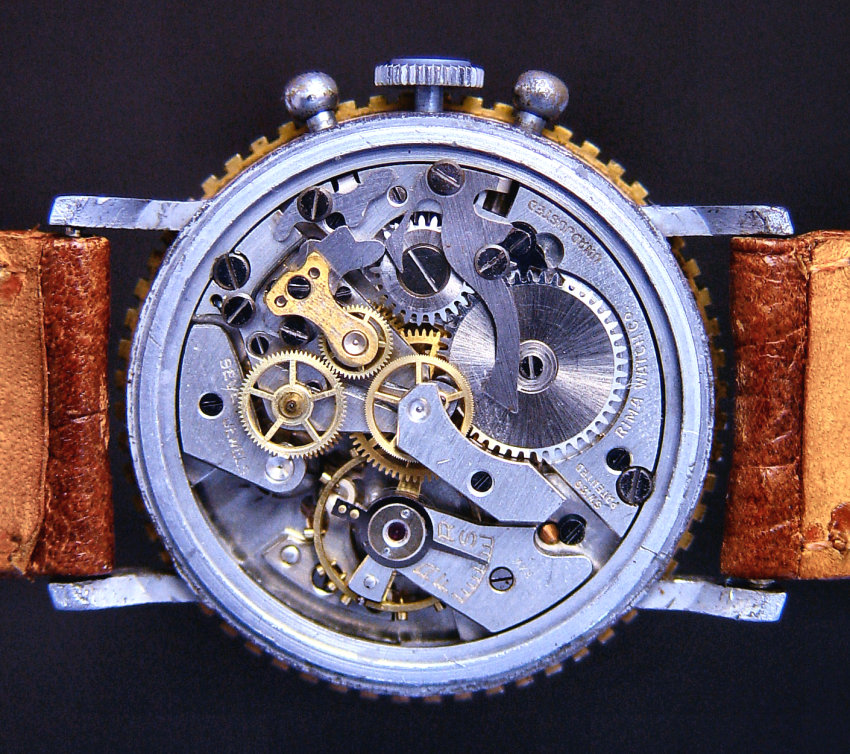
Calibre 10,5 lignes, base A. Schild 984

The Secontrol [5] is a small stop-en vol watch watch equipped with a column wheel-free caliber based on the A. Schild 984, measuring 10.5 lines. It works as follows: the lower push button stops the central seconds hand, and the upper push button resets it to zero. The small pushers, which feature a sealing ring pressed against the case, were also the brainchild of Henri Jacot-Guyot.

However, the four companies that subsequently offered a Stop watch were not chronograph specialists, and their experience in this field was short-lived. These were Helvétia in 1941, Tissot in 1942, Montilier in 1946, and Marvin around 1950.

- Helvétia

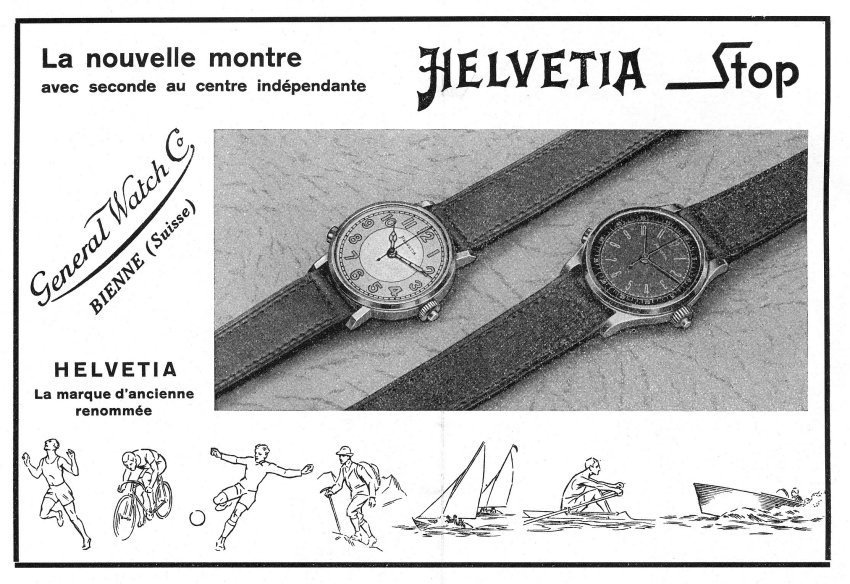
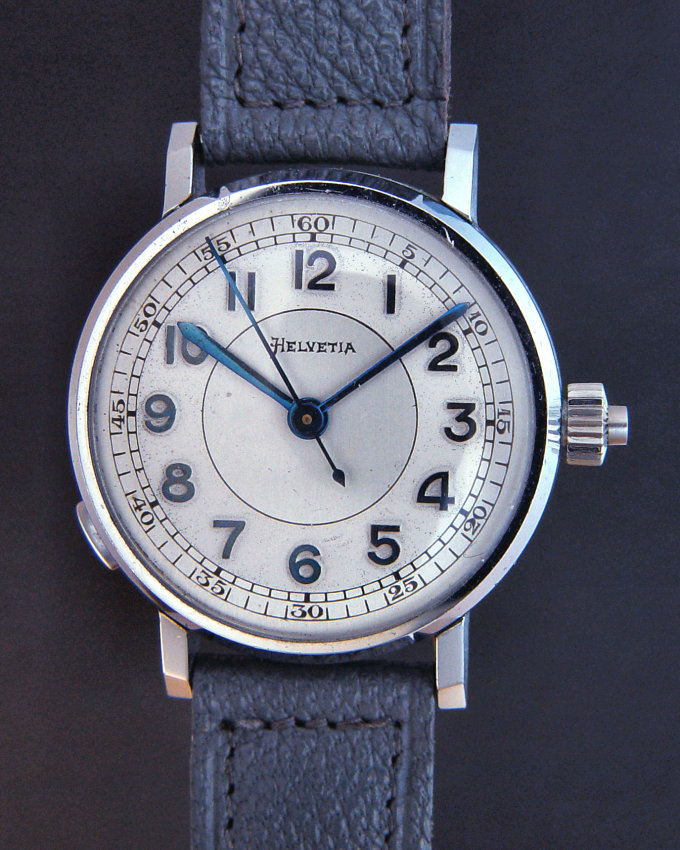
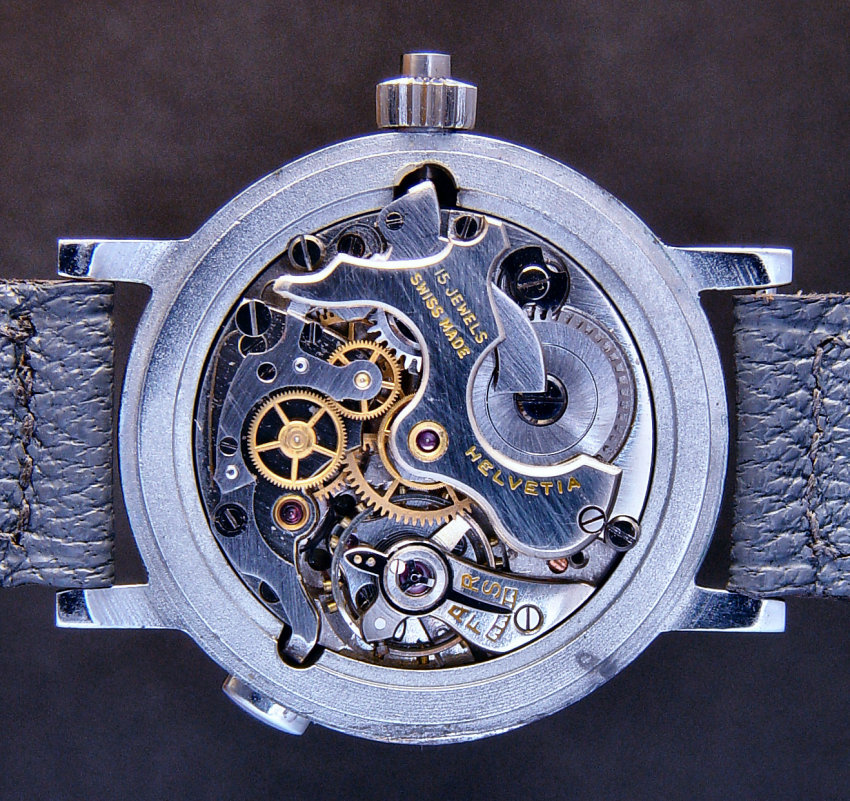
Helvétia was a brand of the General Watch Co., a company founded in 1895 by the successors of Louis Brandt et Frères in La Chaux-de-Fonds [4].

1941

Calibre Helvétia 822

The Helvétia Stop watch, patented in 1940 and released a year later, features an in-house movement: the Helvétia 822 caliber. It is a watch with a permanent central seconds hand that can be temporarily stopped by a push-button at 8 o'clock, or reset to zero using a push-button at 2 or 3 o'clock. This movement can also be found under the Orator brand, owned by Schild & Cie. in La Chaux-de-Fonds.

- Tissot

Tissot is also a name that is part of Swiss watchmaking heritage. The company was founded in 1853 by Charles-Félicien Tissot and his son Charles-Émile, and became a Manufacture in 1918.

In 1930, the company joined forces with Omega to form the SSIH, Société Suisse pour l'Industrie Horlogère, and in 1932, Lémania, a specialist in chronographs, became part of the SSIH.

From that date onwards, Lémania became the supplier of chronograph calibers for Omega and Tissot, even though commercial policy dictated that the more luxurious versions were reserved for Omega.

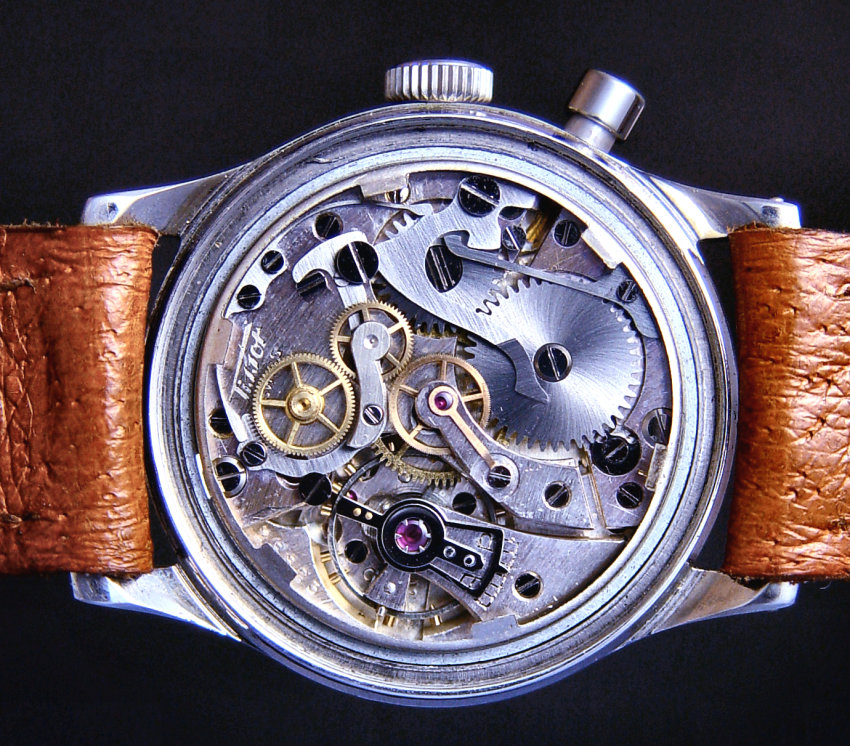
Calibre Tissot 27,53

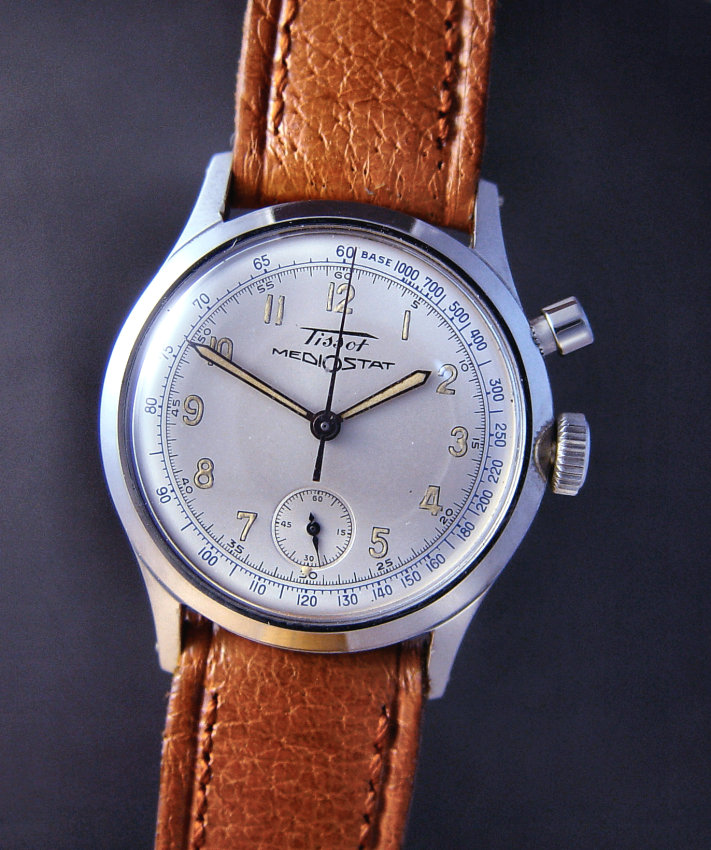
However, the 1942 Tissot Mediostat does not feature a Lémania caliber, but rather a Tissot Manufacture caliber, known as 27.53.

The watch itself is a stop-en vol watch. The single push-button at 2 o'clock stops and resets the central hand, which resumes its movement as soon as the push-button is released.

- Montilier

Étienne Ovide Domont founded the Montilier Watch Factory in Morat in the canton of Fribourg in 1852 [6]. Due to its distance from the major watchmaking centers, the company manufactured its own movements and cases, some of which were made of aluminum, starting in 1883. In 1936, the company became Montilier Watch Co.

1946

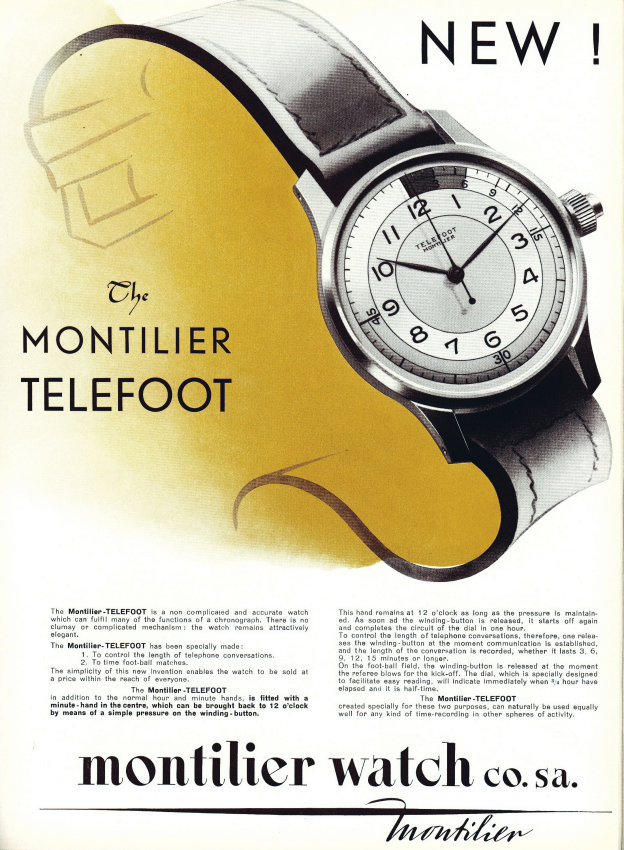
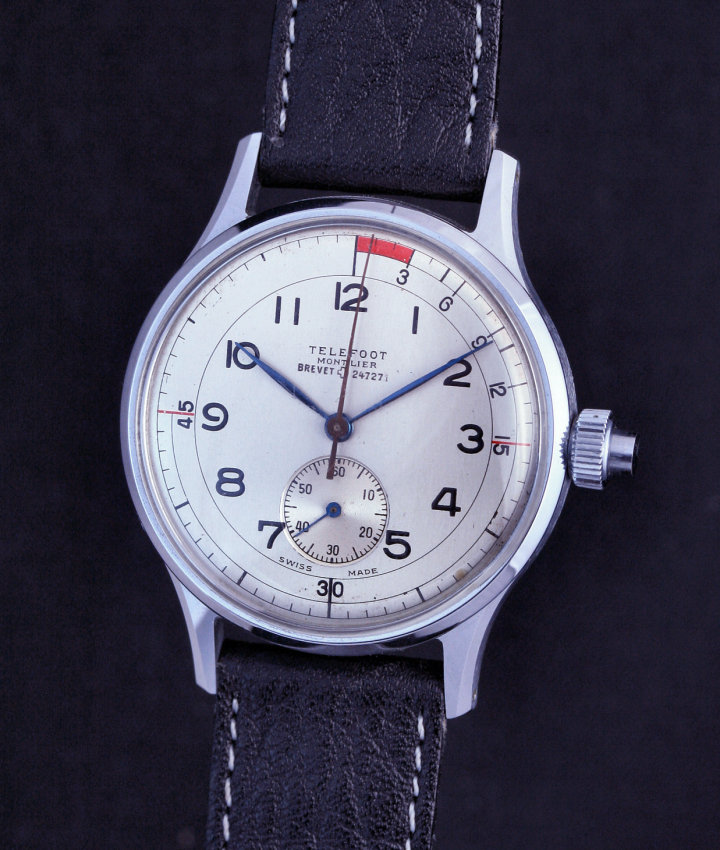
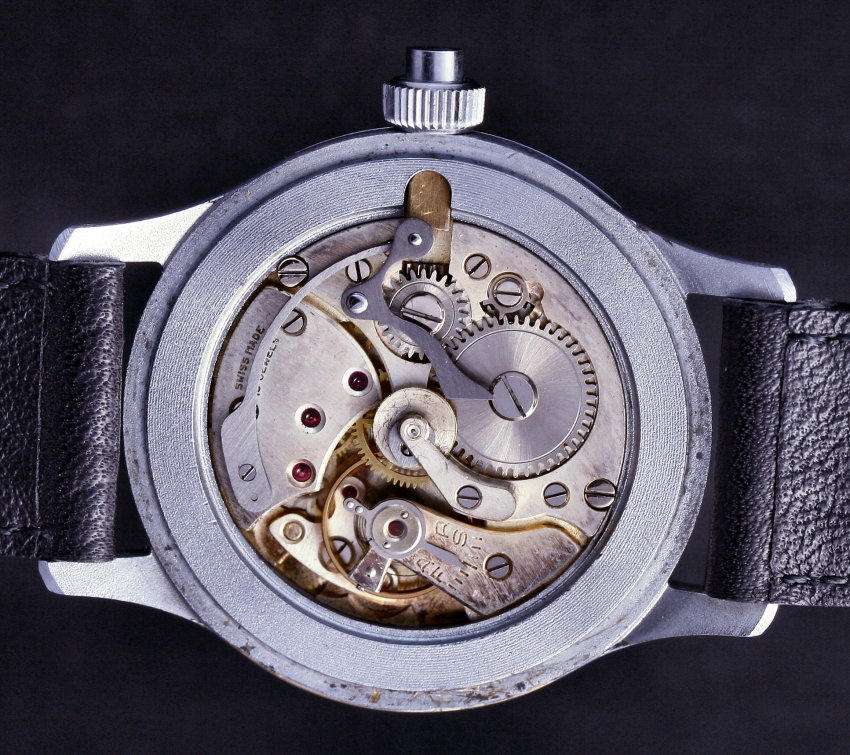
The 1946 Montilier Telefoot watch is a stop-en vol watch. The single push-button allows the central hand, which counts minutes rather than seconds, to be reset to zero. The time scale around the edge of the dial highlights the first forty-five minutes, reflecting the length of halves in soccer matches. The movement is a Montilier caliber.

- Marvin

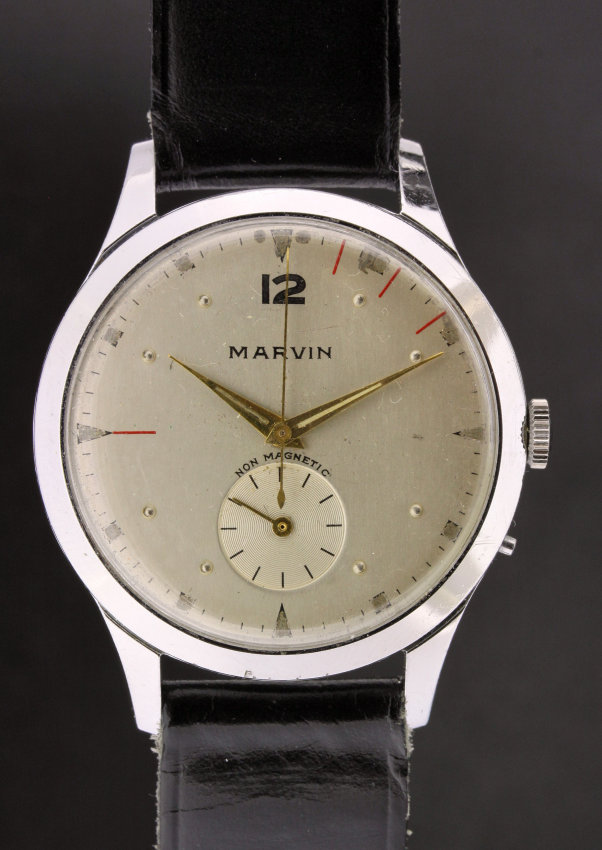
Founded in 1850 by the Didisheim brothers, Marvin was a particularly creative manufacturer from the 1930s to the 1950s, with models such as the Gyroplan, the Motorist, the tire watch, and the Flying Dutchman, which made it famous [8]. Around 1950, Marvin developed a very rare Stop watch with no name on the dial.

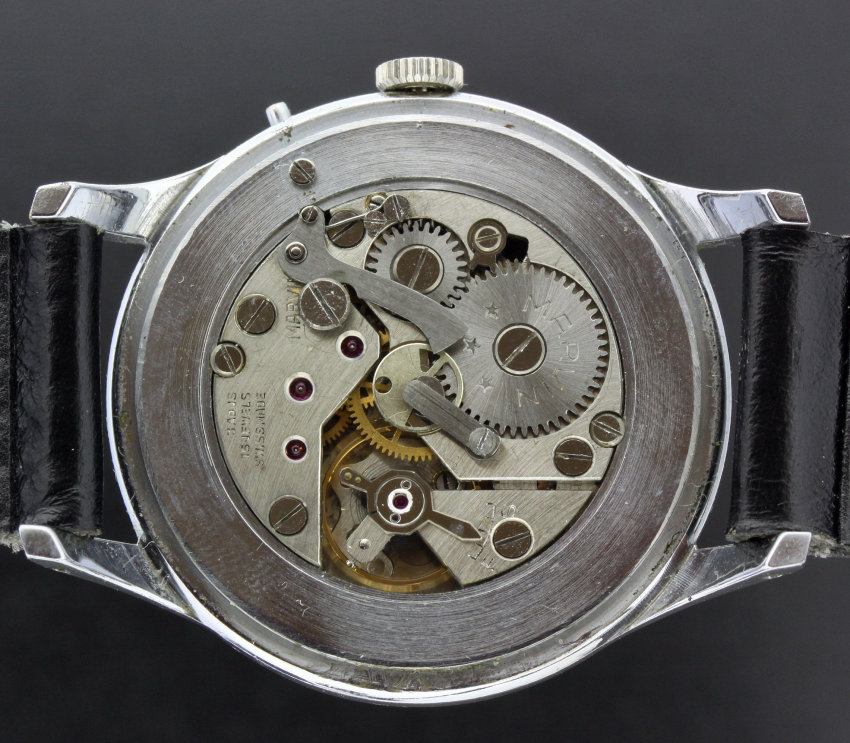
This is a stop-en vol watch with a central minute counter. The small push button at 4 o'clock resets the minute counter hand, which immediately starts running again. The dial features the classic 3, 6, and 9 minute markings for telephone conversations and a 45 minute marking for football.

The caliber is a Marvin manufacture movement, derived from the 10.5-line caliber 565.

- Pierce

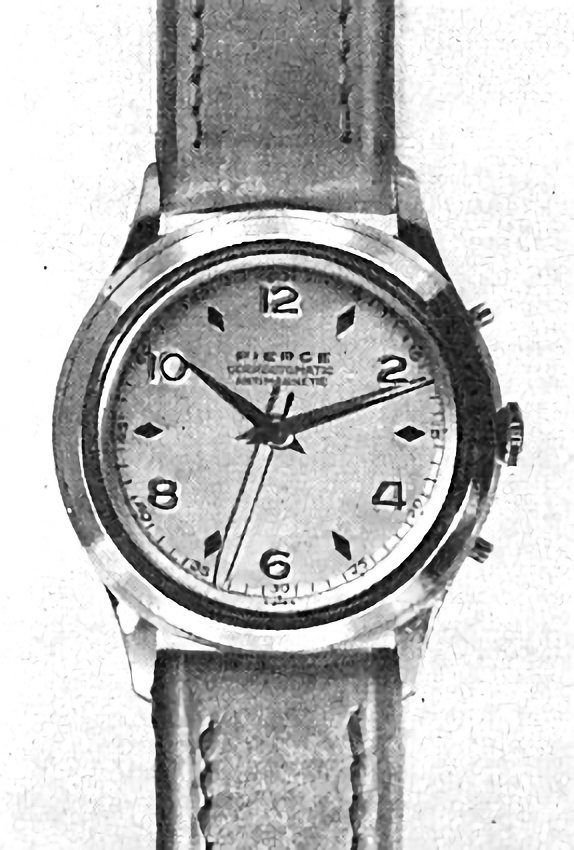
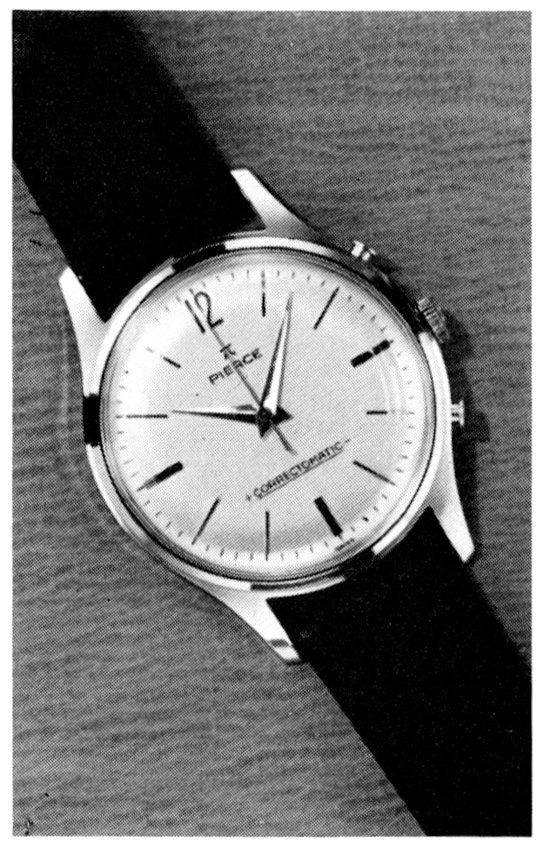
Another remarkable model from Pierce that can be classified as a stopwatch is the Correctomatic, released in 1955. On this watch, one of the small pushers allows the hands to be reset and thus the seconds hand to be reset to zero. The second pusher readjusts the balance spring if the watch is running fast or slow [9].

In the 1950s, as we have seen, the public lost interest in chronographs. Fortunately, the 1963 promotional campaign, carried out by the Federation of Swiss Watchmakers in association with manufacturers, proved effective, and the launch of a whole series of new models revived interest in this type of watch, particularly among a younger audience with more modest incomes.

To meet these new expectations, Swiss chronograph manufacturers launched the concept of a range: a model with a single name is available in a multitude of versions. Heuer inaugurated this concept in 1963 with the Carrera range, which included the Carrera 45, Carrera 12, Carrera Tachy, and versions with a date display. Breitling did the same in 1964 with the Top Time range, which was available in a multitude of versions with white or black dials, tachymetric, pulsometric or decimal scales, and round or square cases, either simple or water-resistant.

- Omega

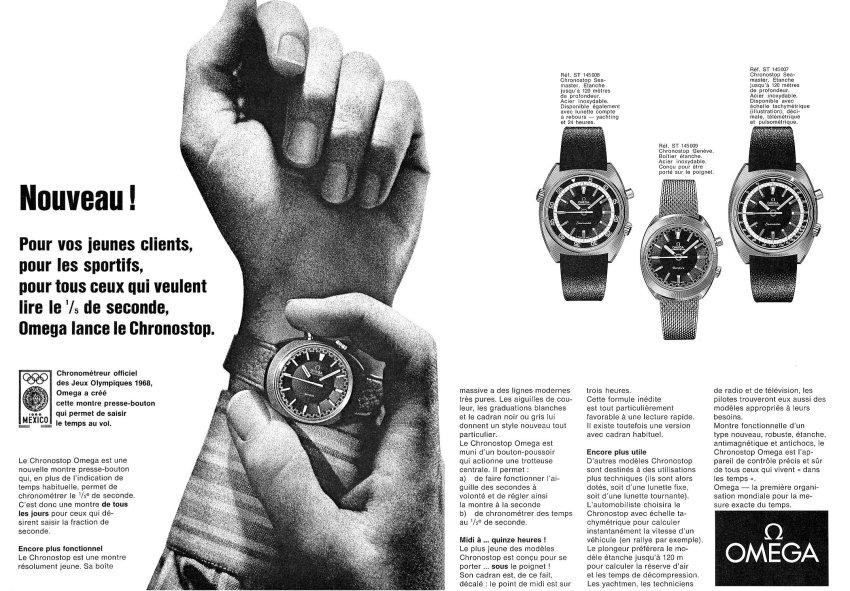
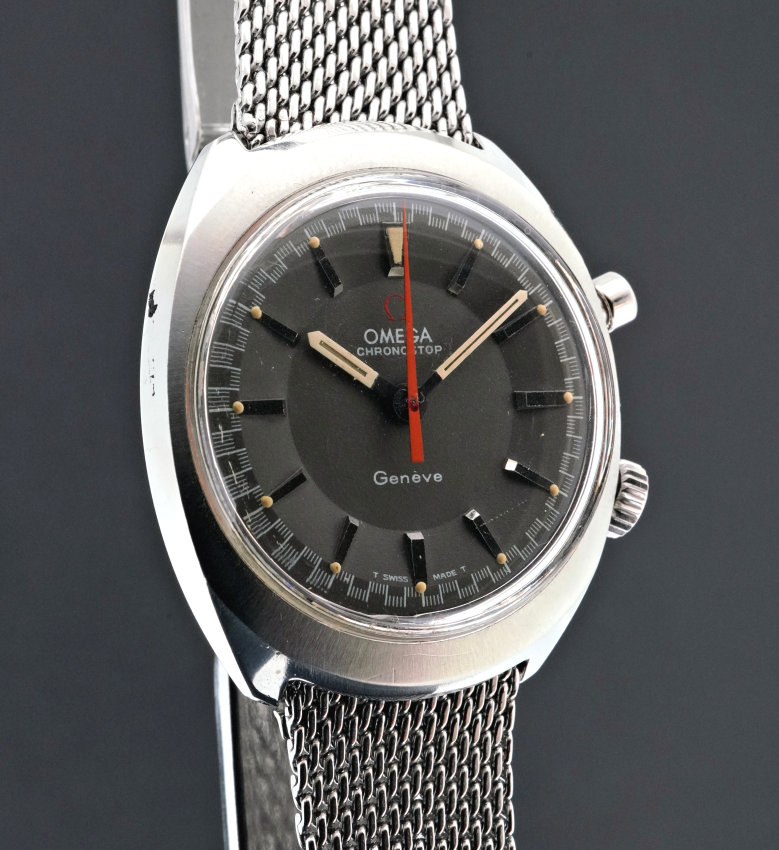
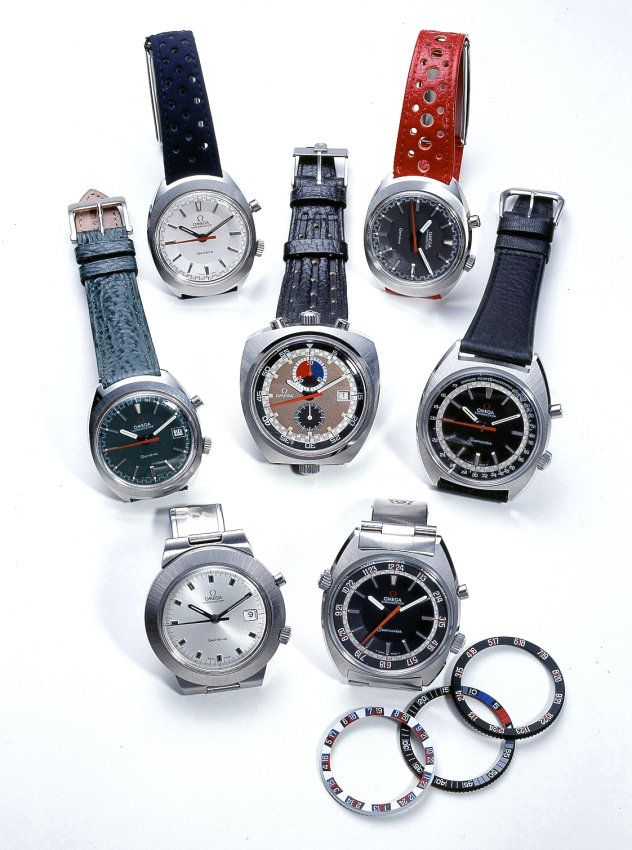
When Omega launched its own version of this concept in 1967, it was with a stop watch: the Omega Chronostop.

Omega is a major player in the history of Swiss chronographs in the 20th century. It originated as a watchmaking workshop founded in La Chaux-de-Fonds by Louis Brandt in 1848. The company moved to Biel in 1879 and became a Manufacture a year later, producing in particular the famous 19-line "Omega" caliber, which gave the company its name.

Omega began producing wrist chronographs in 1913 and has never stopped since. The partnership with Lémania in 1932 allowed Omega to become independent from Ébauches SA for this type of movement.

Omega has also been the official timekeeper of the Olympic Games for many years, and it was in anticipation of the 1968 Olympic Games in Mexico City that the Chronostop watch was designed.

1967

It is a chrono-stop caliber, meaning that the central seconds hand can be stopped at zero permanently. However, when the hand is started by pressing the single push-button and then stopped by pressing it a second time, it cannot be held in this stopped position, and as soon as the push-button is released, the hand returns to zero.

The movement, caliber Lémania 865, was fitted to a large number of versions, with pulsometric, decimal, and telemetric scales, with a rotating bezel for countdown or second time zone, waterproof Yachting and Seamaster versions, and even versions with a date window, in 1968, the movement then being the Lémania 920.

- Aquastar

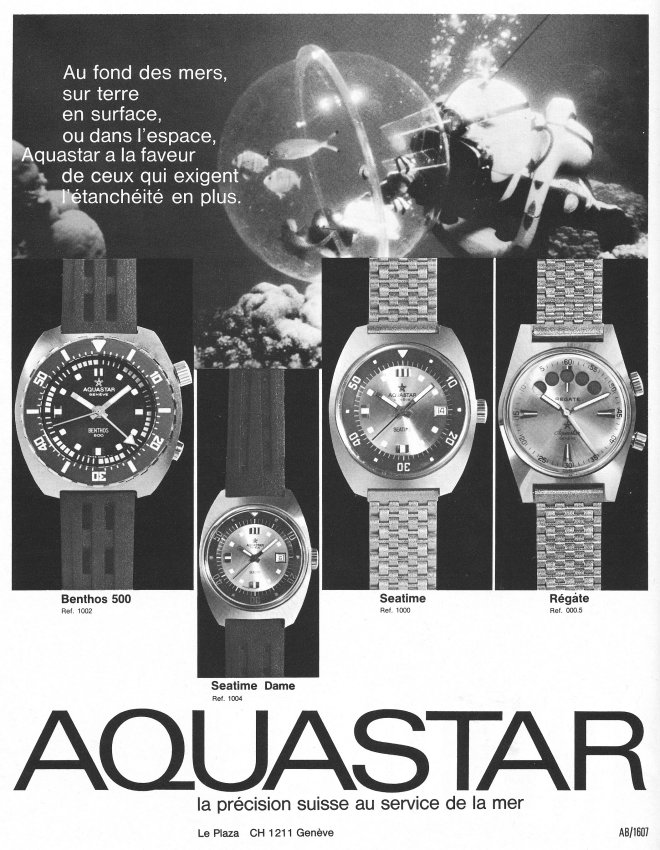
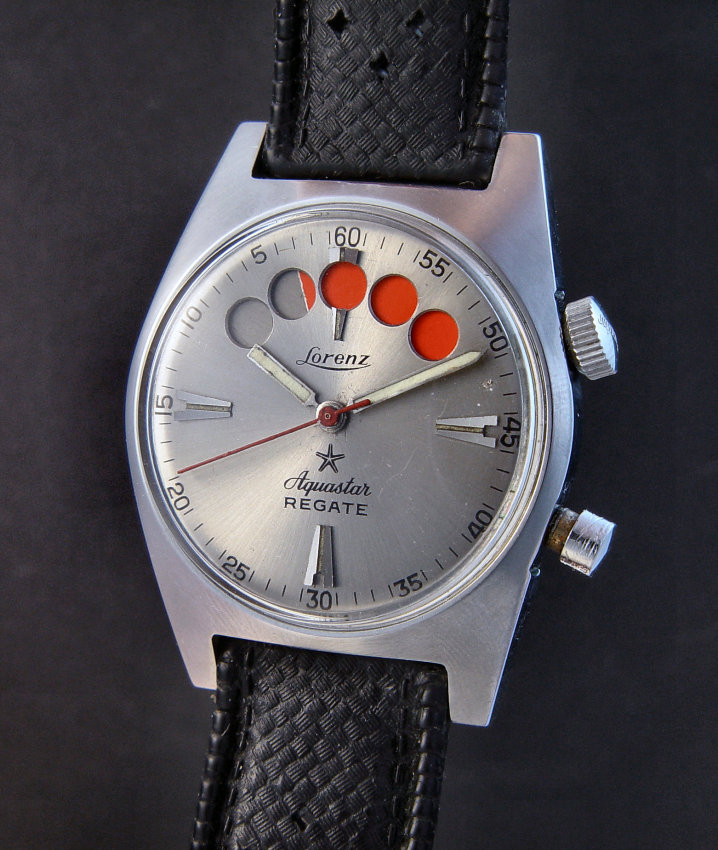
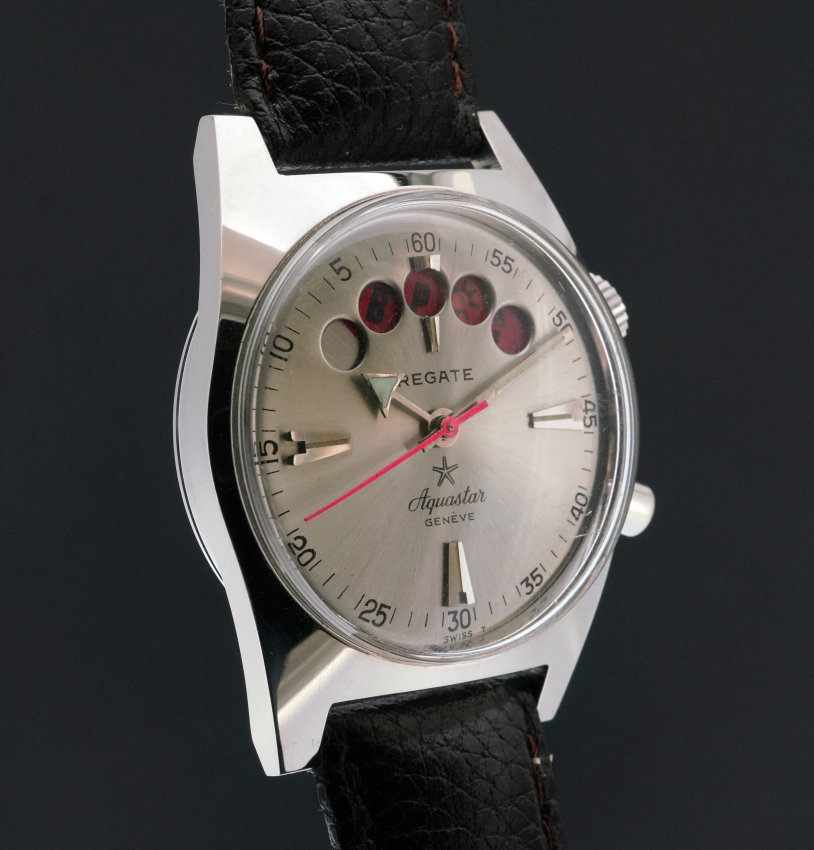
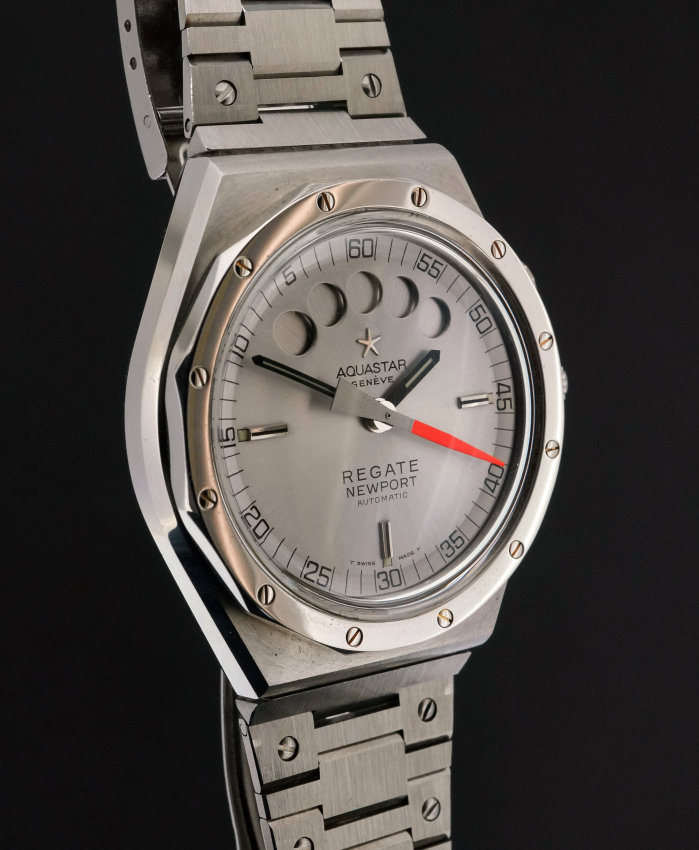
A Lémania caliber can also be found in a very special stop-en vol watch released around 1967: the Aquastar Régate.

This watch is based on the principle of the 1920s regatta counters, with a dial featuring five circular openings behind which a two-tone disc rotates. Pressing the single push-button at 2 o'clock causes all the discs to turn red, then gradually turn blue at a rate of one opening per minute. The first movements, which were automatic, were made by Felsa, and the push-button was located at 4 o'clock.

This watch was therefore the first stopwatch to feature an automatic movement. Subsequently, the movement used was a Lémania, also automatic, with a push-button at 2 o'clock, and some models are available under the Lémania brand as well as under the name Heuer Regatta.

1970

Aquastar was an offshoot of Jean-Richard SA, a company founded in Geneva in the 1950s that specialized in watches and diving instruments sold directly in specialist stores. At the same time as the Régate watch, Aquastar offered a diving watch called the Benthos 500.

It was also an automatic stop-en vol watch, with a push button at 2 o'clock and a crown at 4 o'clock, but the central hand counted the minutes. The watch was water-resistant to 500 meters and was followed a few years later by a Benthos I version, water-resistant to 1,000 meters.

- Baumgartner

In 1973, a manufacturer of watch movements introduced a curious, inexpensive chronograph without a counter that also functioned as a stop-en vol watch: Baumgartner.

Baumgartner was founded in 1899 in Granges by Arnold Baumgartner with the aim of manufacturing affordable watches, and the company specialized in Roskopf watches.

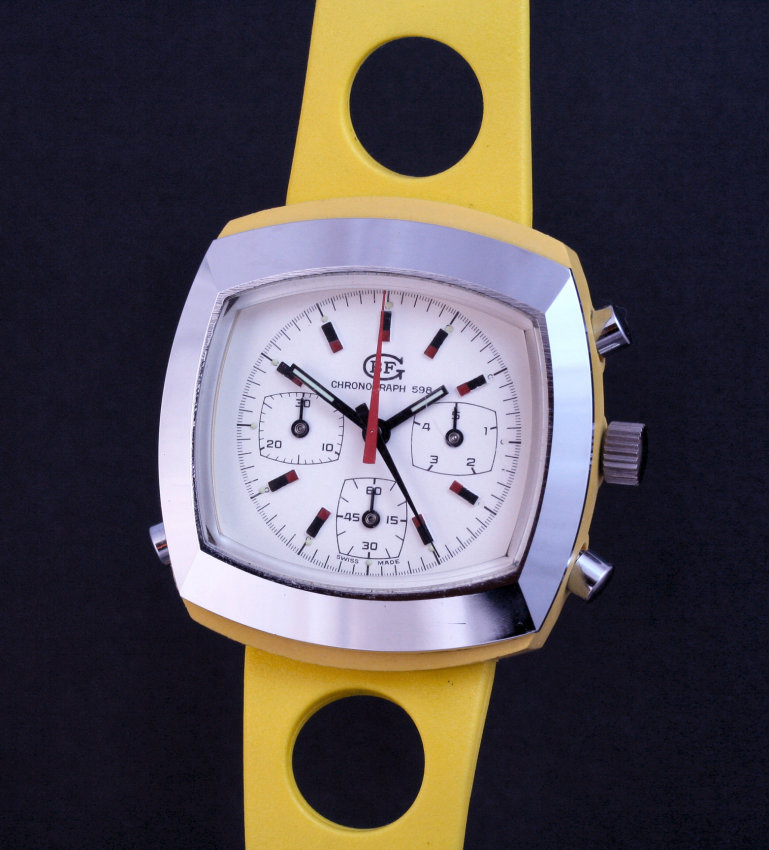
The 1973 chronograph caliber, with a pin anchor, named BFG 598, is a 13.5-line movement that existed in 1 or 17-jewel versions and had three pushers at 2 o'clock, 4 o'clock, and 8 o'clock.

Its operation was quite complex, as it had no fewer than three counters and seven hands: a 5-hour counter at 3 o'clock, a permanent small seconds hand at 6 o'clock, a 30-minute counter at 9 o'clock, and, in addition to the hours and minutes, another permanent central seconds hand and the chronograph seconds hand. The first push-button at 2 o'clock starts and stops the central seconds hand. The second push-button at 4 o'clock resets the watch after stopping, but also activates the flyback function. The third push-button exclusively activates the flyback function for all three counters, which therefore operate independently for timing long periods.

The BFG 598 caliber was first marketed by Baumgartner under its Uniwa and BFG brands, then from 1975 by Dolmy [7], which offered a version with a jeweled anchor, and Ilona for a Yachting model with a waterproof plastic case and a subdivided minute counter for regatta starts.

Baumgartner did not survive the quartz crisis and went bankrupt in 1981.

After the major crisis of the late 1970s, the Swiss mechanical chronograph is now a shadow of its former self.
The Stop watch, meanwhile, has been completely forgotten.

- Jaeger-LeCoultre

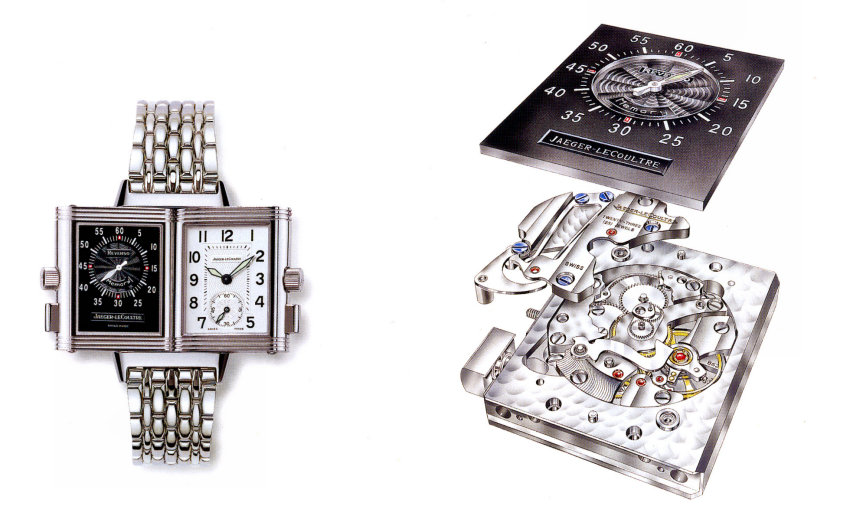
With the renaissance of mechanical watches at the end of the 20th century and the growing need to create models that stood out from an increasingly crowded market, a final model appeared in 1999, at the turn of the century: the Reverso Memory by Jaeger-LeCoultre.

The famous Manufacture du Sentier, creator of so many calibers, needs no introduction, but it may come as a surprise to some that Jaeger-LeCoultre did not produce a chronograph caliber for wristwatches for almost the entire 20th century. The brand's chronographs used Universal or Valjoux calibers, and the first creations, in 1988, were in fact hybrid mechanical and quartz movements.

It was not until 1996 that the first Jaeger-LeCoultre wristwatch chronograph with a Manufacture movement, caliber 829, appeared on the brand's iconic model: the Reverso. It was a small series, limited to 500 pieces, and movements with wider distribution were not offered until 1999 with the Reverso Memory.

The latter is a stop-en vol watch, caliber JLC 862, whose single push-button allows the continuously running minute counter to be reset to zero.

3.2 Stop watches with Ébauches SA caliber

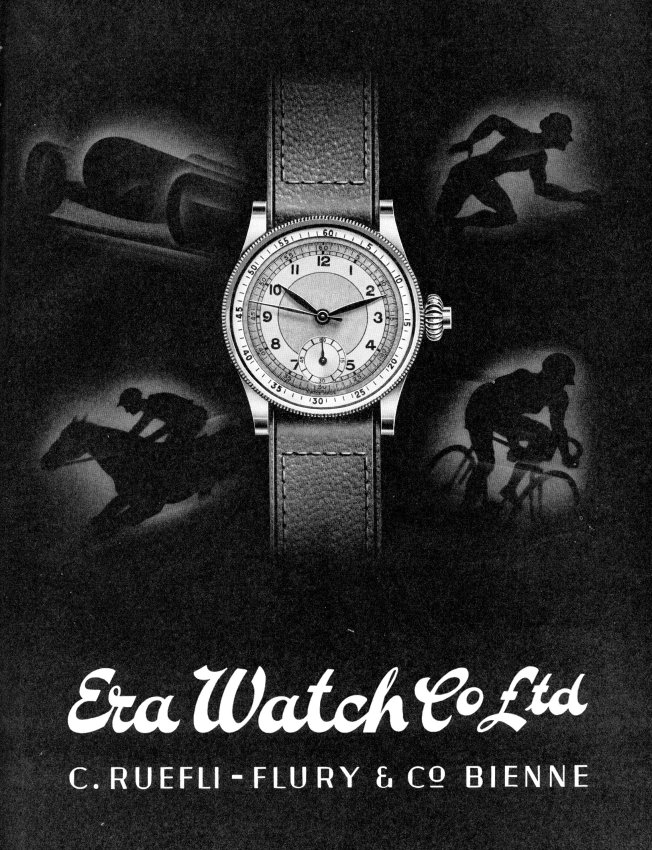
In 1937, Ébauches SA offered two stop-en vol calibers: the highly original Venus 131 movement measuring 8.75/12 lines and the Venus 103 measuring 10.5 lines. These were used in numerous brands such as Fortis, Era, Eloga, and many others.

1939

calibre Vénus 131

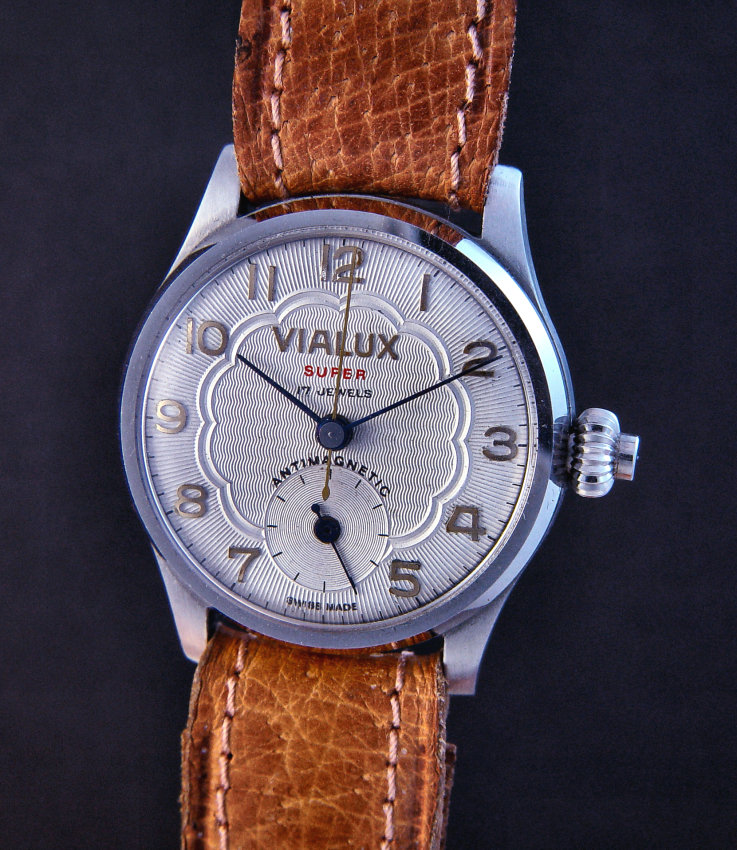
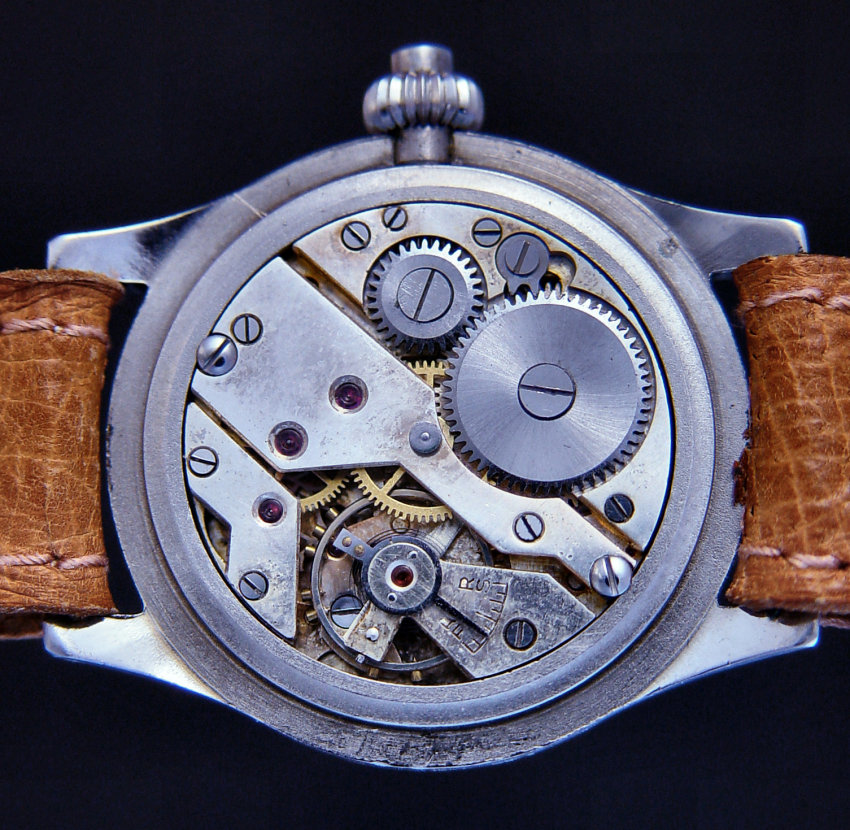
However, little is known about Vialux and its stop-in-flight watch, released around 1947. The central hand is actually a minute counter, and the single push-button, coaxial with the crown, allows this hand and the small seconds hand at 6 o'clock to be reset.

The movement used is also rather mysterious. It is based on a caliber from Arogno, one of the movement manufacturers belonging to the Ébauches SA trust, and could be the rare Arogno 158 caliber. It is possible that this movement was used by other companies.

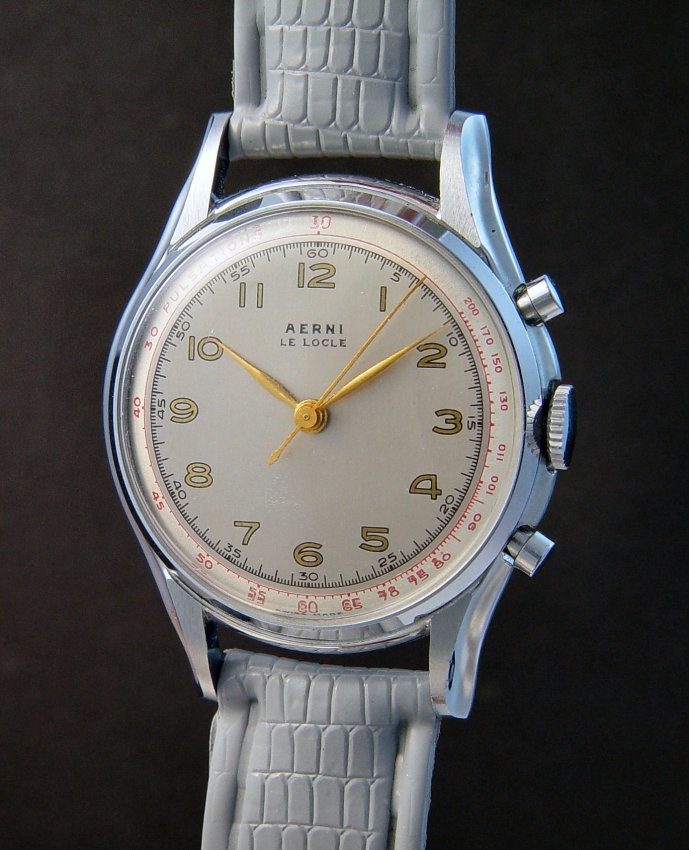
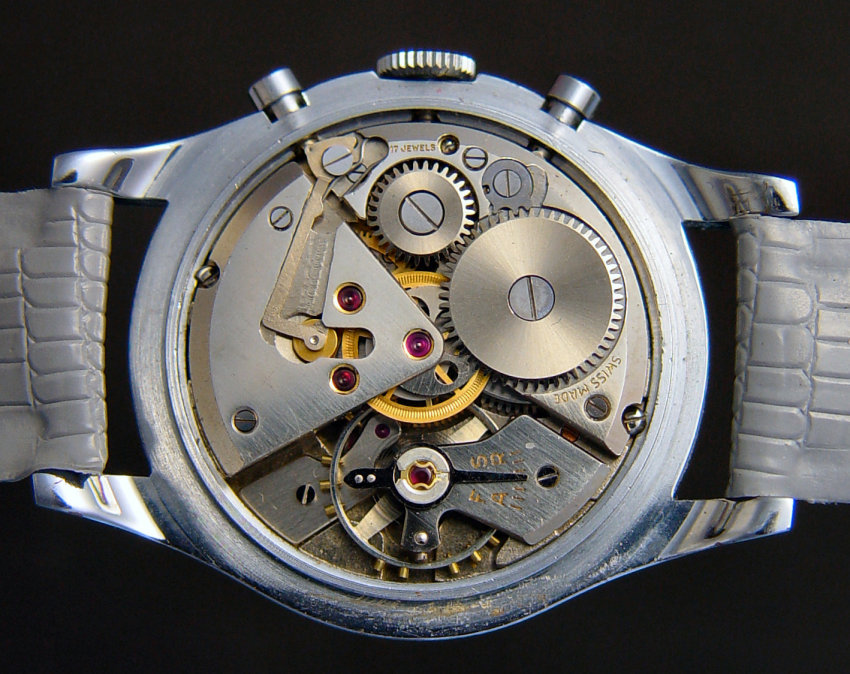
However, these watches were uncommon and probably produced in very small quantities. Things changed for the Stop watch in 1951 when ETA, another movement manufacturer owned by Ébauches SA, introduced the ETA 1168 caliber.

This was a 12-line movement with a stop-en vol function and a permanent central seconds hand that could be stopped by a small push-button at 2 o'clock or reset to zero by another push-button at 4 o'clock. This caliber was very successful and was used as soon as it became available by Ogival, a company created in 1929 by René Brandt, then by Gunzinger Frères, manufacturer of Technos watches in Rosières, Béguelin et Cie., manufacturer of Damas watches in Tramelan, and by many other companies.

Notes:

About Time To Tell: Time To Tell has one of the largest private digitized databases on the history of Swiss watchmaking, with over 2.5 TB of data on more than 1,000 Swiss watch manufacturers. This database has been built up over a period of around 30 years and continues to be updated with around 50 to 100 GB of data each year. The database consists of old documents, mainly Swiss trade journals, dating from the late 19th century to the late 20th century. Most of these documents are not available on the Internet. The historical articles published on the time2tell.com website always cite the sources used.

Time To Tell is a private company, independent of any watch manufacturer.

©Time To Tell, 2026

Reproduction prohibited without permission.

Any use of this article by artificial intelligence is strictly prohibited and will be considered a violation of copyright.

Product Details

Product added to wishlist

Nous utilisons des cookies afin de fournir une expérience utilisateur conviviale. En naviguant sur ce site, vous acceptez la politique d'utilisation des cookies.